Photograph: The logo of the Department of Agriculture's Supplemental Nutrition Assistance Program, as of 2010, also known as food stamps. Photo credit: US Department of Agriculture, Public Domain, Wikimedia Commons.
Introduction
This page examines substantive injustices in U.S. politics, like different levels of public investment, welfare and relief, social determinants of health, placement of jobs, etc.
Messages and Resources

Mako Nagasawa, John Locke’s Theology of Private Property, edited by Grace Tien and Maria Eugenia Funes, Religion and Racial Capitalism. Palgrave MacMillan, 2025.
American libertarians and private property absolutists appeal to John Locke, remembered as an English political philosopher. Locke originally positioned himself, however, as a biblical scholar and theologian. As such, Locke departed from Christian tradition. I argue the relationship between Locke’s political philosophy and the Bible is that of a parasite and its host. Christian leaders prior to Locke believed that the earth is the Lord’s, the fruit of the earth belongs to all, and the political community could modify property in various ways because it was ethically and chronologically prior to private property. Locke, however, argued that individuals first create private property by enclosing land and laboring on it, then bring their private properties into political society, which was meant by God to defend individual property rights. He thereby defended both the English Revolution of 1688 and also English colonialism in the Americas.
See also the slides to this presentation. The introduction features John Winthrop vs. Roger Williams to highlight the debate over freedom of religious Conscience vs. Christendom. The presentation highlights Christian accomplishments in health and hospitals, education and schools, land ownership and economic justice, and criminal justice reform.

How do Christian heresies contribute to America’s racial and political climate? Could Christian history have gone differently? Could it still? Examine U.S. history from the standpoint of church history. See the whole course or just the blog posts.

Why is it so easy for people — including Christians, especially Christians — to scapegoat people who are considered other for their own feelings of anxiety, anger, and disgust? See more about the course. See more about the overall topic.
White American Evangelical Political Attitudes and Behavior: Explanation and Correctives
White American evangelical political attitudes can be characterized by the debate between John Winthrop and Roger Williams, and their respective attitudes towards Native Americans, slavery, fairness, and faith in civic space. This is a presentation also explores Scripture and church history to argue that Roger Williams was correct. Given to the staff of Emmanuel Gospel Center, Apr 18, 2018, as a follow-up to how Christian restorative justice impacts ministry; audio file here.
The Role of Jesus in Revolution and the Pursuit of Justice
This is an evangelistic message that highlights the Christian-led and Christian-influenced non-violent resistance movements throughout the world in the 20th century. They show the connections and spiritual vitality of Christian faith under empire or empire-like oppression.
-
Ashley B., Racism. Ashley B, Aug 14, 2026. Health care, social security, college, public pools. Every other wealthy developed democracy has these public resources as a public good. The US makes a lot of excuses, but racism is surely one of the reasons, spoken or unspoken.
Heather McGhee, The Sum of Us: What Racism Costs Everyone and How We Can Prosper Together. One World | Amazon page, Feb 16, 2021. See also Ezra Klein, Heather McGhee and The Cost All Americans Pay for Racism. The Ezra Klein Show, Feb 2021. “Drained pool politics” can be seen in white opposition to Medicaid expansion. Public investment suffers because white people don’t want to include black people in the “public.”
As an example of one issue, consider: Casey Leins, States With the Highest Maternal Mortality Rates. US News & World Report, Jun 12, 2019. “Some states’ maternal mortality rates match those of developing countries.”
See also Mihei Andrei, Texas Has Highest Maternal Mortality Rate in Developed World, Study Finds. ZME Science, Aug 22, 2016. “The US lags behind all the developed world, and the situation in Texas is unmatched.” Molly Redden, Texas Has Highest Maternal Mortality Rate in Developed World, Study Finds. The Guardian, Aug 20, 2016. “As the Republican-led state legislature has slashed funding to reproductive healthcare clinics, the maternal mortality rate doubled over just a two-year period.”
See also Andrew Mwaniki, US States With The Highest Infant Mortality Rates. World Atlas, Apr 2, 2018. Knowing Better, Welfare | The Complete Moderate's Guide. Knowing Better, Jan 6, 2019. This is a 30 minute video that discusses public housing, tax credits, education, TANF, SNAP/WIC, Medicaid/CHIP/ACA, unemployment insurance, social security, and universal basic income. There is an outstanding bibliography of links.
-
Donna Franklin, Ensuring Inequality: The Structural Transformation of the African-American Family. Oxford University Press | Amazon page, 1997.
Hamden Rice, Most of You Have No Idea What Martin Luther King Actually Did. Daily Kos, Aug 29, 2011.
Zack Beauchamp, How Racism Caused the Shutdown. Think Progress, Oct 9, 2013. How the New Deal drove the racists to the Republican party.
Zack Beauchamp, Yes, the South Really Is Different - And It’s Because of Race. Think Progress, Oct 18, 2013.
Joshua Holland, Why Americans Hate Welfare. Bill Moyers & Company, Mar 6, 2014. Notes shift in 1960's television coverage of welfare recipients from white to black; see also Martin Gilens, Why Americans Hate Welfare: Race, Media, and the Politics of Antipoverty Policy. Google book, Oct 1, 2000.
Jackson Lears, Teddy Roosevelt, Not-So-Great Reformer: What Washington Liberals Miss About Progressivism. The New Republic, Mar 14, 2014. Reviews Doris Kearns Goodwin, The Bully Pulpit: Theodore Roosevelt, William Howard Taft, and the Golden Age of Journalism. When Democrats were white, they were for welfare and public good programs. Progressive Republicans wanted a government sector purged of business interests.
Daniel Jose Older, Gentrification’s Insidious Violence: The Truth About American Cities. Salon, Apr 8, 2014.
Adam Serwer, Lyndon Johnson Was a Civil Rights Hero, But Also a Racist. MSNBC News, Apr 11, 2014.
Max Ritvo, From One White Guy to Another: An Open Letter About Our Privileges. Huffington Post, May 7, 2014.
Joshua Holland, How Bill Clinton's Welfare "Reform" Created a System Rife With Racial Biases. Truthout, May 13, 2014.
Kiran Dhillon, Blue States Barack Obama Won In 2012 Are More Educated Than Red States. Time, May 15, 2014.
Kevin Short, Next Time Someone Says "White Privilege Isn't Real", Show Them This. Huffington Post, Oct 21, 2014.
Jason Furman, Smart Social Programs. NEW YORK Times, May 11, 2015. about positive long-range outcomes of welfare programs like the Earned Income Tax Credit, early intervention, early education and educational equity initiatives, food stamps, etc.
Brittney Cooper, Segregationists Never Went Away: We Just Call Them "Small Government Conservatives" Now. Salon, May 27, 2015. highlights racial attitudes around the resourcing of public schooling, and dog-whistles about welfare and the public sector
Emily Badger, Obama Administration to Unveil Major New Rules Targeting Segregation Across U.S. Washington Post, Jul 8, 2015. about economic and racial integration. See also Stanley Kurtz, Massive Government Overreach: Obama’s AFFH Rule Is Out. National Review, Jul 8, 2015. criticizing it, without any acknowledgement of past discrimination by government policies.
Daniel Geary, The Moynihan Report: An Annotated Edition. The Atlantic, Sep 14, 2015. “A historian unpacks The Negro Family: The Case for National Action on its 50th anniversary.”
Courtland Milloy, How American Oligarchs Created the Concept of Race to Divide and Conquer the Poor. Washington Post, Apr 19, 2016.
Victoria M. Massie, Lillie Harden Was Bill Clinton’s Welfare Reform Success Story. Welfare Reform Failed Her. Vox, Aug 23, 2016. “Honoring Harden's legacy includes recognizing the limits of welfare reform that doesn't reform what makes welfare necessary.” “Lillie Harden’s story may have been a triumph for Clinton’s welfare reform agenda. But in the decade after, her life showcased its undeniable limitations. Last year, for Alternet, journalist Zaid Jilani tried to seek Harden, and found that she had died 12 years after she suffered a stroke in 2002, which left her unable to qualify for Medicaid or afford her bill for monthly prescriptions.”
Gary Rivlin, White New Orleans Has Recovered from Hurricane Katrina. Black New Orleans Has Not.. Talk Poverty, Aug 29, 2016.
Jason De Parle, Why Do People Who Need Help From the Government Hate It So Much? New York Times, Sep 19, 2016. racial politics
Catherine Rampell, Why the White Working Class Votes Against Itself. Washington Post, Dec 22, 2016.
Chris Ladd, Unspeakable Realities Block Universal Health Coverage In The US. Forbes, Mar 13, 2017. On "white socialism."
Brian S. Feldman, The Decline of Black Business. Washington Monthly, Mar/Apr/May 2017. "And what it means for American democracy" illuminates the relationship between economic independence and political liberty
Michael Linden, Kansas’ Experiment with Tax Cutting Failed Spectacularly — On Its Own Terms. Business Insider, Jun 14, 2017. is a data point on how conservative-led states with low taxes have lower levels of education, maternal health and mortality, rural health care, even slower job growth, and other entirely preventable problems. See also William G. Gale, The Kansas Tax-Cut Experiment. Brookings, Jul 11, 2017. and Heather Boushey, Failed Tax-Cut Experiment in Kansas Should Guide National Leaders. The Hill, Nov 29, 2018. .
Jamelle Bouie, Why Donald Trump Doesn't Care About Puerto Ricans. Slate, Oct 1, 2017. he promised a government that would care for white Americans
Michael Lewis, Inside Trump’s Cruel Campaign Against the U.S.D.A.’s Scientists. Vanity Fair, Nov 2, 2017. A long but worthwhile article about the Department’s management of natural resources, animal welfare, forests and grasslands, farming economics, food stamps and school nutrition.
Ryan Cooper, The Subtle Racism of Centrist Democrats. The Week, Mar 9, 2018. and Michael Harriot, Doug Jones and the Democratic Party Just Screwed Black Voters ... Again. The Root, Mar 15, 2018.
Aaron Tolbert, The Trump Administration Is Waging War On The Poor. Huffington Post, Apr 18, 2018. Good cross-cultural comparisons between American views of work and self-determination, and other countries' views of work.
Paul Heideman, Socialism and Black Oppression. Jacobin Magazine, Apr 2018.
Vann R. Newkirk II, What Black Voters Want. The Atlantic, May 8, 2018.
Eliza Griswold, Amity and Prosperity: One Family and the Fracturing of America. Farrar, Straus, and Giroux | Amazon page, Jun 12, 2018. re: the Appalachian region, environmental issues, and political divide between urban and rural America; see also review by Isaac Chotiner, “What Is the Source of Disenfranchisement for Rural Americans?” Slate, Jun 14, 2018.
PBS News Hour, The Story of American Poverty, As Told By One Alabama County. PBS News Hour, Jul 7, 2018. More than 18 million Americans live in “extreme poverty,” according to a report from the United Nations, which ranked poverty in the U.S. alongside some of the poorest areas in the world. The UN Special Rapporteur for Extreme Poverty paid a visit to the U.S. last year, drawing worldwide attention to his findings. This Alabama African American community lacks clean sewage water treatment because the State of Alabama has opposed extending public infrastructure there. This is a case study of how most Americans have benefited from massive public investment yet insist that American society is an “meritocracy of individual achievement,” and why “small government conservatism” is often a smokescreen for “prejudice and systemic racial injustice.”
Michael Kazin, America's Never-Ending Culture War. New York Times, Aug 24, 2018. The issues that drove protesters to Chicago in 1968 are still motivating our partisan divide, 50 years later; a brief narrative of the New Deal old left, and the new left of the 1960's
Oliver Eagleton, You Won't Evict Us. Jacobin Magazine, Aug 2018. On renters via direct action resisting eviction by landlords in Ireland.
Daniel Yudkin, The Psychology of Political Polarization. New York Times, Nov 17, 2018. Presents a more optimistic view, by focusing in on more basic questions about parenting styles, moral beliefs, views of personal responsibility, etc.
Knowing Better, Welfare | The Complete Moderate's Guide. Knowing Better, Jan 6, 2019. This is a 30 minute video that discusses public housing, tax credits, education, TANF, SNAP/WIC, Medicaid/CHIP/ACA, unemployment insurance, social security, and universal basic income. There is an outstanding bibliography of links.
Mark Joseph Stern, Judge Blocks Discrimination Against Puerto Ricans, Says Federal Government Is Engaging in “Citizenship Apartheid”. Slate, Feb 5, 2019.
Casey Leins, States With the Highest Maternal Mortality Rates. US News & World Report, Jun 12, 2019. “Some states’ maternal mortality rates match those of developing countries.” See also Mihei Andrei, Texas Has Highest Maternal Mortality Rate in Developed World, Study Finds. ZME Science, Aug 22, 2016. “The US lags behind all the developed world, and the situation in Texas is unmatched.” Molly Redden, Texas Has Highest Maternal Mortality Rate in Developed World, Study Finds. The Guardian, Aug 20, 2016. “As the Republican-led state legislature has slashed funding to reproductive healthcare clinics, the maternal mortality rate doubled over just a two-year period.” See also Andrew Mwaniki, US States With The Highest Infant Mortality Rates. World Atlas, Apr 2, 2018.
Rachel Maddow, Legal Strategy Has Proven Record Against White Supremacist Groups. Rachel Maddow Show | MSNBC, Aug 6, 2019. Civil trials and heavy fines placed on Klan groups for inciting violence, distinct from criminal trials and charges on individuals for violence.
Travis Gettys, Behar Exposes “Sad Truth” About Some Trump Voters: “They Don’t Want Health Care If You Get It Also”. Salon, Oct 21, 2019.
The Young Turks, Trump Steals Food From The Poor. The Young Turks, Dec 4, 2019. up to 700,000 people will be kicked off of food stamps; when half of Americans are in low-wage jobs making a median income of $18k.
Charles Postel, Bloomberg or Bernie: 2020 Democrats Should Look to the Past for Lessons on Progressive Coalitions. NBC News, Dec 7, 2019. includes mention of how women’s suffragists Elizabeth Cady Stanton and Susan B. Anthony stood against the 14th and 15th Amendments because they only enfranchised black men, how the Women’s Christian Temperance Union made an alliance with former Confederate white women at the expense of black women, and how the rural anti-monopolists included Southern farmers and demanded an end to Reconstruction efforts to empower freed blacks.
Michael Harriot, Can Coronavirus Cure White Supremacy? The Root, Apr 1, 2020. a list of historical legislation, primarily New Deal, where urgent need made white Americans support progressive social programs
Yuvraj Joshi, Does Transitional Justice Belong in the United States?. Just Security, Jul 13, 2020. “In the pre-Trump world, the Obama Administration endorsed economic reparations, truth commissions, and memorial building for countries transitioning out of repressive regimes. Promoting these processes was “a core moral responsibility of the United States,” it said. When a New York Times columnist asked whether the United States is such a country in transition, an Obama State Department spokesperson replied: “I won’t have anything further for you.” This uncomfortable silence reflects a broader trend within the field of transitional justice, which addresses how societies can deal with conflictual histories. For decades, U.S.-based discussions of transitional justice have gazed outward internationally, while overlooking the legacies of slavery, segregation, and white supremacy at home.” See also Colleen Murphy, Transitional Justice in the United States. Just Security, Jul 16, 2020. “The United States shares with societies like South Africa three features that I argue in my book, “The Conceptual Foundations of Transitional Justice,” give rise to the need to pursue transitional justice. The first such feature is what I call pervasive structural inequality… In the United States today, the racial wealth gap is the same today as it was in 1968, and Black people are contracting the coronavirus and dying from COVID-19 at disproportionately high rates due to structural factors. The second is normalized political wrongdoing… Black Americans have been killed engaging in mundane activities such as jogging, going to a store, or even sleeping, underscore the constant threat of violence at the hands of white private citizens or the police. The third is serious existential uncertainty… We collectively do not know if the structural reform and accountability for perpetrators of violence against Black Americans being demanded will be achieved.”
Jason Lemon, North Carolina City Approves Reparations for Black Americans in Historic Unanimous Vote. Newsweek, Jul 15, 2020.
Emily Peck, Trump’s Crackdown On Diversity Training Is Fascist. And Terrifying.. Huffington Post, Oct 22, 2020. “The White House ban on anti-racism training is an authoritarian attack on free speech and already doing serious damage.” “In an executive order and a series of administrative actions issued over the past month and a half, the Trump administration effectively banned diversity and inclusion training in the federal workforce and at any company or entity that contracts with the government or receives federal funding, a huge swath of American businesses and universities, covering millions of workers and students. As part of the administration’s continued efforts to effectively ban anti-racism training, the Labor Department announced Wednesday it would begin collecting information on diversity training from contractors (Verizon, which owns HuffPost, is one such company) as a way of policing the way diversity is discussed within private companies.”
David Brooks, How the Democrats Won the War of Ideas. New York Times, Oct 24, 2020. "The era of big government is here." See response by Jared Peterson, David Brooks Gets It Wrong. American Thinker, Oct 24, 2020. Brooks faults immigration for admitting people who are much more open to expansive government.
Cody Johnston, Katy Stoll, and Will Gordh, Jim Crow, Neoliberalism, And The Current Fascist Backlash Against Civil Rights Movements. Some More News, Oct 25, 2020. discuss voter suppression, attacks on social welfare programs, and the likelihood of structural change
David Doel, Andrew Yang Nails Why Democrats Lose Working Class Voters. The Rational National, Nov 7, 2020. features progressive initiatives on direct democracy ballot measures that passed
Joel Shannon, The Dakotas Are 'As Bad As It Gets Anywhere in the World' for COVID-19. USA Today, Nov 14, 2020. demonstrates the downsides of the conservative commitment to white American “personal freedom.” See also Dan Goodspeed, COVID Cases Since June. Dan Goodspeed. which uses the bar chart race format to show red states taking the lead in COVID cases over time.
Heather McGhee, The Sum of Us: What Racism Costs Everyone and How We Can Prosper Together. One World | Amazon page, Feb 16, 2021. See also Ezra Klein, Heather McGhee and The Cost All Americans Pay for Racism. The Ezra Klein Show, Feb 2021. “drained pool politics” can be seen in white opposition to Medicaid expansion. Public investment suffers because white people don’t want to include black people in the “public.”
Jeremy Schwartz, Kiah Collier, and Vianna Davila, Power Companies Get Exactly What They Want: How Texas Repeatedly Failed to Protect Its Power Grid Against Extreme Weather. The Texas Tribune and ProPublica, Feb 22, 2021.
Dorothy Brown, The Whiteness of Wealth: How the Tax System Impoverishes Black Americans--and How We Can Fix It. Crown | Amazon page, Mar 2021. examines many aspects of the tax code, as well as tax code history, to show that the tax code privileged life situations of white Americans. See also Ryan Grim, Race and Taxes. The Intercept, Jun 4, 2021. “If Joe Biden is serious about tackling the racial wealth gap, Emory law professor Dorothy Brown says he should start with the tax code.” Excellent highlights of Dorothy Brown’s book.
Ben Steverman, A Tax Code Optimized for White Wealth Leaves Black Americans Behind. Business Insider, Mar 10, 2021. “With The Whiteness of Wealth, Brown has turned a notoriously boring topic into a surprisingly accessible and lively 288-page book, relying on examples from real families, including her own, to guide readers through the intricacies of a tax code provisioned for just about every milestone in a person’s life—education, marriage, homeownership, childbearing, death and inheritance. Generations of lawmakers have optimized the system for White people, she argues, with the result that in the U.S.’s supposedly progressive and race-neutral tax code, Black people end up paying more than White people with the same incomes.”
Dareh Gregorian, States with Republican Governors Had Highest Covid Incidence and Death Rates, Study Finds. NBC, Mar 11, 2021. “States with Democratic governors had the highest incidence and death rates from Covid-19 in the first months of the coronavirus pandemic, but states with Republican governors surpassed those rates as the crisis dragged on, a study released Tuesday found. From March to early June, Republican-led states had lower Covid-19 incidence rates compared with Democratic-led states. On June 3, the association reversed, and Republican-led states had higher incidence," the study by researchers at the Johns Hopkins Bloomberg School of Public Health and the Medical University of South Carolina showed.”
Krystal Ball and Saagar Enjeti, Zaid Jilani: Why UK Labour Party Is Losing Working Class Voters. Rising | The Hill, May 10, 2021. discuss the difference between the US Republican Party and the UK Conservative Party. After WWII, the UK built the UK National Health Service and even Margaret Thatcher maintained it because it is so popular. The US, by contrast, maintains a much more libertarian tradition.
Daniel Marans, New York Raises Taxes On The Rich As State Shifts Leftward. Huffington Post, Apr 11, 2021. “New York’s overwhelmingly Democratic state legislature passed a budget for the 2022 fiscal year that will raise $4.5 billion in taxes on millionaires and corporations to fund economic relief for undocumented immigrants, schools and housing assistance.”
Erica Werner, Andrew Van Dam, and Yeganeh Torbati, Biden’s Aid Programs Help Buttress McCarthy’s District Despite GOP Leader’s Complaints About ‘Socialist’ Spending. Washington Post, May 18, 2021. Bakersfield is one of the poorest districts in the state, yet McCarthy votes against their economic interests.
Ronald Brownstein, Watch What’s Happening in Red States. The Atlantic, Jun 3, 2021. on gun rights, abortion bans, transgender rights rollbacks, voting restrictions, protest crackdowns, bans on “critical race theory” in schools, penalties for defunding police departments, limits on mask mandates.
“Relationship dissolution is common among socioeconomically disadvantaged parents. This study utilizes longitudinal data from the Fragile Families and Child Wellbeing Study (FFCWS) to assess whether fathers’ time off work after the birth of a child reduces the likelihood of parents dissolving their relationship. We also consider whether the association between fathers’ time off work and relationship dissolution is mediated by fathers’ support of mothers and moderated by union type. Results indicate that the risk of relationship dissolution is lower when fathers take time off work after the birth of a child. Results also suggest that longer periods of time off work (i.e., two or more weeks) are associated with a lower risk of relationship dissolution among married couples, although overall evidence for variations by union type are mixed. Additionally, there is evidence that the association between fathers’ time off work and relationship dissolution is at least partially explained by higher levels of relationship support among fathers who took time off work after the birth of a child. Overall, findings suggest that providing fathers with opportunities to take time off for the birth of a child may help to promote relationship stability among socioeconomically disadvantaged couples in the U.S.”
This finding builds on an earlier study: Richard J. Petts, Daniel L. Carlson, Chris Knoester - If I [Take] Leave, Will You Stay? Paternity Leave and Union Stability. Journal of Social Policy, Nov 2019. It also finds the same positive outcomes that studies of European paternal leave policies have seen. See Trude Lappegård, Ann-Zofie Duvander, Gerda Neyer, Ida Viklund, Synøve N. Andersen, Ólöf Garðarsdóttir, Fathers’ Use of Parental Leave and Union Dissolution. European Journal of Population, Jan 2019.
“With increasing union dissolution and changing gender behaviour, questions have emerged about possible links between gender equality and union stability. The aim of this article is to examine whether and how early fathers’ involvement in child-rearing is associated with union dissolution in three Nordic countries. All three countries have reserved part of their parental leave to be used by one parent in order to promote fathers’ engagement in child-rearing. Our analysis uses fathers’ parental leave as a proxy for his involvement, and we distinguish between fathers who take no leave (“non-conforming fathers”), fathers who take only the reserved part (“policy-conforming fathers”) and fathers who take more than the reserved part (“gender-egalitarian-oriented fathers”). We find that couples in which the father uses parental leave have a lower risk of union dissolution than couples in which the father takes no leave. The pattern is consistent for all countries, for the whole study period 1993–2011, and for cohabiting and married couples. However, we do not find support for asserting that the couples with greatest gender equality, in which fathers take longer leave than the policy reserves, are the most stable unions, as the pattern is not uniform in the three countries. We attribute this to the fact that gender equality within the family in the Nordic countries is still an ongoing process, and the relationship between gender behaviour and union stability is still in flux.”
See also Arna Olafsson and Herdis Steingrimsdottir, How Does Daddy at Home Affect Marital Stability? The Economic Journal, Jul 2020. This is the notable Iceland study, showing that a paternal leave policy is linked to a 22.5% decrease in the divorce rate over a 15 year period. Summarized by Arna Olafsson and Herdis Steingrimdottir, How Paternity Leave Can Help Couples Stay Together. Oxford University Press, Jun 4, 2020.
“It appears that reserving part of the parental leave for fathers, thereby making the sharing of childcare responsibilities more equal, leads to significantly fewer couple separations. The drop in divorces is not just transitory, but rather appears to be a permanent one, as the difference in the proportion of couples divorced remains throughout the fifteen-year period that we follow them. Among the parents who did not get paternity leave, 40% were separated fifteen years after the birth of their child. Our results indicate that a paternity leave reduces the divorce rate by approximately nine percentage points.”
Maggie Fox, Unvaccinated People Are ‘Variant Factories,’ Infectious Diseases Expert Says. CNN, Jul 3, 2021. “Just 18 states have fully vaccinated more than half their residents, according to data from the US Centers for Disease Control and Prevention. "Currently, approximately 1,000 counties in the United States have vaccination coverage of less than 30%. These communities, primarily in the Southeast and Midwest, are our most vulnerable. In some of these areas, we are already seeing increasing rates of disease," CDC Director Dr. Rochelle Walensky told a White House briefing Thursday.” Shows that racial prejudice manifests itself in lack of public investment and infrastructure, of which public health is one aspect. Suspicion of public health efforts is related to COVID vaccine skepticism. Thus, white supremacy is self-harming.
Chris Hayes, GOP Stoking Vaccine Culture War At The Cost Of American Lives. All In | MSNBC, Jul 7, 2021. Chip Roy, Marjorie Taylor Greene
Cody Johnston, The Racist History of Austerity Politics In America. Some More News, Jul 19, 2021. also called “Racism and Capitalism - A Love Story” starting with Reconstruction and the Southern resistance to taxes and black empowerment; the argument was “fiscal responsibility” based on the interests of “the taxpayer.”
Rashawn Ray and Alexandra Gibbons, Why Are States Banning Critical Race Theory? Brookings Institute, Aug 2021. “The approach of some Republican-led state legislatures is a method for continuing to roll back racial progress regarding everything from voting rights to police reform.”
Hari Sreenivasan, Alarming Study Finds Cognitive Deficits in Those Who Had Even Mild COVID Cases. Amanpour and Company, Aug 6, 2021. interviews Dr. Adam Hampshire, neuroscientist at Imperial College London, finding that cognitive test assessments showing that COVID produces decreases in reasoning and problem solving. This will have major long-term political, economic, and social consequences.
Ari Melber, Florida's 'Mini-Trump' Loses Teacher Clash: 'I Don't Have That Power'. The Beat | MSNBC, Aug 13, 2021. Florida’s COVID cases skyrocket while Gov. De Santis tried to ban schools’ ability to require masks, and withhold school officials’ salaries who disagreed as financial retaliation.
Mika Brzinsnky, Dallas County Judge Sounds Alarm For Children Due To Coronavirus. MSNBC, Aug 16, 2021. Dallas, TX county judge Clay Jenkins says that pediatric beds are filled with children with COVID-19
Gene Slater, Freedom to Discriminate: How Realtors Conspired to Segregate Housing and Divide America. Heyday | Amazon page, Sep 21, 2021. explains how CA realtors responded to MLK’s definition of freedom as civil rights and economic well-being, by redefining “freedom” in CA Proposition 14 as “freedom from state interference with the housing market.” See Gene Slater, The Inventors of America’s Most Dangerous Idea. The Atlantic, Nov 29, 2021.
Emma Pierson, Jaline Gerardin and Nathaniel Lash, The Lives Lost to Undervaccination, in Charts. Washington Post, Sep 14, 2021. 23,900 deaths in red states; 11,900 deaths in blue states.
David Leonhardt, Red Covid. New York Times, Sep 27, 2021. state level and county level data correlating partisan lean and COVID deaths. References Charles Gaba, Time To Check In On The COVID Red/Blue Divide Again. ACA Signups, Sep 17, 2021. See discussion by Ryan Grim, COVID Deaths Are Wiping People Out In Trump Country. Rising | The Hill, Sep 28, 2021. and David Doel, New Data Shows Trump Voters Getting Ravaged By Delta Variant. The Rational National, Sep 28, 2021. who compares US data to Canadian data, where conservative areas where people prioritize libertarian individualism and freedom from authority also demonstrate higher COVID rates.
Stephen Vogel, Cristina Miller, and Katherine Ralston, Impact of USDA's Supplemental Nutrition Assistance Program (SNAP) on Rural and Urban Economies in the Aftermath of the Great Recession. U.S. Department of Agriculture Economic Research Service, Oct 2021. See summary by Candice Clark, USDA: SNAP Benefits Help Rural Communities by Saving Jobs, Local Economy. Rural Health Quarterly, Oct 20, 2021.
Amber Ruffin, Why Rich People Are The Reason America Is Broke. The Amber Ruffin Show, Oct 15, 2021. catching rich tax evaders could fund the government, but the IRS audits lower-income people, in the poorest counties, instead. People who claim the Earned Income Tax Credit — the working poor — are more likely to get audited than people making 20x as much. Cites Paul Kiel and Hannah Fresques, Where in The U.S. Are You Most Likely to Be Audited by the IRS? ProPublica, Apr 1, 2019. to show the overwhelming correlation between counties the IRS audits and counties that are more non-white. Also cites Michael Harriot, Racism by the Numbers: How the Internal Revenue Service Targets Poor Black Taxpayers. The Root, Apr 11, 2019.
David Pepper, Laboratories of Autocracy: A Wake-Up Call from Behind the Lines. St. Helena Press | Amazon page, Oct 2021. Explores the GOP attempt to take over state legislatures. See interview by Thom Hartmann, The Wealthy Are Creating Labs of Autocracy - Conversations With Great Minds - David Pepper. Thom Hartmann Program, Nov 30, 2021.
Johnny Harris and Binyamin Applebaum, Liberal Hypocrisy is Fueling American Inequality. Here’s How. New York Times Opinion, Nov 9, 2021. look at blue states (CA, WA, NY, IL) and the failure to act on housing, taxes, and education. Use Palo Alto, CA as an example of NIMBYism and rezoning for lower density neighborhoods.
Ryan Grim, Was The 20th C. Political Realignment a Mirage? Rising | The Hill, Nov 18, 2021. Grim argues from a historical perspective that the two party system made the Build Back Better Act difficult because it neutralizes working class interests. See also Ryan Grim, The Two-Party System Was Designed To Crush Social Uprisings, And It's (Mostly) Working. Rising | The Hill, Nov 23, 2021. argues from a historical perspective that the two party political system was designed by Martin Van Buren etc. to obstruct abolition, which echoes the entrenchment of big business today.
Priya Fielding-Singh, How the Other Half Eats: The Untold Story of Food and Inequality in America. Little, Brown Spark | Amazon page, Nov 2021. See interview by Dr. Priya Fielding-Singh, How The Other Half Eats. Thom Hartmann Program, Nov 18, 2021. SNAP benefits run out typically half-way through the month. Poverty influences whether a parent says no to junk food.
Amanda Marcotte, With New Omicron Variant Looming, Republicans Are Now Paying People to Avoid Vaccination. Salon, Nov 29, 2021. “Republicans understand that if death rates remain high, the economic recovery remains stagnant, and unpleasant mitigation measures like mask mandates and school shutdowns continue into 2022, a pandemic-weary public is going to start blaming the guy in charge for not doing more to fix the situation.”
James Ross Gardner, A Willfully Misunderstood Earmark Can Help Reduce Climate-Change Heat Deaths. The New Yorker, Nov 29, 2021. “The tree-equity portion of the Build Back Better Act aims to redress some of those decades-old policies. In its current form, the bill, passed by the House earlier this month, earmarks three billion dollars to expand and protect urban tree canopies, with priority toward neighborhoods where thirty per cent or more residents live below the poverty line and in areas “with lower tree canopy and higher maximum daytime summer temperatures compared to surrounding neighborhoods.” Grants would go to nonprofits and state and local governments to achieve equity goals. According to one estimate, that will require five hundred and twenty-two million new trees in urban neighborhoods.”
Second Thought, How Moderates Serve the Right. Second Thought, Dec 17, 2021. explains how the terms “left” and “right” originate from the French Revolution as generally egalitarian vs. traditional hierarchy. Critiques the Biden administration for continuing aspects of Trump’s immigration policy under Title 42. Demonstrates how “moderate” in the overall US population means very high support for key provisions of the Build Back Better bill, but “moderate” among political leadership skews to the right of that. Largely because of the outsized influence of corporations and corporate donors on politicians.
Willian Saletan, Sickening Decisions. Slate, Dec 20, 2021. “Republicans are attacking the White House with a new talking point: More Americans have died of COVID-19 under Joe Biden’s presidency, they point out, than under Donald Trump’s. Mathematically, that’s true. When Trump left office, the U.S. death toll was around 400,000 people; now it’s above 800,000. The comparison is misleading for many reasons, however. One is that Biden has been dealt two new variants, Delta and Omicron, that spread more aggressively than the original Wuhan virus did. Furthermore, while Biden has begged Americans to get vaccinated, Republican politicians have constantly undermined him by banning or blocking vaccine mandates. But there’s another crucial difference between the two administrations, and it’s outlined in a new report from the House Select Subcommittee on the Coronavirus Crisis. Trump’s administration, unlike Biden’s, deliberately sabotaged the nation’s response to the pandemic.”
Claire McInerny, Texas Schools Ask Parents to Fill In as Substitute Teachers. NPR, Jan 12, 2022. Texas had poor COVID safety policies.
Gravel Institute, How America's Best State Fell Apart. Gravel Institute, Jan 27, 2022. This features Wisconsin, originally very community-oriented and labor-union oriented because of the Scandinavian, not Anglo-Saxon, immigrants who settled there. But deindustrialization and Republican neoliberal ideology from Ronald Reagan to Scott Walker dismantled the unions, gerrymandered the state, and made Democratic traditional politics very hard to reinvigorate. Wisconsin serves as a template for what the GOP wants to accomplish.
Walker Bragman and Alex Kotch, How Dark Money Shaped The School Safety Debate. The Daily Poster, Mar 8, 2022. “To get America back to work and boost profits, the Koch network and other right-wing money groups have long pushed to return to pre-pandemic schooling.”
Ari Melber, 'Mask Slips': Legal Expert On GOP Senator’s 'Outlandish' Interracial Marriage Comments. The Beat | MSNBC, Mar 23, 2022. Mike Braun (R-IL) said that he believes “states rights” should effectively dismantle the 14th Amendment.
Jonathan Capehart, Study: States With High Murder Rates More Likely To Be Republican. MSNBC, Mar 27, 2022. “Republicans love to blame crime on Democrats and liberal policies. Last week during the confirmation hearing, multiple senators questioned Judge Ketanji Brown Jackson views branding her as "soft on crime". However, a new report shows among the 10 states with the highest murder rates in 2020 ... eight of them voted for Trump.”
Ezra Klein, America Has Turned Its Back on Its Poorest Families. New York Times, Apr 17, 2022. An in-depth examination of the child tax credit.
Mary L. Adams, Implications of Red/Blue State Differences in COVID-19 Death Rates. Journal of Food Science and Nutrition Research, Apr 10, 2022.
“The study objective was to explore state death rates pre- and post- 4/19/2021 (date vaccines were assumed available) and the relative contributions of 3 factors to state death rates post- 4/19/2021: 1) vaccination rates, 2) prevalence of obesity, hypertension, diabetes, COPD, cardiovascular disease, and asthma and 3) red vs. blue states, to better understand options for reducing deaths. The ratio of red to blue state deaths/million was 1.6 pre-4/19/2021 and 2.3 between 4/19 and 2/28/2022 resulting in >222,000 extra deaths in red states or 305/ day. Adjusted betas from linear regression showed state vaccination rates had the strongest effect on death rates while red vs. blue states explained more of the difference in state death rates (60% vs. 46% for vaccination rates) with mean vaccination rates ~10% higher in blue states. Results suggest that increasing vaccination rates in red states could potentially save thousands of lives as the pandemic continues.” In other words, before vaccines were widely available, red states had about 1.6 times the COVID death rate of blue states. After vaccines became available in April 2021, red states had about 2.3 times the death rate of blue states.
Brian Tyler Cohen, Gavin Newsom Joined Truth Social. His First Post is Brilliant. Brian Tyler Cohen, Jun 17, 2022. Governor Newsom asked why red states are responsible for 8 of the top 10 states with the highest murder rates by gun. Cohen does a quick glance at gun death stats by state and by city.
Simar Bajaj, Voting Is Significant Determinant of Health, US Medical Association Declares. The Guardian UK, Jul 14, 2022. “women’s suffrage decreased child mortality rates by 8-15% while the Voting Rights Act reduced economic inequality and increased health spending. One recent study found that an increase in voter restriction barriers was correlated with a 25% higher probability of not having health insurance. In another, researchers linked a higher voter turnout rate with significantly reduced risk of cancer death. And finally, after following adolescents for 14 years, voting was found to be associated with improved mental health, as well as greater socioeconomic status. “Voting can influence many different health outcomes,” Eatman said, “whether it be through access to resources in one’s community, whether it be through insurance.” The sickest patients are the least likely to vote but most in need of good health policy.”
Lydia Densworth, People in Republican Counties Have Higher Death Rates Than Those in Democratic Counties. Scientific American, Jul 18, 2022. A growing mortality gap between Republican and Democratic areas may largely stem from policy choices. “In a study published in June in The BMJ, Warraich and his colleagues showed that over the two decades prior to the pandemic, there was a growing gap in mortality rates for residents of Republican and Democratic counties across the U.S. In 2001, the study’s starting point, the risk of death among red and blue counties (as defined by the results of presidential elections) was similar. Overall, the U.S. mortality rate has decreased in the nearly two decades since then (albeit not as much as in most other high-income countries). But the improvement for those living in Republican counties by 2019 was half that of those in Democratic counties—11 percent lower versus 22 percent lower.”
Krystal Ball and Saagar Enjeti, GOP Hypocrites Block Insulin Cap They Claim to Support. Breaking Points, Aug 9, 2022. Red states have higher rates of diabetes. Meanwhile Americans spend more than four times what people in other OECD countries pay for insulin.
Amy Goodman and Juan Gonzalez, "Freedom Dreams": Historian Robin D. G. Kelley on 20th Anniversary of His Book & Movements Mattering. Democracy Now, Aug 31, 2022. Discusses how many aspects of racial justice politics have been co-opted. Argues that we can’t just fight for the poor, but we need radical change, because of the climate crisis.
Jason de Parle, Expanded Safety Net Drives Sharp Drop in Child Poverty. New York Times, Sep 11, 2022. “With little public notice and accelerating speed, child poverty fell by 59 percent from 1993 to 2019, according to a comprehensive new analysis that shows the critical role of increased government aid”
Ryan Zickgraf, The Jackson Water Crisis Is a Disaster Created by Austerity. Jacobin Magazine, Sep 6, 2022. Old cities require maintenance and repairs. White flight was not just racism, but greed for newer homes with lower taxes.
CNBC, Why Cities Are Banning Cars Around The World. CNBC, Sep 7, 2022. Making cities more walkable and bikeable leads to a modest (9%) increase in business and economic activity.
Max, The Airline Crisis: Why Is Air Travel a Mess Under Buttigieg? UNFTR, Jan 23, 2023. Max rewinds from President Jimmy Carter passing the 1978 Airline Deregulation Act, which ended federal control over airlines after 50 years and ended the Civil Aeronautics Board which required airlines to serve rural communities. In its place came the FAA and the National Transportation Safety Board, neither of which has the regulatory authority to prevent industry abuses. Low cost carriers like Southwest and JetBlue were allowed to enter. By 1990, industry power and consolidation had increased. During the COVID pandemic, airlines got federal subsidies but cut labor and staff, so in 2022, they oversold tickets to consumers without knowing whether they would have the staff to fly the planes.
Lauren Sforza, Misinformation Contributing to Lower Life Expectancy in US, FDA Chief Says. The Hill, Apr 11, 2023.
Chris Hayes, DeSantis Pushes Child Health Care Bans, Fights with Disney in His ‘MAGA Kingdom’. All In | MSNBC, May 18, 2023. Hayes argues that DeSantis’ policies involve a heavy-handed state that overrules free speech, parental rights, abortion rights, etc. in an appeal to Christian nationalism. Heather Cox Richardson, Letters from an American May 18, 2023. Letters from an American | Substack, May 18, 2023. Richardson notes, “No longer committed to keeping the government weak to stay out of the way of business development, the party is now committed to creating a strong government that enforces Christian nationalism. This is a major and crucially important political shift. From the earliest days of the Reagan Revolution, those leaders who wanted to slash the federal government to end business regulation and cut the social safety net recognized that they did not have the votes to put their program in place. To find those votes, they courted racists and traditionalists who hated the federal government’s protection of civil rights. Over time, that base became more and more powerful until Trump openly embraced it in August 2017, when he said there were “very fine people on both sides.””
Chris Hayes, What the Republican Debt Ceiling Threat Is Really About. All In | MSNBC, May 23, 2023. Hayes points out that Republicans do not want to “spend less,” because they have never spent less. Hayes argues that the GOP simply wants to tank the economy so Biden gets the blame. Another example of how words cannot be believed on their face.
Leeja Miller, How Reagan Ruined Everything. Leeja Miller, May 24, 2023. Reagan’s union-busting, dismantling of the New Deal welfare state, War on Drugs, and stance towards AIDS
Julia Rock and Andrew Perez, Dark Money’s Behind The Debt Ceiling Plan To Punish The Poor. The Lever, May 24, 2023. “Republican House Speaker Kevin McCarthy borrowed his punishing work requirement proposal [and other cuts to Medicaid, food stamps, and cash assistance] from the conservative think tank pushing to loosen child labor laws,” the Foundation for Government Accountability.
Thom Hartmann, These Corporations Force Workers Onto Welfare…Then Lobby To Cut the Safety Net… Thom Hartmann, May 25, 2023.
Yves Smith, Origins of Debt: Michael Hudson Reveals How Financial Oligarchies in Greece and Rome Shaped Our World. Naked Capitalism, May 27, 2023. An illuminating overview of history, including Jewish law and Jubilee.
Emily Kenway, Who Cares? The Hidden Crisis of Caregiving and How We Solve It. Seal Press | Amazon page, May 2023. See interview by Michel Martin, The Silent Suffering of Caregivers. Amanpour and Company, Jun 5, 2023.
The Black Forest Family, Driving Culture Clash: Why Do Our Cars Look so Radically Different? The Black Forest Family, Jul 30, 2023. Very helpful stats, consideration of law and regulation, and personal narrative. In the US, vehicle crash tests are done to minimize damage to vehicle occupants. In Germany, they are done to minimize damage to pedestrians and cyclists, too, which is a big reason for why their cars are smaller and lower.
Keerti Goal, Millionaire Tax Feeds Hungry Kids. The Lever, Aug 9, 2023.
Stephen Semler, Bidenomics Isn’t Working For Working People. The Lever, Aug 15, 2023. Important data on food insecurity, financial hardship, and government spending outlays on social welfare programs.
Symone Sanders Townsend, How Houston’s Mayor is Fighting Back Against Republicans’ Preemption Power Play to Attack Democracy. Symone | MSNBC, Sep 2, 2023. GOP state legislators preempt Democratic mayors on public education, labor rights, and investigations of judges and public officials.
Chris Hayes, Republicans Threaten to Impeach Wisconsin Justice Before She Has Ruled on Any Case. All In | MSNBC, Sep 1, 2023.
Colin Woodward, America’s Surprising Partisan Divide on Life Expectancy. Politico, Sep 1, 2023. “Centuries-old settlement patterns — and the attitudes they spawned about government — are to blame for differences in longevity between red southern states and bluer parts of the country.”
Symone Sanders Townsend, How Houston’s Mayor is Fighting Back Against Republicans’ Preemption Power Play to Attack Democracy. Symone | MSNBC, Sep 2, 2023. GOP state legislators preempt Democratic mayors on public education, labor rights, and investigations of judges and public officials.
Max B. Sawicky, It’s Time to Reclaim the Promise of Economic Rights in the U.S. In These Times, Sep 12, 2023. “In his new book The Ends of Freedom: Reclaiming America’s Lost Promise of Economic Rights, Rutgers Professor Mark Paul provides a full-spectrum picture of what we could think of as a version of the Sanders program, located historically in the history of U.S. social democracy. Paul’s objective is to propose a framework for understanding the full gamut of economic and social policy in the 21st century. One of the book’s central claims is that the idea of rights as a political concept is immediately tangible and appealing to the general public. Policy can be endlessly detailed and arcane, including in the implementation of rights. But on the surface, the idea of, say, a right to a job, is readily grasped. Paul sets up a menu of rights in seven categories: employment, housing, healthcare, nutrition, income, education and the environment. Before introducing the definition and political viability of each category, he lays down the retrograde history of liberty in the United States.
Jill Filipovic, A Big New Report on American Children Is Out. It’s Horrific. Slate, Sep 12, 2023. “Protect the children” is a popular modern rallying cry. If only. A new Human Rights Watch report paints a damning portrait of children’s rights in the United States. That is, children here have remarkably few rights and are particularly ill-treated in the conservative states that claim the mantle of “family values.” According to HRW, “Children in the US can be legally married in 41 states, physically punished by school administrators in 47 states, sentenced to life without parole in 22 states, and work in hazardous agriculture conditions in all 50 states.” Over and over again, the worst states for children are clustered around the “pro-life” Bible Belt, and the map of the states that are the worst for children looks a lot like a map of red-state America. (Liberal states, too, have a long ways to go when it comes to protecting kids, but they generally do a bit better.)
Human Rights Watch, How Do US States Measure Up on Child Rights? Human Rights Watch, Sep 13, 2022. Per state analysis on various metrics.
Kyle Kulinsky, Dem Governor Does Automatic Voter Registration! | The Kyle Kulinski Show, Sep 22, 2023. Minnesota Governor Tim Walz, with a one seat majority, passed many progressive laws. Wisconsin Governor Tony Evers passed new public school funding for 400 years. Pennsylvania Josh Shapiro passed automatic voter registration via motor vehicles. Contrast with red state legislation making child labor more acceptable, etc.
Robert Weissman, The Corporate Sabotage of America’s Future. Public Citizen, Sep 2023. Free PDF book. See interview by Krystal Ball and Saagar Enjeti, Corruption Expert: How Pharma Stole Half a Trillion From Taxpayers. Breaking Points, Sep 26, 2023.
Washington Post Staff, The Post Spent the Past Year Examining U.S. Life Expectancy. Here’s What We Found. Washington Post, Oct 3, 2023. Factors highlighted: chronic diseases; poverty’s impact on health; childhood. Lauren Weber, Dan Diamond, and Dan Keating, How Red State Policies Are Shaving Years Off American Lives. Washington Post, Oct 3, 2023.
Justin King, Let's Talk About the GOP Majority of the Majority. Beau of the Fifth, Oct 4, 2023. On the protocol that the Speaker of the House can choose to not bring forward legislation for a vote, based on the minority opposition of the GOP majority. This means that a minority of the governing party can stop bills from being voted upon.
Thom Hartmann, Did GOP Policies Cause the Grossest Disease Outbreak in Recent Memory? The Thom Hartmann Program, Oct 18, 2023. “Red States that banned women’s healthcare are seeing skyrocketing rates of congenital syphilis as well as other STDs. Is this the result of GOP policies limiting education & access to reproductive healthcare?” Possibly the GOP defunding of Planned Parenthood, which serves lower-income communities.
Ana Kasparian and Cenk Uygur, Nikki Haley: Sure, I'll Cut Social Security Because It's What My Billionaire Friends Want. The Young Turks, Nov 17, 2023.
Manuel Funke, Moritz Schularick, Christoph Trebesch, Populist Leaders and the Economy. American Economic Review, Dec 2023. “Populism at the country level is at an all-time high, with more than 25 percent of nations currently governed by populists. How do economies perform under populist leaders? We build a new long-run cross-country database to study the macroeconomic history of populism. We identify 51 populist presidents and prime ministers from 1900 to 2020 and show that the economic cost of populism is high. After 15 years, GDP per capita is 10 percent lower compared to a plausible nonpopulist counterfactual. Economic disintegration, decreasing macroeconomic stability, and the erosion of institutions typically go hand in hand with populist rule.” This should be standard rebuttal material for “Project 2025,” the right-wing and Christian dominionist plan which Trump is embracing.
National Urban League, 2024 State of Black America: The Civil Rights Act of 1964, 60 Years Later. National Urban League, Jan 2024.
GBH News, What is Owed? Reparations in Boston and Beyond. GBH News, Feb 16, 2024.
Prem Thakker, House Republicans Want to Ban Universal Free School Lunches. The Intercept, Mar 21, 2024. “The Republican Study Committee’s annual budget also calls to permanently defund UNRWA and eliminate the National Labor Relations Board.”
More Perfect Union, Rural Post Offices Are Disappearing. We Found Out Why. More Perfect Union, May 1, 2024. Louis DeJoy, a Trump appointee, is stripping down the Post Office, a Constitutional right.
Chelsea Brasted, New Wealthy, White City in Louisiana Just Became One of State's Largest Towns. Axios, May 2, 2024.
Thom Hartmann, New Law Makes It Illegal To Say Climate Change Is Real. Thom Hartmann, May 16, 2024. Florida Governor Ron DeSantis angles to get billionaire oil money. The ramifications on Florida will be massive.
Thom Hartmann, Why Republicans Want and Need a Permanent Economic Underclass. The New Republic, May 24, 2024. Ever heard of the “mudsill theory”? Well, it goes back to the slaveholding South. And it explains a lot.
“So far, three blue states (and two red ones) have made it harder for employers to exploit child labor, while eight red states have made it easier for children to get trapped in a cycle of work that often ends their educational progress and consigns them to a lifetime of manual labor. Eight other Republican-controlled states are currently considering legislation to weaken child labor laws, while 13 mostly Democratic-controlled states are in the process of tightening their restrictions.
Meanwhile, Republican-controlled states are waging war against universal quality public education for their children. The first shots were fired in efforts to strip schools of books and curricula referencing America’s history of slavery, Jim Crow, Native American genocide, and brutality against the queer community. Those were followed by often violent, threat-filled appearances at school board meetings by militia members and other white supremacists, “calling out” teachers and school administrators for “woke indoctrination.”
Most recently, multiple red states moved to kneecap public schools by removing their funding and reallocating it to families who can afford private academies, religious schools, and home schooling. Arizona, Arkansas, Florida, Indiana, Iowa, North Carolina, Ohio, Oklahoma, Utah, and West Virginia have all instituted universal or near-universal school voucher programs in the past few years.
Matthew Desmond and Jillian Weinberger, I Study Homelessness. I Wish More Places Looked Like This Shelter. New York Times, Jun 26, 2024. In this audio essay, the sociologist Matthew Desmond interviews a resident of the Water Street Mission shelter in Lancaster, Pa., about what makes it so unique. “Here’s a place that is treating people in their full humanity,” Mr. Desmond says.
Olga Matveeva, Aleksey Y. Ogurtsov, and Svetlana A. Shabalina, Impact of Vaccination Rates, Pre-Pandemic Life Expectancy, Economic Status and Age on COVID-19 Excess Mortality Across United States. PubMed, Aug 12, 2024.
“Results and Discussion: States with lower life expectancy and lower GDP per capita experienced significantly higher mortality rates during the pandemic, underscoring the critical role of underlying health conditions and healthcare infrastructure, as reflected in these factors. When categorizing states by vaccination rates, significant differences in GDP per capita and pre-pandemic life expectancy emerged between states with lower and higher vaccination rates, likely explaining mortality disparities before mass vaccination. During the Delta and Omicron BA.1 waves, when vaccines were widely available, the mortality gap widened, and states with lower vaccination rates experienced nearly double the mortality compared to states with higher vaccination rates (Odds Ratio 1.8, 95% CI 1.7-1.9, p < 0.01). This disparity disappeared during the later Omicron variants, likely because the levels of combined immunity from vaccination and widespread infection across state populations became comparable. We showed that vaccination rates were the only significant factor influencing age-adjusted mortality, highlighting the substantial impact of age-specific demographics on both life expectancy and GDP across states.
Conclusion: The study underscores the critical role of high vaccination rates in reducing excess deaths across all states, regardless of economic status. Vaccination rates proved more decisive than GDP per capita in reducing excess deaths. Additionally, states with lower pre-pandemic life expectancy faced greater challenges, reflecting the combined effects of healthcare quality, demographic variations, and social determinants of health. These findings call for comprehensive public health strategies that address both immediate interventions, like vaccination, and long-term improvements in healthcare infrastructure and social conditions.”
Roland Martin, Trump's Extreme Anti-Blackness And Hate Exposed In New Ad: A Racist With Racist Policies. Roland Martin, Sep 8, 2024. Brave New Films has released one of the most hard hitting and truth telling campaign ads about Donald Trump.
Kyle Kulinski, Robber Baron Lays Out MAGA’s Evil Plan For America. The Kyle Kulinski Show, Dec 18, 2024. Marc Andreessen says he wants to dismantle FDR’s New Deal society and social programs, like Medicare, Social Security, unemployment insurance, worker protections, financial regulations, etc. This is what tech libertarians like Elon Musk want.
Krystal Ball and Saagar Enjeti, Elon Nukes GOP Spending Bill in Key Test for Trump 2.0. Breaking Points, Dec 19, 2024. Elon Musk leverages his wealth to threaten to primary GOP leaders in Congress who do not agree with his demands. Musk is ideologically more libertarian, admiring of Javier Milei in Argentina, is willing to inflict austerity on the American people, and is willing to lie about slashing Social Security and Medicare.
David Pakman, The Real Reason Red States Are a Total Disaster. The David Pakman Show, Dec 25, 2024. Republican leaders of red states focus on culture war issues to the detriment of citizens of red states.
Kyle Kulinski, Biden Raises Social Security Payments On Way Out. The Kyle Kulinski Show | Secular Talk, Jan 7, 2025. For over 3 million people who were in public sector jobs.
More Perfect Union, An Unprecedented Corporate Assault is Coming. Can It Be Stopped? More Perfect Union, Jan 8, 2025. Biden expanded rights of labor and unions. Trump is hostile to labor.
Janelle Hanchett, They Aren’t Better Parents Because They’re Culturally Superior. Janelle Hanchett | Substack, Jan 9, 2025.
“Having raised kids for 18 years in the United States and the past 5 years in The Netherlands, I feel qualified to assert that discussing a problematic “culture of parenting” in the USA is a frivolous, misleading, and irrelevant focus that does nothing but deflect from the real problem, which is that America hates people.”
Roland Martin, Watch! Jasmine Crockett, Ayanna Pressley Demolish MAGA, Tear Into Iowa Gov. Roland S. Martin, Feb 7, 2025. Pressley points out that Iowa’s maternal mortality is skyrocketing because birthing units have closed, educational outcomes are down, more kids are going hungry as Iowa’s food pantries hit record highs. The “fiscal efficiencies” gained by gutting DEI resulted in $112,000 in savings, 0.001% of the state budget, and less than the salary of the Iowa Governor.
Anika Dandekar, GOP Proposals That Cut Social Safety Net to Give Tax Breaks to the Wealthy Are Unpopular. Data for Progress, Feb 11, 2025. Great charts measuring the popularity of Social Security, Medicare, Medicaid, SNAP, taxing the wealthy, taxing corporations, etc.
Shawn Fleetwood, Meet The Group Writing The Blueprint For Dismantling Bureaucracy In Every Red State. The Federalist, Feb 19, 2025. State Leadership Initiative (SLI), founded by Noah Wall and Nate Fischer,
“is a coalition-building organization aimed at ensuring Republican-run “red states” operate in the best interests of GOP voters. In collaborating with like-minded groups, the initiative seeks to slash needless regulations and spending, appoint conservatives to important state government positions, and advance critical legislation across the country. As an example, the SLI president cited figures from an August 2024 analysis by George Mason University’s Mercatus Center, which ranked states according to their total number of regulatory restrictions. The study found that, as of 2023, several Republican-run states were more regulated than those run by Democrats. Red states such as Texas (5th) and Louisiana (10th), for example, were ranked higher on the list than blue states like Colorado (12th) and Maryland (21st). Wall also noted figures from the American Legislative Exchange Council’s “Rich States, Poor States” 2024 report, which found higher numbers of public sector employees in numerous GOP states than in Democrat ones. Taken from the U.S. Census Bureau, the 2022 data shows that red states such as Wyoming, Kansas, and Nebraska boast more public employees per 10,000 residents than blue states like New York, Vermont, and California. The first prong of this plan is to form leadership teams in each of the group’s initial target states: Florida, Indiana, Texas, West Virginia, and Wyoming. SLI is currently in the process of staffing these teams. According to Wall, once onboarded, these conservative activists will “start working on getting aligned individuals placed on [state] boards and commissions,” where they can have a “quick impact.” The SLI co-founder noted how such boards “oversee everything from state investments to university systems, so much can be accomplished with effective oversight.””
Ryan Grim and Sarah Hay, Trump Stripped All $103 Million of Legal Assistance from Storm and Disaster Victims. Drop Site News, Feb 24, 2025. Trump campaigned on a promise he wouldn't abandon hurricane and flood victims. Ryan and Sarah provide a list of recent natural disasters and their victims for context and significance.
“More than 90 million people in 28 states were impacted by hurricanes, tornadoes, wildfires, flooding, and extreme weather that warranted a disaster declarations in 2023 and 2024, according to LSC's supplemental request for funding (see below for an itemized list). The California wildfires have only exacerbated the crisis. Before the California fires, 17 million people were already eligible for legal assistance navigating disaster recovery. Absent the new funding, those services will be largely unavailable.
“The move is a victory for property insurers looking to cut costs after major disasters, as homeowners and renters still reeling from some of the worst natural disasters in their lifetimes will be unable to tap the legal resources needed to navigate the thicket of obstacles often thrown up by insurers. The line item struck by Johnson would have provided$103 million of assistance to support families facing opportunistic scammers and miserly insurance companies seeking to avoid paying out on policies. Funding for the LSC has been part of every storm-response package since Hurricane Sandy in 2012, including during the first Trump administration, according to a review of legislation enacted over the past decade.”
See commentary by Kyle Kulinsky, Trump Betrays MAGA & Blocks FEMA Money To Red States! The Kyle Kulinski Show | Secular Talk, Feb 27, 2025. West Virginia got flooded and Trump is ignoring it. Trump accused Biden falsely of not responding to the hurricane victims of Florida and North Carolina, yet Trump himself wants to abolish FEMA entirely and let the states handle their own disasters. FEMA protects people not just in the direct sense, but in the indirect sense of shielding people from being exploited by predatory insurance companies.
Ryan Grim and Emily Jashinsky, House GOP Rams Through Medicaid Cuts. Breaking Points, Feb 26, 2025. Ryan makes helpful points about actual Medicaid fraud that would actually make the program work better for recipients, but Republicans don’t want the program at all.
Maddie Hale, Trump Just Lied and Turned His Back on MAGA Voters. Times Radio, Feb 26, 2025. Democratic strategist Ally Sammarco tells Times Radio’s Maddie Hale that Donald Trump has “lied” to his MAGA constituents when he promised to protect middle-class Americans after the House passed a budget resolution bill which could see an extra $3 trillion added to the deficit and the potential slashing of Medicaid.
Emma Vigeland, Ben Shapiro Lies About Medicaid: "Worse Than Having No Insurance". The Majority Report with Sam Seder, Feb 27, 2025. An example of right-wing media trying to gaslight their own base and strip out benefits. Discussion about the U.S. for-profit health insurers being exploitative, the indebtedness of the population, and the argument for government single-payer insurance.
Sarah Kliff and Martin Gonzalez Gomez, More Than 70 Million Americans Are on Medicaid. This Is Where They Live. New York Times, Feb 27, 2025.
Daniel Wu, Neo-Nazis Targeted a Majority-Black Town. Locals Launched an Armed Watch. Washington Post, Feb 27, 2025. Residents of Lincoln Heights, Ohio, are guarding their streets with rifles after criticizing the police response to a neo-Nazi rally.
Jacob Knutson, Trump Bid to Take Over Postal Service Could Threaten Mail Voting. Democracy Docket, Mar 3, 2025.
Stephen Groves, Trump Administration Plans to Cut 80,000 VA Employees, Memo Says. Associated Press | Military Times, Mar 5, 2025.
Chris Hayes, Trump Is Coming for Social Security. And He Has a New 'Big Lie' to Justify It. All In | MSNBC, Mar 5, 2025.
Steve Inskeep, How Tax Cuts on Social Security Benefits Would Impact Program’s Longevity. NPR, Mar 6, 2025. On March 4, Trump spoke before Congress and pitched a deceptive plan that would affect Social Security. Mark Goldwein from the Committee for a Responsible Budget says the taxes only affect upper-earners. The revenues from those taxes go back into the system to help everyone else.
Vernal Coleman, The Office That Investigates Disparities in Veterans’ Care Is Being “Liquidated”. ProPublica, Mar 11, 2025. “The closure effectively hobbles the VA’s efforts to investigate and eliminate long-standing racial inequities that the department itself has acknowledged. “The consequences will be dire, wide-reaching and deadly,” an advocate for Black veterans said.”
Lawrence B. Glickman, Social Security Is Not a Ponzi Scheme. Boston Review, Mar 11, 2025. Today’s attacks are just the latest form of backlash to the New Deal. A good response to Elon Musk’s accusation.
Jodi S. Cohen and Jennifer Smith Richards, Massive Layoffs at the Department of Education Erode Its Civil Rights Division. ProPublica, Mar 12, 2025. “Only five of the agency’s civil rights offices remain nationwide. Those who are still with the department say it will now be “virtually impossible” to resolve discrimination complaints.”
Sam Seder, Sam Debates Conservative Struggling To Understand How Social Security Works. The Majority Report with Sam Seder, Mar 12, 2025. Clips and commentary on Sam’s debate on Jubilee with 20 young MAGA conservatives.
Eli Hager, “The President Wanted It and I Did It”: Recording Reveals Head of Social Security’s Thoughts on DOGE and Trump. ProPublica, Mar 12, 2025. “In a recording obtained by ProPublica, acting Social Security Commissioner Leland Dudek portrayed his agency as facing peril, while also encouraging patience with “the DOGE kids.””
Kyle Kulinsky, MAGA Banks Free School Lunch For Kids In New Low. The Kyle Kulinski Show | Secular Talk, Mar 13, 2025.
Roland S. Martin, Black Middle-Class Attack! USPS Alarming DOGE Deal! 10K Jobs At Risk. Roland S. Martin, Mar 17, 2025. 30% of USPS workers are Black. Also, coverage in rural areas would be impacted, and mail-in ballots would impact voting accuracy.
Krystal Ball and Saagar Enjeti, Leaked Memo: Social Security Sabotage Could Destroy System. Breaking Point, Mar 18, 2025. The goal is to cut services, not efficiency.
Hansi Lo Wong, USPS Head Louis DeJoy Steps Down as Trump Officials Consider Postal Service Overhaul. NPR, Mar 24, 2025.
Leigh McGowan, Military Commander Breaks Silence on Trump Attacks. PoliticsGirl | Meidas Touch, Mar 25, 2025. Interview with Bobby S. Jones, director of Veterans for Responsible Leadership. Within two days of Trump assuming office, the Veterans’ Suicide Hotline went down. “Current leadership isn’t just letting our military down, they’re setting them up. Cutting benefits, firing veterans, changing allies….Our soldiers might be, as Commander Jones says, “trained to absorb a lot” but they shouldn’t have to absorb this kind of disrespect. The American military are not there to make the president appear more manly, or be used as an enforcement brigade to deliver real estate deals or bring political enemies to heal, so what happens when the administration asks our soldiers to do something for him but against the constitution? You don’t remove the kind of expertise from military leadership unless you have an agenda of which you know military leadership wouldn’t approve. So where are we, and what comes next?”
David Pakman, Shock Video Is the Real Reason Trump Won. The David Pakman Show, Mar 29, 2025. A spontaneous survey of college students on spring break shows that they do not know basic facts about U.S. history and civics. Consider whether they can think through whether wealth trickles down. This is why Republicans benefit from cutting education and creating media bubbles.
Andy Spears, The Big Bank Protection Bureau. Advocate Andy | Substack, Mar 29, 2025. “Elon Musk’s DOGE effectively killed the Consumer Financial Protection Bureau (CFPB), as recent actions by the neutered agency make clear.”
Ashton, Why We Hate Welfare Freeloaders (But Shouldn't). Type Ashton, Apr 6, 2025. Ashton begins by citing a fascinating psychological experiment about people who choose a social system where they can punish freeloaders over a social system where they cannot. Most people choose the punishment system. She then cautions us against scapegoating immigrants or food stamp beneficiaries because of facts: immigrants contribute to the economy; food stamp beneficiaries are overwhelmingly children, elderly, disabled, and even employed at low-wage work. Why not require employers to pay a living wage and give better health benefits?
Riley Ceder, DOD Stops Offering Rape Kits to Most Overseas Civilian Workers. Military Times, Apr 17, 2025.
Griffin Coop, Sanders Says Arkansas in ‘Dire Need of Federal Assistance,’ But Trump Says No. Arkansas Times, Apr 21, 2025.
“Fourteen tornadoes touched down in Arkansas on March 14 and 15, leaving three deadand dozens injured.
The next week, Sanders asked President Donald Trump for a major disaster declaration, the first step in securing federal funds and other help from the Federal Emergency Management Agency. Sanders specifically requested help in the form of small business loans and individual assistance for people in Greene, Hot Spring, Independence, Izard, Jackson, Lawrence, Randolph, Sharp and Stone counties.
But the Trump administration declined to declare a disaster, meaning no federal assistance would be heading our way.
In their rejection note to Sanders’ March 21 request, the federal government said the damage wasn’t anything state and local folks couldn’t handle.”
Marisa Penaloza and Hansi Lo Wong, Federal Work Shaped a Black Middle Class. Now It’s Destabilized by Trump’s Job Cuts. NPR, Apr 27, 2025. Includes statistics about people in each federal department by race.
Angela Wyse and Bruce D. Meyer, Saved by Medicaid: New Evidence on Health Insurance and Mortality from the Universe of Low-Income Adults. National Bureau of Economic Research, May 2025.
“We examine the causal effect of health insurance on mortality using the universe of low-income adults, a dataset of 37 million individuals identified by linking the 2010 Census to administrative tax data. Our methodology leverages state-level variation in the timing and adoption of Medicaid expansions under the Affordable Care Act (ACA) and earlier waivers and adheres to a preregistered analysis plan, a rarely used approach in observational studies in economics. We find that expansions increased Medicaid enrollment by 12 percentage points and reduced the mortality of the low-income adult population by 2.5 percent, suggesting a 21 percent reduction in the mortality hazard of new enrollees. Mortality reductions accrued not only to older age cohorts, but also to younger adults, who accounted for nearly half of life-years saved due to their longer remaining lifespans and large share of the low-income adult population. These expansions appear to be cost-effective, with direct budgetary costs of $5.4 million per life saved and $179,000 per life-year saved falling well below valuations commonly found in the literature. Our findings suggest that lack of health insurance explains about five to twenty percent of the mortality disparity between high- and low-income Americans. We contribute to a growing body of evidence that health insurance improves health and demonstrate that Medicaid’s life-saving effects extend across a broader swath of the low-income population than previously understood.”
Ben Meiselas, MAGA Mike gets Bad News as Bill Blows Up on Live TV. Meidas Touch, May 26, 2025. Speaker Mike Johnson (R-LA) tries to defend Trump’s “Big Beautiful Bill” Act which will strip his own constituents of food stamps (SNAP benefits). He claims they deserve to be cut because they were committing waste, fraud, and abuse — he says they are all able-bodied young men who could work.
Sam Stein, RFK’s Health Report Is a Mess. The Bulwark, May 29, 2025. NOTUS reporter Margaret Manto breaks down RFK Jr.’s MAHA report—a document packed with fake citations, broken links, and bogus studies. The report has 522 citations. Scholars cited denied that they wrote the studies that the report attributed to their names. Manto points out that AI generates reports like this. See also Chris Jansing, RFK Jr. ‘Cannot Remain in Office’ After MAHA Report Cited Fake Studies: Doctor. MSNBC, May 30, 2025. “NOTUS and the New York Times are reporting that Robert F. Kennedy Jr.’s “Make America Health Again” cited fake studies. New York Times Political Reporter Maggie Astor, senior research scholar at Columbia University Dr. Irwin Redlener and former Romney presidential campaign advisor Kevin Madden join Chris Jansing to react and to discuss the impact on families making health care decisions.”
John Oliver, Air Traffic Control: Last Week Tonight with John Oliver (HBO). Last Week Tonight, Jun 2, 2025.
Rhiannon Euhus, Elizabeth Williams, Alice Burns, and Robin Rudowitz, Allocating CBO’s Estimates of Federal Medicaid Spending Reductions and Enrollment Loss Across the States: House Reconciliation Bill. Kaiser Family Foundation, Jun 4, 2025.
Bobby Jones, Hegseth's Attack on Military Housing | Anchor Watch with Bobby Jones. Lincoln Square Media, Jun 3, 2025. A 31 minute video. “The Secretary of Defense is working overtime against the military personnel he's meant to serve.”
Greg Jaffe, The Army Was the Only Life She Knew. Trump’s Trans Ban Cast Her Out. New York Times, Jun 16, 2025. “Maj. Erica Vandal’s superiors called her “a superb officer.” The president said transgender soldiers like her lack the “honesty,” “humility” and “integrity” to serve.”
Ashley Kirzinger, Lunna Lopes, Maryley Presiado, Julian Montalvo III, and Mollyann Brodie, KFF Health Tracking Poll: Views of the One Big Beautiful Bill. Kaiser Family Foundation, Jun 17, 2025.
John Oliver, Trump’s One Big Beautiful Bill. Last Week Tonight with John Oliver (HBO), Jun 30, 2025. John examines Medicaid and Food Stamps. On the latter, work requirements do not add to the labor force; they decrease program participation because the people affected cannot work. John also examines Georgia Pathways, the Republicans’ idea of a Medicaid replacement. The contrast is stunning between Senator Joni Ernst (R-IA) advocating for companies needing to do too much paperwork vs. being content to let people die.
Heather Cox Richardson, July 6, 2025. Letters from an American | Substack, Jul 7, 2025.
“All five living former directors of the NWS warned in May that the cuts “[leave] the nation’s official weather forecasting entity at a significant deficit…just as we head into the busiest time for severe storm predictions like tornadoes and hurricanes…. Our worst nightmare is that weather forecast offices will be so understaffed that there will be needless loss of life.” But former NWS officials maintain the forecasts were as accurate as possible and noted the storm escalated abruptly. They told Christopher Flavelle of the New York Times that the problem appeared to be that NWS had lost the staffers who would typically communicate with local authorities to spread the word of dangerous conditions. Molly Taft at Wired confirmed that NWS published flash flood warnings but safety officials didn’t send out public warnings until hours later.”
Freddy Brewster and Lucy Dean Stockton, Amid Deadly Floods, Lawmakers Left Gap In Warning System. The Lever, Jul 9, 2025. Before the Texas disaster, Congress and successive presidents ignored demands to fully fund a nationwide system monitoring rivers for signs of flash floods.
Jennifer Rubin, MAGA’s Ugly Budget at Odds with Its Creepy Pronatalism. Contrarian | Substack, Jul 10, 2025. “Republicans’ legislation hurts kids and makes child-rearing more expensive.”
“Instead, Americans are rightfully concerned about the cost of childcare. A strong plurality favors government support for childcare (including 56% of independents), 2/3 favor mandated paid leave for parents of newborns, and 64% favor free or low-cost childcare for preschool-age children.
The ugly reconciliation legislation only makes matters worse for families and couples contemplating having children. Cuts in food stamps, Medicaid, energy subsidies, and the Department of Education will all hit families with children. “Low-income children and families would be among the groups hit hardest by Republicans' One Big Beautiful Bill Act,” NPR reports. “While the bill would be a boon to wealthy Americans, it would scale back resources for the nation's poorest households, the nonpartisan Congressional Budget Office (CBO) warned in a recent letter to lawmakers.” With about 37 million children enrolled in either Medicaid or the Children's Health Insurance Program (CHIP), new paperwork and work requirements for parents with children over the age of 14 will strip many of healthcare and promote a new generation of latchkey kids.
The largest cut in SNAP history is projected to eliminate millions of kids from food support, including free lunch programs. New rules for the Earned Income Tax Credit will also hit poorer families with a requirement that “they go through an onerous precertification process for their children before being able to claim the credit.” While the Child Tax Credit will increase to $2500, “households have to earn a certain amount of income to be eligible for the full credit.” Making it harder to receive benefits is a feature, not a bug, of this and other programs that are supposed to help children.”
Leeja Miller, Is It Safe To Fly In America? Leeja Miller, Aug 6, 2025.
Ben Meiselas, Trump In Panic as Most DOJ Lawyers Suddenly Quit. Meidas Touch, Aug 7, 2025.
Heather Cox Richardson, There Are Two Ways to Look At Freedom | Explainer. Heather Cox Richardson, Sep 5, 2025. Freedom from [government], and freedom to [do things]. HCR then talks about the antivax movement and Robert F. Kennedy Jr.’s decisions to cut vaccines and research.
Heather Cox Richardson, October 25, 2025. Letters from an American | Substack, Oct 25, 2025. On the history behind SNAP and nutrition, the Farm Bill and the stabilization of agriculture.
Will Gordh and Adrienne Larkin, Why the Hell Did Farmers Vote for Trump? Talking Politics with Mom, Oct 31, 2025.
“American farmers voted for Trump by huge margins... even though he campaigned on a tariff policy that was certain to start a trade war and hurt their exports of stuff like soy beans to China. He also promised to deport "illegal immigrants" (undocumented workers) who make up a large percentage of the farm sector's labor force. But they voted for him anyway - why? There is a narrative out there that they were lied to... but our guest, Sarah Taber (a farmer herself) exposes the real reasons farmers voted for Trump, and reveals that the American farmer is much different than the image we all have in our head... they are much wealthier on average than most people think. Mom and I discuss with Sarah the reality of farming in America - the H-2A visa program (which has been exploited by some contractors to the point that their practices qualify as slavery) and we discuss the possibility of a looming bailout... Should American farmers be bailed out or suffer the consequences of making a bad bet?”
Peter Zeihan, Child Care for All? In New Mexico? Zeihan on Geopolitics, Nov 28, 2025. NM just started a new policy where everyone is covered for publicly funded child care, for about $600 million per year.
Gabe Cohen, DHS Begins Slashing FEMA Disaster Response Staff as 2026 Begins. CNN, Jan 2, 2026.
New York Times, How Trump Is Remaking America, State by State. New York Times, Jan 19, 2026.
Matt Bernstein and Krystal Ball, What I Learned From 12 Hours of DOGE Bro Depositions. Matt Bernstein and Breaking Points, Mar 20, 2026. Perhaps the last word on DOGE and the supposed budget cutting they did, which resulted in an increased budget with other ideological goals achieved. Matt and Krystal comment on the two former DOGE employees — young, White men named Justin Fox and Nathan Cavanaugh — who were deposed in a lawsuit brought by organizations who want the money that Congress appropriated to them. “Meritocracy” is often code for White, male identity politics.
“States with lower life expectancy and lower GDP per capita experienced significantly higher mortality rates during the pandemic, underscoring the critical role of underlying health conditions and healthcare infrastructure, as reflected in these factors. When categorizing states by vaccination rates, significant differences in GDP per capita and pre-pandemic life expectancy emerged between states with lower and higher vaccination rates, likely explaining mortality disparities before mass vaccination. During the Delta and Omicron BA.1 waves, when vaccines were widely available, the mortality gap widened, and states with lower vaccination rates experienced nearly double the mortality compared to states with higher vaccination rates (Odds Ratio 1.8, 95% CI 1.7-1.9, p < 0.01). This disparity disappeared during the later Omicron variants, likely because the levels of combined immunity from vaccination and widespread infection across state populations became comparable. We showed that vaccination rates were the only significant factor influencing age-adjusted mortality, highlighting the substantial impact of age-specific demographics on both life expectancy and GDP across states.” Not yet peer-reviewed, but good graphical presentation of data of Red vs. Blue states.
Paul Krugman, MAGA Will Kill Many Americans. Paul Krugman | Substack, May 6, 2026. Concern about the next pandemic. Krugman argues that Reagan’s policies started what MAGA has continued. Graphs: By state, inverse relationship of Trump vote vs. life expectancy; Life expectancy in US vs. France 1980-2024.
“What drives this correlation? Part of the answer is that red states have weak social safety nets and are especially unwilling to provide healthcare to vulnerable populations. As I noted in my most recent primer, many red states refused to expand Medicaid under the Affordable Care Act, even though the federal government would have borne the bulk of the cost. Texas, which likes to boast about its economic success, leads the nation in the share of its children who lack health insurance.
Beyond this, right-wing politics in America often goes hand in hand with hostility to science in general and medical science in particular. The deadly linkage between reactionary politics and rejection of science was obvious during the Covid pandemic. The chart at the top of this post comes from the redoubtable Charles Gaba, who carefully tracked the association at the county level between political orientation and vaccination, and — because the vaccines worked when people were willing to get them — between politics and death rates. Deaths per capita in America’s reddest counties were almost three times as high as in our bluest counties. Also notice, in the chart comparing America with France, the big drop in US life expectancy during Covid, which had a lot to do with vaccine rejection.
Why is right-wing politics so deadly? Greed and willful ignorance.
The right’s opposition to providing healthcare obviously has a lot to do with greed, with wealthy donors unwilling to pay taxes to help others in need.”
Elizabeth Elder and Neal A. O’Brien, The Political Polarization of Health Outcomes. Nature Human Behaviour, May 14, 2026.
“Public health disparities provide an important lens for understanding social and political change in the USA. Using individual-level medical data and death records, this study shows that conservative Americans experienced worsening health and higher mortality than liberals during the 2010s. Here we find evidence consistent with two potential mechanisms. First, demographic realignment within political coalitions brought less healthy individuals into the conservative camp. Yet by the 2020s, demographic change, public policy and COVID-19 do not fully account for the widening gap in mortality rates. Public opinion data are consistent with a second mechanism: declining trust in medical professionals among right-leaning individuals, including lower willingness to seek care, follow clinical advice or believe in medication effectiveness, even for issues unrelated to COVID-19. These patterns suggest that growing ideological divides in health behaviours are leaving conservative Americans increasingly vulnerable to preventable health risks.”
Peter Zeihan, Screwworms Take a Bite Out of Texas’ Beef Industry. Zeihan on Geopolitics, Jun 17, 2026. “The return of the New World screwworm is threatening the U.S. cattle industry, especially in Texas. Typically, this would have been detected early on by agricultural monitoring and disease-detection programs, but those are now gone due to cuts made by the Trump Administration.”
Tom Philpott and Nina B. Elkadi, ‘Cancer Doesn't Care What Party You Belong To’: Poisoned Water Is Turning This Rural State Bluer. Politico, Jul 19, 2026.
“In recent years, Iowa’s cancer rate has climbed significantly above the U.S. average. It now stands as the nation’s second highest, and Iowa is one of only three states where the rate is rising. The situation has put a spotlight on nitrates, which are linked to a growing body of science to kidney, brain and ovarian cancer. Nitrates are a key component in the deluge of chemical pesticides and fertilizers used by the state’s farmers, some of which washes off farm fields and into waterways. A second culprit is glyphosate, the active ingredient in Roundup, the world’s most common weedkiller, which the International Agency for Research on Cancer declared “probably carcinogenic” in 2015, an assessment rejected by the U.S. Environmental Protection Agency.”
M. Gessen, What’s Happening in Kansas Should Alarm Us All. New York Times, Aug 12, 2026. “On Feb. 25, Siobhan Kirchstein received an official letter from the Kansas Division of Vehicles instructing her to surrender her driver’s license. She was one of hundreds of Kansans who received such letters when Senate Bill 244, a hastily passed piece of legislation, invalidated driver’s licenses on which the gender marker did not match the holder’s sex as assigned at birth.”
-
These are the images used in artistic physical displays. They are survey questions and conversation starters that are topically and thematically organized. They demonstrate how Jesus is relevant to each topic or theme. You can also just view the images on your device. If you would like, see all our Conversation Stations; below are the ones that relate to the topic of Race.
Whose Justice? (and instructions and Christian Restorative Justice Study Guide)
Whose Justice? for Harvard Law School
Is a Good Friend Hard to Find? (and instructions and conversation tree)
What Can We Do About Evil? (and instructions and conversation tree) and smaller version and brochure version
Que Podemos Hacer Sobre La Maldad? for the Asociacion Dominicana de Estudiantes Evangelico, 2014
Does the Good Outweigh the Bad? (and instructions)
Race What's the Problem? (and instructions) and brochure version
Race and Power: Topics:
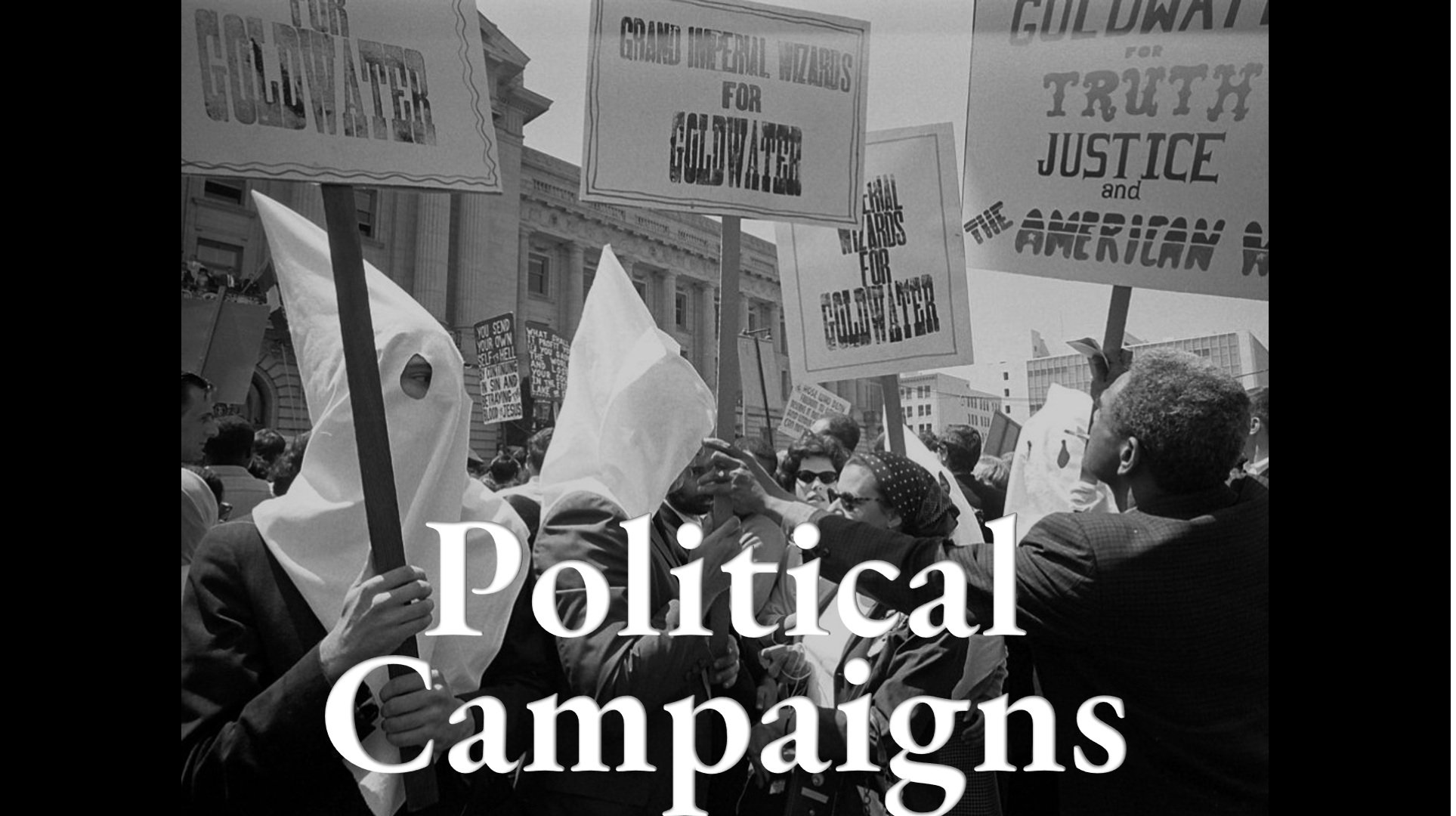



Race: Topics:



Christian Restorative Justice Critique of the Right: Domestic Policy Topics:












Church and Empire: Topics: