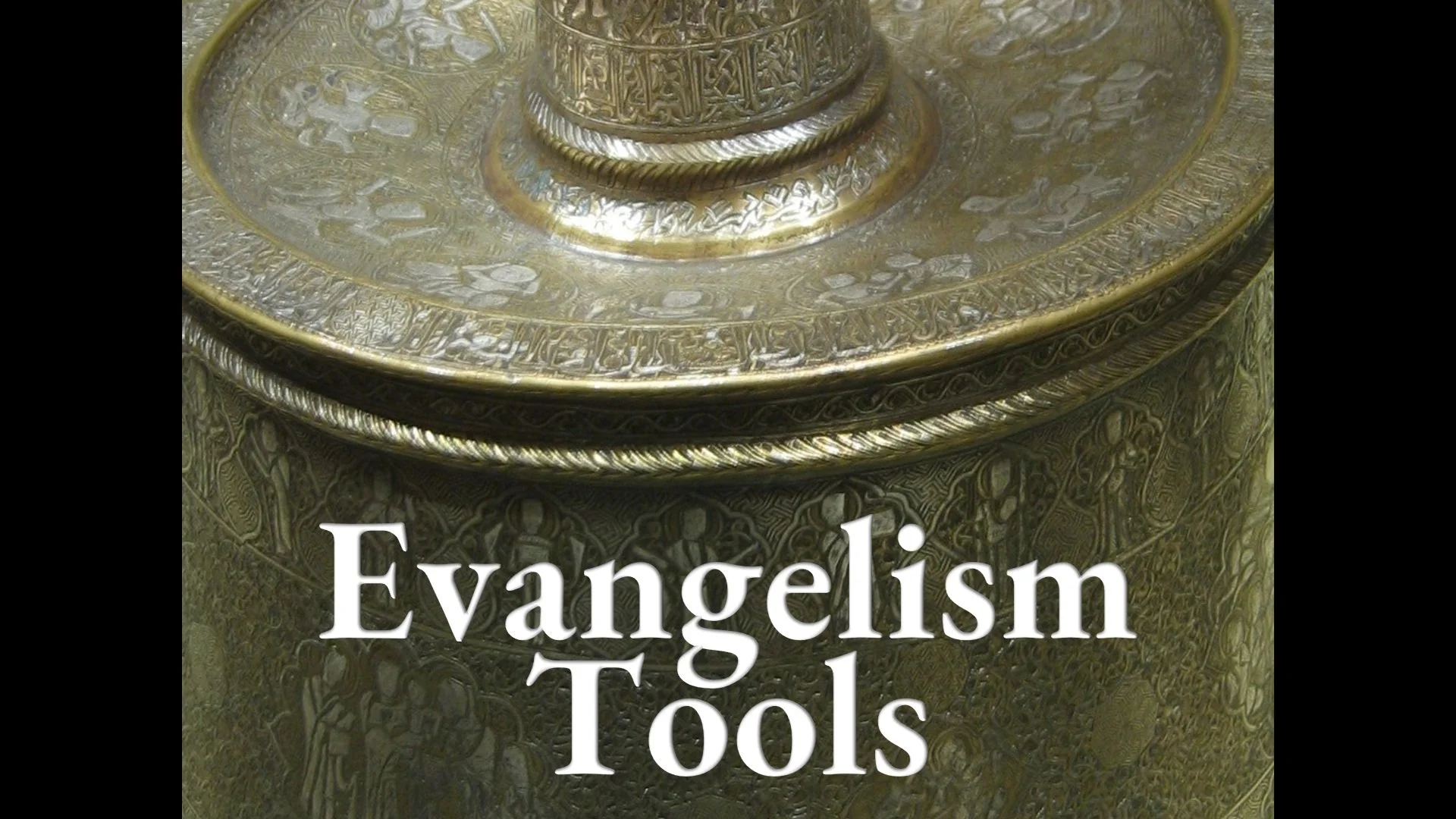
Photograph (top): Copper and silver candlestick holder was made by Dawud ibn Salama al-Mawsili in Syria in 1248/9 under the Muslim Ayyubid dynasty. Photo credit: Fabos | Public Domain, Wikimedia Commons. Read more about Christians under Islamic rule in the Middle East and Christian-Muslim interaction.
Introduction
The candlestick holder above reminds us of the Christian vocation of bearing light to others, even when the larger culture is not Christian. We bring beauty into the service of Jesus. Although the decorative style is typical of Islamic art, there are scenes from the life of Jesus: the Baptism, the Presentation in the Temple, and the Wedding at Cana. Christian art depicting Jesus can enter into Islamic art, which forbids depictions of Mohammed.
This page has trainings and tools to help you share about Jesus, your faith in him, and why Jesus is relevant to people. The trainings and tools are fundamentally rooted in the view that Jesus uniquely healed human nature of the corruption of sin. This is the only way God can be 100% good and beautiful, the only way this God can respond to the problem of human evil, and the only way God can call for our partnership by calling out to the originally good desires He put in us.
Consider these brief video clips below are from our 2019 Conference: Healing Atonement. They illustrate how you can talk about Jesus by using the paradigm of the good-triumphing-over-evil story, and how the hero retells the story of the tragic hero.
Tools
”The Gospel in Chairs” by Neighborhood Church of Dorchester Kids Church, Apr 5, 2026. A nine minute video where the kids presented “the gospel in chairs” to the congregation on Easter Sunday. Using simple folding chairs, “The Gospel in Chairs” shows how God always turns to face us, even when we turn away. Compared with the paradigm where God turns His back on people, Chairs is beautiful and moving. This version uses 2 to 4 chairs at a time to portray multiple characters through the biblical story. See also Brad Jersak, The Gospel in Chairs.
Evangelism Tools for Kids Ministry. This page contains an ever-growing list of resources and activities; some we create, most we curate.

Conversation Stations — Interactive Displays. This page contains artistic and intellectual conversation starters, resizable and scalable for your use. They can be physically printed out and posted up somewhere, or used on a device as a series of graphics.
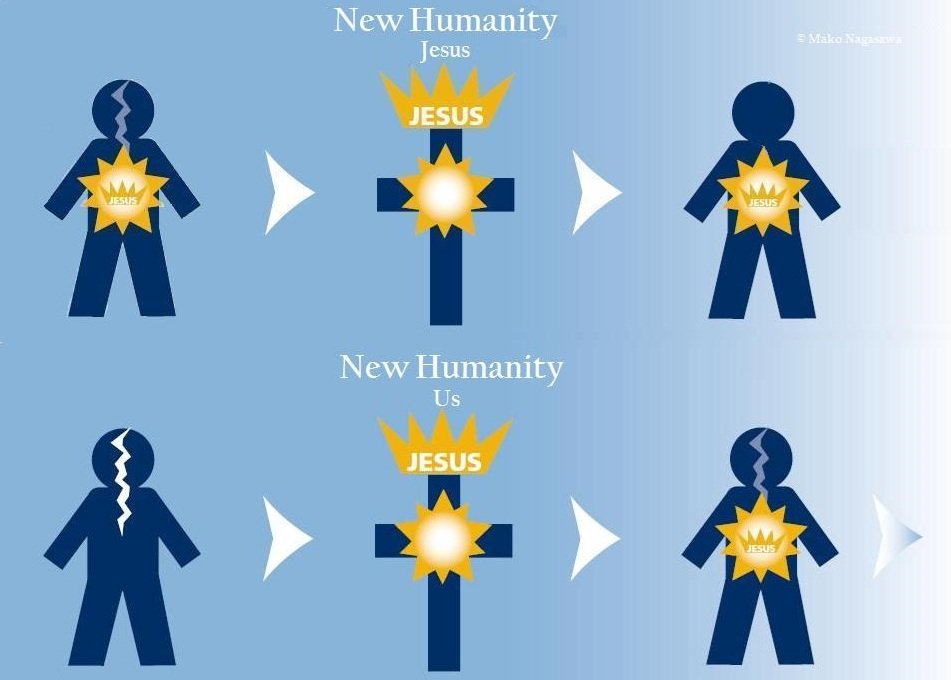
Evangelism Diagram of the New Humanity Paradigm
This is a simple diagram that you can draw on a napkin and explain.
Illustrating Jesus
A series of stories, poems, movie clips, etc. that you can use to illustrate who Jesus is and the nature of his love for us. See the whole series.


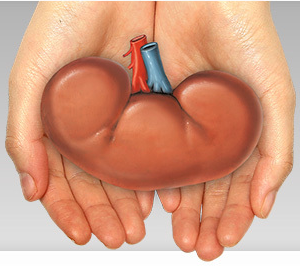



Illustrations of the Atonement a file of illustrations, stories, and analogies that illustrate Jesus healing human nature. Also, Illustrations of Sin as Self-Harm to Human Nature a file of illustrations, stories, and examples of how sin is both self-harming and other-harming. For more on these topics, see our section on Evil and Jesus’ Healing of Human Nature.
Training
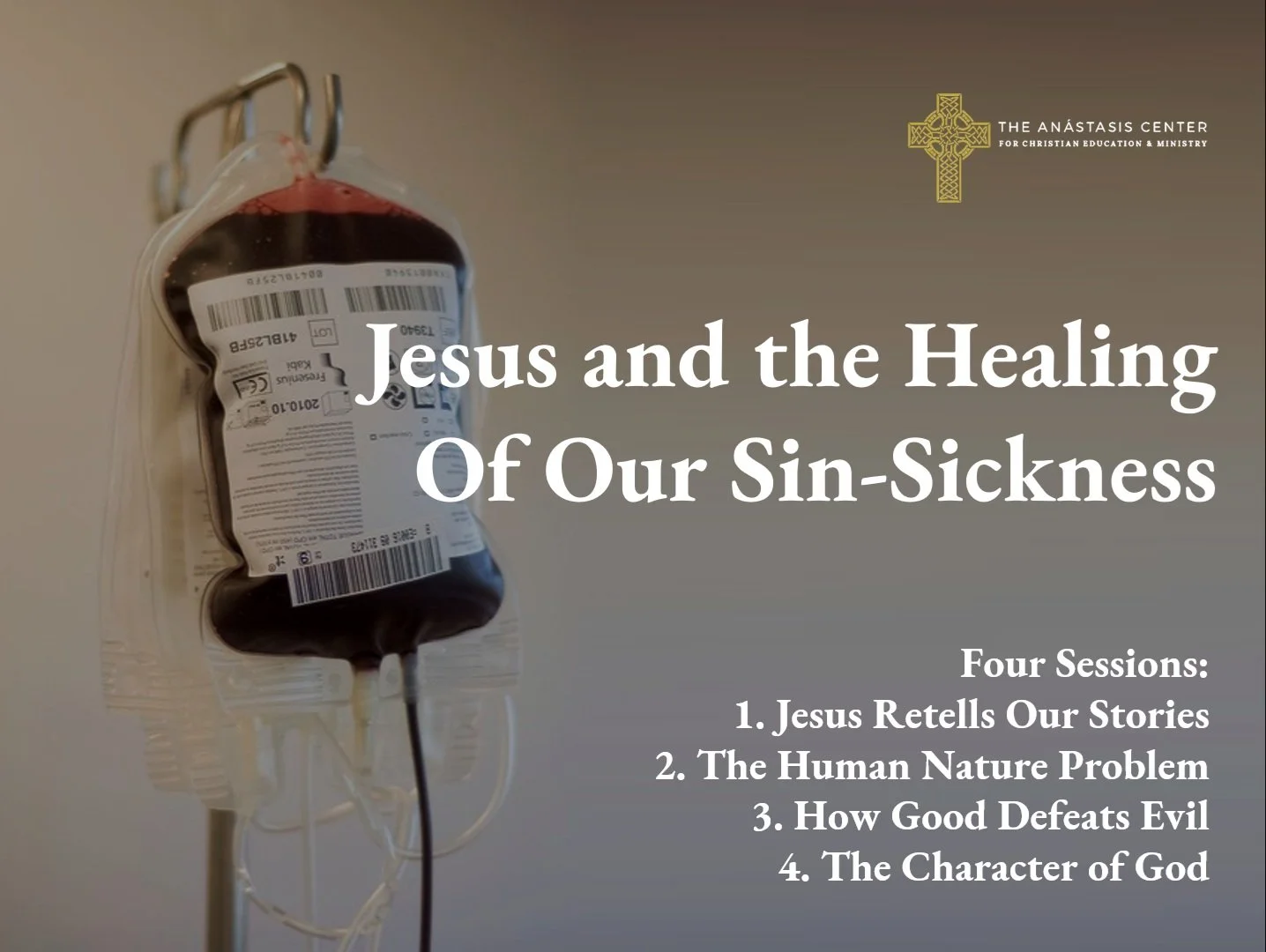
This is a training module in four sessions, and is our Evangelism 101 Class explaining Jesus in the restorative, healing atonement paradigm. You can go through our workbook with an instructor as a Course or self-paced as a Study Guide.
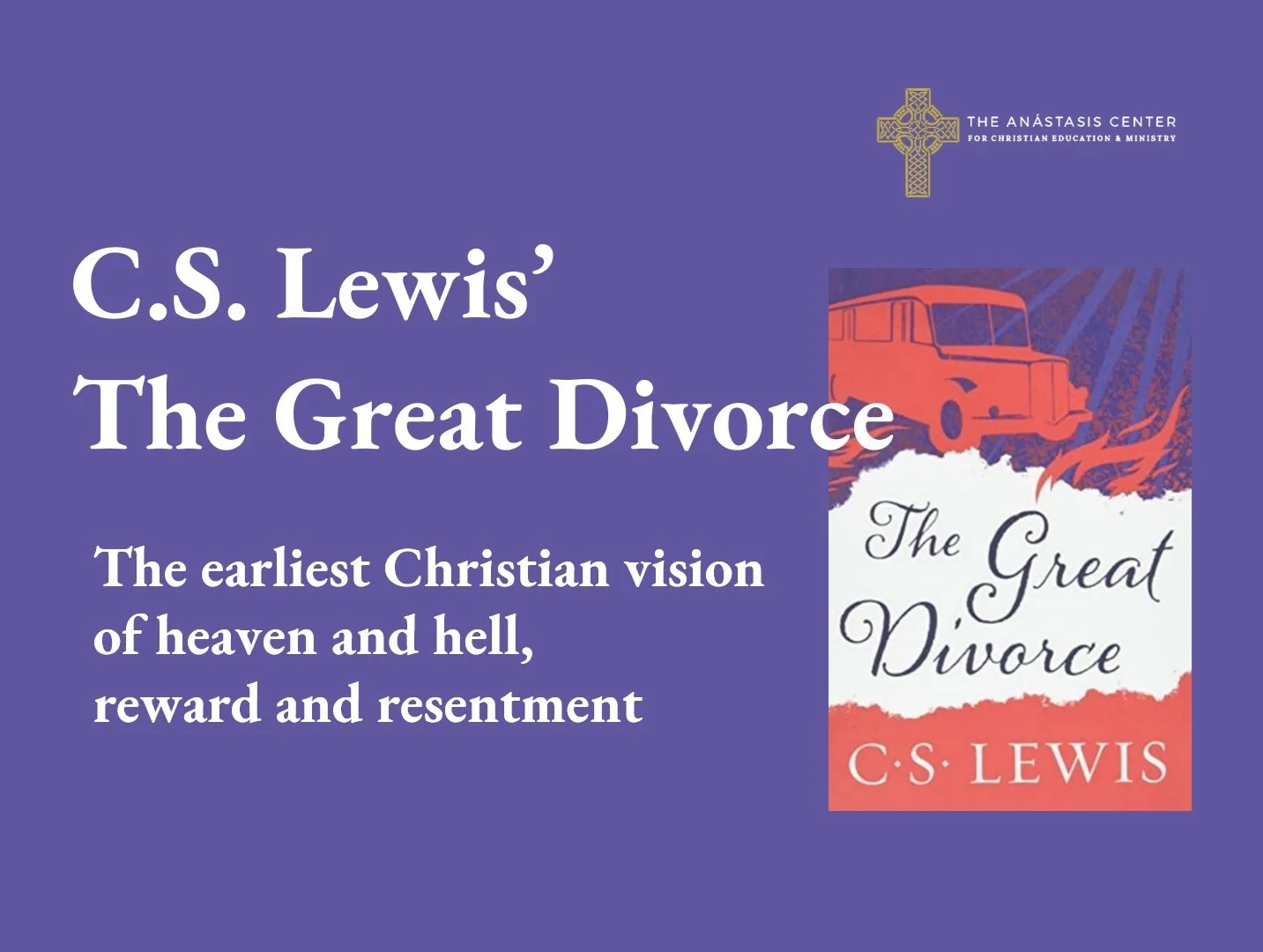
Would people in Hell choose Heaven if given the chance? In the popular modern show The Good Place, people can and do. In C.S. Lewis’ classic portrayal of a bus ride from Hell to Heaven, all but one do not. That may be surprising. See the course. Or see a bit more on the book and its background.
Conversations: Human Nature
A collection of actual conversations we’ve had about human nature. See the whole series.


Conversations: Good and Evil
A collection of actual conversations we’ve had about good and evil. See the whole series.



Conversations: Character of God
A collection of actual conversations we’ve had about the character of God. See the whole series.


Illustrating Jesus
A series of stories, poems, movie clips, etc. that you can use to illustrate who Jesus is and the nature of his love for us. See the whole series.
Jesus Saves Us From What? Integration of Motifs in Evangelism Training
This is a chart comparing the various imagery used to describe “salvation” in Scripture, and their implications for evangelism. What are we saved from? Mortality; demonic influence; purposelessness; personal guilt; hell; etc. But all of these images are actually ways to describe the impact of our human nature being corrupted by sin.
Evangelistic Messages on Video
Are We Post-Postmodern? Back to Personally Struggling Between Good vs. Evil?
The Wicked movies show that we are post-postmodern. Postmodernism is the rejection of Modernism, which is the rejection of Imperial Christianity, which is a rejection of the way of Jesus. Modernism made truth claims that were really power claims in disguise. Postmodernism is the notion that if we undermined truth claims, we would have more equal power. But as we showed in Part 1: Wicked, the Beasts of Revelation, Empire, and Trumpism, we didn't get more equal power. We got authoritarian fascism. Postmodernism led us into Empire. Can post-postmodernism lead us out? Maybe - if we return to the framework of personal struggle between good vs. evil, truth vs. lies, beauty vs. ugliness? Consider how Elphaba says, "We can't let good be just a word. It has to change things." And how the song For Good says, "I do believe I have been changed for the better." If we believe in character growth, not just character shifts or random changes of opinion, then we are post-postmodern: We believe in a personal struggle between good vs. evil.
0:00 Trailer
1:00 Definition of Postmodernism
2:57 Postmodernism in the movies, Into the Woods (2014) and The Dark Knight (2008)
9:00 Argument #1 from Wicked: Postmodern leads to Empire
14:08 Argument #2 from Wicked: Character growth means good vs. evil
20:07 Argument #3 from Wicked: Character growth means truth vs. lies
31:59 Argument #4 from Wicked: Character growth means beauty vs. ugliness
38:00 Argument #5 from Wicked: We are human beings and human becomings
45:03 Summary
Weird Coincidences, Supernatural Events, Funny Feelings - Is That You God?
A message about experiencing unusual things, and how to interpret them as a good God directing our attention to Jesus. People sometimes encounter “thin spaces” -- when the boundary between heaven and earth gets “thin” and we perceive more than we usually do. Ever experience something spiritual and/or supernatural that you wanted to talk about more? Let us know in the comments. Mako Nagasawa gave this message on February 22, 2026 at his church, Neighborhood Church of Dorchester.
Video of a message on Ezekiel 36:22 - 36 given by Mako Nagasawa to Highrock Brookline Church in Brookline, Massachusetts, on March 19, 2023. Message starts at the 36:25 minute mark, and the link will take you there, on YouTube. The message has an abundance of quotations and stories from Jewish sources, which was appropriate given Ezekiel being part of the Hebrew Bible and describing the experience and plight of Israel, and also Brookline, MA having a large Jewish population.
More Evangelistic Messages
-
Where is God in Pain, Especially Mine?
Text and slides of message about God being not behind your pain, with you in your pain, and ahead of your pain pulling you through it. Jesus is central to the experience of pain because he is the one who fully transformed pain so he could bless others in resurrection life, as opposed to passing on the pain to others, since “hurt people hurt people.” For more on this subject, see God’s Goodness Despite Human Suffering.
The Desire for a Happy Ending: Interpreting the Movies, Songs, and Stories Around Us
Slides to a presentation. We like happy ending stories because we long for an actual happy ending for the world. This workshop groups all belief systems into not happy ending vs. happy ending stories; and then internal vs. external villains. Our desire for good to triumph over evil is evidence that we are made in the image of a good God who calls for our partnership to do it. A 10 - 15 minute read.
-
The Desire for a Happy Ending: Interpreting the Movies, Songs, and Stories Around Us
Slides to a presentation. We like happy ending stories because we long for an actual happy ending for the world. This workshop groups all belief systems into not happy ending vs. happy ending stories; and then internal vs. external villains. Our desire for good to triumph over evil is evidence that we are made in the image of a good God who calls for our partnership to do it. A 10 - 15 minute read.
The Healing of Human Nature in Jesus
A 30 minute video of a message given by Mako Nagasawa to students at Boston College, November 15, 2013. This message is rooted in the story of Jesus going through his baptism and wilderness temptation, in Matthew 3:13 - 4:11, reflecting his commitment to fix and fulfill his human nature by going all the way through his faithful life, death, and resurrection, in order to share himself with us by his Spirit.
Slides to a presentation given to the 2022 Reconstruction class. It covers the early Christian understanding of human being, human becoming, and how we co-create with God our human desires and human nature. Hell is the love of God because (1) the united church taught that for over a thousand years; (2) God's Triune nature requires all other activity of God to flow out of His love; (3) literary exegesis of fire shows that it is God's call to purification. This study largely depends on the theme of fire in Scripture; please see the resources on the page God’s Goodness in the Theme of Fire.
Text of a message that reflects on our desire for love, meaning, and justice. Where do these desires come from? Are they connected to the God who reveals Himself in Jesus Christ? This might be called the “problem of goodness,” specifically human goodness. This was the first of three messages at a retreat. The second is Jesus Is God’s New Humanity, from Romans 5:12 - 21. This message explores how Jesus became a “new Adam,” fulfilling the role that God originally set forth for Adam and Eve. The third was God's Victory Over Human Evil in Jesus — the text of a message from Romans 6:1 - 11 about how Jesus’ death and resurrection was the way he triumphed over the corruption of sin in the human nature he took on, and how we die and rise with Jesus to share in that victory. Each message is a 10 - 15 minute read.
Desires, Beliefs, and How We Know Truth
This is a presentation on how desires are a consideration, but not the first, in how we know truth. Our desires suggest that we have both good and evil in us. This does not prove, but agrees with, the biblical story. After all, we are made in the image of God and wounded by sin. Some desires can be taken up and expanded by Jesus; other desires, Jesus reshapes or transforms. Also, belief systems have an implied story and metaphysics, which results in an ethics, and contains an epistemology, which is a way by which we can examine whether it is true. A 15 minute read.
Athanasius as Evangelist: God Haunts and Calls Us Through Our Own Words
A blog post, Jan 22, 2018. A 10 minute read about how an early Christian leader, Athanasius of Alexandria (298 - 373 AD) recognized that language reaches into us; God uses words like “good and evil,” “beauty and ugliness,” “justice and injustice,” and so on, to remind us that there are larger moral categories into which we fit, and within which we are called to grow.
Medical Substitutionary Atonement, Personal Healing, and Social Justice
If Jesus came to solve the problem of human evil, then you can invite people to Jesus, personal healing, and social justice, all at the same time. Jesus confronts the evil in us, evil done to us, and evil institutionalized in the world — and does so by healing the corruption of sin in human nature, first in himself, then in us by his Spirit. These are slides to a presentation given at the Honor-Shame Conference 2017, a gathering of missionaries, scholars, and ministry practitioners. See also a short Youtube video (4.5 min). This presentation is now published as a chapter in Chris Flanders and Werner Mishke, Honor, Shame, and the Gospel: Reframing Our Message and Ministry, by William Carey Publishing, 2020.
The Theology of J.K. Rowling’s Harry Potter
A fun, 40 minute presentation. A fun exploration of J.K. Rowling's reliance on Christian motifs and the biblical plot arc. Why is book 4 the turning point of the 7 books? Why do the two New Testament passages quoted in book 7 summarize the whole story? Why did Harry have to surrender his life?
-
Medical Substitutionary Atonement, Personal Healing, and Social Justice
If Jesus came to solve the problem of human evil, then you can invite people to Jesus, personal healing, and social justice, all at the same time. Jesus confronts the evil in us, evil done to us, and evil institutionalized in the world — and does so by healing the corruption of sin in human nature, first in himself, then in us by his Spirit. These are slides to a presentation given at the Honor-Shame Conference 2017, a gathering of missionaries, scholars, and ministry practitioners. See also a short Youtube video (4.5 min). This presentation is now published as a chapter in Chris Flanders and Werner Mishke, Honor, Shame, and the Gospel: Reframing Our Message and Ministry, by William Carey Publishing, 2020.
An article written by Mako Nagasawa for the HonorShame blog, Nov 11, 2015. Shame is the desire to hide the self. It is rooted in a fear that there is nothing good — or nothing left of the image of God — within me, especially in my motivations, desires, and hopes. Thus, penal substitutionary atonement, which only addresses feelings of guilt, still leaves many people feeling shame, which is dangerous and sometimes toxic. Medical substitutionary atonement, by contrast, rests on the view that God is always upholding us in His image, and thus even our sinful desires have an originally good source. For more on this, see Why Penal Substitution Damages Asian-Americans, a presentation contrasting guilt-oriented and shame-oriented persons, and how they tend to interact with two different atonement theories: penal substitution and medical substitution. See also Does God Sound Like an Asian Parent? What Language of Motivation Does He Use? which is a blog post, and a 20 - 30 minute read.
Beyond "Near" and "Far": Jesus Overcomes Shame and Alienation
Text of a message on Ephesians 2:11 - 22. Paul points out that Jews were “near” and Gentiles were “far” from God, but the critical place and person of importance in Jesus, because Jesus overcame the hostility in human nature against God, others, and self, and wrought peace in his own humanity instead. Thus, being “near” or “far” is less relevant, because we must now participate “in” Christ by his Spirit. A 10 minute read.
Shame and Glory: How Jesus Heals Your Self, Desires, and Emotions
Links to a page with a curriculum for small group discussion or personal reflection. If shame is the desire to hide the self, then glory is the response of God to invest Himself in us and renew His image in us. This material explores humanity as fundamentally good, but corrupted by sin, and not entirely in control of our own desires and emotions. Part of the spiritual and emotional struggle, then, is to know ourselves, know how God sees and loves us, and to receive into ourselves the Spirit of Christ. Peppered with insights from the early Christians, including some “desert fathers and mothers” who were the earliest “spiritual directors.”
More Evangelistic Presentations on Video
Our video series, The Theology of J.R.R. Tolkien’s The Lord of the Rings, is also found in our Arts and Theology section and our YouTube channel, where we put brief descriptions of each video. It’s a great way to engage people who have an appreciation for the stories. Each video has questions for group discussion and/or personal reflection.
Here is a suggestion about how to use these videos to explore and explain Jesus of Nazareth:
Part 7: The Hero’s Journey and Defeat of Evil as Atonement and Salvation addresses the parallels to Jesus, where his hero’s journey and defeat of internal evil is atonement and salvation.
Part 6: The Addictive Power of Evil lays a foundation for appreciating the life of Jesus by explaining how sin is addictive, where we need our human nature to be healed.
Part 5: Human Being and Becoming in Tolkien and Christian Faith lays the further foundation of who we are as human beings, and human becomings, and why our free will is important to a loving and good God.
Part 2: A Good God, Creation, and Fall and Part 3: The Music of the Ainur look at the narrative requirements for the story we live in to be a good-triumphs-over-evil story, using Tolkien’s framework of God as a master musician who wants to lead a symphony.
Part 9: What’s the Right Thing to Do? And How Do We Know? challenges personal preferences and ethical commitments that we have outside of Christian faith, which we often use to criticize and reject Christian faith.
Next Steps: If You Would Like To
Read More background on our approach
Please see the Healing Atonement Study Guide.
Follow A structured introduction to Jesus at your own pace
Please see the Why Jesus? Study Guide
Christian Resources on Hot Topics
These topics involve frequently asked questions. We write about, speak on, and curate links to other people’s resources on, the following topics. Christians have reflected on these topics from earliest times, and we include those links.