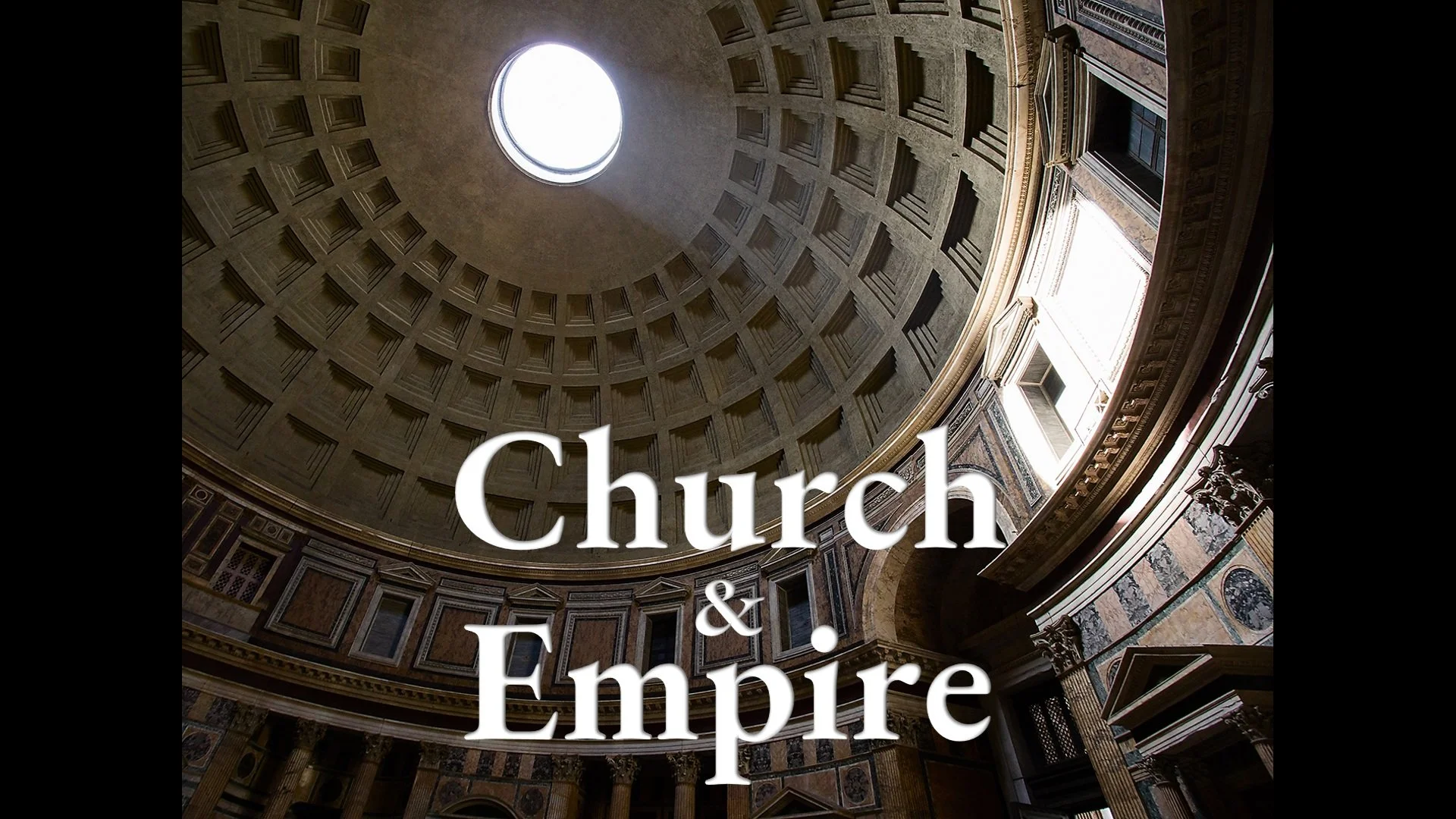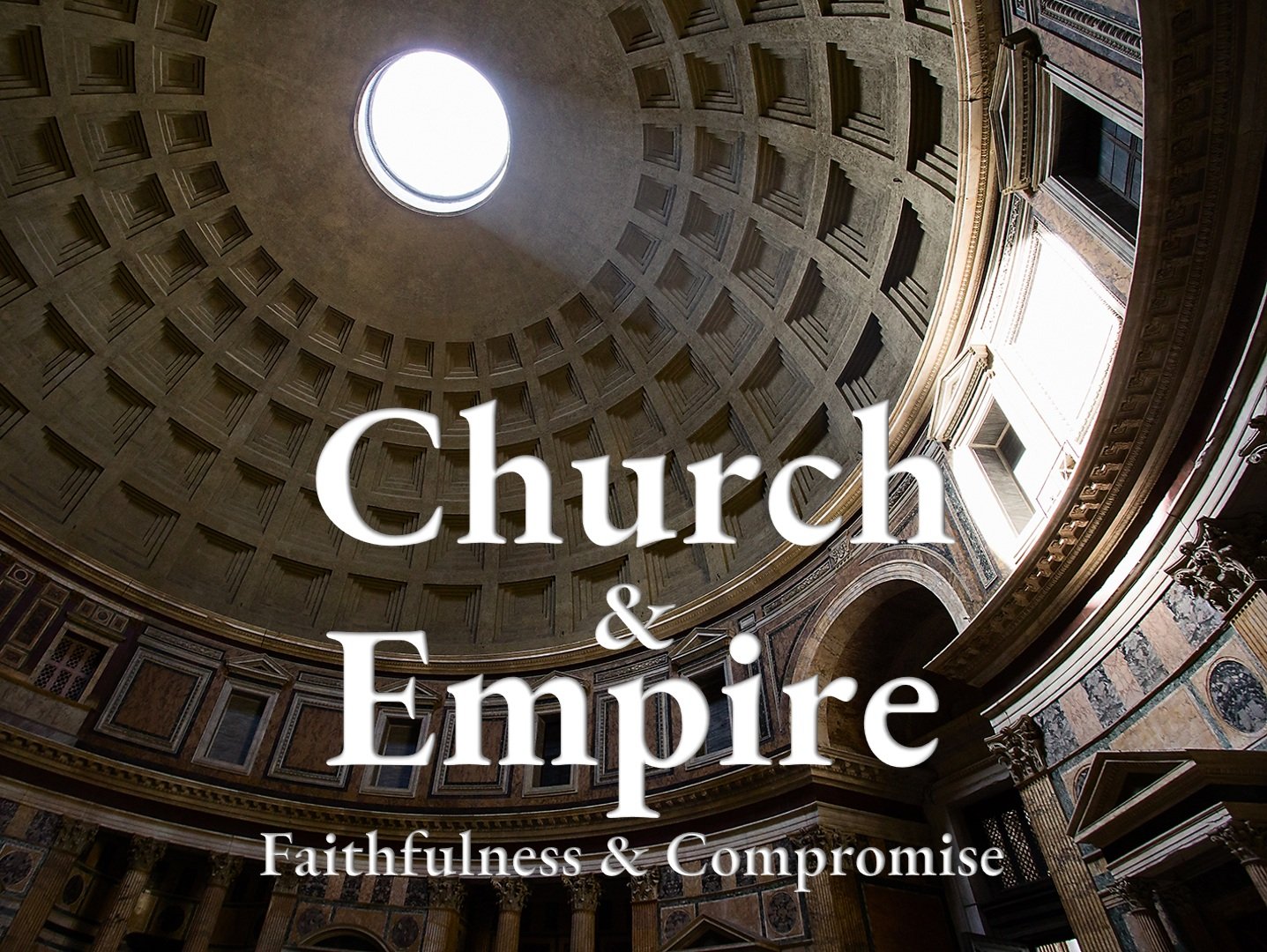
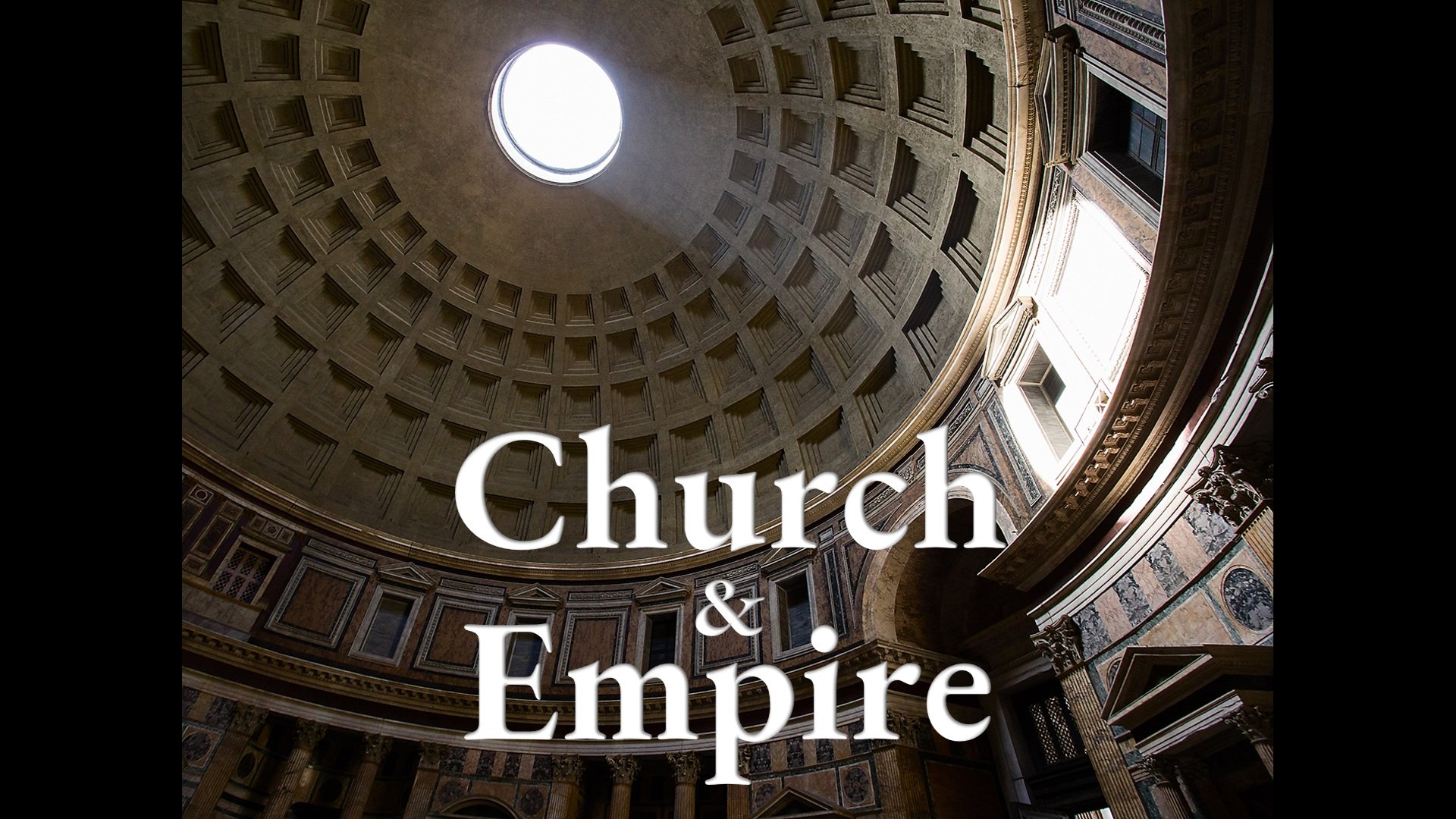
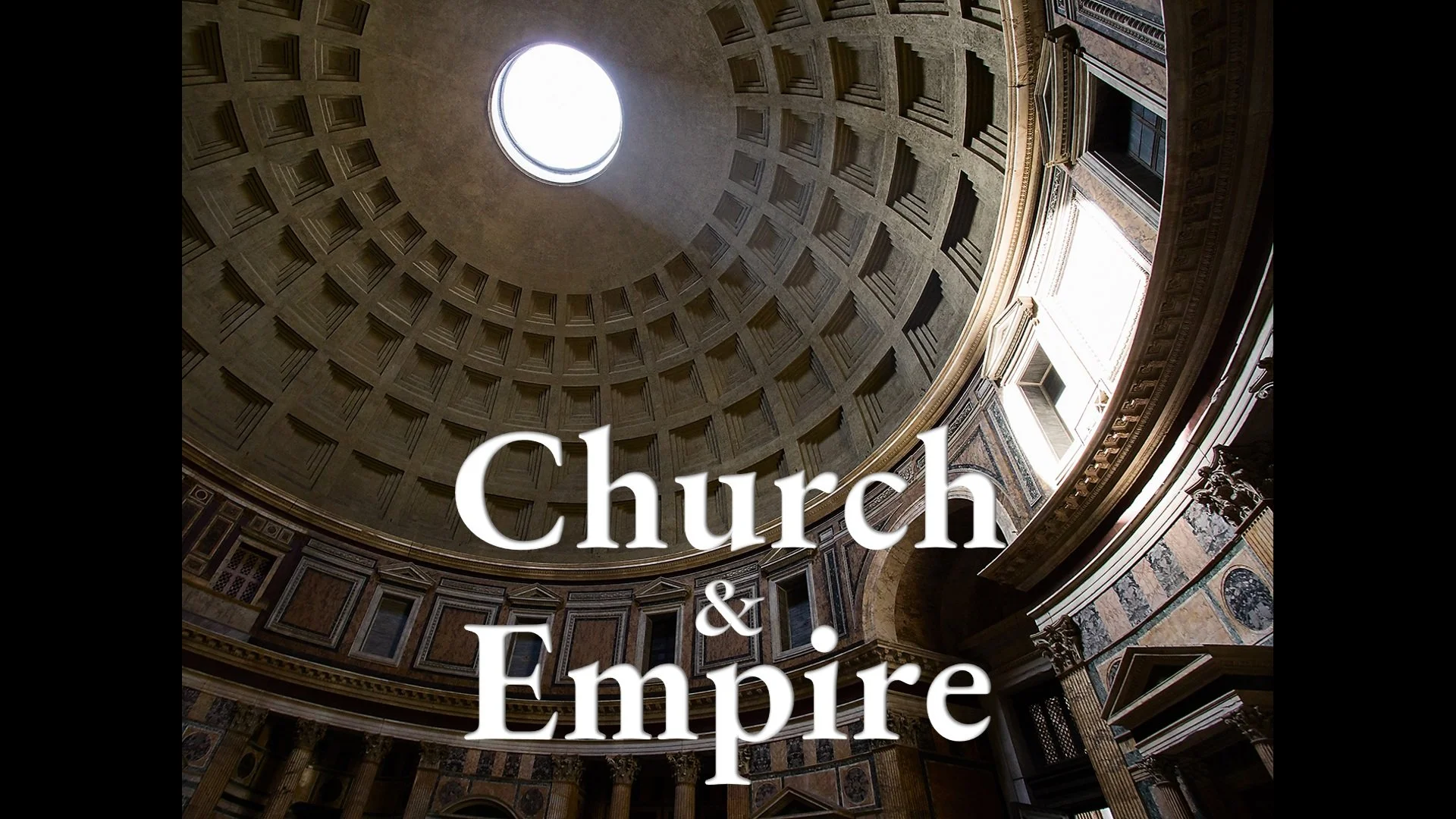
Photograph: The dome and oculus of the Pantheon in Rome, still the largest unreinforced concrete dome in the world. Photo credit: Atibordee Kongprepan | CC2.0, Flickr.
Introduction: Is Empire a Biblical Concern?
Yes, it is. The Pantheon (above) represents the complex interactions between Church and Empire. The Pantheon was originally constructed as a temple to the gods of ancient Rome, completed around 126 AD. In 609 AD, the Christian Emperor Phocas in Constantinople gave the building to Pope Boniface IV, who converted it into the Church of Saint Mary and the Martyrs (it is still in use as a Catholic church). Yet in 663 AD, Emperor Constans II stripped the roof of its bronze tiles and sent them to Constantinople as supply. So, at times the Church seems to reverse pagan practices, but at other times, reinforce them. At times, the Empire seems to benefit the Church, but at other times, plunders the Church for building materials.
Yes, it is. The Roman Empire enforced a religious separation between Christians from Jews. Emperor Hadrian, who presided over the Roman victory over the Jewish revolt at Masada in 135 CE, renamed Judea, Syria Palaestina, and Jerusalem, Aelia Capitolina. He forbade Jews from entering the city, on pain of death. This begged the question: Can Christians also be Jews, and vice versa? Arguably, then, the Roman Empire forged separations between kindred peoples, and ultimately church and synagogue.
This page offers biblical expositions of Empire. The selection of perspectives on church history in this section has been guided by three factors: (1) to demonstrate that Christianity has not been a “white man’s religion”; (2) the study of empire as a recurring motif in Scripture by recent biblical studies scholars; and (3) explorations of biblical Christian ethics on issues of power and polity, to understand how Christians were faithful to Christ or not. Christian relational ethics continues a Christian theological anthropology that began with reflection on the human nature of Jesus, and the human experience of biblical Israel.
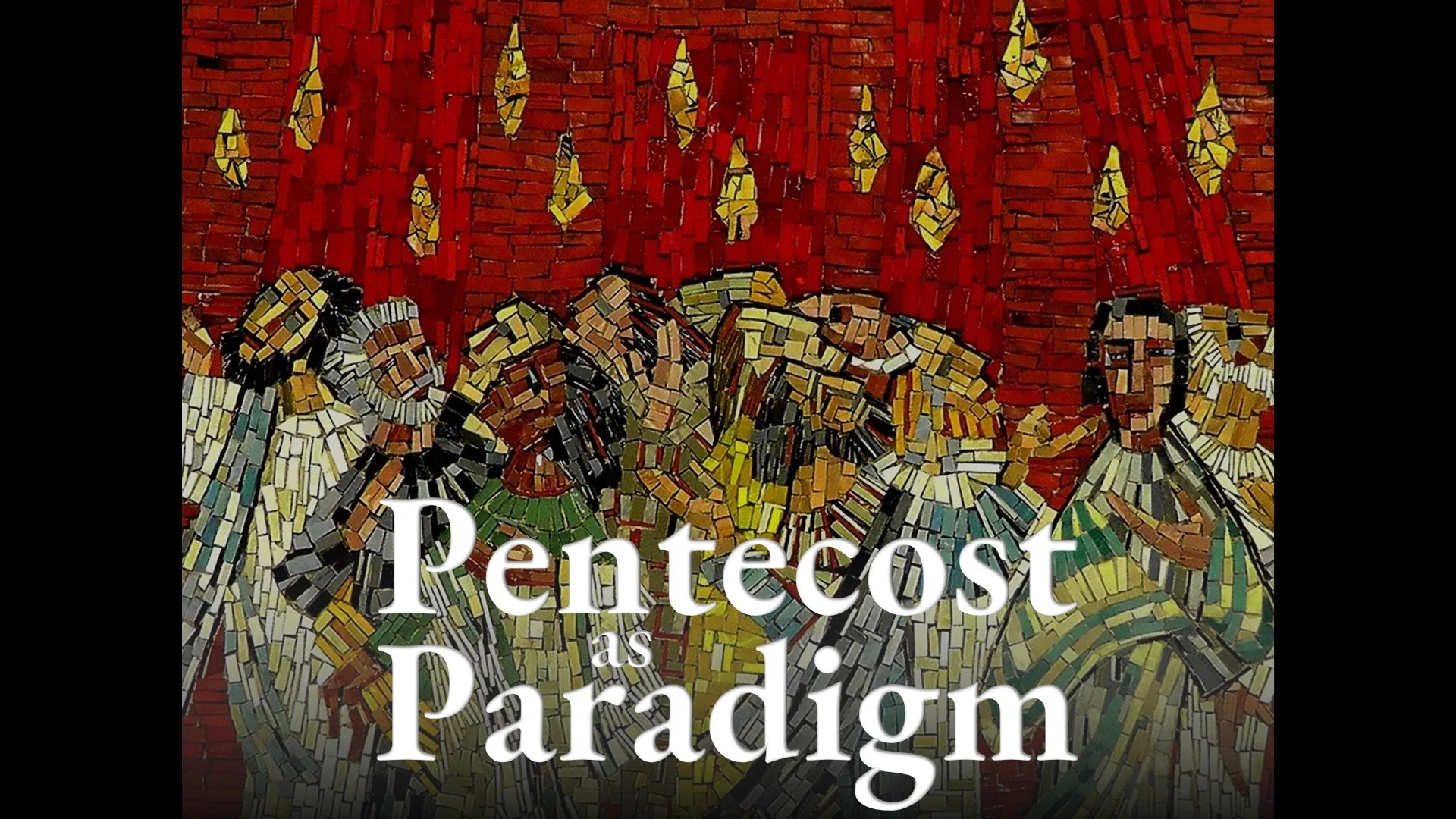
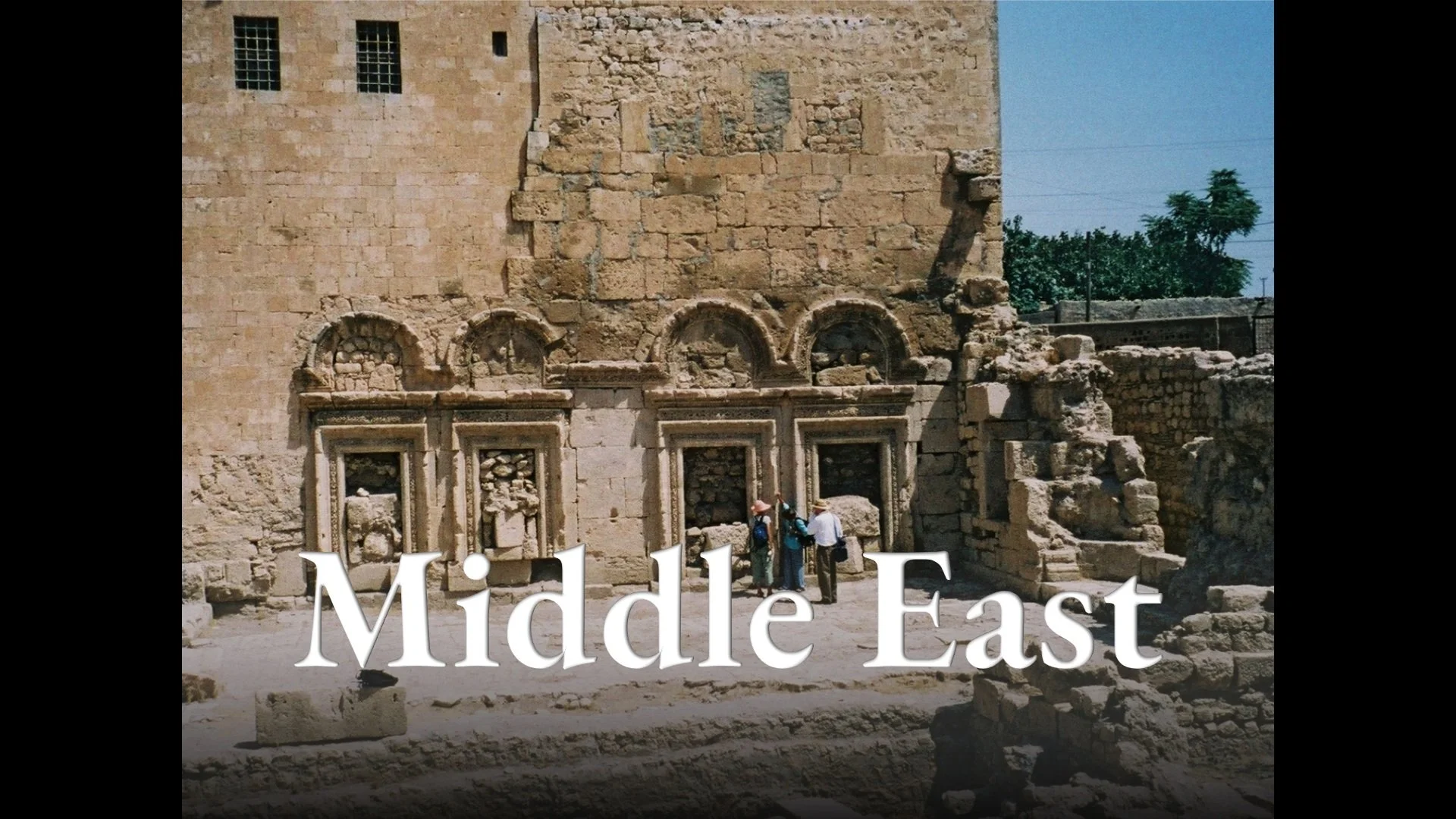
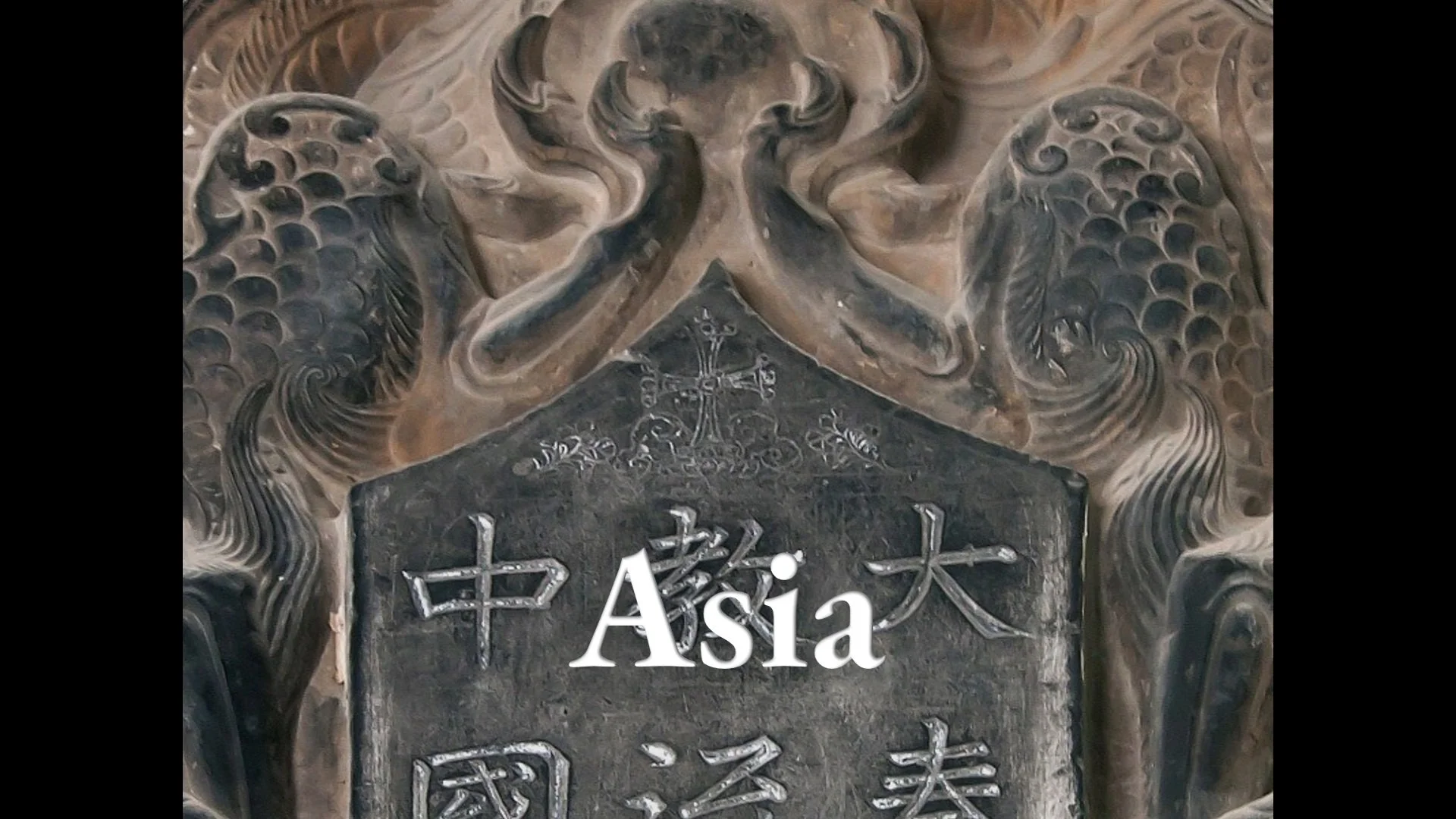
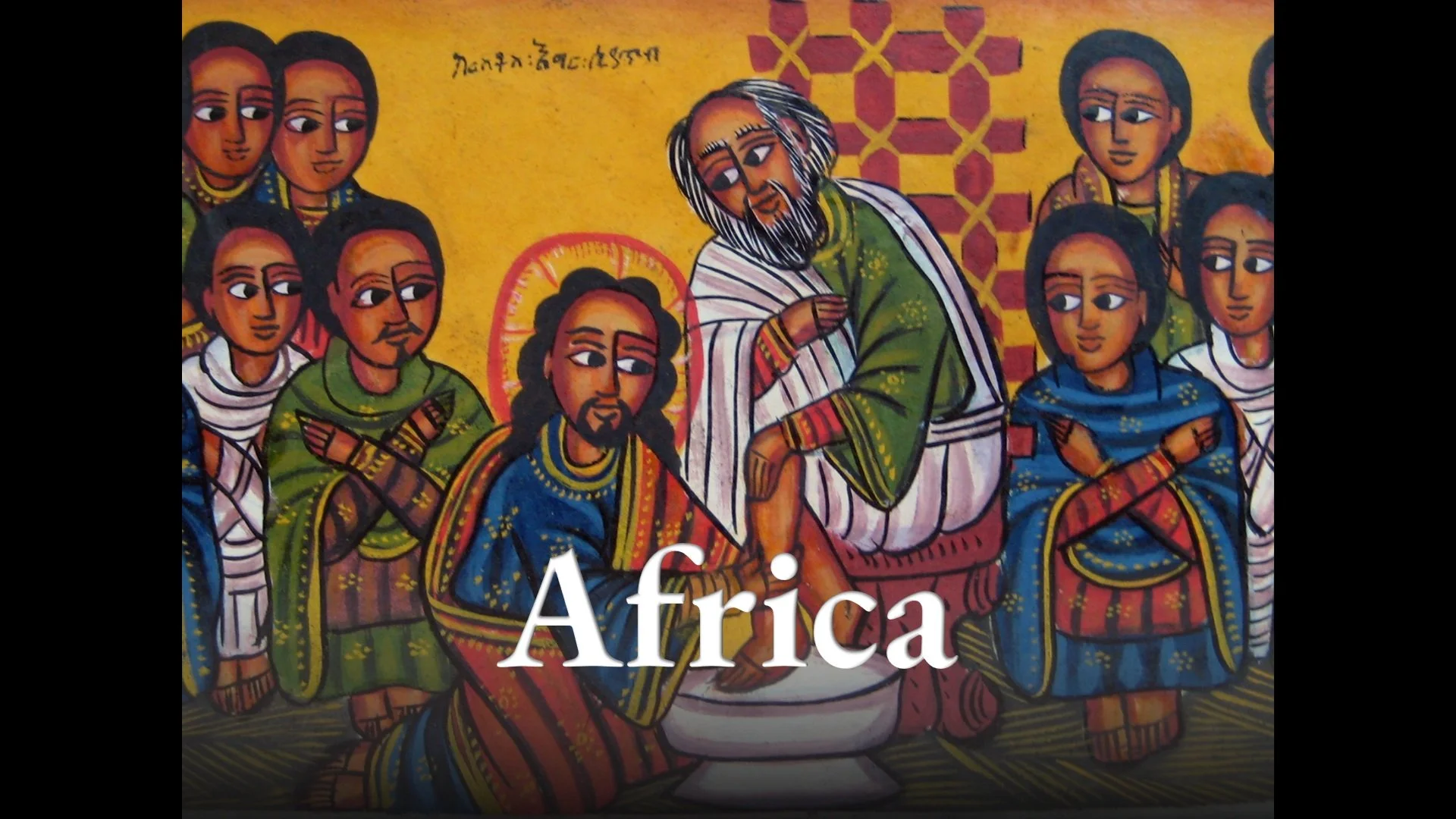
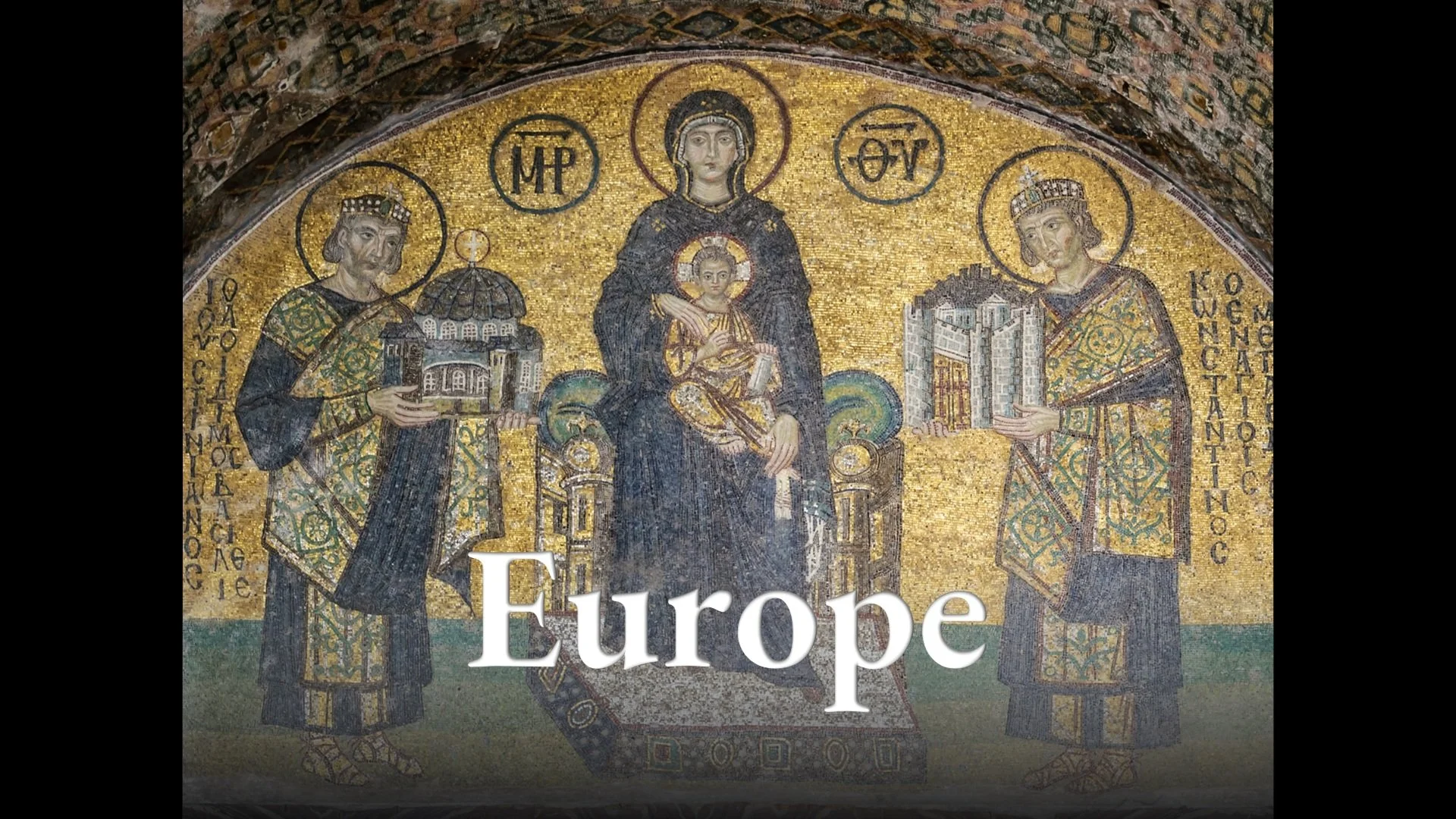
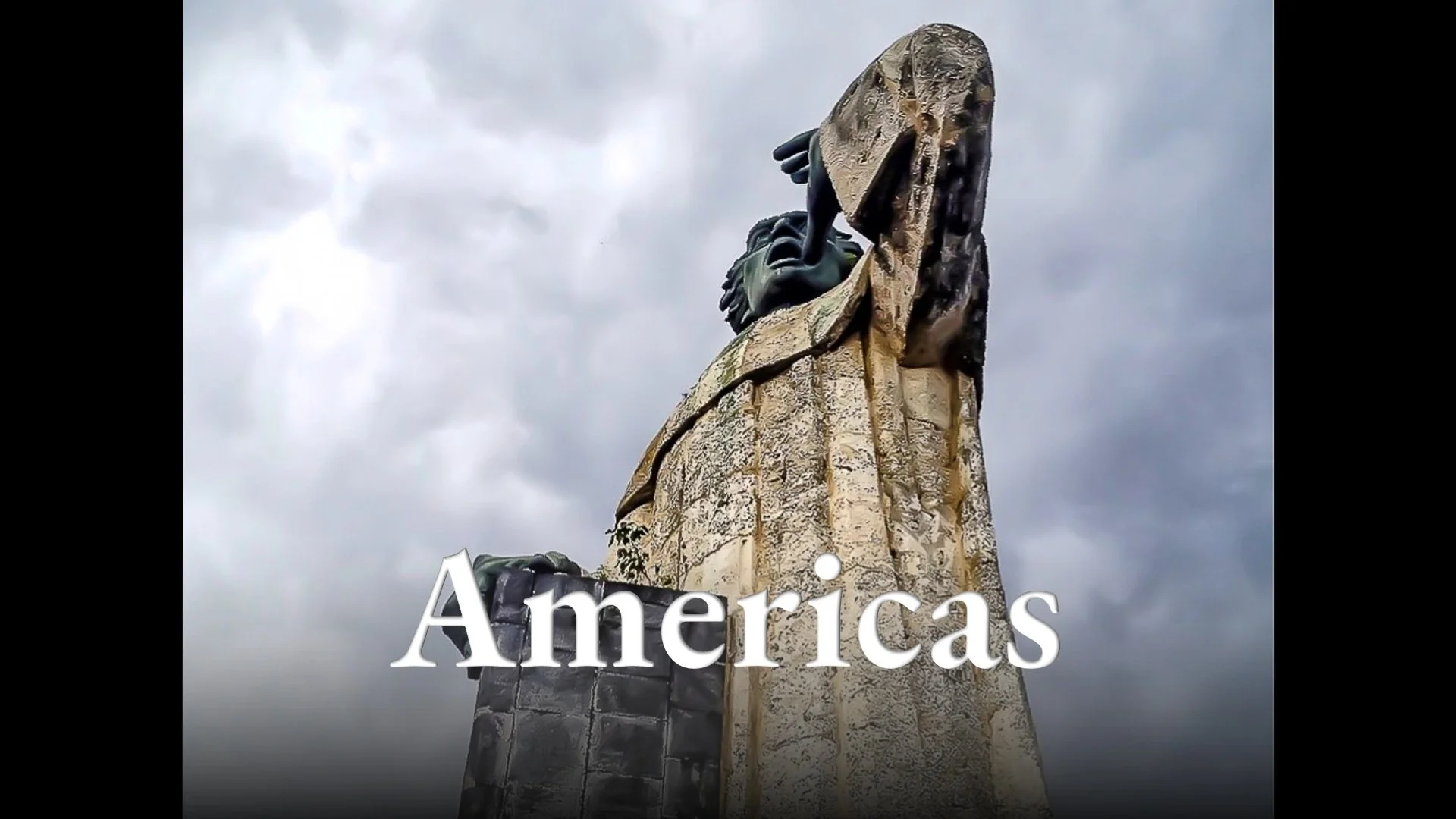
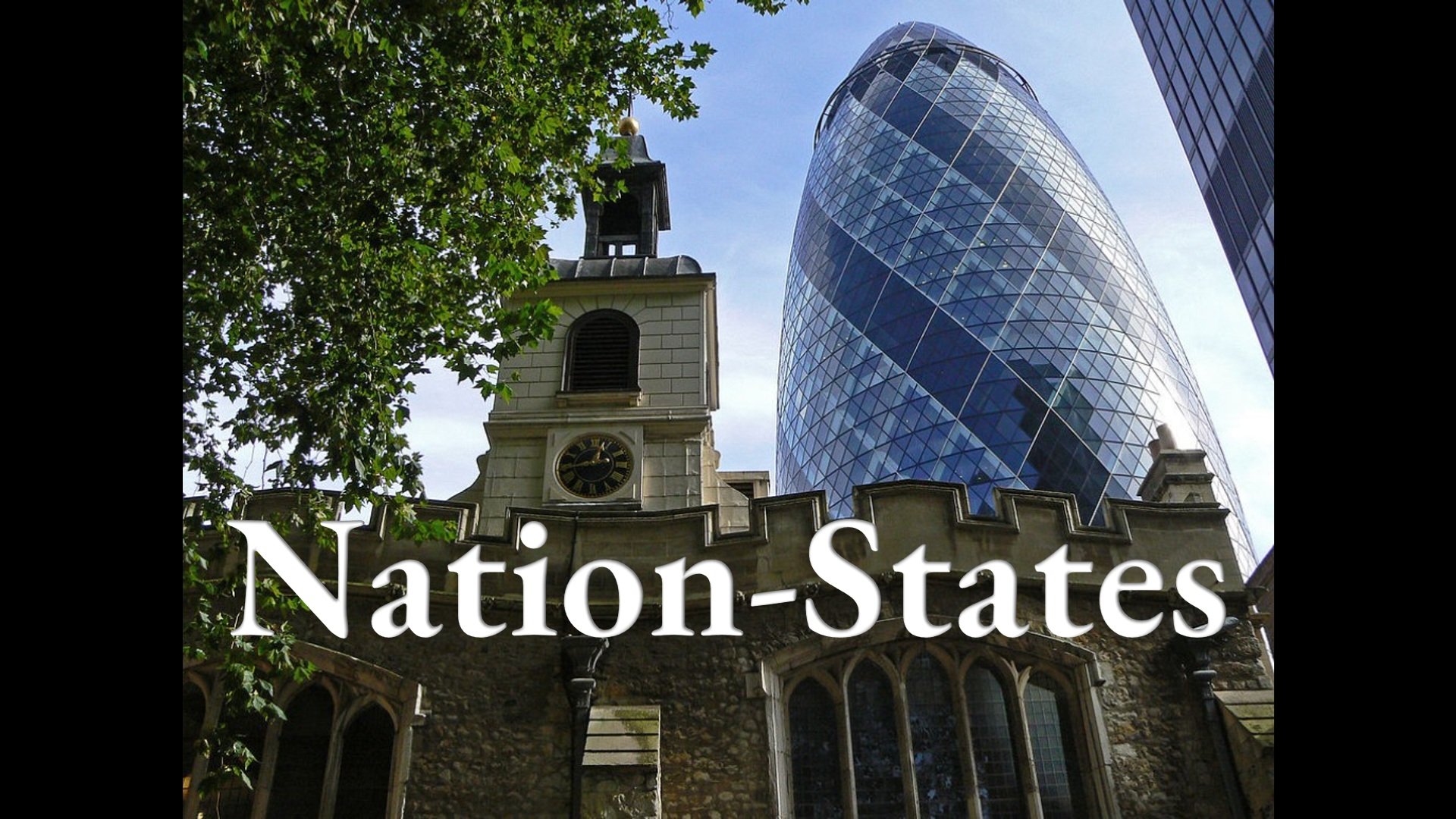
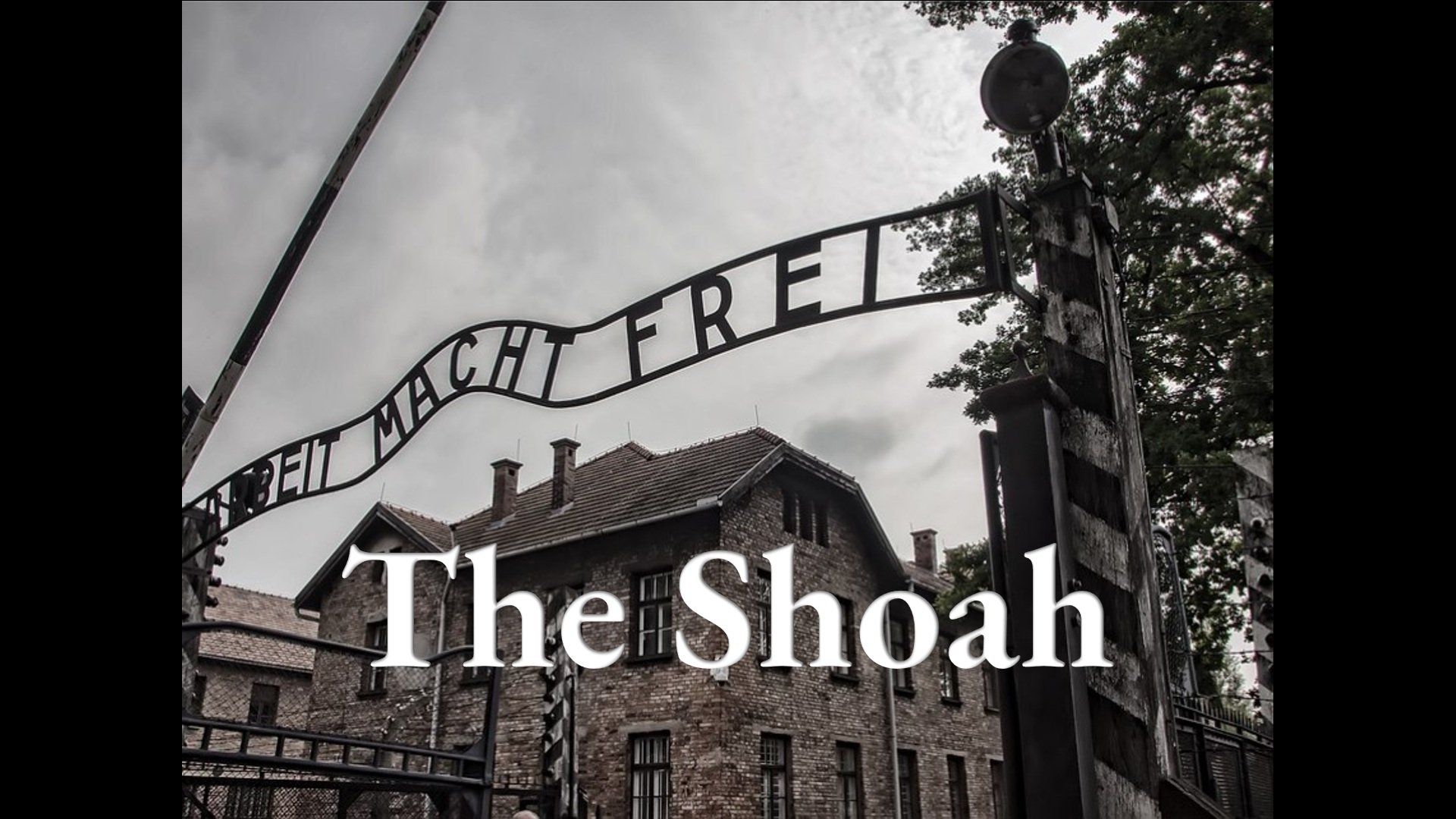
Explore the meaning of Pentecost as Paradigm for Christianity and Cultures, then material by region: Middle East, Asia, Africa, Europe, Americas, then Nation-State, with special attention given to The Shoah of Nazi Germany.
Here are some quick links to pages related to:
Race: White Christian Supremacists and White Christian Anti-Supremacists
Religion: Tribalism: The Chosen People-Racist Synthesis and Authoritarianism: Augustine’s Authoritarian-Theocratic Synthesis to understand the theological roots of this mistake. By contrast, Religious Pluralism and Tolerance to understand Christianity, not secularism, as the foundation for religious pluralism.
Messages and Resources
Get a quick, 4 minute summary of this theme as it appears in the Bible. Dr. Rob Dalrymple, a scholar of the New Testament, especially the Book of Revelation, joined Mako to present this. This short video is part of the first video in our series on the two Wicked movies (2024, 2025), which is listed below.
Many Christians have criticized the two Wicked movies (2024, 2025). But we think the movies help us better understand the Bible and live in our political moment. Consider the biblical themes of Empire, deception, and accusation -- especially in the Book of Revelation, and the first and second beasts of Revelation 13. Consider that the Wicked movies show us something about Trumpism, the scapegoating of vulnerable people to deflect from the administration's own corruption, and the abuse of power.
9:05 Revelation 13: The Dragon and the Two Beasts
12:58 A Quick Survey of the Theme of Empire in the Bible
17:23 Empire and Propaganda in Revelation 13
22:07 The Wizard of Oz and the Scapegoating of the Animals
26:30 Propandist 1: Madame Morrible as Dean of Shiz, then Press Secretary
28:03 Trump's Press Secretaries
33:52 Trump's Attorney General Pam Bondi
36:31 Propandist 2: Nessa and Trump's GOP Congress
37:50 Progandist 3: Glinda
38:10 The Animals, the Dehumanization of Outsiders, and Real Examples
46:10 If You Feel Defensive
See our trailers below:
This video, the tenth in our video series on Tolkien found on our Arts and Theology page and our YouTube channel, looks at lessons about power and leadership from those three contexts. The Scouring of the Shire teaches us why we should resist "plantation capitalism." Rohan has lessons about migration, conflict, treaties, and peace. Gondor sifts its legacy from Numenor: an influential blessing at first, an imperial terror at the end. As usual, we look at Christian theology and ethics: the biblical theme of Empire, the question of women in power and leadership, and land, property, and hospitality.
00:10:36 The Shire
00:25:57 Rohan
00:38:14 Gondor
00:53:25 The Biblical Theme of Empire
01:07:08 Women Ruling and Leading
01:26:45 Land and Property
This video, the first of five videos in our series on Black Panther found on our Arts and Theology page and our YouTube channel, looks at Christian faith and leadership in the golden thread of non-violent resistance movements during the 20th century, including the Civil Rights Movement in the U.S. led by the Black Church. This context is vital for understanding the real choices faced by the Black Panthers in Oakland, California in the 1970s. In Part 2, we also consider look at real-world Ethiopia as the only non-colonized people in Africa, and the mystique and Christian history that it has — and the Ethiopian cross was worn by a tribal elder in the movie, shown just as T’Challa falls over the waterfall at Warrior Falls.
The whole series on Black Panther engages the ethical vision and choices of a chosen but suffering people responding to Empire and imperialism: isolation, imperialism, or involvement. We show how Jesus’ vision of involvement is the only real choice for biblical Israel to share with the world the gift from above, and the only way a good Creator God could bring about a triumph of good over evil.
Video of a message on Daniel 7:1 - 14 given by Mako Nagasawa at Neighborhood Church of Dorchester, Jul 26, 2020. Scripture saw Empires as one result of the Fall. The prophet Daniel saw Empires as misshapen and mixed beasts. In Daniel 7:13 - 14, he saw how the Jewish king would triumph over the beasts. Jesus drew on this Scripture. This message also explains why the U.S. is an Empire in the biblical sense. See also text in pdf format.
Video of a message on Luke 3:12 - 13 given by Mako Nagasawa at Neighborhood Church of Dorchester, Aug 2, 2020. The New Testament understands structural, systemic injustice perfectly well, as shown by Luke 3:12 - 13. Tax collectors were given special instructions about how to resist being tools of imperial exploitation. This message explores the U.S. as founded as a legal gray zone for Christians to exploit people, and escape responsibility for Christian ethics. See also text in pdf format.
Christ vs. Empire, Part 3: Police Terror and Jesus’ Peace (Luke 3:14)
Video of a message given by Mako Nagasawa at Neighborhood Church of Dorchester, Aug 9, 2020. This message explores the fact that the New Testament understands structural, systemic injustice perfectly well, as shown by Luke 3:14. The Roman soldiers performed a police terror function and extorted conquered peoples. We explore the police today in general as a way racial terror has been inflicted on American citizens. See also text in pdf format.
Christ vs. Empire, Part 4: Pentecost vs. White Christian Nationalism (Acts 2:1 - 11)
Video of a message given by Mako Nagasawa at Neighborhood Church of Dorchester, Aug 16, 2020. Pentecost in Acts 2:1 - 11 is the expression of Jesus’ new humanity for all humanity. It is outward, self-giving, missional, and embracing of other languages and cultures. It is not monocultural, monolingual, self-protective, and fearful. Explains why Christian nationalism in the U.S. is such a problem, and wrong. See also text in pdf format.
Christ vs. Empire, Part 5: Defund the Idolatry (Acts 19:18 - 41)
Video of a message given by Mako Nagasawa at Neighborhood Church of Dorchester, Aug 23, 2020. This is a critique of “white Jesus” vs. the real Jesus, and highlights the efforts to defund vs. defend the idolatry in the U.S. It examines the riot at Ephesus in Acts 19:18 - 41 as a parallel to efforts to defend “white Jesus” and white nationalism today. See also text in pdf format.
Christ vs. Empire, Part 6: When the Empire Burns (Revelation 13, 18, 21)
Video of a message given by Mako Nagasawa at Neighborhood Church of Dorchester, Aug 23, 2020. This message explores how Jesus dealt Empire a “fatal wound” as Revelation 13 portrays, but Empire continued on with the support of a fake Christianity that lent its voice and support to Empire. Criticizes Vice President Mike Pence’s substitution of “Old Glory” into Hebrews 12:1 - 2 at the 2020 Republican National Convention. See also text in pdf format.
Christ vs. Empire, Part 7: The Insurrection of January 6, 2021 (1 Samuel 15)
Video of a message given by Mako Nagasawa at Neighborhood Church of Dorchester, January 10, 2021. This message situates the Trump-led insurrection as part of a long history of white supremacist and Christian fascist resistance to legitimate change. Criticizes Trump as a parallel to King Saul, who could not give up the kingship because of his character flaws. See also text in pdf format.
See also the slides to this presentation. Mako Nagasawa guest lectured a class at Gordon-Conwell Theological Seminary in February 2024. Here is the English text of the treatise, which Ambrose wrote in 389. Ambrose uses King Ahab as a case study of greed when he seized Naboth’s vineyard, in 1 Kings 21. This presentation relates to the Genesis creation story because Ambrose structures it around Genesis 1. He says that God gave all humans a shared dominion over the creation. In Christ, God gives us dominion, in principle, over sin. Covetousness, therefore, is a double problem. It interferes with the shared dominion over the creation, and it causes us to fail in exercising proper Christ-centered dominion over the sin in ourselves. Ambrose shows that Ahab became cruel, like the wild dogs that eventually fed off his dead, unburied body, as in 2 Peter 2:19 - 22. Ambrose also draws upon Matthew 6:19 - 24 because of how moths and rust share in our physical goods whereas God shares in the development of our moral goodness. Ambrose draws as well on Luke 12:13 - 34 because the greedy tear down barns/granaries and build bigger ones, finding more pleasure in the rising price of grain, not its widespread availability. A few slides refer to Ambrose’s understanding of the human being as a human becoming, Jesus’ work of atonement as a medical substitution healing human nature for us and inviting us to share in him, the pressing issue being human desires and not deservingness per se, and hell as the love of God but experienced by those who have become addicted to sin.
The Role of Jesus in Revolution and the Pursuit of Justice
This is an evangelistic message that highlights the Christian-led and Christian-influenced non-violent resistance movements throughout the world in the 20th century. They show the connections between Christian faith under empire or empire-like oppression, and its spiritual vitality.
God as the Foundation of Human Rights
Text of a message on Genesis 1 - 11, which was aware of other Ancient Near Eastern and Mediterranean creation stories, and argued against them, as shown by literary analysis. Topics of disagreement include: the value of every human being; the relations of humans and God/gods; the reason for catastrophes like the Flood; the resolution or movement.
Slavery in the New England Colonies: Key Moments and Motivations. An outline (8 pages) of early events in the English Puritan colonization of New England. The outline draws on historical research to show how the Pequot War of 1637 - 38 was motivated, in large part, by financial reasons: The Puritans of Mass Bay Colony needed cheap labor, as the seven year contracts of English indentured servants were expiring, and the seven year monopoly on trade with Old England was expiring as well. New England then participated in the Triangular Trade, transporting enslaved Pequots and bringing back enslaved Africans. This outline focuses on stated motivations by the English settlers and slave traders involved. They drew on biblical language and categories but utterly betrayed Christian faith.
-
Epistle to Diognetus, which dates to the 1st - 2nd century; ch.5 displays the early Christian approach to culture, language, and political identity:
"For the Christians are distinguished from other men neither by country, nor language, nor the customs which they observe. For they neither inhabit cities of their own, nor employ a peculiar form of speech, nor lead a life which is marked out by any singularity. The course of conduct which they follow has not been devised by any speculation or deliberation of inquisitive men; nor do they, like some, proclaim themselves the advocates of any merely human doctrines. But, inhabiting Greek as well as barbarian cities, according as the lot of each of them has determined, and following the customs of the natives in respect to clothing, food, and the rest of their ordinary conduct, they display to us their wonderful and confessedly striking method of life. They dwell in their own countries, but simply as sojourners. As citizens, they share in all things with others, and yet endure all things as if foreigners. Every foreign land is to them as their native country, and every land of their birth as a land of strangers."
Eric Rebillard, Christians and Their Many Identities in Late Antiquity, North Africa, 200 - 450 CE. Cornell University Press | Amazon book, 2012. Rebillard pays close attention to the works of Tertullian and Augustine, as well as other social science research about early Christianity and Late Antiquity, Rebillard argues that Christians practiced a principled cultural diversity. This agrees in principle with the Epistle to Diognetus. The idea of a monolithic “Christianness” gradually narrowed and consolidated around the developing institution of the monarchical bishop.
Walter Wink, Naming the Powers: The Language of Power in the New Testament. Fortress Press | Amazon book, Jan 5, 1984.
Ched Myers, Binding the Strong Man: A Political Reading of Mark’s Story of Jesus. Orbis Press | Amazon book, 1988.
Walter Wink, Engaging the Powers: Discernment and Resistance in a World of Domination. Fortress Press | Amazon book, Jan 5, 1988.
Walter Wink, Unmasking the Powers. Fortress Press | Amazon book, Jan 1, 1992.
Walter Wink, The Powers That Be: Theology for a New Millennium. Fortress Press | Amazon book, Mar 16, 1999.
Oliver O’Donovan and Joan Lockwood O’Donovan, From Irenaeus to Grotius: A Sourcebook in Christian Political Thought. Eerdmans | Amazon book, 1999. and this bibliographic summary by Patristic Evangelism, Readings in Patristic Ethics. Patristic Evangelism blog, date unknown.
Paul Evdokimov, Ages of the Spiritual Life. pdf file, 2002., an Eastern Orthodox perspective, examines monasticism as a movement against the Christianization of the empire; says on p.143, "We must admit that the empire proclaimed Christian was built on the three solutions of Satan, certainly not entirely or consciously, but in mingling light with darkness, God and Caesar, the suggestions of Satan and the refutations of Christ. It was an ambiguous empire, for it distorted the cross... Constantine founded an empire whose greatness and prosperity were more dangerous than the cruelties of Nero."
Richard A. Horsley, Jesus and Empire: The Kingdom of God and the New World Disorder. Fortress Press | Amazon book, Nov 1, 2002.
Brian J. Walsh and Sylvia C. Keesmat, Colossians Remixed: Subverting the Empire. InterVarsity Press Academic | Amazon book, Nov 1, 2002. Walsh and Keesmat offer a creative, socio-rhetorical reading of Paul's letter to the Colossians. It deserves careful consideration, but they do not sufficiently explore Paul's engagement with the Old Testament.
Pui-Lan Kwok, Don H. Compier, and Joerg Rieger, Empire and the Christian Tradition: New Readings of Classical Theologians. Fortress Press | Amazon book, 2007. Kwok, Compier and Rieger give a vital counterpart to biblical exegesis: major theologians from the early church to the present; rereading them is essential.
Richard A. Horsley, In the Shadow of Empire: Reclaiming the Bible as a History of Faithful Resistance. Westminster John Knox Press | Amazon book, Oct 31, 2008.
Richard A. Horsley, Jesus and the Powers: Conflict, Covenant, and the Hope of the Poor. Fortress Press | Amazon book, Oct 1, 2010.
Davina C. Lopez, The Apostle to the Conquered: Reimagining Paul's Mission. Fortress Press | Amazon book, Oct 1, 2010.
Roger Haydon Mitchell, Church, Gospel, and Empire: How the Politics of Sovereignty Impregnated the West. Wipf and Stock | Amazon book, Nov 15, 2011. Mitchell helps us examine European church history and Christian capitulation to state power and violence (Eusebius), military force against outsiders in the Crusades (Pope Innocent III), capital (Bank of England), and energy/biopower.
David Bentley Hart, Is, Ought, and Nature's Laws. First Things, Mar 2013. Hart rejects 'natural law' without revelation. See also Brad Littlejohn, The Late, Great Natural Law Debate. Brad Littlejohn blog, Mar 26, 2013.
Scot McKnight and Joseph B. Modica, Jesus Is Lord, Caesar Is Not: Evaluating Empire in New Testament Studies. InverVarsity Press | Amazon book, Apr 28, 2013. This was a wonderful collection of essays bringing us up to date on what New Testament scholars believe about whether the NT has an anti-imperial message within its pages. In some ways, it is a literature review, and a very helpful and illuminating one at that. Each contributor to the book not only does an even-handed job with the scope s/he was given. On Matthew, or John, etc. they take a position curbing the enthusiasts. That curbing is well taken, given that the scavenger hunt for anti-imperial clues has been on since the ‘post-colonial’ paradigm for studying literature, politics, and the social sciences has dominated the field for a few decades: One is likely to find a bit of ‘empire’ to criticize if you go looking hard enough! This book is a good examination of that. So it is with disappointment that I must disagree with each author and the book as a whole. I do so because their methodology is truncated and incomplete: Each author analyzes the correspondences between images and phrases used by the Roman Empire and also used by the New Testament, like comparing ‘Caesar is Lord’ with ‘Jesus is Lord;’ they say that the New Testament’s deeper concern is not confrontation with empire per se, but correspondence with the Old Testament. With this I wholeheartedly agree. However, they stop there, and that is their methodological problem. The Old Testament itself was anti-imperial, and the New Testament builds upon it. For instance, God scattered Babel, then designed Israel to be an open community with laws that respected human dignity and relations, with strict limits on its land claims. Israel’s Scriptures criticized urbanization, the centralization of power in a kingship, and the Temple cult itself. When the major Gentile empires emerged on the scene, Daniel condemned them as beastly against the visionary backdrop of a new Adam figure who would be enthroned above them. So the correspondence between the New and Old Testaments on this issue is deeper than these New Testament scholars perceive. The New Testament is anti-imperial because the Old Testament is anti-imperial. I have put my position into the mouth of Apollos in my fictionalized account of his time in Ephesus, Character Sketches for 1 Corinthians.
Berry Friesen and John K. Stoner, If Not Empire, What? A Survey of the Bible. Bible and Empire, Jun 1, 2014. A helpful resource, although they tend to downplay historic Christian eschatology to stress this life
Mitri Raheb, Faith in the Face of Empire: The Bible Through Palestinian Eyes. Orbis Books | Amazon book, 2014.
N.T. Wright, Paul’s Trinitarian Theology. Fuller Seminary, 2014. at the 49:25 minute mark, Wright comments on Jesus vs. empire. “The higher your christology, the sharper your conflict with the principalities and powers, and Caesar is pretty senior among that lot. And that’s why the site of a doctrinally conservative Christianity, strongly affirming the divinity of Jesus, but not wanting to see that in any way to do with the confrontation of political authority, that strikes me as wanting to have your cake and eat it.”
Leo G. Perdue and Warren Carter, Israel and Empire: A Postcolonial History of Israel and Early Judaism. Bloomsbury | Amazon page, Jan 2015.
“This open access book, Israel and Empire, introduces students to the history, literature, and theology of the Hebrew Bible and texts of early Judaism, enabling them to read these texts through the lens of postcolonial interpretation. This approach should allow students to recognize not only how cultural and socio-political forces shaped ancient Israel and the worldviews of the early Jews but also the impact of imperialism on modern readings of the Bible.
Perdue and Carter cover a broad sweep of history, from 1300 BCE to 72 CE, including the late Bronze age, Egyptian imperialism, Israel's entrance into Canaan, the Davidic-Solomonic Empire, the Assyrian Empire, the Babylonian Empire, the Persian Empire, the Greek Empire, the Maccabean Empire, and Roman rule. Additionally the authors show how earlier examples of imperialism in the Ancient Near East provide a window through which to see the forces and effects of imperialism in modern history.”Adam Winn, An Introduction to Empire in the New Testament. Society of Biblical Literature Press | Amazon book, Jun 24, 2016. Great contributions from Beth Sheppard, Davina Lopez, Neil Elliot, Warren Carter, and others.
Maria Doerfler and George Kalantzis, editors, Church and Empire. Fortress Press | Amazon page, September 2016. This work is a literary study of representative documents from the move from the margins (part 1), towards the center (part 2), at the heart of the empire (part 3), and trajectories (part 4).
Kristina Stoeckl, Ingeborg Gabriel, and Aristotle Papanikolaou, Political Theologies in Orthodox Christianity: Common Challenges - Divergent Positions. T&T Clark | Amazon book, 2017. This book examines multiple angles from various scholars wrestling with modernity; includes chapters on prophetic, ecclesial, civic, and symphonic positions. A must-read, especially as it comes from the Christian tradition with the longest history.
Ashley M. Purpura, God, Hierarchy, and Power: Orthodox Theologies of Authority from Byzantium. Fordham University Press | Amazon book, 2018. Purpura examines the theology of hierarchy - a technical term not identical with power structures, but which would become intertwined with it, beginning with Dionysius the Areopagite.
Willie James Jennings, Acts: A Theological Commentary. Westminster John Knox Press | Amazon book, May 2017. Jennings argues that Acts is a recapitulation of Genesis, a spreading over the creation to proclaim and enact a lordship.
Walter Scheidel, Escape from Rome: The Failure of Empire and the Road to Prosperity. Princeton University Press | Amazon book, Oct 2019. Scheidel explores the role of Christian faith from the fall of Rome in 476 as one of many factors.
Terence Donaldson, Gentile Christian Identity from Cornelius to Constantine: The Nations, the Parting of the Ways, and Roman Imperial Ideology. Eerdmans | Amazon book, Nov 5, 2020. Donaldson argues that defining “Christian” as “not Jewish” played a pivotal role in the consciousness of Gentile empire building.
-
Shane Claiborne and Chris Haw, Jesus for President: Politics for Ordinary Radicals. Zondervan | Amazon book, Mar 3, 2008. Claiborne and Haw give us a readable introduction to this topic, set in contemporary terms. See summary and discussion of Jesus for President, Chapter 1. Facebook Live discussion, Nov 29, 2020.
Jonathan Councell, The Limits of Control: A Deeper Look into 'The Hobbit’s' Worldview. Charisma News, Dec 31, 2013.
Brian Zahnd, A Farewell to Mars: An Evangelical Pastor’s Journey Towards the Biblical Concept of Peace. David C. Cook Publishing | Amazon book, Jun 1, 2014.
Krishnan Kumar, Were Empires Better Than Nation-States at Managing Diversity? Zocalo Public Square, Mar 16, 2018. Kumar presents a thought-provoking article which makes us ask the question of whether Nation-States are necessarily an improvement over Empires, and why Pentecost-expressions might have been more intuitive in formal Empires rather than formal Nation-States.
Josh, Justification in the Early Church – The Early Perspective on Justification. The Scripture Says, Mar 27, 2016. This is important because “justification” is evidence of belonging to the transnational community of the church.
Christine Mungai, Jesus Was a Victim of Empire. Acknowledging This Should Transform Christianity. Truth Out, Dec 16, 2020. A personal journey centered in Kenya but inspired by the writings of African American theologian Howard Thurman.
Andrew Mark Henry, The Origins of Hebrew. Religion for Breakfast, Apr 14, 2021. Henry details the archaeological evidence and dominant theories of linguistic development. While the timeline might be shifted earlier because it is based on stonework and ceramic materials, and not papyri, the overall impression is important. From an archaeological perspective, Hebrew appears to be a development taking place between 1000 - 587 BCE in a region with many different linguistic and scribal traditions. It may be a blend of those traditions, reinforcing the biblical portrait of Israel being a multi-ethnic faith community that was designed to be a good neighbor to others.
Nilay Saiya, Proof That Political Privilege Is Harmful for Christianity. Christianity Today, May 6, 2021. “Our analysis of 166 nations suggests the biggest threat to Christian vitality is not persecution, affluence, education, or pluralism. It’s state support.”
Gravity Leadership, Matt Jantzen: How the Doctrine of God’s Providence Was Shaped by Whiteness. Gravity Leadership, Jun 8, 2021. Very important observations on how white Christians feel comfortable saying, “God sent that earthquake to Haiti” but trembled with disbelief at European suffering in WWII: “God is dead.”
Richard Wolff, Capitalism Depends on Empire. Democracy at Work, Dec 1, 2021. Economist Richard Wolff is not a Christian per se, but gives very helpful perspective on this subject.
David French, Deconstructing White Evangelical Politics. The French Press | The Dispatch, Dec 12, 2021. “What if white Evangelicals are disproportionately flocking to outlier political positions because of a combination of factors that have little to do with theology at all? Instead, what if they’re shaped by far more mundane (though still quite powerful) cultural forces that ultimately have little to do with faith and then misinterpreting the cultural as theological?”
Michael Barram, Leslie Bowling-Dyer, BK Woodson, Kamal Hasan, and Grace Kaori Suzuki, Advent in Empire. New College Berkeley, Dec 7, 2024. “The Gospels of Matthew and Luke actually portray the birth of Jesus in quite divergent ways, emphasizing different themes that will resonate throughout their accounts of the messiah’s life, death, and resurrection. What the two infancy narratives have in common is an understanding that Jesus was born and lived his life entirely within the context of the world-conquering military and political power of the Roman Empire. Grasping that historical context really matters for those of us today who seek to understand the Gospels as we ourselves read from within a contemporary environment characterized by empire.” Mike Barram presents, pastors respond in reflection, on how the Gospel accounts “can help shape and form our communities of faith for our own contextualized participation in God’s mission in the world today.
Ryan Cooper, Musk and Trump Are Causing the Dumbest Imperial Collapse in History. The American Prospect, Feb 19, 2025. “Empires have fallen before. But it’s never been this purely idiotic.” Not a theological statement per se, but recognizing the U.S. as an empire is important.
Geography by Geoff, Why The US Won't Let Puerto Rico Succeed. Geography by Geoff, Feb 3, 2026. Puerto Rico is an example of why the US is an actual empire: Puerto Ricans cannot vote in federal elections, making them second-class citizens. The island was originally the “fortress of the Caribbean” Sea which guarded naval shipping routes to New Orleans and the entire Mississippi River economy. The Jones Act continues to force Puerto Rico to bear higher prices for shipped goods. The US tax code once incentivized companies to physically locate themselves in Puerto Rico, but no longer.
Church and Empire: Topics:
This page is part of our section on Church and Empire. These resources begin with a biblical exposition of Empire in Church and Empire and the meaning of Pentecost in Pentecost as Paradigm for Christianity and Cultures, then grouped by region: Middle East, Asia, Africa, Europe, Americas, then Nation-State, with special attention given to The Shoah of Nazi Germany.
The Church: Topics:


Sources of Christian Restorative Justice:
This section explores theological reflection on God’s justice as restorative: in Scripture; the Early Church up to John of Damascus; the Orthodox tradition, both Eastern and Oriental; the Roman Catholic tradition; and the Protestant tradition. See our Restorative Justice Tutorial, or go back to the main page of Sources, or the main page of Politics for how to apply this vision.