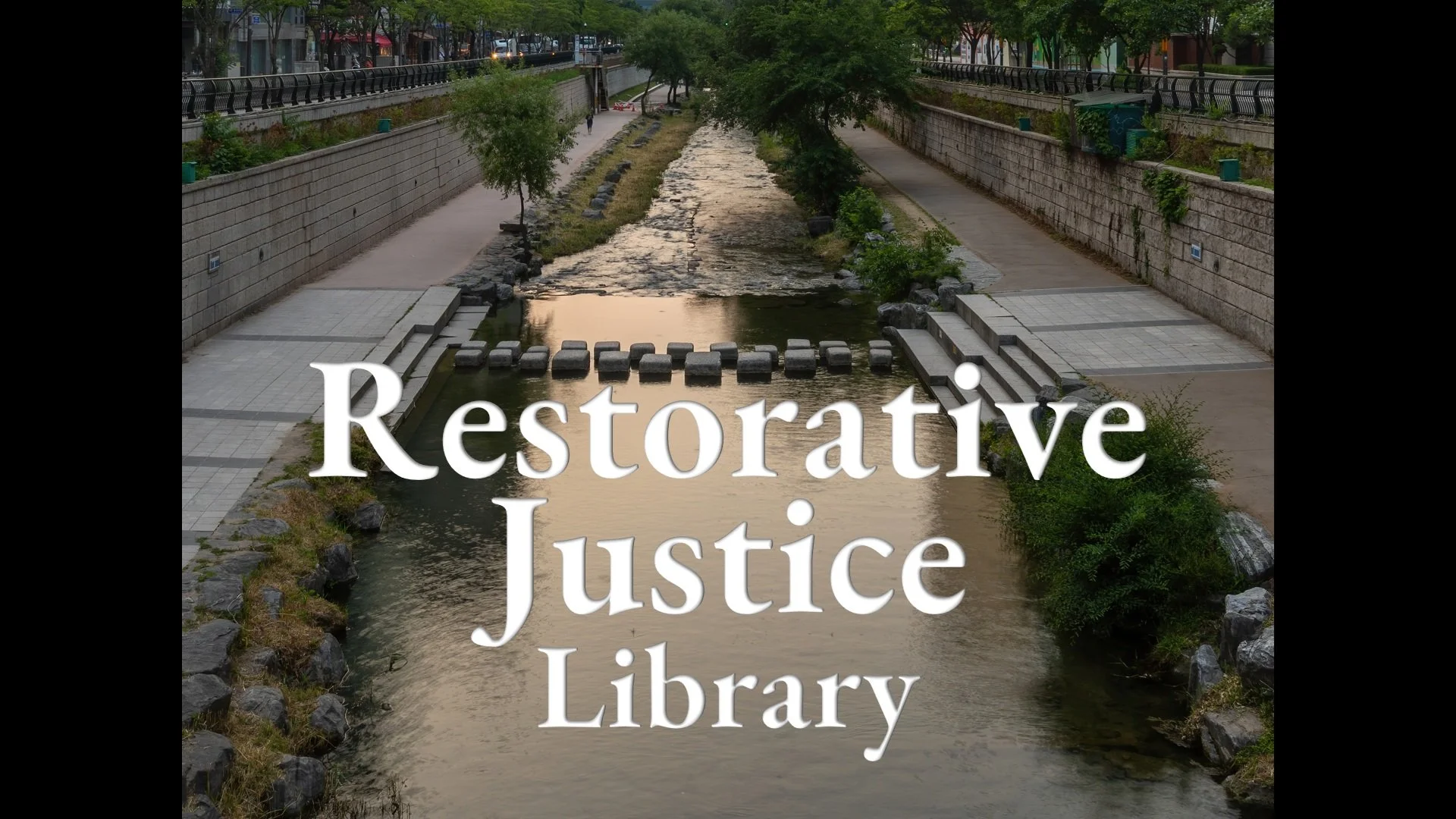
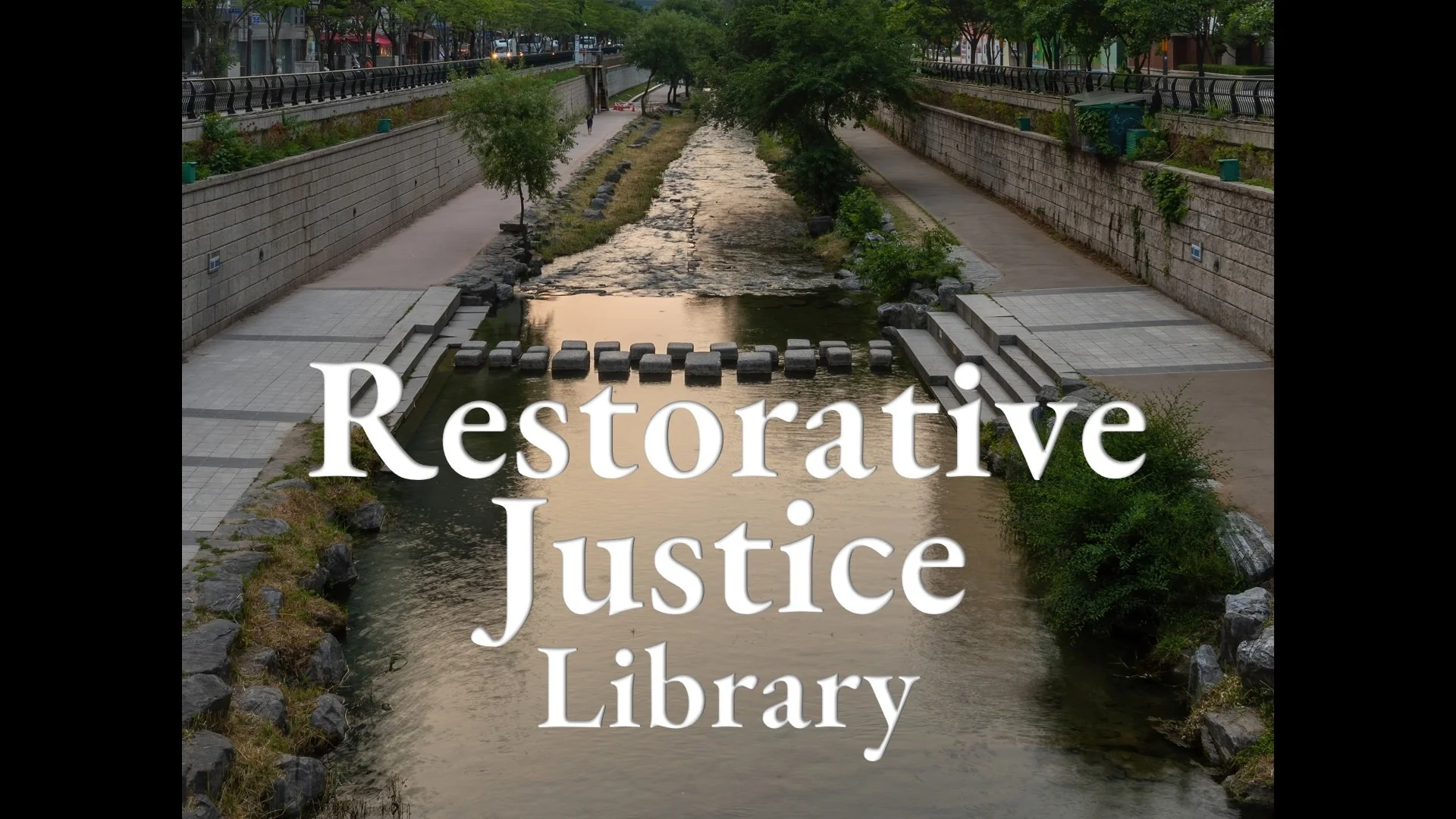
Photograph: The Cheonggyecheon, a nearly 11 kilometer-long stream and public space in downtown Seoul, South Korea: an example of humans responding to God’s desire that we restore our relations with the created world, each other, and ourselves. In 2003, the city government removed an above-ground car expressway and restored the stream. Initially, the Cheonggyecheon restoration project drew significant public criticism, but since its opening in 2005 it has become quite popular among both tourists and residents. Photo credit: Basile Morin, Wikipedia CC-4.0, cropped.
The Restorative Justice Library
Introduction
We believe God’s justice is completely restorative, not retributive. God calls for our partnership to restore all that we have harmed — including the creation, human relationships, and our own hearts, or human nature. Whereas the notion of divine retributive justice says God requires our punishment based on our deeds, the vision of divine restorative justice says God requires our partnership in love based on our desires. Below, you will find a Study Guide, Sources, and Practices of restorative justice in theology and ethics.
Walk Through Our Study Guide
Our Christian Restorative Justice Study Guide steps you through a learning process. Lesson 101 begins with an examination of four principles of justice: meritocratic-retributive, distributive, libertarian, and restorative. Secular thought does not know how to organize these four principles, but Scripture shows that God does have an order. Explore why God’s justice is restorative first and foremost.
See the Sources

Put It Into Practice: Our Classes & Study Guides







Put It Into Practice: Concerns About US Policy and Politics