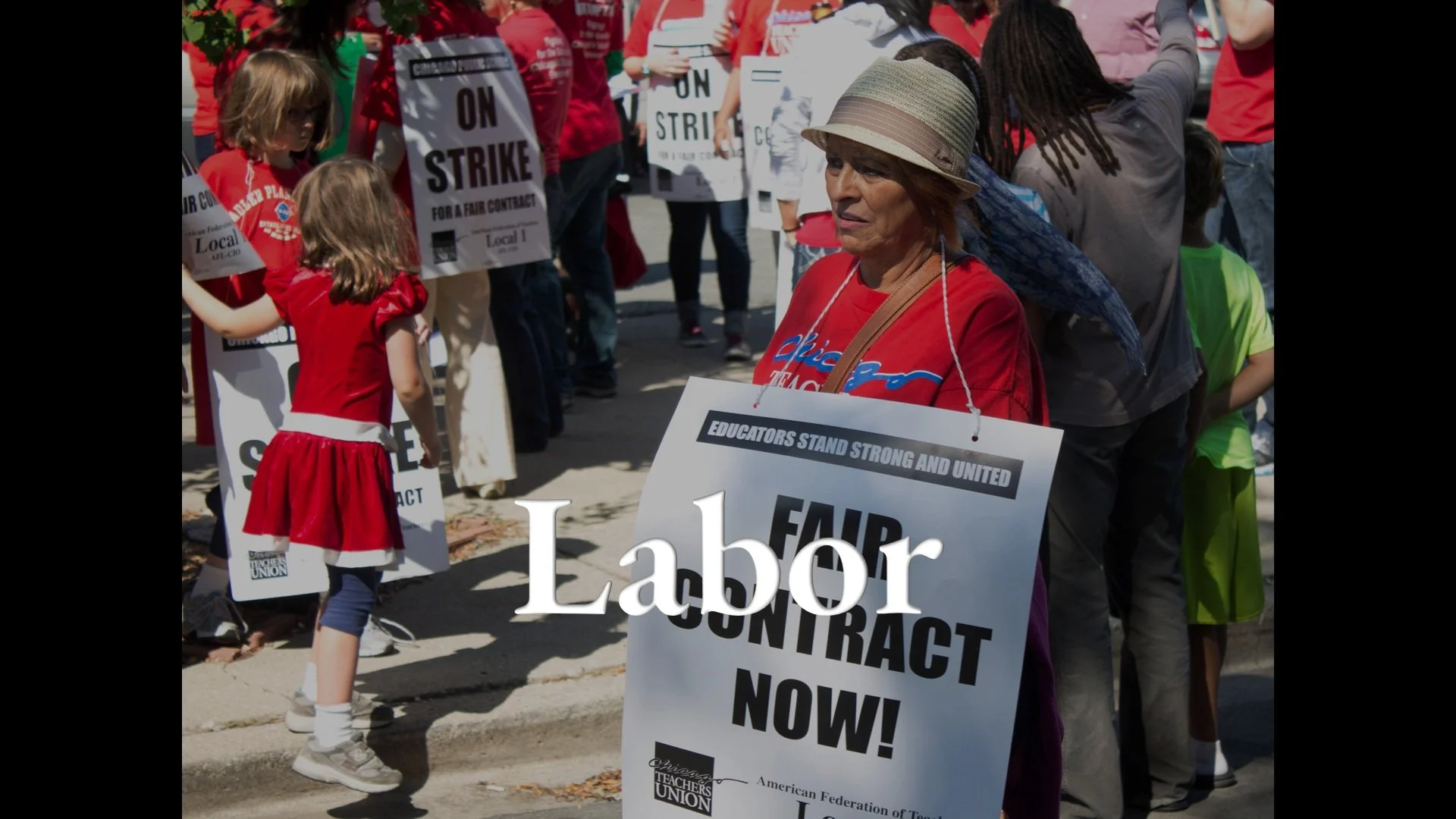
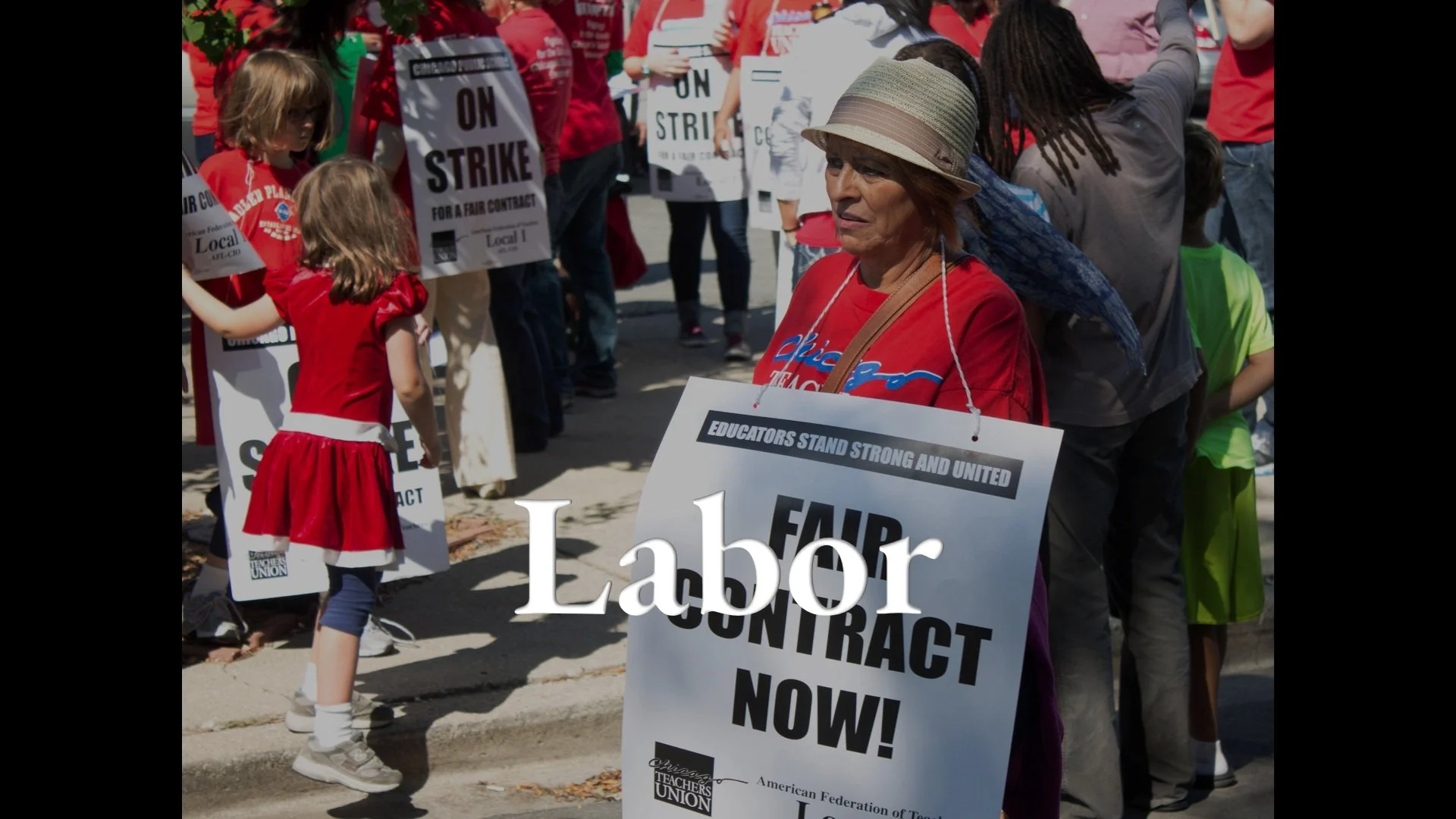
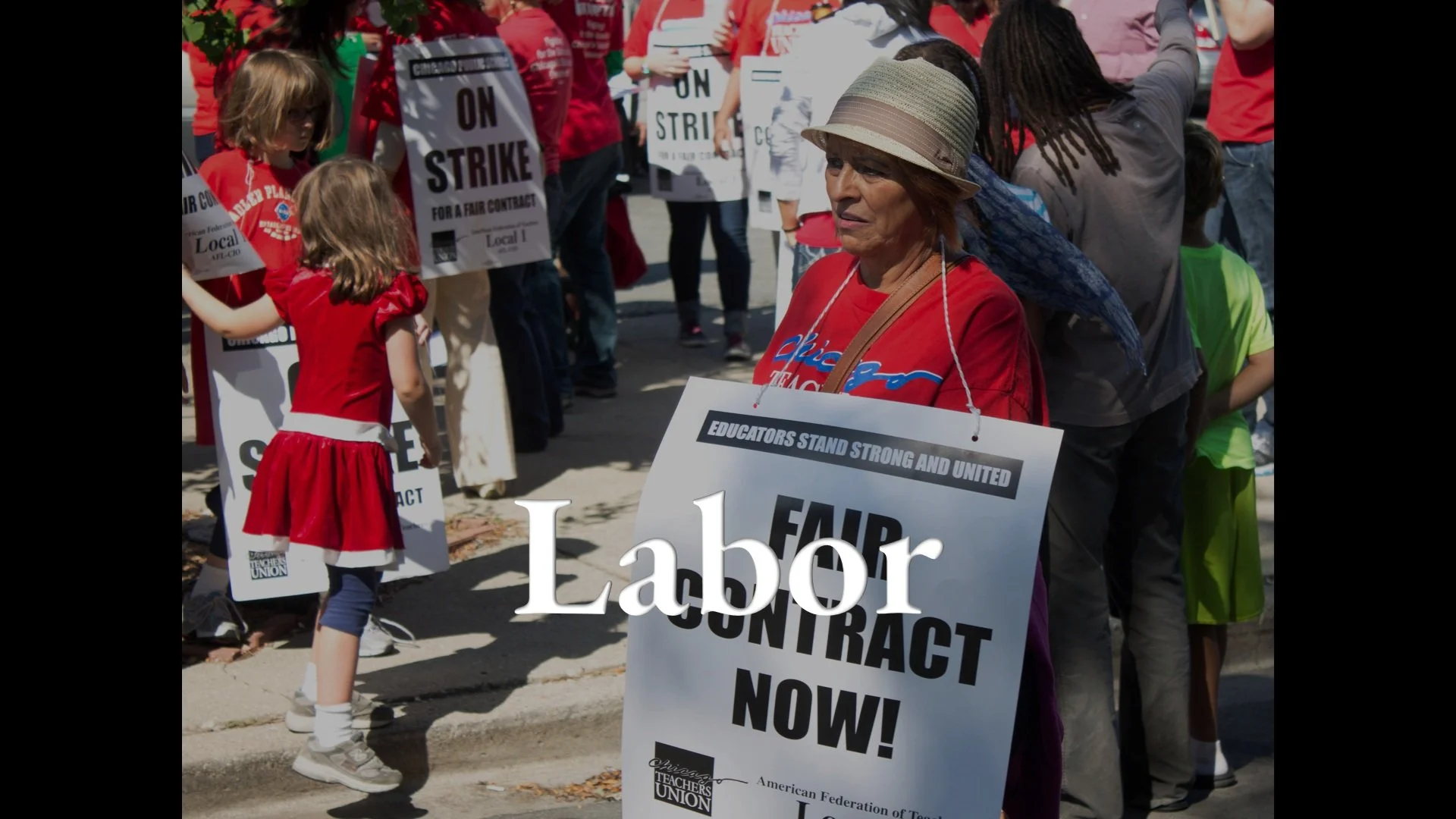
Photograph: Chicago Public School teachers strike, 2012. Photo credit: Brad Perkins | CC2.0, Wikimedia Commons.
Introduction
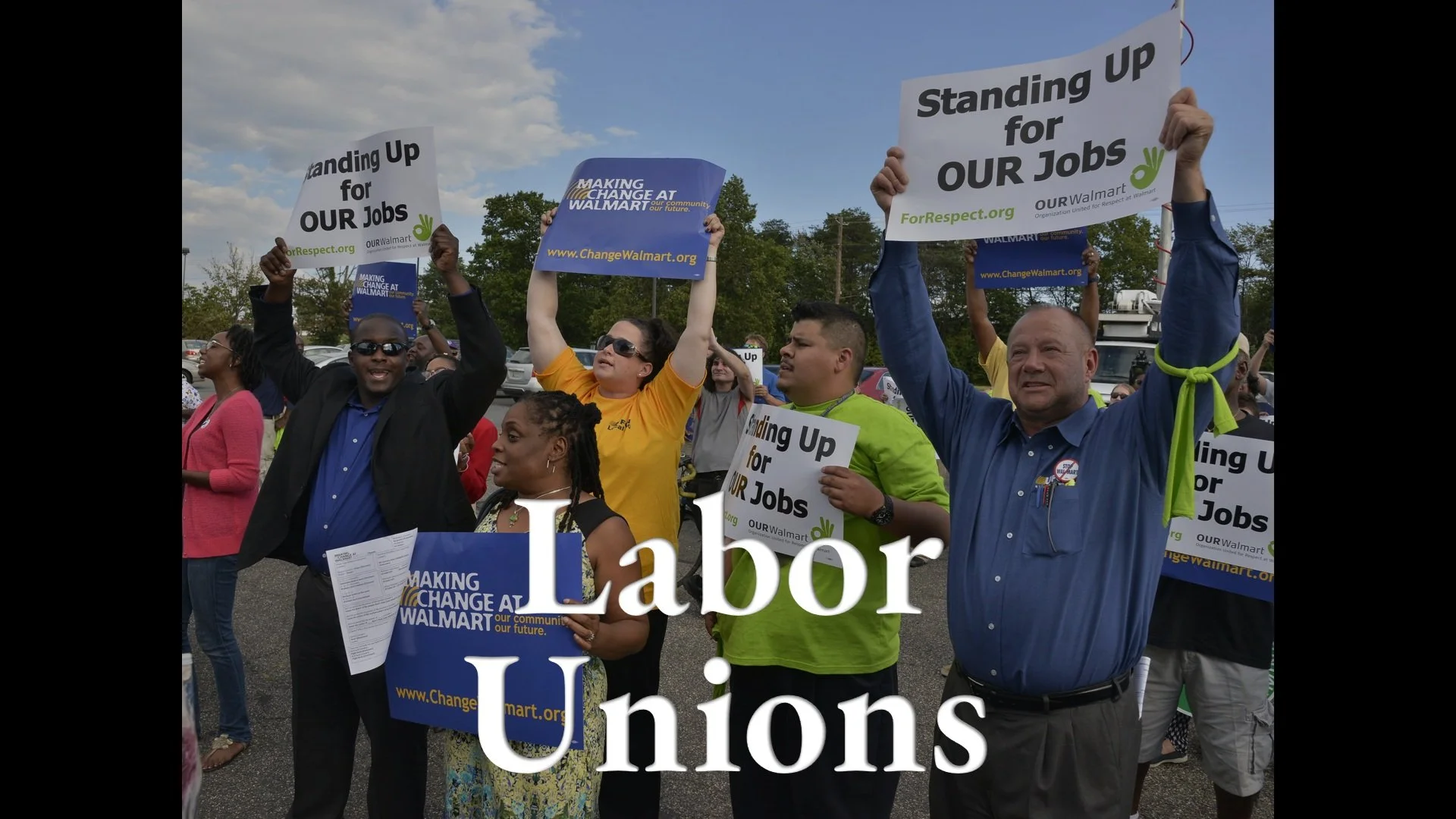
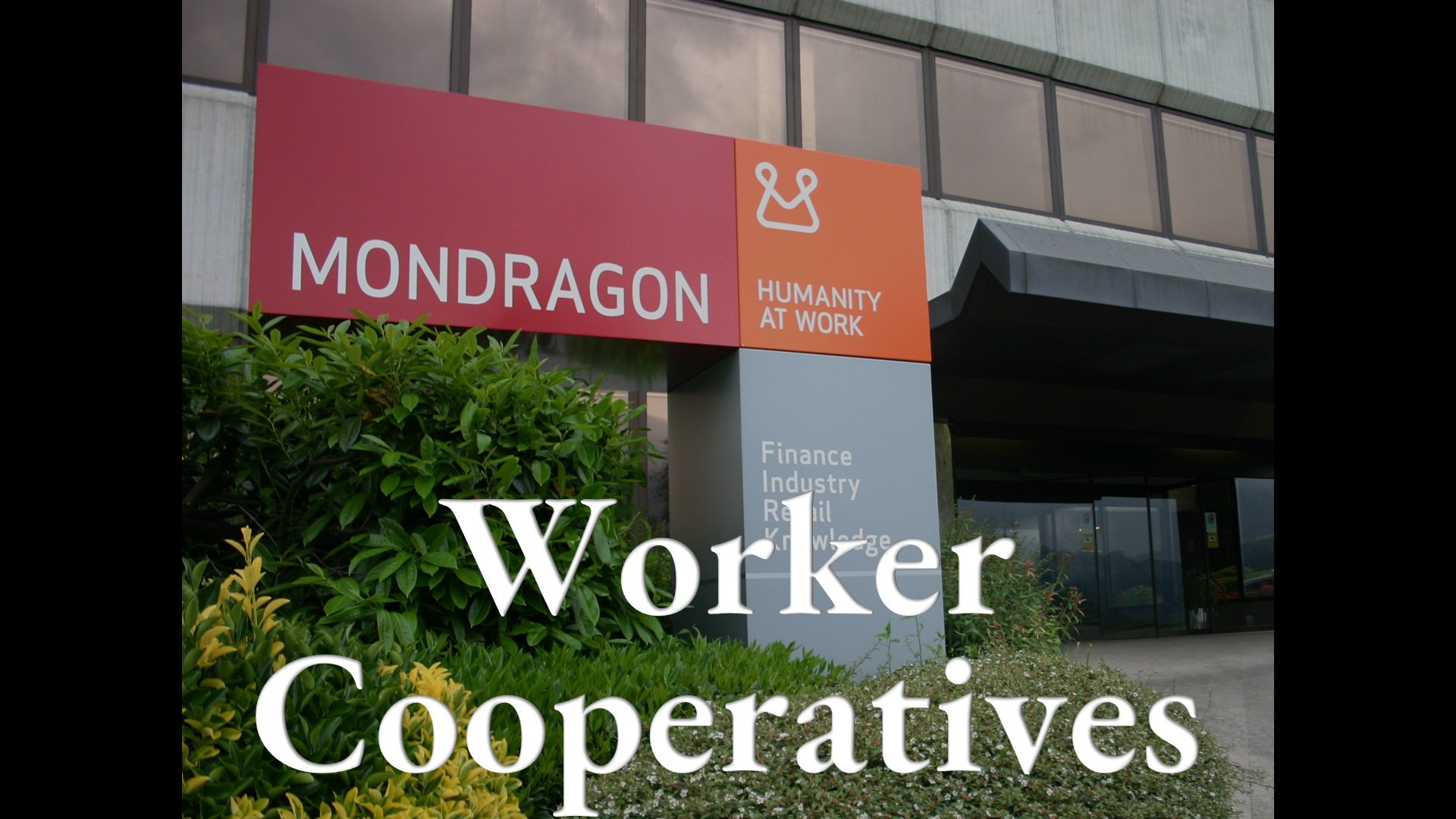
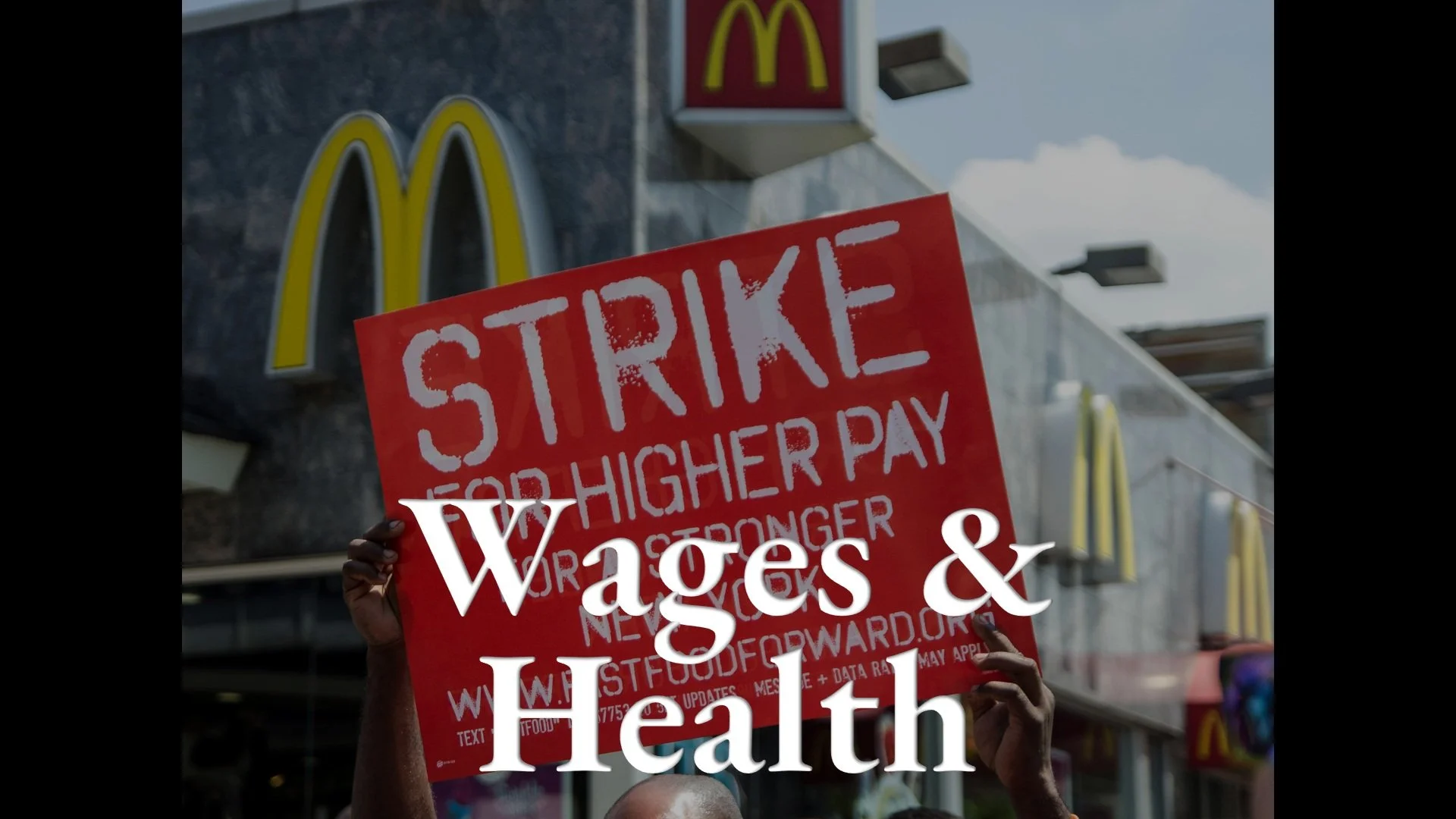
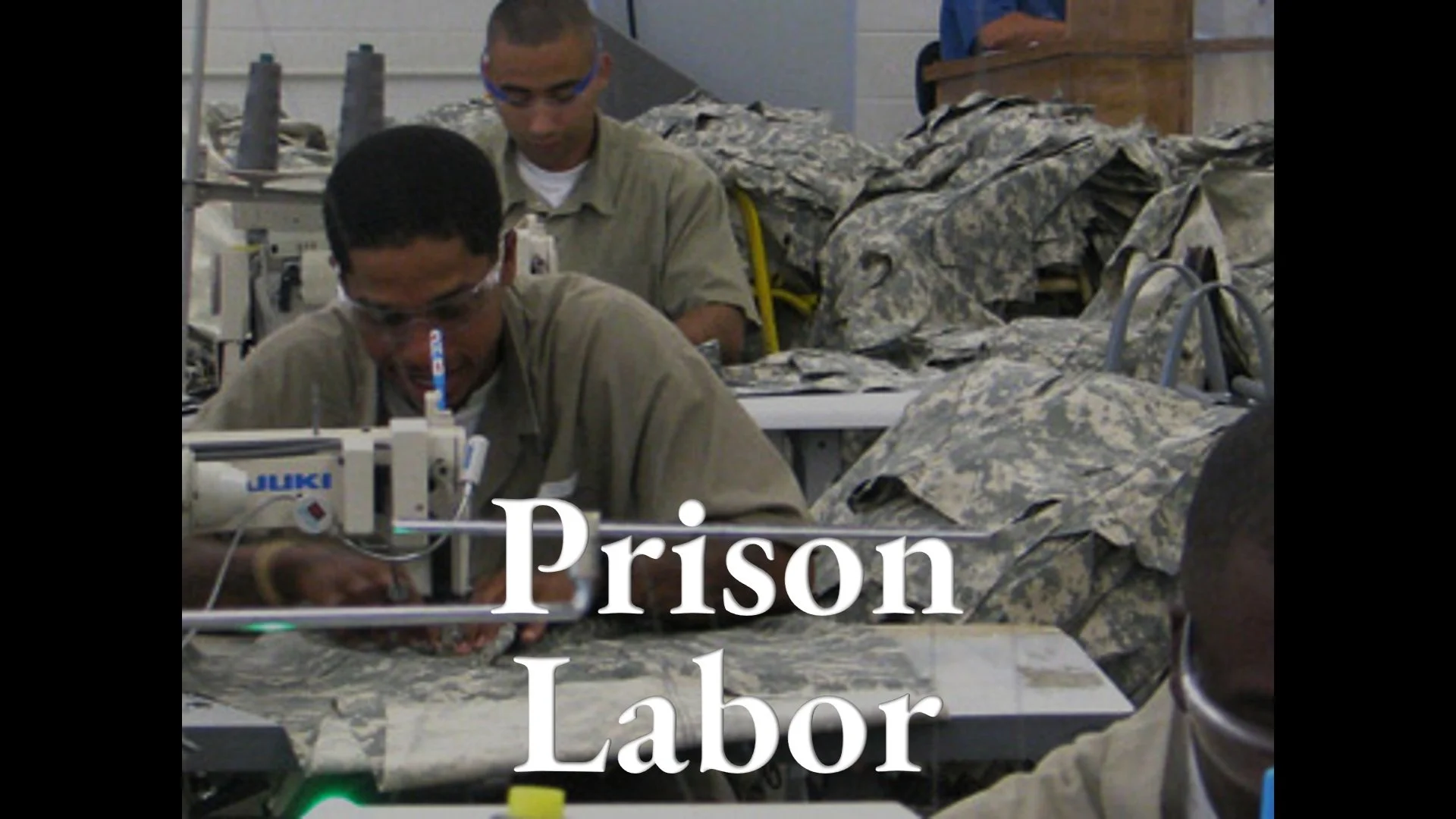
These resources about Labor explore the biblical, economic, and political importance of labor. This includes Labor Unions, Worker Cooperatives, Wages and Health, the impact of Immigration Policy, Trade Policy, Human Trafficking, Prison Labor, and Slavery.
In accepting the Democratic nomination for the second time in 1936, Roosevelt gave a masterclass in how to counter the likes of DOGE. He called the kind of people whom Dewey addressed “economic royalists” sparing them no mercy in connecting their greed to the undermining of democracy and the diminution of liberty for ordinary Americans: “The privileged princes of these new economic dynasties, thirsting for power, reached out for control over Government itself. They created a new despotism and wrapped it in the robes of legal sanction.” Such people, Roosevelt declared, were “new mercenaries” who “sought to regiment the people, their labor, and their property.” For a time, that view enjoyed wide endorsement. In 1954, President Dwight D. Eisenhower could write, as he did in a letter to his brother, that “should any political party attempt to abolish social security, unemployment insurance, and eliminate labor laws and farm programs, you would not hear of that party again in our political history.” The people who supported this, Ike continued, were nothing but “a tiny splinter group.”
Messages and Resources


Plantation Capitalism vs. Jesus’ Jubilee Economy
In this class, explore this public good approach to Christian ethics in the public square. This series will highlight twelve key relationships distorted by Plantation Capitalism, a system of production where elites exploit people and the planet, and corrected by Jesus in his Jubilee Economy. The following videos address finance:
Video 3: Enslavers vs Enslaved. Thieves vs Victims. Debtors vs Lenders. Employers vs. Poor & Poorer Workers. Christian faith had set up certain laws in Europe that abolished chattel slavery, thwarted the worst of labor exploitation, and persistently tried to limit finance and banks. But the colonies were a legal gray zone, where people could get away with exploitation and theft that they couldn't get away with back in Europe. European colonizers treated the North American colonies as a safe place to practice their heresies.
Video 5: Labor vs. Capital; Privatizers vs. Common Goods. Jesus reasserted God's vision of flourishing, where human and land health, and then labor rights, took clear priority over the right of elites to use money to make more money. How does WalMart do? See how we grade it. Also, Berlin residents voted to force BlackRock -- now a massive corporate landlord -- to sell back housing units to the city. How would Jesus think about that? We examine Jesus’ teaching on the relationships of Labor vs. Capital and Privatizers vs. Common Goods. Jesus asserted his claim on all creation and all people. So he extended the relational vision of God for human flourishing, where human health and land health, and human rights and labor rights took clear priority over the rights of capital and the ability of elites to use money to make more money.
See our class description. Register at our Thinkific course site.
-
Paul Tillich, A History of Christian Thought - From Its Judaic and Hellenistic Origins to Existentialism. Touchstone Books | Amazon page, 1968. Page 483 says, "A great gap between the churches and the labor movements in Europe developed. The churches were the representation of the ideologies which kept the ruling classes in power over against the working masses. This was the tragic situation. It is a great thing that in America this tragedy has happened on a much smaller scale. But in Europe it has led to the radical antireligious and anti-Christian attitudes of all labor movements, not only of the communists but also of the social democrats. It was not the 'bad atheists' --as propagandists call them -- who were responsible for this; it was the fact that the European churches, Orthodox, Lutheran, and Episcopalian, were without social sensitivity and direction. They were directed toward their own actualization; they were directed toward liturgical or dogmatic efforts and refinements, but the social problem was left to divine providence."
Pope John Paul II, Laborem Exercens (On Human Work). Vatican website, 1981.
Darren Cushman Wood, Blue Collar Jesus: How Christianity Supports Workers' Rights. Seven Locks Press | Amazon page, Feb 15, 2005)
Marco G. Prouty, Cesar Chavez, the Catholic Bishops, and the Farmworkers' Struggle for Social Justice. University of Arizona Press | Amazon page, Sep 15, 2006.
Medway Village Church, Human Worth and Capitalism: Market Basket, Corporations, and the Local Community. Medway Village Church, Sep 29, 2014.
Kevin Kruse, A Christian Nation? Since When? New York Times, Mar 14, 2015. how U.S. corporations linked libertarian capitalism (anti-New-Deal) and Christianity from the 1930's; this has a terrible legacy.
Rebecca Onion, Rules of Business Ethics for Early 19th Century Christian Merchants. Slate, Apr 29, 2015.
David Bentley Hart, What Lies Beyond Capitalism? A Christian Exploration. Plough, Aug 12, 2019. Hart is notable for the way he centers people and labor: “This form of commerce largely destroyed the contractual power of free skilled labor, killed off the artisanal guilds, and introduced instead a mass wage system that reduced labor to a negotiable commodity. In this way, it created a market for the exploitation of cheap and desperate laborers…”
Matthew Franklin Cooper, Ideological History: The Fourth International Take on 1619. The Heavy Anglo-Orthodox Weblog, Dec 5, 2019. Cooper makes the very important Christian point: “In Europe itself, the two institutions – the slavery of Antiquity, and the chattel slavery of the Age of Exploration – were separated by a good half millennium of gradual abolition and humane developments in law, like those undertaken by Adamnán of Iona in the British Isles and by Eike von Repgow on the Continent. This gradual abolition happened in large part because of the building reliance of the agrarian œconomies of the late-antique barbarian kingdoms on arable land and its produce rather than on labour. This œconomic structure, which was still largely in place on the continent during the capitalist revolution, was the source of a great deal of the early resistance to the new institution of modern chattel slavery, and made up a significant element of the abolition movement going forward. This is something I have laid great stress on over the course of my writing on this blog. The old feudal resistance to the new money-based, urban and mercantile œconomy provided an early basis for the proletarian resistance that was as yet in its germinal stage.”
John W. Miller, The Fight to Unionize Amazon Is the Most Important Labor Story of This Century. America Jesuit Magazine, Mar 25, 2021.
Zak Cassel and Rose Adams, Opposing PRO Act, Uber and Other Gig Companies Spend Over $1 Million Lobbying Congress. The Intercept, May 6, 2021. “After spending a historic sum against similar worker protections in California, gig companies continue to lobby on labor reform in Congress, new disclosures show.”
Mary Papenfuss, Kroger CEO Cut Workers’ COVID-19 Hazard Pay, Grabbed Record $22.4 Million Package Himself. Huffington Post, May 14, 2021.
Dan Price, 1987 vs. 2021 Income, CEO vs. Min Wage (Twitter, Apr 7, 2021) notes that 1987 (inflation-adjusted): U.S. billionaires: 49. Total net worth: $186 billion. Richest person: worth $20 billion. Min wage: $7.92. Now: U.S. billionaires: 724. Total net worth: $4.4 trillion. Richest person: worth $189 billion. Min wage: $7.25.
Bloomberg Quicktake, How America’s Wealth Gap Shaped the Modern Economy. Bloomberg Quicktake, May 7, 2021. A 15 minute video titled The Pay Check: The History of the Racial Wealth Gap, gives important stats on the magnitude of wealth in slavery ($42 trillion at the start of the Civil War, twice the current US economy) and by slavery, from land distribution by the Homestead Acts, white resentment against black wealth like in the Tulsa OK race massacre ($2 million in today’s money), federal policy in redlining from the New Deal.
Matt Bernico, Wage Against the Machine. Sojourners, May 17, 2021. Reflects on labor shortages, fair wages, and biblical commands to pay fair wages.
Obery Hendricks, Christians Against Christianity: How Right-Wing Evangelicals Are Destroying Our Nation and Our Faith. Beacon Press | Amazon page, Jul 2021. Black theologian Obery Hendricks cogently critiques the unholy alliances between white evangelicals and the NRA, the modern antiabortion platform, big business and antilabor, and others. Chapter 8, on big business and antilabor, is excellent.
Colton Barnaby, Why Christians Should Be Socialists. Kensington Koan by Colten Barnaby | Substack, Feb 16, 2026. Re; Sergei Bulgakov. “David Bentley Hart calls him the greatest systematic theologian of the twentieth century. When you read Bulgakov on economics, you understand why. He doesn’t just critique capitalism morally. He critiques it ontologically. The way we organize economic life either aligns with the nature of reality or it doesn’t. And according to Bulgakov capitalism doesn’t.”
Christian Restorative Justice and Labor: Topics:





Christian Restorative Justice, Business, and Economics: Topics:


















Christian Restorative Justice Critique of the Right: Domestic Policy Topics:








Christian Restorative Justice Critique of the Right: Philosophical Influences: