Photo credit: freeGraphicToday | CC0, Pixabay.
Introduction
These resources explore the history of public and private coordination for the sake of economic development. One of the primary theories of economic development noted below relates to geographical and geopolitical factors: land quality, navigable waterways for trade, warfare technology, energy access, agriculture, medicine, scientific research, and education especially shape the development and internal politics of a people. We put special effort into critiquing the libertarian notion that government activity is morally evil because “taxation is theft,” and usually produces bad results — a claim that has many counterexamples and is falsifiable as a libertarian fantasy.
Messages and Resources

Mako Nagasawa, John Locke’s Theology of Private Property, edited by Grace Tien and Maria Eugenia Funes, Religion and Racial Capitalism. Palgrave MacMillan, 2025.
American libertarians and private property absolutists appeal to John Locke, remembered as an English political philosopher. Locke originally positioned himself, however, as a biblical scholar and theologian. As such, Locke departed from Christian tradition. I argue the relationship between Locke’s political philosophy and the Bible is that of a parasite and its host. Christian leaders prior to Locke believed that the earth is the Lord’s, the fruit of the earth belongs to all, and the political community could modify property in various ways because it was ethically and chronologically prior to private property. Locke, however, argued that individuals first create private property by enclosing land and laboring on it, then bring their private properties into political society, which was meant by God to defend individual property rights. He thereby defended both the English Revolution of 1688 and also English colonialism in the Americas.
See also slides to this presentation. Given to the 2022 Reconstruction class. The introduction features John Winthrop vs. Roger Williams to highlight the debate over freedom of religious Conscience vs. Christendom. The presentation highlights Christian accomplishments in health and hospitals, education and schools, land ownership and economic justice, and criminal justice reform.
See also the slides to this presentation. Given October 2, 2021 to the Reconstruction class. Explores early Christian emancipation and abolition. While Christians did not eliminate all forms of servitude, since servitude for civic penalties, indebtedness, war captivity, and self-indenture persisted, Christians eventually did eliminate what we know as chattel slavery. The presentation examines the Old Testament institution of the Hebrew ebed servant, and the New Testament approach to Greco-Roman modes of servitude. We glance at how colonialism and Trans-Atlantic slavery deformed traditional Christian teaching, mindful that more slavery exists today across the globe than every before, and that in the U.S., indebtedness and incarceration show that we have greatly exaggerated the claims that the U.S. has done better than the Bible on “slavery” and its constellation of challenges.
Wayne Grudem's Misuse of Scripture in Politics According to the Bible
This is a blog post critiquing Grudem’s chapter about economics. Grudem argues for a minimal state with no public lands or public functions, because he believes that all land and property — and economic production, apparently — must be private. He misunderstands very important biblical passages like Leviticus 25. See also this humorous take by Kanosea, The Gospel of Supply Side Jesus. Imgur, Apr 9, 2014.
Christian Restorative Justice: Human Dignity, Work, and Wealth
These are slides to a presentation on the biblical vision of jubilee economy is compared to the intergenerational inequality perpetuation of modern American capitalism.
Christian Restorative Justice: Beyond Charity - God's Restorative Justice for Children and Families
These are slides to a presentation given to Boston Chinese Evangelical Church, on biblical basis for supporting children regardless of what their parents did or endured. Provides many examples from church history of Christians providing education, public goods, etc. broadly.
Debate on Facebook with LF About Vaccines and Anti-Trust
A debate on May 13, 2021 about COVID-19 vaccine development. Mako advocated for using anti-trust policy to limit the power of major vaccine supply-chain corporations, in order to bring down costs and increase capacity. LF argued against based on the notion that government interference usually produces bad results.
-
NBC News and Martin Luther King, Jr., 'New Phase' Of Civil Rights Struggle, 11 Months Before His Assassination. NBC News, May 8, 1967. Published April 4, 2018. King speaks of how the U.S. government gave land to white Americans in the West and Midwest to provide them with an economic base, but denied the same to black Americans.
Timothy Gorringe, Capital and the Kingdom. Orbis Press | Amazon page, Mar 1994.
Timothy Gorringe, Fair Shares: Ethics and the Global Economy. Thames & Hudson | Amazon page, Jun 1, 1999.
Darren Cushman Wood, Blue Collar Jesus: How Christianity Supports Workers' Rights. Seven Locks Press | Amazon page, Feb 2005. Wood gives a very good introduction to the American labor movement, along with Scriptures in support of labor.
Thomas Storck, Is Usury Still a Sin? Renew America | Communio: International Catholic Review, Fall 2009.
David K. Goodin, “The God of the Market Place: John Stuart Mill and Maximos Confessor on Economic Virtue”. World in the World: Concordia University Graduate Journal of Theological Studies 3/1, 2010.
Thomas Storck, Is the Acton Institute a Genuine Expression of Catholic Social Thought? The ChesterBelloc Mandate, July 4, 2011.
Angus Sibley, The "Poisoned Spring" of Economic Libertarianism: Menger, Mises, Hayek, Rothbard: A Critique from Catholic Social Teaching of the 'Austrian School' of Economics. CreateSpace Independent Publishing | Amazon page, May 2011. See review by Michael Sean Winters. National Catholic Responder, Jul 6, 2011.
Tim Wallace, A Short Guide to Catholic Economic Thinkers. The Record, Nov 9, 2011.
Jim Wallis, Caring for the Poor is Government’s Biblical Role. Sojourners, Aug 30, 2012.
Thomas Storck, Aquinas on Buying and Selling. Renew America | Communio: International Catholic Review, May 14, 2013.
Joseph Stiglitz, How Dr. King Shaped My Work in Economics. New York Times, Aug 27, 2013.
Medway Village Church, Human Worth and Capitalism: Market Basket, Corporations, and the Local Community. Medway Village Church, Sep 29, 2014.
Rebecca Onion, Rules of Business Ethics for Early 19th Century Christian Merchants. Slate, Apr 29, 2015.
Samuel Freedman, Before Bernie Sanders, There Was Zeidler, a Religious Socialist. New York Times, Apr 1, 2016. despite Lutheran theology
Michael D. Greaney, There's a Better Way, Mr. Trump, Part 1: What Is. The Just Third Way, Dec 6, 2016. S-Corp worker owned corporations
Rod Dreher, Capitalism, Community, Christianity. The American Conservative, Jan 10, 2017. About capitalism creating rot from within, and nationalism not being the answer.
Michael D. Greaney, Mid South Building Supply. The Just Third Way, May 12, 2017. A worker owned company which has turned a dozen workers into millionaires.
Rick Coronado, A Theological Critique of Economic Modernity’s Myths. Church Life Journal, Oct 1, 2018. centered in Pope Francis' encyclical, Laudato Si.
Peet van Biljan, Profit With Purpose: A Christian Guide to Business Leadership. CreateSpace Independent Publishing | Amazon page, Apr 2017. See also Russell Sarder, Interview with Peet van Biljan. Sarder TV, Oct 2, 2018.
Paul Kengor, What “Deep Christian Convictions” of “Democratic Socialism”? Crisis Magazine, May 2, 2019. An attempt to critique David Bentley Hart and the Catholic Social Teaching.
David Bentley Hart, What Lies Beyond Capitalism? A Christian Exploration. Plough, Aug 12, 2019. Notable for the way he centers people and labor: “This form of commerce largely destroyed the contractual power of free skilled labor, killed off the artisanal guilds, and introduced instead a mass wage system that reduced labor to a negotiable commodity. In this way, it created a market for the exploitation of cheap and desperate laborers…”
Bronson Barringer, The Business of War: Theological and Ethical Reflections on the Military-Industrial Complex. Wipf and Stock | Amazon page, Mar 2020. An outstanding collection of essays about U.S. militarism and its impacts on domestic and foreign affairs. Especially good are the chapters highlighting U.S. hegemony over Latin America, Korea, and elsewhere on the grounds of fighting “communism.”
Tony Keddie, U.S. Republicans and the Fallacy of Biblical Capitalism. The Bible and Interpretation blog, Aug 2020.
Obery Hendricks, Christians Against Christianity: How Right-Wing Evangelicals Are Destroying Our Nation and Our Faith. Beacon Press | Amazon page, Jul 2021. Black theologian Obery Hendricks cogently critiques the unholy alliances between white evangelicals and the NRA, the modern antiabortion platform, big business and antilabor, and others. Chapter 8, on big business and antilabor, is excellent.
James Suzman, Anthropologist Debunks Darwin’s Most Abused Idea. Big Think, Nov 18, 2022. Suzman calls into question a life of competition: “What do you imagine life was like for hunter-gatherers throughout human history? You might guess that daily life for them was a constant struggle between eating and being eaten in a world where surviving was a full-time job. But anthropological research suggests that probably wasn’t the case. When the anthropologist James Suzman went to the Kalahari Desert to study the Ju/'hoansi hunter-gathers, for example, he found that they worked only 15 hours per week, and that much of that time was spent on activities that many people in the modern West consider leisure, like hiking and fishing.”
Colton Barnaby, Why Christians Should Be Socialists. Kensington Koan by Colten Barnaby | Substack, Feb 16, 2026. Re; Sergei Bulgakov. “David Bentley Hart calls him the greatest systematic theologian of the twentieth century. When you read Bulgakov on economics, you understand why. He doesn’t just critique capitalism morally. He critiques it ontologically. The way we organize economic life either aligns with the nature of reality or it doesn’t. And according to Bulgakov capitalism doesn’t.”
Levi Checketts, A Luddite Lesson in Labor Justice for Our Technocratic Age. U.S. Catholic, Apr 6, 2026. “In a world where techno-capitalism exploits workers and accelerates climate collapse, the Luddites are more relevant than ever.” “Today, because of such acts, the Luddites are characterized as anti-technology. But in reality, they were simply anti-exploitation. This early conflict between rich capitalists and impoverished laborers set the tone for many other class conflicts that followed. Understanding Luddism’s roots is therefore deeply relevant for contemporary Catholic social thought on labor justice.”
-
Mariana Mazzucato, The Entrepreneurial State: Debunking Public vs. Private Sector Myths. Public Affairs | Amazon page, Oct 2015. See also interview by Politics Joe, Economist Critiques Labour and Tory Economic Policies. Politics Joe, Sep 10, 2023. “First rising to prominence with her aversion to public spending cuts made in the wake of the financial crisis, Mariana Mazzucato is back with a new edition of her book: The Entrepreneurial State, Debunking Public Vs Private Sector Myths. In a country attuned to austerity, Mazzucato argues state investment is the real driver of innovation. She is a professor in the Economics of Innovation and Public Value at University College London and founding director of the UCL Institute for Innovation and Public Purpose.”
-
Foundations for American Renewal. American Compass. A very helpful bibliography segmented into various sections. American Compass seeks to return to a robust economic policy, and a return to geopolitics. “A long-standing intellectual tradition offers not only a comprehensive critique of market fundamentalism and consumerism, but also a constructive path forward. Stretching back over a century, and vibrant as ever today, this work returns repeatedly to several key themes: the unavoidable tension between market dynamism and social stability; the necessity of production for national and individual well-being; the importance of an economy’s diversified productive capacity; and the need for national solidarity, which depends upon a common culture that reinforces reciprocal obligations.”
NBC News and Martin Luther King, Jr., 'New Phase' Of Civil Rights Struggle, 11 Months Before His Assassination. NBC News, May 8, 1967. Published April 4, 2018. King speaks of how the U.S. government gave land to white Americans in the West and Midwest to provide them with an economic base, but denied the same to black Americans
Doris Goodwin, The Way We Won: America's Economic Breakthrough During World War II. American Prospect, Fall 1992. About the rise of manufacturing being dependent on the US military role globally. See also Wikipedia, Military Production During World War II (Wikipedia article). See American Lives Film Project, War Production. PBS, Sep 2007. See also Robert Lewis, World War II Manufacturing and the Postwar Southern Economy. The Journal of Southern History, Nov 2007.
Engineering and Technology History Wiki, A Brief History of the U.S. Federal Government and Innovation. Part I. : From Independent to World War I. 1787 – 1917 and Part II. : From World War I through World War II. 1917 – 1945 and Part III. : From World War II through Today. 1917 – 1987. Engineering and Technology History Wiki.
Peter Passell, High-Tech Industry is Hard to Help. New York Times, Feb 2, 1993.
Keith Bradsher, Business Technology: U.S. to Aid Industry in Computer Battle With Japan. New York Times, Apr 27, 1994.
Bryan Caplan, Why I Am Not an Austrian Economist. George Mason University, 1997.
Noam Chomsky, Free Markets? Santarky, Dec 5, 1997. About the role of the state in markets and economic development; the importance of limiting capital and banks
Ha-Joon Chang, Kicking Away the Ladder: Development Strategy in Historical Perspective. Anthem Press | Amazon page, Jul 2002. (pdf book)
Dave Lindorff, GM’s Healthcare Double Standard. In These Times, Apr 27, 2005. See also Physicians for a National Health Program, Canadian Auto Workers Union, Big Three Sign Letters With Canadian Auto Workers Union on Publicly Funded Health Care. PNHP, Nov 9, 2010.
Ha-Joon Chang, Bad Samaritans: The Myth of Free Trade and the Secret History of Capitalism. Bloomsbury Publishing | Amazon page, Dec 2008. *pdf book)
Amy Goodman, Economist Ha-Joon Chang on "The Myth of Free Trade and the Secret History of Capitalism". Democracy Now, Mar 10, 2009.
Jeff Wiltse, Contested Waters: A Social History of Swimming Pools in America. The University of North Carolina Press | Amazon page, May 2010. “From nineteenth-century public baths to today's private backyard havens, swimming pools have long been a provocative symbol of American life. In this social and cultural history of swimming pools in the United States, Jeff Wiltse relates how, over the years, pools have served as asylums for the urban poor, leisure resorts for the masses, and private clubs for middle-class suburbanites. As sites of race riots, shrinking swimsuits, and conspicuous leisure, swimming pools reflect many of the tensions and transformations that have given rise to modern America.”
Mariana Mazzucato, The State as Risk-Taking Entrepreneur. Mariana's blog, Oct 19, 2010.
John Horgan, Dear Occupy Wall Street: Read Jeffrey Sachs! Scientific American, Oct 11, 2011. "According to Sachs, Google funnels billions in profits into off-shore subsidiaries, which pay lower tax rates than the U.S. corporation does. Sachs points out that Sergey Brin's "ingenious work in creating Google's search engine" was supported by the National Science Foundation, which means that our tax dollars helped Brin get his start."
Farhad Manjoo, Obama Was Right: The Government Invented the Internet. Slate, Jul 24, 2012.
Thomas Hanna, Free Market Mythologies and the Future of Public Ownership. Truthout, Mar 23, 2013.
Jordan Malter, Thank the Government for Your iPhone. CNN Money, Oct 24, 2013.
Jim Edwards, Silicon Valley is Living Inside a Bubble of Tone-Deaf Arrogance. Business Insider, Dec 15, 2013.
Alec McGillis, If the Private Sector is So Great, Why Did UPS Botch Christmas? A Corrective for Market Triumphalists. New Republic, Dec 26, 2013.
Peter L. Singer, Federally Supported Innovations: 22 Examples of Major Technology Advances That Stem From Federal Research Support. The Information Technology and Innovation Foundation, Feb 2014.
David Akadjian, 25 Images of Markets "Regulating Themselves" . Daily Kos blog, Feb 3, 2014.
Mike Konczal, The Voluntarism Fantasy: Conservatives Dream of Returning to a World Where Private Charity Fulfilled All Public Needs, But That World Never Existed. Democracy Journal, Spring 2014.
Mike Konczal, The Conservative Myth of a Social Safety Net Built on Charity. The Atlantic, Mar 24, 2014.
Arthur W. Hunt, Pope Francis Needs Distributism. The American Conservative, Apr 3, 2014.
Jeff Madrick, Innovation: The Government Was Crucial After All. New York Review of Books, Apr 24, 2014.
Eamonn Fingleton, In World's Best-Run Economy, House Prices Keep Falling -- Because That's What House Prices Are Supposed To Do. Forbes, Feb 2, 2014.
Eamonn Fingleton, The Mystery Of China's Growth: Five Reasons Why Americans Will Never Understand It. Forbes, Feb 26, 2014.
Steve Downs, Review: Why Privatization Fails. Labor Notes, Sep 29, 2014.
Neil Irwin, A Big Safety Net and Strong Job Market Can Coexist. Just Ask Scandinavia. New York Times, Dec 17, 2014.
Carl Gibson, This Billionaire Governor Taxed the Rich and Increased the Minimum Wage -- Now, His State's Economy Is One of the Best in the Country. Huffington Post, Feb 24, 2015.
Tony Smith, Red Innovation. Jacobin, Mar 2015. About innovation in capitalism and in socialism
Art Jahnke, Who Picks Up the Tab for Science? Boston University Today, Apr 6, 2015. about government funded research and its results. Barbara Moran, Truths and Half-Truths. Boston University Today, Apr 13, 2015. about climate research and its communication. Barbara Moran, Cracking the NIH Code. Boston University Today, Apr 21, 2015. Moran writes about the NIH being the major source for biomedical research in the U.S. Sara Rimer, Too Many Postdocs, Too Little Funding. Boston University Today, Apr 27, 2015. about NIH funding cuts.
Patrick Buchanan, Who Really Lost America? . The American Conservative, May 19, 2015. partly on the loss of manufacturing jobs in the U.S., makes a case for economic populism-nationalism through a strong manufacturing sector, and its effect on politics - but does not account for American manufacturing dominance being the result of a post WWII order, American imperialism abroad, and government support of corporations
Sam Biddle, Silicon Valley is a Big Fat Lie. GQ, Jun 2015.
Mariana Mazzucato, The Entrepreneurial State: Debunking Public vs. Private Sector Myths. Public Affairs | Amazon page, Oct 2015. See also interview by Politics Joe, Economist Critiques Labour and Tory Economic Policies. Politics Joe, Sep 10, 2023. “First rising to prominence with her aversion to public spending cuts made in the wake of the financial crisis, Mariana Mazzucato is back with a new edition of her book: The Entrepreneurial State, Debunking Public Vs Private Sector Myths. In a country attuned to austerity, Mazzucato argues state investment is the real driver of innovation. She is a professor in the Economics of Innovation and Public Value at University College London and founding director of the UCL Institute for Innovation and Public Purpose.”
Janet Allon, Bill Gates: The Private Sector is Completely Inept. Salon, Oct 29, 2015.
Lynn Stuart Paramore, What the Steve Jobs Movie Won't Tell You About Apple's Success. Truthout, Oct 30, 2015. About government investment
Steve Roth, Welfare and Redistribution Saves Capitalism From Itself. Evonomics, Nov 5, 2015.
Manuel Funke, Moritz Schularick, Christoph Trebesch, The Political Aftermath of Financial Crises: Going to Extremes. Vox EU, November 21, 2015.
James Bennet, Bill Gates, "We Need an Energy Miracle". The Atlantic, Nov 2015. on why the free market won't solve it
Leigh Phillips, Bill Gates, Crypto-Socialist? Jacobin, Dec 23, 2015. on why the private sector is stifling innovation in green tech
Zach Cartwright, Here's How All the Technology in the iPhone Was Created by Socialism, Not Capitalism. US Uncut, Jan 10, 2016.
Michael T. Klare, The Desperate Plight of Petro-States. Nation of Change, May 26, 2016.
Yoree Koh, Study: Immigrants Founded 51% of U.S. Billion Dollar Startups. Wall Street Journal, May 17, 2016.
Robert Barsocchini, Father of Western Economics Took ‘Most of His Best Ideas’ from Sharia Law. Washingtons blog, May 24, 2016.
Ha-Joon Chang, Making Things Matters. This is What Britain Forgot. Guardian, May 18, 2016.
Rick Noack, Where Europe is Most and Least Innovative, in 6 Maps. New York Times, Aug 1, 2016. interesting to see the Basque region in Spain high on innovation, given their Catholic-influenced institutional organization
Margaret Chan, Director-General of the World Health Organization, China's Growing Contribution to Health at Home and on the Global Stage. Lecture at the Chinese Academy of Governance, Nov 18, 2016. Remarks about government-led economic development, disease prevention, and public health; market liberalization happened in China only after adequate protectionism.
Slavoj Žižek, Why There Are No Viable Political Alternatives to Unbridled Capitalism. Big Think, Nov 27, 2016. All 20th century leftist projects came to an end.
The Economist, Why a Strengthening Dollar Is Bad for the World Economy. The Economist, Dec 3, 2016.
Valos Tryantafillou, Socialism in an Age of Reaction: An Interview with Noam Chomsky. Jacobin Magazine, Dec 13, 2016. Gives an outstanding economic and political global history, such as:
“Bear in mind that capitalism is a tiny period of human society. We never really had capitalism, we always had one or another variant of state capitalism. The reason is capitalism would self-destruct in no time. So the business classes have always demanded strong state intervention to protect the society from the destructive effect of market forces. It’s often business that it’s in the lead, because they don’t want everything destroyed.
So we’ve had one or another form of state capitalism during an extremely brief period of human history, and it tells us essentially nothing about human nature. If you look at human societies and human interactions, you can find anything. You find selfishness, you find altruism, you find sympathy.
Let’s take Adam Smith, the patron saint of capitalism — what did he think? He thought the main human instinct was sympathy. In fact, take a look at the word “invisible hand.” Take a look at the actual way in which he used the phrase. Actually, it’s not hard to find out, because he only used it twice in any relevant sense, once in each of his two major books.
In his one major book, The Wealth of Nations, the phrase appears once, and it appears in what amounts to a critique of neoliberal globalization. What he says is that, if in England, the manufacturers and merchants invested abroad and imported from abroad, they might benefit, but it would be harmful to England. But their commitment to their home country is sufficient, so they are unlikely to do this and therefore, by an invisible hand, England will be saved from the impact of what we call neoliberal globalization. That’s one use.
The other use is in his other major book, The Theory of Moral Sentiments . which people don’t read much, but for him it was the major book. . Here he is an egalitarian, he believed in equality of outcome, not opportunity. He is an Enlightenment figure, pre-capitalist.”
Ray Dalio, Back to the Future. The World In, Dec 2016. Why the 1930's hold a clue to what lies ahead for the economy
Robert Reich, Tax Experiment. Inequality Media, Dec 9, 2016. About the Republican disinvestment strategies in Kansas and Texas vs. the Democratic public investment and regulation strategy in California
Rachael Bade and Jake Sherman, Free-Market Republicans Contort to Defend Trump. Politico, Dec 9, 2016.
The Economist, Place-Based Economic Policies as a Response to Populism. The Economist, Dec 15, 2016. With helpful comparison US vs. EU; noting history of land-grant universities
C.J. Polychroniou, Socialism for the Rich, Capitalism for the Poor: An Interview With Noam Chomsky. Truthout, Dec 11, 2016.
Politico Magazine, Highways Aren't Enough: What Trump Needs to Know About Remaking the Rust Belt. Politico Magazine, Dec 21, 2016.
Michelle Jamrisko and Wei Lu, These Are the World's Most Innovative Economies. Bloomberg, Jan 17, 2017. South Korea and Nordic nations; Russia low
Vox, This Jet Fighter Is a Disaster, But Congress Keeps Buying It. Vox, Jan 26, 2017. A 7 minute video about F-35 military jet, and the military-industrial-government complex
Alice Salles, Saudi Arabia, Yemen, and What You’re Not Being Told About Trump’s Travel Ban. Anonymous, Feb 1, 2017. Nixon's petrodollar deal with Saudi Arabia.
Rutger Bregman, No, Wealth Isn’t Created at the Top. It Is Merely Devoured There. The Guardian UK, Mar 30, 2017. “There is also a second way to make money. That’s the rentier way: by leveraging control over something that already exists, such as land, knowledge, or money, to increase your wealth. You produce nothing, yet profit nonetheless. By definition, the rentier makes his living at others’ expense, using his power to claim economic benefit… It may take quite a mental leap to see our economy as a system that shows solidarity with the rich rather than the poor. So I’ll start with the clearest illustration of modern freeloaders at the top: bankers. Studies conducted by the International Monetary Fund and the Bank for International Settlements – not exactly leftist thinktanks – have revealed that much of the financial sector has become downright parasitic. How instead of creating wealth, they gobble it up whole. Don’t get me wrong. Banks can help to gauge risks and get money where it is needed, both of which are vital to a well-functioning economy. But consider this: economists tell us that the optimum level of total private-sector debt is 100% of GDP. Based on this equation, if the financial sector only grows, it won’t equal more wealth, but less. So here’s the bad news. In the United Kingdom, private-sector debt is now at 157.5%. In the United States, the figure is 188.8%.”
May Bulman, Donald Trump Could Reverse Cuts To Arts, Poor, and Elderly If He Stopped Staying at Mar-a-Lago, Figures Show. UK Independent, Mar 17, 2017.
Tracy Chou, A Leading Silicon Valley Engineer Explains Why Every Tech Worker Needs a Humanities Education. Quartz, Jun 28, 2017.
Adam Behsudi, Trump’s Trade Pullout Roils Rural America. Politico, Aug 7, 2017.
Paul Roberts, This Is What Really Happens When Amazon Comes to Your Town. Politico, Oct 19, 2017.
Natasha Singer, Tech's Ethical Dark Side: Harvard, Stanford and Others Want to Address It. New York Times, Feb 12, 2018.
Lee Fang, Obama Officials Helping Silicon Valley Firms Like Google Get Pentagon Contracts. The Intercept, Jul 22, 2018. “Google canceled a Pentagon contract for AI in drone targeting. But there’s no shortage of national security work for Silicon Valley.”
Ian Bremmer, Trump’s Not the Problem. He’s a Symbol of 4 Bigger Issues. Big Think, Aug 1, 2018. Neoliberal globalization drains work and wealth from people, making them resent immigrants for the opportunities and benefits they receive in the country; veterans return from wars feeling dejected and despondent; technology automates jobs away and drives people apart through social media. Compares populist movements to Japan, which largely rejected neoliberalism, immigration, war, and social media.
Doug Bandow, Corporate Welfare Lives On and On. The American Conservative, Aug 29, 2018.
David Roberts, We Could Shift to Sustainability and Save $26 Trillion. Why Aren't We Doing It? Vox, Sep 6, 2018.
Kevin Kelleher, Ford Prepares for Mass Layoffs After Losing $1 Billion to Trump's Trade Tariffs, Report Says. Yahoo Finance, Oct 9, 2018.
Aditi Shikrant, Why Walkable Cities Are Good for the Economy, According to a City Planner. Vox, Oct 26, 2018. subtitled "people spend more money when cities are less vehicle-oriented"
Brent Staples, A Fate Worse Than Slavery, Unearthed in Sugar Land. New York Times, Oct 27, 2018. "Bodies of sugar cane workers recently discovered in Texas reveal gruesome details about the convict leasing system"; see also Michael Hardy, Blood and Sugar. Texas Monthly, Jan 2017. showing the role of prison labor in America's economic growth
Arthur Delaney and Matt Fuller, Republicans Are Making A Deal On Food Stamps And Farm Subsidies. Huffington Post, Nov 16, 2018.
Kari Paul, Climate Change Has Cost the Government $350 Billion — Here’s What It Will Cost You. MarketWatch, Nov 24, 2018. estimates $35 billion per year. See also Rex Nutting, Calamitous Weather Destroyed $175 Billion of Wealth. MarketWatch, Nov 13, 2018.
Patt Morrison, New Linguist George Lakoff on What Democrats Don’t Understand — and Republicans do — About How Voters Think. Los Angeles Times, Nov 28, 2018. About the importance of storytelling in civic, political life; touches on how private enterprise depends on public development and funding. and how the left tends to fail at both.
Robert E. Scott, The State of American Manufacturing: The Failure of Trump's Trade and Economic Policies. Economic Policy Institute, Feb 5, 2019.
Katha Pollitt, Day Care For All. New York Times, Feb 9, 2019.
Blake Schmidt, Blackwater Mercenary Prince Has a New $1 Trillion Chinese Boss. Bloomberg, Feb 9, 2019.
Mayra Rodriguez Valladares, Hispanics, Not Trump, Are the Biggest Engine Of U.S. Economic Growth. New York Times, Feb 11, 2019. References the study by Gonzalo Huertas and Jacob Funk Kirkegaard, The Economic Benefits of Latino Immigration: How the Migrant Hispanic Population’s Demographic Characteristics Contribute to US Growth. Peterson Institute for International Economics, Feb 2019.
John Horgan, House Revolt Against the Rich. Scientific American, Feb 18, 2019. "Nobel laureates, a new congresswoman and others urge raising taxes on the ultrawealthy to counter surging inequality"
Alex Ward, House Dems Reveal New Info on a Shady White House Plan to Sell Nuclear Tech to Saudi Arabia. Vox, Feb 19, 2019. demonstrating that sensitive weapons, security, and energy technology can often be politically maneuvered, not subject to the "free market"
Thor Benson, It’s Corruption, Not Socialism, That Brought Down Venezuela. Pacific Standard, Mar 14, 2019. “What socialist policy failed in Venezuela? The policies of allowing virtually free rein to capital for enrichment?”
Dan Meegan, Conservatives Have a Different Definition of ‘Fair’. The Atlantic, Apr 30, 2019. “And liberals ignore it at their peril.” “Conservatives tend to value equity, or proportionality, and they see unfairness when people are asked to contribute more than they should expect to receive in return, or when people receive more than they contribute. Consider a hypothetical comparison of two people who graduated from college five years ago with equal amounts of debt. Jessie successfully implemented a plan to pay off the debt in five years, while Sam still has much to repay. Warren’s plan [for student debt forgiveness] forgives Sam’s debt, but offers nothing to Jessie, despite her industriousness and self-discipline. To add insult to injury, Jessie must contribute tax dollars to the $640 billion fund necessary to forgive outstanding loans, including Sam’s.” The root visceral impulse at the heart of the myth of meritocracy.
The Young Turks, Trump's Advisers Quit As He Wrecks Economy. The Young Turks, May 7, 2019. agriculture and farm subsidies and trade effects demonstrate how government protections work in agriculture; see also Lawrence O’Donnell, Trump Admin. Gives $62M Earmarked For Farmers To Corrupt Brazilian Brothers. The Last Word | MSNBC, May 16, 2019.
Mark Arax, The Dreamt Land: Chasing Water and Dust Across California. Knopf | Amazon page, May 21, 2019. A bestseller about how Californians have fought water wars since the Gold Rush. The patterns of politics and governance in CA are partially the result of water.
Sean Illing, How the Baby Boomers Wrecked the Economy for Millenials. Vox, May 22, 2019. a conversation with author and WSJ columnist Joseph Sternberg; Sternberg admits his bias as a free-market conservative to avoid examining the financial sector, etc.
Dylan Matthews, The Radical Plan to Change How Harvard Teaches Economics. May 22, 2019. Contrasts neo-classical theorist Greg Mankiw and data-driven empiricist Raj Chetty
Amy Hanauer, Ohio’s Economy No Longer Recovers After Recessions. Economic Policy Institute, May 23, 2019.
James Ellsmoor, United States Spend Ten Times More On Fossil Fuel Subsidies Than Education. Forbes, Jun 15, 2019.
Economics Explained, Norway - Is It the Perfect Economy? Economics Explained, Jun 26, 2019. “ocean” substitutes for “land” with regards to oil discovery
Ariel Malka, Yphtach Lelkes, and Christopher J. Soto, Are Cultural and Economic Conservatism Positively Correlated? A Large-Scale Cross-National Test. British Journal of Political Science, Jul 2019. More common to be negatively correlated.
Steve Karnowski and Balint Szalai, Some Big Farms Collect Big Checks from Trump Aid Package. Associated Press, Jul 3, 2019.
Joseph Stiglitz, The End of Neoliberalism and the Rebirth of History. Project Syndicate, Nov 4, 2019. “For 40 years, elites in rich and poor countries alike promised that neoliberal policies would lead to faster economic growth, and that the benefits would trickle down so that everyone, including the poorest, would be better off. Now that the evidence is in, is it any wonder that trust in elites and confidence in democracy have plummeted?” Critiques the privatizing, supply-side economic thinking of the right. See also this humorous take by Kanosea, The Gospel of Supply Side Jesus. Imgur, Apr 9, 2014.
Krystal Ball and Saagar Enjeti, Matt Stoller: Obama’s “Catastrophic Response” to Financial Crisis. Rising | The Hill, Nov 8, 2019. Interviews Matt Stoller, Goliath: The 100-Year War Between Monopoly Power and Democracy. Simon & Schuster | Amazon page, Oct 2019. , see also Matt Stoller, How Democrats Killed Their Populist Soul. The Atlantic, Oct 24, 2016. “In the 1970s, a new wave of post-Watergate liberals stopped fighting monopoly power. The result is an increasingly dangerous political system.” Concentrated wealth in America produces political swings between culturally elitist signaling on race without actual change for working class people, authoritarian populism in reaction, and economic populism.
Donelle Eller, ISU Report: Iowa Farm Finances Continue to Erode, with 44% of Growers Struggling to Cover Costs. DesMoines Register, Nov 14, 2019. Iowa farm debt hit $18.9 billion in the second quarter, the highest level in the nation. An Iowa State economist says the percentage of financially vulnerable farmers (44%) is "very, very concerning."
Ramesh Ponnuru, NAFTA Was Good, and the USMCA Is Okay. National Review, Nov 21, 2019. Soberly worded assessment of the differences, showing that Trump didn’t really bring improvements over NAFTA and TPP.
Ashley Viens, Visualized: Ranking the Goods Most Traded Between the U.S. and China. Visual Capitalist, Dec 5, 2019.
Krystal Ball and Saagar Enjeti, Nathan Robinson Debates with Saagar: 'Why You Should Be a Socialist'. Rising | The Hill, Dec 24, 2019. reviewing the book by Nathan Robinson, Why You Should Be a Socialist. All Points Books | Amazon pages, Dec 10, 2019.
Dan Charles, America Will Import More Sugar This Year Than It Has In 4 Decades. NPR, Dec 11, 2019. discusses sugar tariff policies which are designed to protect domestic sugar companies
Aaron Flaaen and Justin Pierce, Disentangling the Effects of the 2018-2019 Tariffs on a Globally Connected U.S. Manufacturing Sector. Finance and Economics Discussion Series 2019-086. Washington: Board of Governors of the Federal Reserve System, Dec 2019. and summaries by Mary Papenfuss, Trump Tariffs Hurt U.S. Manufacturing, Cost American Jobs: Federal Reserve Economists. Huffington Post, Dec 27, 2019. “The paper noted that U.S. manufacturing employment and output increased at a “robust pace” in 2017 through much of 2018. But since late last year, manufacturing output “declined noticeably and manufacturing employment growth has stalled.”” Also Ben Gittleson, President Trump’s Tariffs Have Hurt US Manufacturers, Fed Study Says. ABC News, Dec 30, 2019. and Ben Werschkul, Trump Made This False Claim About China and Tariffs At Least 108 Times in 2019. Yahoo Finance, Dec 27, 2019. who says, “Earlier this year, the Federal Reserve Bank of New York estimated that the cost of the China tariffs is $831 per U.S. household. JPMorgan Chase estimated costs of the tariffs at more than $1,000 per year for the typical American household.”
Nicholas Kulish, Sarah Kliff, and Jessica Silver Greenberg, The U.S. Tried to Build a New Fleet of Ventilators. The Mission Failed. New York Times, Mar 29, 2020. highlighting both the failures of government officials and the private market with regards to capacity building in the health care sector
Eric Levitz, Coronavirus Is Forcing the GOP to Tacitly Admit Its Ideology Is Delusional. New York Magazine, Apr 7, 2020. (1) undocumented immigrants are not a scourge to America, but rather indispensable in farming and food production - Trump has called them “essential”; (2) federal agencies are not bloated and gutted, but reconstituted; (3) the market is not an apolitical sphere, but a big government program.
Mike Hixenbaugh, Scientists Were Close to a Coronavirus Vaccine Years Ago. Then the Money Dried Up. NBC News, Mar 8, 2020. “We tried like heck to see if we could get investors or grants to move this into the clinic… But we just could not generate much interest.” “The global response to the coronavirus exposes broader flaws in the way medical research is funded, which he says tends to be market-driven and reactive, rather than proactive.” “We've had some conversations with big pharma companies in recent weeks about our vaccine, and literally one said, ‘Well, we're holding back to see if this thing comes back year after year.’” “Because nobody would invest a few million dollars into these SARS vaccines, we're looking at, I don't know what the number is, $10 billion, $100 billion in economic losses… The stakes are so high, and the amount of money you're talking about to fund this research is so modest.”
Saagar Enjeti, Saagar Destroys Corporate Republican Regressive Bailout Bill. Rising | The Hill, Mar 20, 2020. The moral and pragmatic problems with the trickle-down theory of sustaining corporations
Nicholas Kulish, Sarah Kliff, and Jessica Silver Greenberg, The U.S. Tried to Build a New Fleet of Ventilators. The Mission Failed. New York Times, Mar 29, 2020. highlighting both the failures of government officials and the private market with regards to capacity building in the health care sector
Lydia DePillis and Lisa Song, In Desperation, New York State Pays Up to 15 Times the Normal Prices for Medical Equipment. ProPublica, Apr 2, 2020. an example of disaster capitalism and federal unpreparedness
Chris Luo, Too Little, Too Late: Why the CARES Act Fails Main Street. Five Stars blog, Apr 7, 2020. critiques the pandemic stimulus of March 2020 as slanted against small businesses
Eric Levitz, Coronavirus Is Forcing the GOP to. Tacitly. Admit Its Ideology Is Delusional. New York Magazine, Apr 7, 2020. 1. undocumented immigrants are not a scourge to America, but rather indispensable in farming and food production - Trump has called them “essential”;. 2. federal agencies are not bloated and gutted, but reconstituted;. 3. the market is not an apolitical sphere, but a big government program
Paul Constant, The Coronavirus Pandemic Has Shown That the Trickle-Down Theory of Economic Growth Is a Fabrication. Business Insider, May 4, 2020.
Matthew Klein and Michael Pettis, Trade Wars Are Class Wars: How Rising Inequality Distorts the Global Economy and Threatens International Peace. Yale University Press | Amazon page, May 2020. Discusses how corporate leaders shipped jobs overseas in search of cheaper labor that is unethical and/or a geopolitical risk, like in China. See also interview by Saagar Enjeti, Author: How Elites Sold American Workers Out And How To Fix It. Rising | The Hill, Dec 23, 2020.
Hasan Minhaj, How Coronavirus Broke America. Patriot Act | Netflix, Jun 1, 2020. re: supply chains especially in medical equipment; efficiency and resilience are in tension. Critiques Trump’s use of the Defense Production Act for meat supply chains.
Robert E. Scott, The Wheels Are Coming Off Trump’s Trade Policy. The Hill, Jun 19, 2020.
Krystal Ball and Saagar Enjeti, Breaking: Worst Economic Contraction In American History, Unemployment Claims SPIKE, Congress Wavers. Rising | The Hill, Jul 30, 2020. Keynes is completely vindicated about the fact that government spending — in this case, fiscal support for citizens — has been the only thing keeping consumers afloat, and keeping the consumer side of the economy afloat.
Cody Johnston, Katy Stoll, David C. Bell and Will Gordh, The Freakin’ Post Office! Some More News, Aug 26, 2020.
Big Think, Is a Capitalist-Socialist Economy Inevitable?. Big Think, Aug 31, 2020. Anand Ghiradaradhas and others critique the neoliberal globalist ideal.
Lydia DePillis, Justin Elliott and Paul Kiel, The Big Corporate Rescue and the America That’s Too Small to Save. ProPublica, Sep 12, 2020. “Girish Patel doubts his small, 20-year-old shop will survive the pandemic economy. Thirty stories above, aerospace company TransDigm has sustained eye-popping profits thanks to steep layoffs and raised over a billion with help from the U.S. government.”
Linette Lopez, It’s Official: Trump’s Trade War with China is Now an Unmitigated, Farcical Disaster. Business Insider, Sep 16, 2020. . “The World Trade Organization just ruled that the Trump administration's trade war with China violates the body's trade rules — rules the US helped to design. But add the fact that the US trade deficit surged to its highest level in 12 years this summer, and the fact that China isn't meeting its purchasing targets, and that China hasn't made any structural changes to its economy.” See also Ashley Viens, Visualized: Ranking the Goods Most Traded Between the U.S. and China. Visual Capitalist, Dec 5, 2019. for basic information. Following the presidential campaign debate on Sep 29, 2020, see Joe Scarborough, Steve Rattner: Trump's Economy Is Far From The Best Ever. Morning Joe | MSNBC, Sep 30, 2020. for four key metrics on why Trump’s economy is one of the worst in the post-WWII era, even before the coronavirus pandemic, including jobs numbers, GDP growth, manufacturing jobs, and public opinion about Dem vs. Rep strategies for economic recovery. For Trump’s specific lie about reviving manufacturing in Ohio, see Tom Krishner and Ricardo Alonso-Zaldivar, AP FACT CHECK: Trump Falsehoods on Ohio Economy, Health Care. Associated Press, Sep 28, 2020.
Adedayo Akala, Cost Of Racism: U.S. Economy Lost $16 Trillion Because Of Discrimination, Bank Says. NPR, Sep 23, 2020. intriguing argument that economic growth happens best when the poor and middle classes are assisted and provided a level playing field
Samuel Sigal, Everywhere Basic Income Has Been Tried, in One Map. Vox, Oct 20, 2020. “The evidence so far suggests that getting a basic income tends to boost happiness, health, school attendance, and trust in social institutions, while reducing crime. But critics worry that it will disincentivize work, cheating economies out of productivity and cheating individuals out of the sense of meaning that work can bring. Plus, they say, it’s just plain unaffordable for the government to pay every citizen enough to live on regardless of whether they work. The evidence so far does not support these critiques, as you’ll see.”
Krystal Ball and Saagar Enjeti, Ryan Girdusky: Why Trump's Identity Politics Gambit Failed. Rising | The Hill, Nov 11, 2020. argues Trump just wasn’t competent enough to pull it off. there are 44 million non-college educated whites. , and projects that manufacturing jobs might come back to the Southwest, but not the Midwest where labor is more expensive and requires a trillion dollar investment in technology and industry infrastructure.
Johan Norberg, Open: The Story of Human Progress. Atlantic Books | Amazon page, Nov 2020. makes the case that human beings’ willingness to learn and change is key to progress. He finds “loyalty” can impede it: “82% of Democrats and 16% of Republicans support single-payer healthcare when told that Obama supports it. When instead told that Trump supports it, Dem support drop to 46% and Rep support increase to 44%.”
Krystal Ball and Saagar Enjeti, Media Repeats Pfizer Big Pharma Talking Points To Own Trump On Covid Vaccine. Rising | The Hill, Nov 10, 2020. makes great points with actual data about public investment and the regulatory environment, poking fun at both the right and the left
Krystal Ball and Saagar Enjeti, Fed Chair Warns Of Catastrophic Damage To Economy. Rising | The HIll, Nov 13, 2020. re: the mental health, education, addiction trends and how it will impact people leaving the labor force
Krystal Ball, Vaccines Show Actually Big Government Is the Answer. Rising | The Hill, Nov 24, 2020.
Tom Boggioni, Wisconsin Residents Furious Over Losing Homes for Trump-Supported Foxconn Factory That Was Never Built: Report. Raw Story, Dec 8, 2020. shows the hope for economic populism through trade deals, and that Trump’s populism was a fraud.
Nicole Wallace, Dr. Peter Hotez: The COVID Vaccine Discovery Was Not a 4 Month Process, It Was a 17 Year Process. MSNBC, Dec 8, 2020. NIH-funded research into SARS1. especially the spike protein. was very helpful towards developing vaccines for SARS2. COVID-19. Andrew Joseph, ‘A Huge Experiment’: How the World Made So Much Progress on a Covid-19 Vaccine So Fast. Stat, Jul 30, 2020. writes, “Many of the teams pursuing vaccines for SARS-CoV-2. the scientific name of the new coronavirus. have previously worked on vaccines for the original SARS virus… The earlier projects had pointed to a component of the coronaviruses called the spike protein as a ripe target for a vaccine, which gave scientists a head start for crafting their candidates. Work on SARS also illuminated stumbling blocks in designing coronavirus vaccines that Covid-19 immunizations have so far avoided. “What really helped was the knowledge gained from the SARS-1 infection,” said Rama Rao Amara, an immunologist and vaccine researcher at Emory University. “SARS-2 is quite similar to SARS-1, especially in that spike protein. People could take a very educated guess that this is the protein that we need to be going after.”” Vivian Roach, Baylor Professors Hope to Release COVID-19 Vaccine by Summer or Fall of 2021. Baylor Lariat, Sep 29, 2020. is an encouraging announcement because Dr. Hotez’s proposal to do more research into SARS1 stalled in the 2000’s due to lack of interest and funding. See also Bonnie Petrie, Vaccine Expert Says There Isn’t A ‘Better’ COVID-19 Immunization; Suggests Taking 1st Option . Texas Standard, Dec 11, 2020. a helpful 4.5 minute interview with Dr. Peter Hotez on why the COVID vaccine production was so fast. prior research on SARS1. , why it needs to be kept so cold. mRNA is a very unstable molecule. , and why the Latino community should be prioritized for the vaccine. a greater percentage of younger Latino people are dying.
Bloomberg, Stocks Drop from All-Time High Because Joe Manchin Voices Opposition to $2k Checks (Twitter, Jan 8, 2021) A sign that redistribution of wealth will grow the economy
Jeehoon Han, Bruce D. Meyer, and James X. Sullivan, Real-time Poverty Estimates During the COVID-19 Pandemic through November 2020 . University of Chicago, NBER, and University of Notre Dame, Dec 15, 2020.
David Leonhardt and Yaryna Serkez, Why Are Republican Presidents So Bad for the Economy? New York Times, Feb 2, 2021. “G.D.P., jobs and other indicators have all risen faster under Democrats for nearly the past century.”
Saagar Enjeti, A Story Of How Elites Sold Us Out And Trump Did Nothing About It . Rising | The HIll, Feb 25, 2021. About semiconductor manufacturing being outsourced to Taiwan, China, South Korea, Singapore. Only 12% of semiconductors used in the US are made in the US, despite their ubiquity in cars and other devices, making the US vulnerable to supply shortages caused by diplomatic or geopolitical reasons.
Amy Goodman, Meet the Texas Doctor Developing a "People's Vaccine" to Help Inoculate Billions Around the World. Democracy Now!, Apr 22, 2021. re: Dr. Peter Hotez, infectious disease expert; capitalism’s shortcoming: not enough money goes to poor people’s diseases; shows the need for publicly funded health resources
Krystal Ball and Saagar Enjeti, Panel: Is Bill Gates Turning Into Biggest Villain of Vaccine Distribution? Rising | The Hill, Apr 27, 2021. Highlights the role of patents and intellectual property; how the profit motive of big pharma inclines pharma corporations to ignore major those who are sick and poor, showing the inhumanity of capitalism
Richard Wolff, How Anti-Capitalists Defeat Capital Flight. Democracy At Work, Apr 28, 2021. Explains why this is mostly an empty threat.
Perla Trevizo, Ren Larson, Lexi Churchill, Mike Hixenbaugh, and Suzy Khimm, Texas Enabled the Worst Carbon Monoxide Poisoning Catastrophe in Recent U.S. History. Texas Tribune, ProPublica, and NBC News, Apr 29, 2021. “They used their car to stay warm when a winter storm brought down the Texas power grid. In a state that doesn't require carbon monoxide alarms in homes, they had no warning they were poisoning themselves.”
Richard Wolff, Economic Update: How US Capitalism Uses Nationalism. Democracy At Work, May 3, 2021. Gives a helpful history since the late 1800s.
Richard G. Frank, Leslie Dach, Nicole Lurie, It Was The Government That Produced COVID-19 Vaccine Success. Health Affairs, May 14, 2021. provides links and dollar amounts into past government funded research into vaccine and therapeutics development
Jon Schwarz, The Idea That Deficit Spending Is a Burden on Our Children Is the Dumbest Propaganda. The Intercept, May 16, 2021. “Every time the government sells a bond, it creates a liability for the government. But it also creates an asset for whoever bought it.” Also, government bonds pay a dividend to their owners, which transfers wealth, unlike simple taxes. “And if they inherit these mutual funds, part of that inheritance will almost certainly be indirect ownership of government bonds. In other words, while she frets in public about “a debt burden on our children and grandchildren,” her children will likely be benefiting from this debt burden. In the future, money will flow from the U.S.’s children in general to her kids specifically.”
Thom Hartmann, The Economy Is In Trouble: Savers vs Spenders w/ Prof. Richard Wolff. Thom Hartmann Program, May 27, 2021. The poorer you are, the more likely you are to spend on something if you had the money. Yet, we do not design labor, tax, etc. policies to get money to the poorer people.
Julianna Forlano, Richard Wolff On Defunding The Military-Industrial Complex. act.tv, May 28, 2021. the scale of military funding, the inability to audit it.
Chris Pomorski, The Death of Hahnemann Hospital. The New Yorker, May 31, 2021. “When a private-equity firm bought a Philadelphia institution, the most vulnerable patients bore the cost.” “Hahnemann and another medical center, St. Christopher’s Hospital for Children, had been acquired, for a hundred and seventy million dollars, by American Academic Health System, a company controlled by the California private-equity firm Paladin Healthcare Capital.” CEO Joel Freedman later closed the Hospital, which served lower-income Black and Hispanic residents of North Philadelphia, PA. “For-profit hospitals arrived in Pennsylvania in 1998. Tenet Healthcare, based in Dallas, owned a hundred and twenty hospitals in eighteen states, and that November the company bought Hahnemann out of bankruptcy, along with St. Christopher’s and six other area hospitals. “We promise we will be here for the long haul,” Michael Focht, Tenet’s C.O.O., said at a ceremony held at Hahnemann. “This is not a short-term visit.” Eight years later, Tenet agreed to pay nearly nine hundred million dollars in fines to the Justice Department for excessive Medicare billing, distributing kickbacks to doctors, and exaggerating the severity of diagnoses in order to inflate charges.”
Bloomberg Quicktake, Inside China's Accelerating Bid for Chip Supremacy. Bloomberg Quicktake, Jun 2, 2021. Why computer chips are in short supply; China and Taiwan; challenges of industrial policy
Krystal Ball and Saagar Enjeti, Texas Power Grid Fails Again, What The Hell Is Going On? Breaking Points, Jun 21, 2021. “The villain is libertarianism. Basically… the “free market” created a massive market failure, where you’re not incentivized to create any excess capacity, so that when you have unusual events, like a deep freeze… or 110 degree weather… you’re not prepared.” See also Saagar Enjeti, Shortage Crisis Shows How Elites Made Us Into a Clown Country. Breaking Points, Jun 21, 2021. covers other shortages: silicon semiconductors, cars, toilet paper, diapers, cheese, oxygen, labor, etc.
Monika Evstatieva, U.S. Companies Shifted To Make N95 Respirators During COVID. Now, They're Struggling. NPR, Jun 25, 2021.
Cody Johnston, The Racist History of Austerity Politics In America. Some More News, Jul 19, 2021. Also called “Racism and Capitalism - A Love Story” starting with Reconstruction and the Southern resistance to taxes and black empowerment; the argument was “fiscal responsibility” based on the interests of “the taxpayer.”
Saagar Enjeti, Chinese Heist of the Century Shows Why US Elites Are Fools. Breaking Points, Aug 31, 2021. Re: semiconductors and Wall Street enthusiasm for corporate profits alone.
Global Witness, Last Line of Defence. Global Witness, Sep 2021. See summary by Claire Marshall, Record Number of Environmental Activists Murdered. BBC, Sep 13, 2021. “227 people were killed around the world in 2020, the highest number recorded for a second consecutive year, the report from Global Witness said. Almost a third of the murders were reportedly linked to resource exploitation - logging, mining, large-scale agribusiness, hydroelectric dams and other infrastructure. The report called the victims "environmental defenders" killed for protecting natural resources that need to be preserved, including forests, water supplies and oceans.”
Kim Iversen, Iron Dome Funding Boosts U.S. Defense Industry Profits, AOC Tearfully Votes ‘Present’. Rising | The Hill, Sep 29, 2021. Excellent spotlight on defense spending as a kickback to the U.S. defense industry
Diana Marcum, A California Town Refused to Help Its Neighbors with Water. So the State Stepped In. Los Angeles Times | MSN, Oct 30, 2021. Demonstrates the important of democratic but centralized governance compared with decentralized governance.
Existential Comics, Explaining Capitalism to Aliens. Existential Comics, Nov 1, 2021.
Richard Wolff, Big Business Is the Cause of Every Inflation. Democracy at Work, Nov 2, 2021. If banks have more cash, or if helicopters drop dollar bills around, big business has a choice: Raise prices or produce more goods and create more jobs? Inflation therefore is often a choice by business leaders, not simply monetary policy.
The Economist, Why It’s Harder to Earn More Than Your Parents. The Economist, Nov 25, 2021. Refers to socio-economic mobility declines, lack of government assistance on parental leave and child care, etc.; this is significant and telling for the mostly conservative Economist
David Zipper, The Deadly Myth That Human Error Causes Most Car Crashes. The Atlantic, Nov 26, 2021. “Every year thousands of Americans die on the roads. Individuals take the blame for systemic problems.” American individualism means that car crashed are attributed to individual drivers, cyclists, and pedestrians. Civil engineers, urban planners, etc. do not shoulder responsibility. But in the EU, they do. “In the European Union, whose population is one-third larger than America’s, traffic deaths dropped by 36 percent between 2010 and 2020, to 18,800. That downward trend is no accident: European regulators have pushed carmakers to build vehicles that are safer for pedestrians and cyclists, and governments regularly adjust road designs after a crash to reduce the likelihood of recurrence.”
James Ross Gardner, A Willfully Misunderstood Earmark Can Help Reduce Climate-Change Heat Deaths. The New Yorker, Nov 29, 2021. “The tree-equity portion of the Build Back Better Act aims to redress some of those decades-old policies. In its current form, the bill, passed by the House earlier this month, earmarks three billion dollars to expand and protect urban tree canopies, with priority toward neighborhoods where thirty per cent or more residents live below the poverty line and in areas “with lower tree canopy and higher maximum daytime summer temperatures compared to surrounding neighborhoods.” Grants would go to nonprofits and state and local governments to achieve equity goals. According to one estimate, that will require five hundred and twenty-two million new trees in urban neighborhoods.”
Matt Pottinger and David Feith, The Most Powerful Data Broker in the World Is Winning the War Against the U.S. Washington Post, Nov 30, 2021. “Through a latticework of recent laws and regulations, Mr. Xi has been hard at work making the Chinese Communist Party the world’s most powerful data broker. How does Beijing do that? By walling Chinese data off from the world, exerting new extraterritorial power over global data flows and putting foreign companies operating in China in a legal bind — all while absorbing other countries’ data by means licit and illicit.”
Jiwon Choi, Ilyana Kuziemko, Ebonya L. Washington, and Gavin Wright, Local Economic and Political Effects of Trade Deals: Evidence from NAFTA. NBER, Nov 2021. Points out that the neoliberal agenda of free trade without an industrial policy devastated American Rustbelt areas, and turned white voters towards Trump in 2016. See commentary by Krystal Ball and Saagar Enjeti, 28 Years Of NAFTA: How It Destroyed Dems, Elected Trump. Breaking Points, Dec 9, 2021.
William Horobin, It Would Cost $50 Billion to Vaccinate the World, OECD Says. Bloomberg, Dec 1, 2021.
Phelim Kine, China Joined Rules-Based Trading System — Then Broke the Rules. Politico, Dec 9, 2021. “Four U.S. trade officials who helped plan and negotiate U.S. normalization of trade ties with China reflect what the 20 years of China's entry into WTO have meant.”
Jake Johnson, Unpatented Shot Dubbed 'The World's Covid-19 Vaccine' Wins Emergency Approval in India. Common Dreams, Dec 28, 2021. This is important because new COVID variants are likely to arise in the developing world because of the lack of mass vaccination. Delta originated in India; Omicron in Africa. To date, poor countries have received only 2% of all vaccine doses distributed around the world. Corbevax is a new, patent-free vaccine developed at Texas Children's Hospital. It is now licensed and approved for use by India, Bangladesh, Indonesia, Botswana. "In a press release issued Tuesday, the Hyderabad, India-based company Biological E. Limited (BE) said Corbevax was "found to be safe, well-tolerated, and immunogenic" in two Phase III clinical trials involving more than 3,000 subjects between the ages of 18 and 80 at dozens of study sites across India. Specifically, the company said Corbevax demonstrated a superior immune response compared to the Oxford/AstraZeneca vaccine—also known as Covishield—against both the original coronavirus strain and the still-pervasive Delta variant. BE announced Tuesday that it intends to produce more than 100 million Corbevax doses per month starting in February 2022 and pledged to distribute over a billion doses globally in the coming months as nations grapple with surging cases. Our Texas Children's Center does not plan to make money on this, it's a gift to the world."
Adam Taylor, A New Coronavirus Vaccine Heading to India Was Developed By a Small Team in Texas. It Expects Nothing in Return. Washington Post, Dec 30, 2021. “If we had even a fraction of the support that Moderna had, who knows, maybe the world would be vaccinated by now. We wouldn’t be having a discussion about omicron,” Hotez said. The cost: $6 - 7 million. See also Amy Goodman, “A Vaccine for the World”: U.S. Scientists Develop Low-Cost Shot to Inoculate Global South. Democracy Now, Jan 3, 2022. Interview with Dr. Peter Hotez. "We know how to make low-cost, straightforward vaccines for use in resource-poor settings. So that was the failure of global policy leaders. They never had any interest in those. It was always about speed and innovation and to make enough vaccines for North America and Europe without any attention to the rest of the world... We got no support from Operation Warp Speed, or the G7 countries… We need 9 billion doses of vaccines for sub-Saharan Africa, Latin America, and Southeast Asia. Nobody was able to step back, as any first year engineering graduate student could tell you, well you can't go from 0 to 9 billion with a new technology [mRNA] right away. You'd better balance it with some older, traditional technologies." “The Biden administration boasted that they donated 275 million doses to 110 countries. Well heck, we've already matched that with our research institute in Texas, and we're about to exceed it." "Public Citizen has said Texas Children's Hospital's commitment to sharing technology is a challenge to the pharma giants and the false narrative that vaccine production and medical innovation thrive through secrecy and exclusivity."
Fred D. Ledley, COVID-19 Vaccine Development Built On >$17 Billion in NIH Funding for Vaccine Technologies. Bentley University | EurekAlert, Apr 22, 2021.
Michael Hudson, America Defeats Germany for the Third Time in a Century: The MIC, OGAM and FIRE Sectors Conquer NATO. The Saker, Feb 28, 2022.
Bill McKibbin, This is How We Defeat Putin and Other Petrostate Autocrats. The Guardian, Feb 25, 2022.
Claire Provost and Matt Kennard, Silent Coup: How Corporations Overthrew Democracy. Bloomberg Academic | Amazon page, May 4, 2023. See interview by PoliticsJOE, Investigative Journalist Charts How Corporate Greed Has Destroyed Democracy | Matt Kennard Interview. PoliticsJOE, Jun 10, 2023. A one hour interview, excellent overview of the book, mostly focusing on how US and UK corporations controlled foreign policy, the IMF, the World Bank, etc. to control democratic power in the developing world.
Matt Stoller, What Ukraine War Reveals About US Economy. Breaking Points with Krystal and Saagar, Mar 5, 2022. The US can be stable in agriculture and energy, but offshored production and supply chains are unstable. Stoller raises the geopolitical and economic challenge of China, the factory of the world. Stoller also looks at the burgeoning nationalism of China due to its media, against the U.S.
Krystal Ball and Saagar Enjeti, Good News: Biden Uses Power To Boost EV Battery Production. Breaking Points, Mar 31, 2022. Insightful commentary on domestic production of key materials to build electric vehicles. Biden uses Defense Production Act to make cheap electric cars, to compete with Chinese electric cars.
David Marchese, This Pioneering Economist Says Our Obsession With Growth Must End. New York Times, Jul 17, 2022.
Globe Watch, Peter Zeihan on The European Geography. Globe Watch, May 27, 2023. Zeihan points out that the rivers of Northern Europe make trade easy and profitable (geography to economics), leading to manufacturing and excess of capital, along with more stable politics and banks. There are critical differences, however, between European vs. American banking. A united Europe, however, has been weakened by the decline of French power, German industry, and the Euro as a currency – and the Euro is a critical weakness. Zeihan also surveys Turkey, Sweden, Poland, Russia, and France as the U.S. withdraws from its global role of policing the maritime lanes or controlling the security of Europe. Note: Zeihan’s original lecture was given prior to 2022.
Motley Fool Podcasts, Peter Zeihan on China, Apple, and Europe. Motley Fool Podcasts, May 28, 2023. Apple was unlike other companies who withdrew from China more quickly, even though labor costs in China have increased by 15x since 2000, not to mention the political and security considerations. Now Apple must look elsewhere; Zeihan estimates that its manufacturing production will take 5 years to get to full capacity.
Geography by Geoff, Why More Americans Live In Massachusetts Than Vermont, New Hampshire And Maine Combined. Geography by Geoff, Jul 3, 2023. A 10 minute video showing how land and riverways made Massachusetts more economically prosperous than its neighboring New England states. However, he does not mention that the slave-grown cotton from the US South supplied the Lowell mills in the Merrimack River Valley with the raw material for the American Industrial Revolution. Note also the Pawtucket and Lowell canals, which contributed to cost-effective shipping and inspired the Erie Canal.
Noah Smith, The Pushback Against Industrial Policy Has Begun. Noahpinion | Substack, Jul 15, 2023. “So far, it's a vague broadside instead of a targeted criticism.”
Mehdi Hasan, “Numbers Don’t Lie”: The Biden Economy is Surging, So Why Aren’t Americans Feeling It? Mehdi Hasan Show | MSNBC, Jul 27, 2023. Hasan covers five metrics: jobs; manufacturing; growth; inflation; and wages. But interest rates are higher than recent memory; children are in poverty; student loans are going into repayment; and 37% of Americans say they could not afford a $400 emergency. Hasan does not cover housing prices and the past asset bubbles from the post 2008 recovery. However, Hasan covers partisanship and media grading Biden more harshly than Trump.
Deutsche Welle, How Heidelberg University Became Entangled in China's Quantum Strategy. DW Documentary, Jul 27, 2023. “At the center of this [2 decade] collaboration is the venerable Heidelberg University, along with its honorary professor Pan Jian-Wei, who was recognized as one of the world's 100 most influential people by the renowned US news magazine, Time, in 2018. Since 2003, there has been a continuous exchange of knowledge between Germany's oldest university and Professor Pan in the field of quantum research. However, experts have cautioned about the potential military applications of quantum technology. Our research has led us deep into the realm where academic freedom collides with national security interests.”
City Nerd, The Sad and Awful Way We Destroyed the World's Greatest Passenger Rail. City Nerd, Sep 6, 2023. Shows how transportation systems — like rail and canals — and economic development and urbanization go hand in hand.
Heather Cox Richardson, Letters from an American: September 9, 2023. Letters from an American | Substack, Sep 10, 2023. On the G20 becoming the G21 with African economic development in mind.
Old Money Luxury, The DuPonts: When Your Family Makes Billions From War. Old Money Luxury, Oct 28, 2023.
Manuel Funke, Moritz Schularick, Christoph Trebesch, Populist Leaders and the Economy. American Economic Review, Dec 2023. “Populism at the country level is at an all-time high, with more than 25 percent of nations currently governed by populists. How do economies perform under populist leaders? We build a new long-run cross-country database to study the macroeconomic history of populism. We identify 51 populist presidents and prime ministers from 1900 to 2020 and show that the economic cost of populism is high. After 15 years, GDP per capita is 10 percent lower compared to a plausible nonpopulist counterfactual. Economic disintegration, decreasing macroeconomic stability, and the erosion of institutions typically go hand in hand with populist rule.” This should be standard rebuttal material for “Project 2025,” the right-wing and Christian dominionist plan which Trump is embracing.
Yanis Varoufakis, Technofeudalism: What Killed Capitalism. Melville House | Amazon page, Feb 2024. See interview by Politics Joe, Yanis Varoufakis Explains How Big Tech Is Economically Dominating Your Life. Politics Joe, Oct 6, 2023.
Real Life Lore, Why Norway Is Becoming the World’s Richest Country. Real Life Lore, Feb 7, 2024. In short, a cooperative and communal culture which resulted in a well-designed public sphere: a limited democratic socialism in combination with some private capitalism when developing its oil and gas resources.
GBH News, Milton Voted to Defy State Law and Reject New Housing Rules. What Now? GBH News, Feb 16, 2024.
Johnny Harris, How Capitalism Changed the Face of War. Johnny Harris, Feb 29, 2024. And Johnny Harris, Why the US Sells Weapons to 103 Countries. Johnny Harris, Mar 6, 2024.
Oh the Urbanity!, This is The City to Beat on Housing Reform. Oh the Urbanity, Mar 4, 2024. Edmonton, Canada.
Leo Shane III, Higher Enlisted Pay, Full Housing Stipends Included in New House Plan. Military Times, Apr 11, 2024. The equivalent of $15/hour minimum wage federally, and an increase from 95% to 100% of a housing stipend to keep up with housing costs. Plus better pay and benefits for DoD child care workers. This suggests that when people’s livelihoods and morale are national security concerns, government policy is useful and perceived as necessary. Otherwise, you’re on your own. Note Leo Shane III, VA Pauses Foreclosures on Home Loans Amid Concerns of Financial Strain. Military Times, Nov 20, 2023.
Bloomberg Originals, America’s Big Chipmaking Blunder. Bloomberg, Apr 12, 2024. Dutch firm ASML leads in ultraviolet lithography, despite the US doing the R&D. Now the US is concerned about sales to China. Intel once led, but now Taiwan’s TSMC and Nvidia lead in critical chipmaking tech.
Joeri Schaasfort, Economist Explains Why India Can Never Grow Like China. Money & Macro, Jun 27, 2024. Schaasfort argues, first, Foreign Direct Investment created an abundance of available capital for business investment. Also, second, the caste system interfered with local business and government hiring practices. Third, China’s centralized state performed favorably with India’s precocious democracy where people, especially public officials, made short-term decisions.
Noah Smith, The New Progressive Economics: Some Constructive Criticism. Noahpinion | Substack, Jul 29, 2024. “We need a progressive approach to economics that doesn't depend on a deficiency of aggregate demand.” “I’ve been trying to collate my various quibbles into a simple form, and I think I’ve basically hit on what I feel is a central flaw in the new progressive paradigm. I think it’s a program designed for an economy that has a demand deficiency — basically, a depression, or a long period of macroeconomic weakness. In fact, America is now facing something different — a world of supply constraints, in which demand stimulus and job provision programs can easily stoke inflation while also failing to build many of the things progressives want to create. The focus on providing jobs, jobs, jobs — a legacy of the New Deal, but also of the Great Recession of the early 2010s — just isn’t ideal in the current macroeconomic environment. This a major flaw in the progressives’ thinking, but I think it’s a fixable one. The movement contains within it the seed of another important idea that could address this issue: the idea of state capacity. But anyway, first let’s talk about the problem, and where it comes from, and why it’s a problem.”
Cat Orman and Jason Lu, Why America Fell Behind in Drones, and How to Catch Up Again. Noahpinion | Substack, Aug 3, 2024. Most drones come from a Chinese company called DJI.
Ash Sarkar and Yanis Varoufakis, "Socialism for the Bankers" Yanis Varoufakis on What Killed Capitalism? (Part 2). How To Academy, Aug 18, 2024. Nine of ten dollars Meta invested in all the cloud capital that now undergirds Meta came from the Federal Reserve.
Old Money Luxury, The $10 Trillion Dollar Family That Runs The World: The Finks. Old Money Luxury, Aug 21, 2024. Larry Fink is CEO of BlackRock. Fink developed the practice of mortgage-backed securities while at First Boston. Fink started BlackRock as a division of Blackstone, initially. From 1994 - 99, BlackRock became independent. From 2008, BlackRock was favored by the government in the bailout. BlackRock has been a major investor in the defense industry: Lockheed-Martin, Raytheon, and Boeing.
Noah Smith, Sizing Up the New Axis. Noahpinion | Substack, Aug 31, 2024. Excellent charts of sources of minerals for green energy, processing locations of those minerals, locations of semiconductor production.
Noah Smith, Progressives Need to Learn to Take the W. Noahpinion | Substack, Sep 1, 2024. Smith points out very important definitional changes in how we define and measure “poverty.” Poverty is not intractable. LBJ’s Great Society was quite effective at bringing down poverty. Food stamps, Medicare, and the EITC have been effective.
Noah Robertson, Pentagon to Unveil New Programs to Boost Quality of Life for Troops. Military Times, Sep 13, 2024. An example of how, when people’s well-being and livelihood is a matter of national security, then the government will support them. Why not everyone?
Leo Shane III, Food Insecurity Among Military Families Unacceptable, Advocates Say. Military Times, Sep 24, 2024. “Advocates want Congress to remember that many troops who should be focused on national security at work are still struggling with food insecurity at home. On Tuesday, officials from the non-partisan group With Honor and lawmakers from the For Country Caucus gathered near the Washington Monument to plant flags along the National Mall as a reminder of the estimated 325,000 military families currently struggling with hunger and financial hardship.”
History Scope, Slovenia: How to Get Rich Without Capitalism. History Scope, Nov 1, 2024. Slovenia was the northernmost province of the former Yugoslavia. It was been socialist because it used worker-owned and worker-managed businesses. Anti-corruption measures in government was important, as was investment in the port of Koper and rail transport. This enabled trade with Western Europe.
Al Jazeera, Israel's Lucrative Relationship with the US Tech Industry. The Stream | Al Jazeera, Nov 8, 2024. Silicon Valley technology contributed to Israel’s tech sector and the War on Gaza.
Lawrence O’Donnell, Biden’s Legacy Will Be ‘Paying Dividends’ for Decades to Come. The Last Word | MSNBC, Dec 10, 2024. Based on Biden’s comments at the Brookings Institution, a bipartisan data-driven thinktank. Biden argued that he has turned the corner from Reaganomics, or “supply-side” economics and libertarianism with military Keynesianism. Showcases the return of industrial policy.
Steve Hanke, Trump’s Manufacturing Revival: A Pipe Dream. Thinkers Forum, Dec 14, 2024. Libertarian economist Steve Hanke argues that government is inherently not “efficient” and that manufacturing goals are unrealistic. Hanke points out that we have military bases that we don’t need, and yet do not close. However, there is a difference between outright government ownership of an enterprise compared to creating financial and tax incentives, and where government acts as the investor as first resort. Hanke argues that automation will kill jobs faster than labor openings will grow. Hanke argues that Silicon Valley AI backers exaggerate manufacturing growth expectations.
Noah Smith, Good Cities Can’t Exist Without Public Order. Noahpinion | Substack, Dec 23, 2024. Anarchy or urbanism: You must choose one.
Foreign Policy, The AI Economy’s Massive Vulnerability. Foreign Policy, Feb 20, 2025. Subsea cables channel data and power, but they face escalating risks.
Robert Maire, CHIPS Act Dies Because Employees Are Fired — NIST CHIPS People Are Probationary. SemiWiki, Feb 23, 2025. See commentary by Kyle Kulinski, Trump KILLS 115,000 Factory Jobs To Snub Biden! The Kyle Kulinski Show | Secular Talk, Feb 27, 2025.
John Branch, A Scenic Tour of Red Tape: Tracking the Slowest High-Speed Train in the Country. New York Times, May 4, 2025. Can America still build big things? A long ride through California’s Central Valley tells a gloomy story.
Mackenzie Hawkins, Trump Calls for End to $52 Billion Chips Act Subsidy Program. Bloomberg, Mar 5, 2025.
“President Donald Trump called for ending a bipartisan $52 billion semiconductor subsidy program that’s spurred more than $400 billion in investments from companies like Taiwan Semiconductor Manufacturing Co. and Intel Corp.
“Your Chips Act is a horrible, horrible thing,” the president said in a prime-time address to Congress on Tuesday. Trump implored US House Speaker Mike Johnson to get rid of the legislation and use “whatever is left over” to “reduce debt or any other reason.”
His remarks were met with applause in a chamber that passed the Chips and Science Act less than three years ago. Vice President JD Vance, whose home state of Ohio won a massive Intel project thanks to the law, stood up to show his support for its revocation.
The Chips Act is among the most significant US forays into industrial policy in more than a generation. It set aside $39 billion in grants — plus loans and 25% tax breaks — to revitalize American semiconductor manufacturing, as well as $11 billion for chip research and development. The aim was to reduce reliance on Asia for electronic components that power everything from smartphones to massive data centers.
Trump, however, has consistently derided a program he regards as a waste of government funds, arguing tariffs would achieve the same outcome while filling coffers. Republicans have also indicated that they want to repeal what they see as “social” provisions of the Chips Act. That could involve eliminating labor-friendly regulations or environmental requirements.
Officials on both sides of the aisle have touted the Chips Act as crucial to US national and economic security, and Trump could have a hard time getting congressional support to repeal it. Dozens of GOP lawmakers voted for the measure, and many red districts have won factories or other projects supported by the law.
That includes South Korea’s Samsung Electronics Co. and SK Hynix Inc., which have committed to multibillion-dollar projects in Texas and Indiana that were contingent on funding and support from the US government. Company representatives declined to comment on the president’s remarks.
Trump, favoring tariffs over incentives, has signaled that import levies on chips could come as soon as next month. Companies can avoid those duties, he has said, by building factories on American soil. He has not offered additional details.
On Monday, Trump credited the tariff threats for TSMC’s decision to invest $100 billion in the US, on top of a previous $65 billion commitment. He touted that project in his address Tuesday, referencing the full $165 billion figure. “We’re giving them no money,” Trump said. “All that was important to them was they didn’t want to pay the tariffs.”
A TSMC spokesperson declined to comment.
The company originally announced plans for a $12 billion US site during Trump’s first term and expanded that project to three factories under Biden. To support those facilities, TSMC struck an agreement with Biden officials for $6.6 billion in Chips Act grants and $5 billion in loans.
As is the case for other Chips Act awards, the funding is supposed to be disbursed over time, as TSMC hits negotiated project milestones. The company received $1.5 billion before Biden left office.
Trump did not specify whether he would attempt to claw back money that’s already been disbursed, renege on remaining incentives to which the government has already committed, or simply not provide additional support for the chipmaker’s latest investment. Commerce Secretary Howard Lutnick said Monday that the newly announced projects — three additional chip plants, plus R&D and advanced packaging sites — won’t win federal funds.
“The main uncertainty is the future of TSMC,” said Xin-Yao Ng, an investment director at abrdn plc. “One long-time competitive advantage was their clustering in Taiwan, where labor costs are still reasonable, construction costs are cheaper, government is supportive, and they can find more workers with vocational training. It’s completely different in the US if they are to shift more manufacturing. Subsidies from US were to be crucial to help mitigate some of the higher costs and challenges.”
TSMC is among 20 companies that reached binding Chips Act agreements with Biden officials. The deals, which represent more than 85% of the manufacturing incentives available under the program, are designed to support leading-edge facilities by companies like TSMC, Intel, Samsung and Micron Technology Inc. — as well as older-generation factories by the likes of GlobalFoundries Inc. and Texas Instruments Inc.
Companies have generally viewed those agreements as ironclad — regardless of who’s in office. But some of them have worried that the Trump administration could seek to modify the terms, Bloomberg has reported. Lutnick has said he cannot commit to honoring existing contracts without reviewing them first.
That review is ongoing, and Lutnick’s intentions for the initiative remain unclear. So far, his questions to program staff have focused on the rationale behind award decisions and the government’s legal authority to claw money back, Bloomberg has reported. The current Chips Act team, meanwhile, has been preparing a list of potential adjustments to the funding application process and final contracts that would be minimally disruptive.
A spokesperson for GlobalWafers Co., which won $406 million from the Chips Act for factories in Texas and Missouri, said the Taiwanese company is committed to its expansion strategy and views any changes to the Chips Act as “unlikely.”
But if the law were to be modified in some way, the spokesperson said, “we would reassess future investments, including evaluating US market demand, pricing, and potential tariffs if production were moved outside the US.”
Nick Rosenberger, President Trump Takes Aim at One of the Biggest Private Investments in Idaho History. Why? Idaho Statesman | Yahoo News, Mar 7, 2025. Micron, a multinational semiconductor company founded and headquartered in Boise, “is well underway on a $15 billion expansion of its Southeast Boise campus with a subsidy under the law. In December, after Trump’s election, and after Trump had criticized the CHIPS Act as wasteful, the Biden administration awarded Micron more than $6.1 billion in federal subsidies to help pay for new chip-making plants in Boise and upstate New York. Boise’s share was $1.5 billion.”
Ezra Klein, There Is a Liberal Answer to Elon Musk. The Ezra Klein Show, Mar 9, 2025.
Ben Norton, This Speech Accidentally Exposed the Truth About the US. Geopolitical Economy Report, Mar 21, 2025. Very impressive interpretation and citations, especially video clips of speeches. The neoliberal consensus was, at one time, that the U.S. would be the place to design things, where poor countries would be the place to manufacture things. China, especially, showed that a developing country could both invent and make things. Trump and Vance want to scapegoat China while trying to keep together their political coalition: Silicon Valley tech billionaires and Rust Belt manufacturing and the MAGA base who favor the latter. They do this in order to not constrain bankers and financiers on how they use capital. They also want to not raise taxes on capital, which means they want to rely on taxes on workers. Norton explains why this coalition will fail: lack of a coherent government industrial policy; competition with primarily Asian nations who do have such policies and prowess in both manufacturing and design.
Julian E. Zelizer, Government Built Silicon Valley. Foreign Policy, Mar 24, 2025. From the internet to electric vehicles, a marriage between Washington and the tech industry helped make America great.
Noah Smith, Blue States Don’t Build. Red States Do. Noahpinion | Substack, Mar 25, 2025. A vigorous critique of blue states related to regulation, NIMBYism in housing, and population shifts, though possibly Noah underestimates the benefits of labor unions.
Steve Keen, Should We Tax the Rich? Prof Steve Keen, Mar 30, 2025. Keen engages with Gary Stephenson. Keen says in a comment, “a wealth tax levied on the increase in asset prices would certainly impact the rich rather than the poor. I’m sympathetic to Gary's agenda--I just want him to get it right on how the government is financed.” Keen argues that taxing wealth is important to help drive housing-asset prices down, although private banks are also driving housing prices up by lending money into the money supply, but also that the government can simply borrow money into existence through government bonds, and finance its operations. He compares to China: China has spent 9.5% of its GDP on infrastructure. Keen believes that the wealthy can evade income taxes, so advocates for wealth taxes. Keen mentions that we should have a form of money that decays over time, thus he seems to embrace inflation to depreciate the currency.
Alex Rogers, James Fontanella-Khan, Kana Inagaki, Jamie Smyth, ‘Feed the Gorilla’: How Corporate America Fought Trump’s Tariffs Threat. Financial Times, May 5, 2025. See archived copy. Threat of a damaging trade war sparked a lobbying campaign by the world’s most powerful business leaders. Apple’s Tim Cook and JPMorgan’s boss Jamie Dimon have both reportedly lobbied Donald Trump behind the scenes to drop tariffs, as have the heads of big retailers such as Home Depot. Trump pressured Jeff Bezos and Amazon not to publish the cost increases due to tariffs.
Jen Judson, Tech Execs Enlist in Army Reserve For New Innovation Detachment. Military Times, Jun 13, 2025. Interesting public-private partnership.
David Sirota, How To End Democrats’ Civil War. The Lever, Jun 18, 2025. “Abundance liberals and populists can together combat scarcity — but one side has to come clean.”
One side believes in the old adage: power concedes nothing without a demand.
The other side insists that asking power to concede anything could destroy the republic. Their catechism was recently summarized by abundance marketer Matt Yglesias when he admonished critics of Democratic senators who ignored consumer advocates’ warnings and voted to help their sponsors deregulate cryptocurrency. “Wouldn’t it be a mistake to alienate an influential group of donors over an unimportant issue and thereby jeopardize abortion rights, Medicaid, energy innovation, the stability of American democracy, etc?” he asked.
Clearly, this dispute is no mere left-right skirmish. This is a quarrel over the nature of power itself — a clash of visions that will continue roiling the Democratic Party in the lead-up to the 2028 presidential election.
Sure, on paper, there are ways the tiny-but-well-funded handful of abundance groups can work with the huge grassroots anti-oligarchy movement on policies that spread prosperity, reform government, combat complexity, and make things easier in the real world.
But a constructive collaboration would need an abundance movement that isn’t just another business front, billionaire ploy, or bookselling grift with a buzzy name but no coherent ideology other than plutocracy.
Brian Becker, Why Elites Are Panicking Over Zohran Mamdani w/ Prof. Wolff. Break Through News, Jul 9, 2025. Mamdani is running as a Social Democrat. Corporations are organized hierarchically, not democratically. And therein lies the tension. Richard Wolff and Brian Becker also highlights how self-identified Communists and Socialists have governed well without getting rid of private property and the class structure.
Jennifer Rubin, MAGA’s Ugly Budget at Odds with Its Creepy Pronatalism. Contrarian | Substack, Jul 10, 2025. “Republicans’ legislation hurts kids and makes child-rearing more expensive.”
Spencer Kimball, Pentagon to Become Largest Shareholder in Rare Earth Miner MP Materials; Shares Surge 50%. CNBC, Jul 10, 2025.
Steve Rose, How Flood-Ravaged Boston Took on the Climate Deniers — And Won. The Guardian, Jul 24, 2025. Highlights the scientific and urban planning dimensions, along with the political headwinds against the Trump administration.
Matt Farrell, How the U.S. Just Handed the Renewable Future to China. Undecided with Matt Farrell, Aug 19, 2025. Farrell analyzes Trump’s One Big Beautiful Bill Act, which subsidizes fossil fuels. It cuts tax credits for solar panels and electric vehicles. At the 7 minute mark, he discusses how government investment in renewable energies multiplies economic activity by a factor of 4. Meanwhile, health expenses due to fossil fuel air pollution costs $820 million annually in medical expenses; every American is paying $2500 per year due to fossil fuels. And federal renewable tax credits in renewable energies attracts private investment on the order of 1:5. Solar jobs tripled from 2010 - 2025. Most do not require a four year degree; as of 2023, 57% did not. So federal investment is a catalyst. But the OBBBA caused companies to cancel green energy projects. Future implications: brain drain from the US as scientific talent leaves the US, though universities are suing the Trump Admin because of energy research grant cuts and might still win; energy price volatility because of oil and gas, whereas electricity generated by solar and wind has price stability; China will become more energy independent and move the world in their direction; losing the sector generating the most jobs.
Dan Wang, A Nation of Lawyers Confronts China’s Engineering State. The Atlantic, Aug 18, 2025. “As the Chinese economy surges forward, the U.S. has lost its capacity for physical improvement.” This is a broad argument, without specific remedies for either side. But Wang makes a valuable observation. He could have argued that the Chinese system of government-owned land, where people merely lease land in 99 year increments at most, is a major factor to how China can accomplish so much so quickly. The U.S. system allows eminent domain in the Fifth Amendment of the U.S. Constitution, but it is far more tedious, tends to be politically unpopular, and is constantly suspected of abuse.
Saagar Enjeti and Krystal Ball, Bernie Backs Trump 10% Intel Stake As Cons Freak. Breaking Points, Aug 25, 2025.
Francesca Bria, José Bautista, How Tech Billionaires Are Building a Post-Democratic America — And Why Europe Is Next. The Authoritarian Stack. Nov 1, 2025.
This project maps the "Authoritarian Stack"—a network of firms, funds, and political actors turning core state functions into private platforms. Based on an open-source dataset of over 250 actors, thousands of verified connections, and $45 billion in documented financial flows. The map aggregates and categorizes information from existing online sources to chart actors, institutions, and their relationships. Data handling and normalization were performed by the Autonomy Institute Data Unit. All entries were manually reviewed and verified. The map reflects connections as of October 2025 and is a living, collaborative resource.
More Perfect Union, Voters Win Big Against AI Data Centers. More Perfect Union, Nov 6, 2025.
Ana Swanson, $10 Billion and Counting: Trump Administration Snaps Up Stakes in Private Firms. New York Times, Nov 25, 2025. “The Trump administration is spending billions of dollars on deals with ownership stakes in companies. The unusual practice shows no sign of slowing.”
Joseph Brown, A New Era - Kevin Warsh Fed Chair. Heresy Financial, May 18, 2026. Jerome Powell’s legacy was not being able to manage inflation down to 2%. He did shrink the Fed balance sheet initially, though expanded it again. Kevin Warsh was critical of this. He was confirmed as Fed Chair, but Powell did not resign, which is unusual. Warsh is likely to step out of the QE role and deregulate banks so banks could buy unlimited US Treasuries. That should put downward pressure on interest rates and increase money, to grow the economy. Significantly, Joe critiques Milton Friedman’s theory of inflation being a monetary policy phenomenon: If the amount of money increases in such a way that, for example, the number of houses increases, then the price of housing should fall. So there is private corporate and public agency involved. This corroborates Richard Wolff’s argument that increasing the money supply does not necessarily or automatically cause inflation.
Paul McAlister, How the Richest Mill City on Earth Went Completely Broke: Lawrence, Massachusetts. Paul McAlister, Jul 14, 2026.
“In 1845, Boston's wealthiest families pooled a million dollars to build an entire city from scratch on empty farmland along the Merrimack River. Lawrence, Massachusetts became America's first planned industrial city — a textile manufacturing powerhouse whose mills stretched for a mile along both banks, whose factory output rivaled major cities, and whose clock tower stood second only to Big Ben. By the 1920s, the American Woolen Company operated sixty mills and controlled a fifth of the nation's wool production, and Lawrence had earned its reputation as the richest mill city on earth. Then the industry left. The factories closed. The buildings came down. This is the story of the Great Stone Dam, the Pemberton Mill collapse, William Wood's improbable rise from a Portuguese immigrant's cottage on Martha's Vineyard to command of the largest textile empire in the world, the Bread and Roses strike of 1912, and the slow unraveling of a city that was designed to do one thing — and had nothing left when that thing was gone.”
Konstantin Kisin & The Financial Crash Expert: Our Leaders Have Lost Control, It's Too Late To Stop! Diary of a CEO, Aug 20, 2026. “Is the West collapsing, or is the planet? Political commentator Konstantin Kisin and rebel economist Steve Keen go head-to-head on the biggest questions facing the West: immigration, the debt crisis, climate change, Trump, China and the future of AI.”
-
Wikipedia, English Land Law. Ownership of land has its roots in the feudal system established by William the Conqueror after 1066, but is now mostly registered and sold on the real estate market. England’s land law was a framework and foundation for U.S. land law.
George Monbiot, A Land Reform Manifesto. Monbiot.com, Feb 22, 1995. Monbiot narrates the history of English land law, which took a pivotal turn when William the Conqueror arrived in 1066, took land from the people, and legally claimed it as his own, while functionally doling it out to 180 barons. This began the English Enclosure Movement. This has enormous legal and social significance for the United States because it drove migration to the American colonies, but also served as the background to John Locke’s theory of private property. On the one hand, Locke sought to find a new basis for individual private property rights over against the state. On the other hand, Locke gave up too much ground, giving no space for the community to manage land and waters in common.
“It was not until Henry VIII’s dissolution of the monasteries that large-scale dispossessions began. In selling their land to urban businessmen, he created a new, peculiarly rapacious landed class, which wasted no time in realizing the value of its assets by seizing the commons and evicting the commoners. The Civil War was essentially a battle between these new lords of the land and the older landed order, and the victory of the former accelerated the adoption of their methods by the latter. In the 18th and 19th centuries the institutionalized theft of the enclosures was formalized by hundreds of acts of parliament.
By the time the Parliamentary Enclosures ended, most of the population was living in the towns, many in misery and squalor, and the land was in the hands of a tiny number of its inhabitants. Today one per cent of the people own between 50 and 75 per cent of the land. It is impossible to be precise, as the landlords have successfully resisted a census since 1875. In Scotland, the enclosures – or Clearances – were both more rapid and more complete than in England. Thousands died when they were dispossessed, tens of thousands were forcibly loaded onto ships and sent to the colonies. Today, half of Scotland is owned by 600 people, and the thieves of our common inheritance are the undisputed lords of the land.”
David Smith, Tanzania Accused of Backtracking Over Sale of Masai's Ancestral Land. The Guardian, Nov 16, 2014. an interesting parallel
Colin Todhunter, Gates Foundation is Spearheading the Neoliberal Plunder of African Agriculture. Ecologist, Jan 21, 2016. as well as Wealth, Influence of Gates Foundation Distorting International Development - Global Justice Now. RT, Jan 20, 2016.
Michael O'Heaney, We Went to Court Over Nestlé’s Actions on Public Land in California. The Story of Stuff Project, Jun 2016. See also Emma Cape, You Are Propelling People-Power Victories over Nestlé! a success story.
Heather Hansman, Congress Moves to Give Away National Lands, Discounting Billions in Revenue. The Guardian UK, Jan 19, 2017.
Larry Bodine, Saudis Buy Huge Arizona Farmland After Sucking their own Aquifers Dry. Blog for Arizona, Dec 14, 2018. See also Lauren Markham, Who Keeps Buying California’s Scarce Water? Saudi Arabia. The Guardian, Mar 25, 2019. To grow alfalfa in Blythe, CA for cow feed in Saudi Arabia. Renee Wilde, 'American Soil' Is Increasingly Foreign Owned. NPR, May 27, 2019. “Today nearly 30 million acres of U.S. farmland are held by foreign investors. That number has doubled in the past two decades, which is raising alarm bells in farming communities.”
Dave Merrill and Lauren Leatherby, Here’s How America Uses Its Land. Bloomberg, Jul 31, 2018.
CNBC, Why Australia Hasn't Had A Recession In Decades. CNBC, Feb 8, 2019. Selling raw materials to China; pension reform; consumer debt reduction; independent central bank.
Austin Frerick, To Revive Rural America, We Must Fix Our Broken Food System . The American Conservative, Feb 27, 2019. See also Gracy Olmstead, Seeding Control To Big Ag. The American Conservative, Feb 27, 2019.
Audrea Lim, How the Green New Deal Can Deliver Land Justice. Jacobin Magazine, May 2019.
“The distribution of land in the US is also shaped by legacies of racial hierarchy and violence. Ninety-eight percent of private rural land and 96 percent of private agricultural lands are white-owned; less than 1 percent of farms are black-owned. It wasn’t always this way — in 1910, that number was 14 percent. The rapid decline was partially a product of the Great Migration and mechanization. themselves outgrowths of a racist political economy. , but black farmers were also pushed off their land through discriminatory lending practices and inadequate legal, political, and financial resources to stave off real estate developers.”
CNBC, Why the US Has No High-Speed Rail. CNBC, May 7, 2019. After WWII, the US lost its rail infrastructure and global leadership position in rail, because the auto and oil industries bought up streetcar services and then dismantled the system. Eisenhower invested in highways and cars. Also because of white suburbs, we became a car-dependent culture.
David Dayen, Obama’s Agriculture Secretary, Now Working for the Dairy Industry, Urges 2020 Democrats to Be Nice to the Dairy Industry. The Intercept, May 6, 2019. Re: Tom Vilsack,
“Any Democrat looking to improve life for everyday Iowans, then, could highlight preventing or reversing big ag consolidation as a way to salvage rural America. Anyone, that is, except for Tom Vilsack, former Iowa governor and former President Barack Obama’s agriculture secretary. Which makes sense, because he’s a mouthpiece for the corporate dairy industry.”
Elizabeth Weil, They Know How to Prevent Megafires. Why Won’t Anybody Listen? ProPublica, Aug 28, 2020. about controlled, periodic burning that Western states have not done. Native Americans understood the need for this form of land management. See Lauren Sommer, To Manage Wildfire, California Looks To What Tribes Have Known All Along. NPR, Aug 24, 2020. See also Susie Cagle, Fire Is Medicine: The Tribes Burning California Forests to Save Them. The Guardian, Nov 21, 2019.
Gabrielle Canon, Trump Administration Advances Plan to Cut Protections for Largest National Forest. The Guardian UK, Sep 24, 2020.
“The Trump administration has announced it will move forward with a plan to roll back regulations protecting millions of acres in America’s largest national forest from logging, sparking an outcry from environmental advocacy organizations, Alaskan tribal nations, and fishermen. More than half of the Tongass national forest – a 16.7m-acre old-growth temperate rainforest in south-east Alaska – has been protected for the last two decades by the so-called “roadless area conservation rule”, which prohibits development in designated wild areas.”
Vice News, Why American Transit Is So Bad. Vice News, Oct 22, 2020. is a 10 minute video showing how U.S. cities are designed to get suburban people into the city, even though transit patterns are otherwise. Once again we see the self-destructive patterns of white supremacy in the formation of white suburbs. Highlights political possibilities for high speed rail, including current projects in TX, FL, and CA.
ENDEVR, Who Rules America: The Rise of The Military-Industrial Complex. ENDEVR Documentary, Dec 27, 2020. Interviews William Hartung, Prophets of War: Lockheed Martin and the Making of the Military-Industrial Complex. Bold Type Books | Amazon page, Mar 2012. Also, interviews Chris Hedges who argues that companies and executives are predatory on the nation and political process, and Michael Klare who argues fossil fuel industries are also running the country. Electronics and robotics are also tied in. Banking supports the military-industrial complex, too.
John Oliver, The Next Pandemic. Last Week Tonight, Feb 15, 2021. Land use will affect our vulnerability to zoonotic (animal borne) diseases.
Heresy Financial, Why the Rich are Swallowing Up Farmland. And You Should Too. Heresy Financial, Mar 12, 2021. Why Bill Gates bought farmland. The US dollar is becoming less valuable and trustworthy. Basic necessities become more important. In Weimar Germany, farmers became wealthy despite hyperinflation and widespread poverty. See also Nick Estes, Bill Gates Is the Biggest Private Owner of Farmland in the United States. Why? The Guardian, Apr 5, 2021. one suspects because of the rising price of food and perhaps water rights. See also MHFIN, Why Is Bill Gates The #1 US Farmland Owner?? | Investing In A Market Crash. MHFIN, Mar 18, 2021.
CNBC, Why Bill Gates Is Buying Up U.S. Farmland. CNBC, Aug 21, 2021. Helpful stats on wealthy investors, farmland as an investment, etc.
Oliver Bahl, Why America Is Terribly Designed. OBF, Nov 3, 2021. A 10 minute video comparing European cities. esp. Amsterdam. and Canadian cities to U.S. cities which are made for cars. In Europe, car parking is underground to save space; bike lanes are protected. Once again we see the self-destructive patterns of white supremacy in the formation of white suburbs. Notes that American high schools need a large parking lot, and wonders if green space or more classroom space would be possible.
CNBC, Where Online Returns Really End Up And What Amazon Is Doing About It. CNBC, Jan 27, 2022. “From all those returns, there’s now nearly 6 billion pounds of landfill waste generated a year and 16 million metric tons of carbon dioxide emissions as well,” said Tobin Moore, CEO of returns solution provider Optoro. “That’s the equivalent of the waste produced by 3.3 million Americans in a year.” Moore says online purchases are at least three times more likely to be returned than items bought in a store. In 2021, a record $761 billion of merchandise was returned, according to estimates in a new report from the National Retail Federation.
Nick Warino, The Nordic Model Invents the Goods. People’s Policy Project, May 16, 2022.
“Nordic countries are good at using public ownership and investment to invent and deploy new technologies.” “Four recent examples of state-led Nordic innovation that should serve as useful models for American policymakers who are interested in steering technological development and deployment in this country: Electric autonomous cargo ships in Norway; fossil-free steel in Sweden; offshore wind and energy islands in Denmark; a mines-to-battery value chain in Finland.”
Michelle Wilde Anderson, The Fight to Save the Town: Reimagining Discarded America. Simon & Schuster | Amazon page, Jun 2022. Anderson studies Josephine County, Oregon; Stockton, California; Lawrence, Massachusetts; and Detroit, Michigan. See review by Sam Scott, Turning the Town Around. Stanford University Magazine, Sep 2022.
Leaf of Life, How Australia is Regreening its Deserts Back into a Green Oasis. Leaf of Life, Sep 18, 2022.
Despite the low population Australia is one of the worst developed countries in the world for broadscale deforestation, wiping out endangered forests and woodlands. In fact, they have cleared nearly half of all forest cover in the last 200 years!
It began in around the early 1800s when the British colonized Australia in search of land and fortunes. At that time Britain had already been completely stripped of trees for centuries by intensive agriculture and war, even today The United Kingdom has one of the lowest percentages of forest cover in Europe. British timber companies were granted free access to vast areas of virgin forest in Australia and trees were felled for agriculture and railway tracks which were constructed alongside other transit infrastructure such as roads, bridges and jetties.
By the 1880s concerns about stripping the forests were being raised but no steps towards conservation were taken and now Australia has become the worst offending country in the world for mammal extinctions, 55 wildlife species plus 37 plant species have gone extinct. The wide spread deforestation has resulted in 55% of all Australian land area being used for agricultural purposes and around 72% of all agricultural output is exported. Meat and live animals has been the fastest-growing export segment, growing 33% in value, However agriculture only accounts for 1.9% of value added (GDP) and 2.5% of employment in 2020–21.
The wide spread land degradation has resulted in man made desertification after centuries of tiling, and the introduction of non native grazing grasses has taken its toll on the landscape. However some regions in Australia are starting to turn this around, transforming large areas of degraded land back into bio-diverse ecosystems, by restoring millions of trees and in turn improving the lives for rural farming communities, as well as capturing over a million tons of carbon to benefit the planet as a whole. This can be considered a major accomplishment for any country, particularly one that has a low average rainfall of 16 inches per year. In this video we will show you how a 200km long green corridor will connect 12 nature reserves across a 10,000 km².
Patrick Boyle, How The Japanese Economic Miracle Led to Lost Decades. Patrick Boyle, Sep 23, 2022. Japan transformed from being a collapsed economy to the 2nd strongest economy, after the US, in 30 years. Factors include: no military to fund; no reparations required; favorable trade agreement in GATT; US needed Japanese industry for the Korean War (1950 - 53); lowering taxes; internal corporate competition; bank credit quotas to limit financial risk; Japan’s central bank kept its currency weak, which meant its exports were encouraged but imports were discouraged. But in the 1980s, low interest rates by the Bank of Japan produced inflated asset bubbles in the Japanese stock market and land occurred.
Newsthink, Without One German Product, Modern Civilization Would Collapse. Newsthink, Oct 6, 2022. German company, Zeiss. Along with ASML, a Dutch company that makes the machines that build the circuitry of chips, Zeiss mirrors make the optical system that miniaturize the circuits on a silicon wafer.
Patrick Boyle, How to Beat China. Patrick Boyle, Oct 12, 2022. On government trade and security policy and semiconductor manufacturing.
Patrick Boyle, How China Is Helping to Reduce Inflation. Patrick Boyle, Oct 28, 2022. China’s reduced demand reduces inflationary pressure for raw materials and energy, especially.
Glory Liu, Adam Smith's America: How a Scottish Philosopher Became an Icon of American Capitalism. Princeton University Press | Amazon page, Nov 2022. See interview by Charles Pasi, Stephanie Kelton, Glory Liu, How Adam Smith Became an Icon of Capitalism. MarketWatch, Dec 8, 2022.
Colette Davidson, Lenora Chu, Cole Sinanian, Sara Miller Llana, A Costly Winter Looms. How Much Will the West Be Willing to Sacrifice? Christian Science Monitor, Dec 13, 2022. A case study in European energy and its costs, as impacted by Putin’s invasion of Ukraine.
Zack Budryk, Grijalva Blasts Provision in House Rules Package Making It Easier to Transfer Public Land Ownership. The Hill, Jan 9, 2023. This will make Native American lands, which are held in trust, more vulnerable.
“The proposed rules package, made public Friday, includes a provision streamlining the process by which ownership of federal lands passes from the federal government to states or localities. The provisions are similar to those passed during the 115th Congress, the last session in which Republicans controlled the House, Rep. Raúl Grijalva (D-Ariz.) told The Hill on Monday. “The whole process of this rule is to devalue public land,” Grijalva said. “You’re basically handing [land] over to the industries, whichever they might be … and all the protections that are in place under federal law, in terms of siting those and getting permission for those [lands] disappears, and that changes the complexion of it completely.”
Peter Zeihan, Should We Ban TikTok and Meta? Zeihan on Geopolitics, Apr 12, 2023. China legally requires all companies operating in China to share its data with government intelligence services. TikTok also tracks all activity on your devices, including phone calls, bank account numbers, credit card numbers, and SSN information. Additionally, Meta/Facebook collects data in the same way, but sells user data based on what sort of fraud/scam Meta thinks you will fall for. Meta markets data to scammer conventions, where the governments of China and Russia attend.
Peter Zeihan, Uncovering Japan's Most Shocking Secret. Geopolitics in Conflict, Apr 29, 2023. Demographic decline for five decades and cost of urban living. Japanese companies since the 1900s used “desourcing” of building where they sell, which relied on U.S. maritime security.
NAVY Productions, What Happens When Pirates Attack Massive US Navy Ships? | Somali Pirates Documentary. NAVY Productions, Aug 20, 2023. A detailed look at how US Navy ships repel pirates, and how the US Navy enables international trade on the seas.
Leaf of Life, How Beavers Are Restoring Wetlands in North American Deserts! Leaf of Life, Sep 3, 2023.
Lucy Dean Stockton, A Wildlife Refuge Stays Wild. The Lever, Sep 9, 2023. The Alaskan Arctic and oil.
Real Life Lore, Why Norway Is Becoming the World’s Richest Country. Real Life Lore, Feb 7, 2024. In short, a cooperative and communal culture which resulted in a well-designed public sphere: a limited democratic socialism in combination with some private capitalism when developing its oil and gas resources.
USDA, Farms and Land in Farms. U.S. Department of Agriculture, Feb 2024. See updates by Andrew Keller and Kathleen Kessell, The Number of U.S. Farms Continues Slow Decline. U.S. Department of Agriculture, Mar 12, 2025.
“After peaking at 6.8 million farms in 1935, the number of U.S. farms fell sharply until the early 1970s. Rapidly falling farm numbers during the earlier period reflected growing productivity in agriculture and increased nonfarm employment opportunities. Since 1982, the number of U.S. farms has continued to decline, but much more slowly. In the most recent survey, there were 1.88 million U.S. farms in 2024, down 8 percent from the 2.04 million found in the 2017 Census of Agriculture. Similarly, acres of land in farms continued a downward trend with 876 million acres in 2024, down 3 percent from 900 million acres in 2017. The average farm size was 466 acres in 2024, only slightly greater than the 440 acres recorded in the early 1970s.”
Farming Explained, Why Farmers Are Not Capitalists. Farming Explained, Jul 14, 2024.
Reventure Consulting, Why Billionaires Are Buying Up Farmland All Over the U.S. Reventure Consulting, Aug 28, 2024. See Land Report 100 (website). Bill Gates is #42 and Jeff Bezos is now the #1 private individual [from early 2025].
How Money Works, Wall Street's Dangerous New Obsession With Farmland. How Money Works, Oct 16, 2024.
Jennifer K. Balch et.al., The Fastest-Growing and Most Destructive Fires in the US (2001 to 2020). Science, Oct 24, 2024.
“The most destructive and deadly wildfires in US history were also fast. Using satellite data, we analyzed the daily growth rates of more than 60,000 fires from 2001 to 2020 across the contiguous US. Nearly half of the ecoregions experienced destructive fast fires that grew more than 1620 hectares in 1 day. These fires accounted for 78% of structures destroyed and 61% of suppression costs ($18.9 billion). From 2001 to 2020, the average peak daily growth rate for these fires more than doubled (+249% relative to 2001) in the Western US. Nearly 3 million structures were within 4 kilometers of a fast fire during this period across the US. Given recent devastating wildfires, understanding fast fires is crucial for improving firefighting strategies and community preparedness.”
James Li, Environmental Terrorism? Newsom Forces Closure of Historic California Farms. Breaking Points, Mar 8, 2025. The caveat is that the pressure groups are obscure. It could be Big Agriculture or consolidated meat companies masquerading as environmental groups.
Attracta Mooney, ‘Sitting Ducks’: The Cities Most Vulnerable to Climate Disasters. Financial Times, May 5, 2025. See archived copy. Climate change is shifting wildlife-urban interfaces. Flooding and fire risks.
Mike Baker, Malika Khurana, Harry Stevens and Marco Hernandez, Camp Mystic Cabins Stood in an ‘Extremely Hazardous’ Floodway. New York Times, Jul 9, 2025. “The New York Times analyzed federal data to identify 19 cabins at Camp Mystic that were located in designated flood zones, including some in an area the county had deemed “extremely hazardous.” See also Heather Cox Richardson, How Human Error and Climate Policy Failures Made a Tragedy Worse | Explainers. Heather Cox Richardson, Jul 10, 2025. An 8 minute video focusing on the leadership errors: denial of climate change; renewal of fossil fuel subsidies; gutting of green energy policy; crippling federal agencies (FEMA had to wait three days until Monday, July 7 to get Kristi Noem’s approval for an expenditure over $100,000); local county leadership failures to not install sirens because they did not want to raise taxes. Richardson compares this event to the Galveston, TX flash flood of 1900. The waters rose 29 feet in 2 hours. They blamed the federal government for not warning them quickly enough, but it was the local officials who failed to transmit the national weather service. See also Jennifer Schulze, Death on a Texas River. Lincoln Square Media, Jul 11, 2025. “Journalists are piecing together what was — and wasn’t — done by Texas officials and the National Weather Service as the Guadalupe River roared over its banks.” See also Ryan J. Foley and Christopher L. Keller, FEMA Removed Dozens of Camp Mystic Buildings from 100-Year Flood Map Before Expansion, Records Show. Associated Press, Jul 12, 2025.
Claudia Lauer, Warning Sirens Helped This Small Texas Community Survive Flooding. Associated Press, Jul 10, 2025. Comfort, Texas is a community that stands in contrast with Camp Mystic. See also Brenton Blanchet, Texas Community Where No One Died in Devastating Floods Credits Siren System with Saving Lives. People, Jul 11, 2025. “Officials in the community of Comfort said that it "might be time to enhance the system even further" following last week's devastating floods.”
Innovative Techs, Norway has Discovered a Resource that Could Surpass Oil. Innovative Techs, Jul 22, 2025. Nordmining discovered phosphate, very important in fertilizer and industrial food production, and the green energy transition—powering electric vehicles, solar panels, and advanced electronics. Phosphate is distributed very unevenly across the world. Norway discovered 70 billion tons (71 billion known before, with Morocco at 50 billion, China at 3.8, Egypt at 2.8, Tunisia at 2.5, and Russia at 2.4), and also titanium and vanadium. Converting phosphate into fertilizer also generates a large amount of radioactive waste and carbon pollution, which must be carefully disposed of.
How Money Works, The Farm Industry Is Collapsing... Again. How Money Works, Sep 27, 2025. Refers to Sarah Taber, Why Farmers Voted for Trump. Farm to Taber, Sep 14, 2025. “I'm a farmer, and I'm always surprised when people say we were "lied to" about what Trump would do to us. We weren't! US farmers knew Trump planned another trade war, and that it would hurt our businesses. And a lot of farmers just voted for him anyway. Want to know why? Get ready for real talk on wealth and entitlement in agriculture. Today's farm country isn't the same common-sense place that so many Americans' grandparents left behind.”
Melissa Naschek, Colonial Plunder Didn’t Create Capitalism. Jacobin Magazine, Dec 14, 2025. Vivek points out that capitalism really started in 14th and 15th century England. It did not start with the Spanish and Portuguese empires, because they simply accumulated gold and goods without turning them into reinvestable capital. In England, however, the feudal relationships between nobles and peasants eroded as nobles displaced peasants from their land. Peasants’ traditional rights to land were eviscerated. This forced English peasants to offer their labor and products at lower costs, seeking efficiencies. The cultural and institutional motivation to use money as investment capital was driven by insecurity. Britain’s imperial expansion followed capitalism and expanded it, but did not create it. Thus: “You can think of the welfare state as something where people are given access to basic necessities as a matter of right, which is what they had in feudalism. They had access to basic necessities because they had rights to the land. And just like that was a barrier to capitalism back then, the welfare state is seen by capitalists as a barrier to their growing expansion and profitability today. And that’s why capitalists oppose what’s called “decommodification” — this is when goods that have been bought and sold in the market are taken off the market by giving them to people as rights.”
Kathleen Grathwol, Why Are Public Lands Being Handed Over to Corporate Developers? The Preamble | Substack, Aug 17, 2026.
“America’s national monuments are shrinking. Last month, President Trump signed two proclamations dramatically reducing the size of two national monuments in southern Utah: Bears Ears and Grand Staircase-Escalante. Until now, each monument contained well over a million acres of protected land, with Grand Staircase-Escalante at 1.87 million and Bears Ears at approximately 1.36 million. Both will be shrunken now to less than 10% of the terrain they previously spanned.”
Christian Restorative Justice, Business, and Economics: Topics:








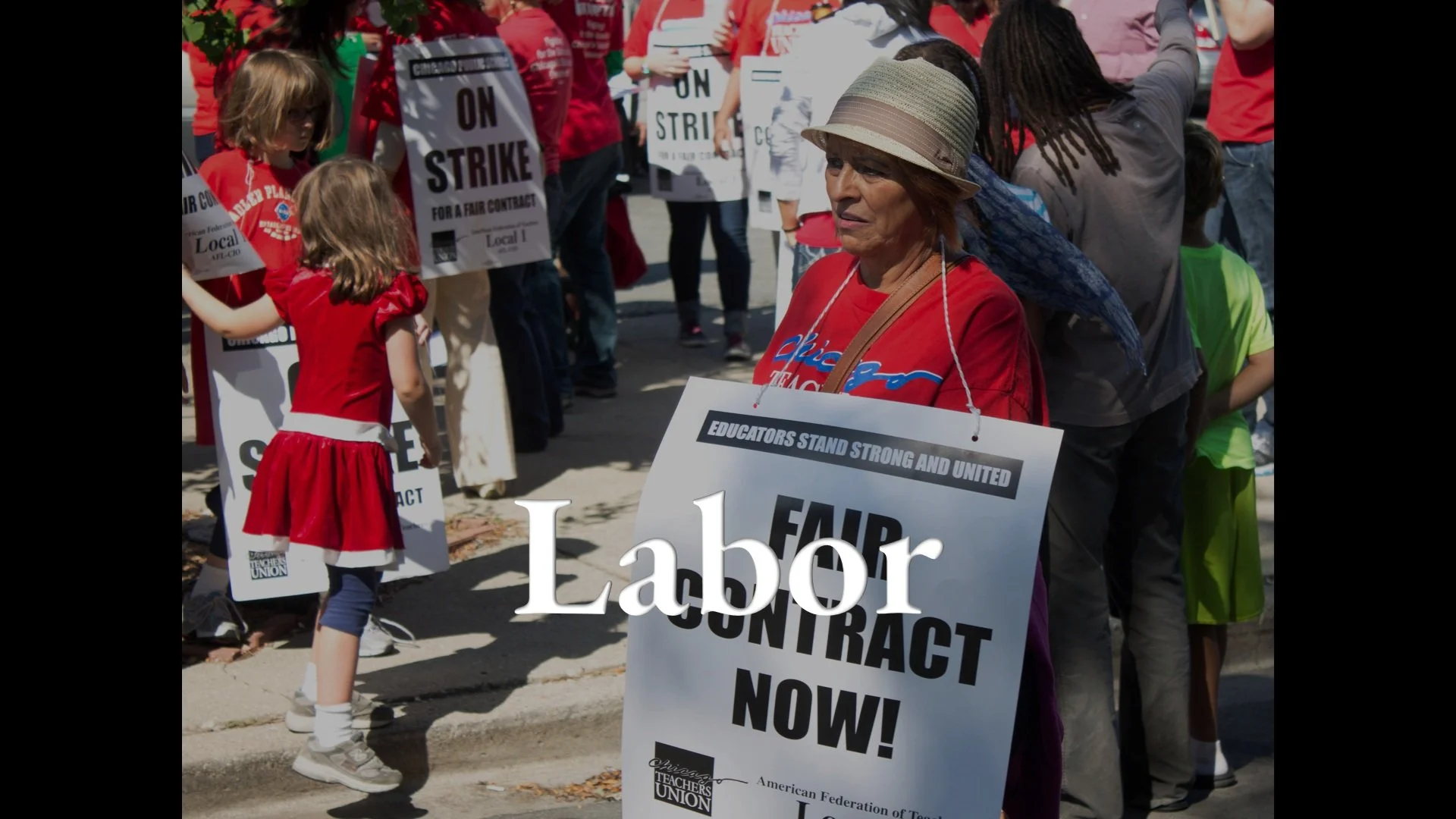
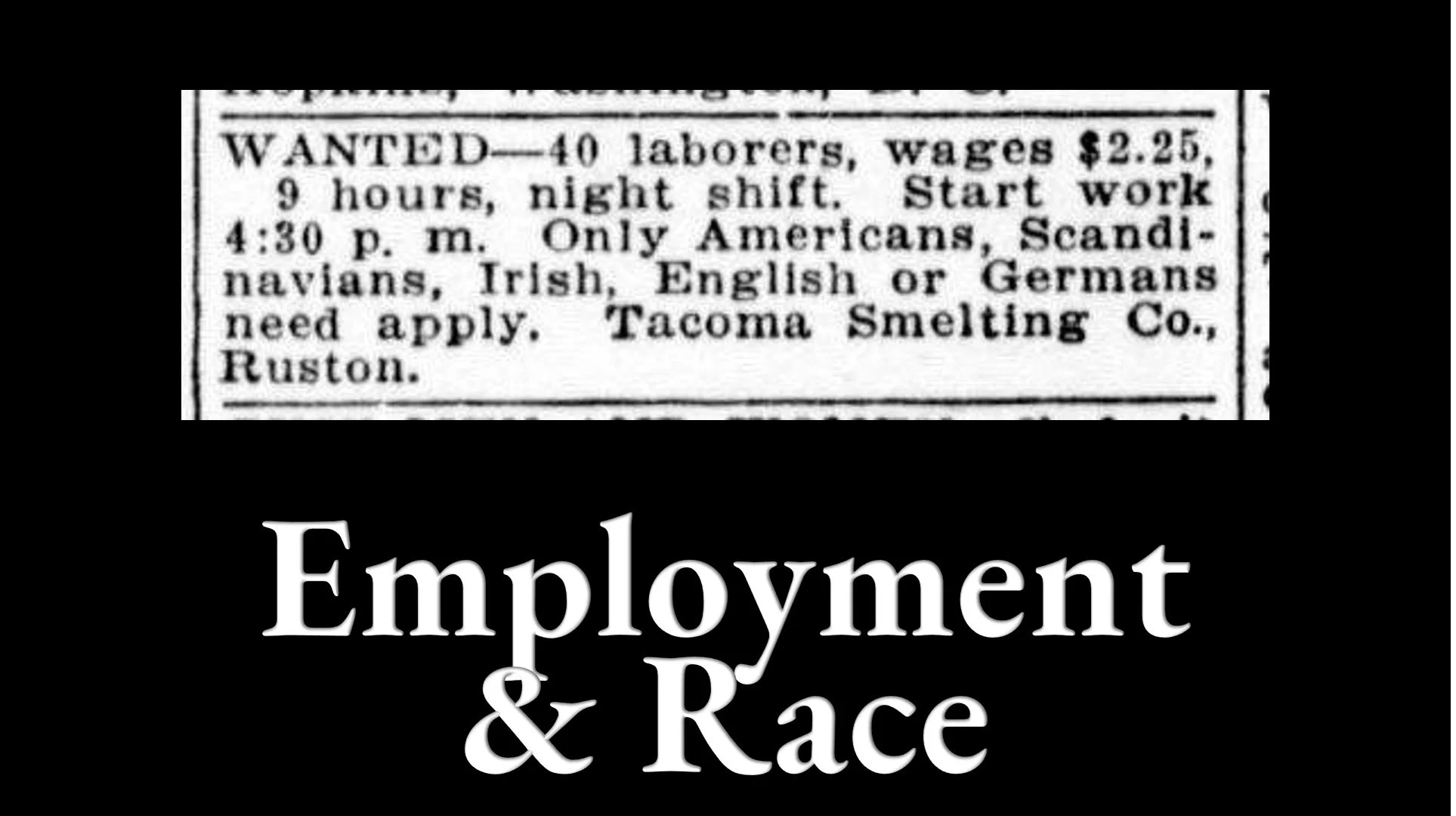

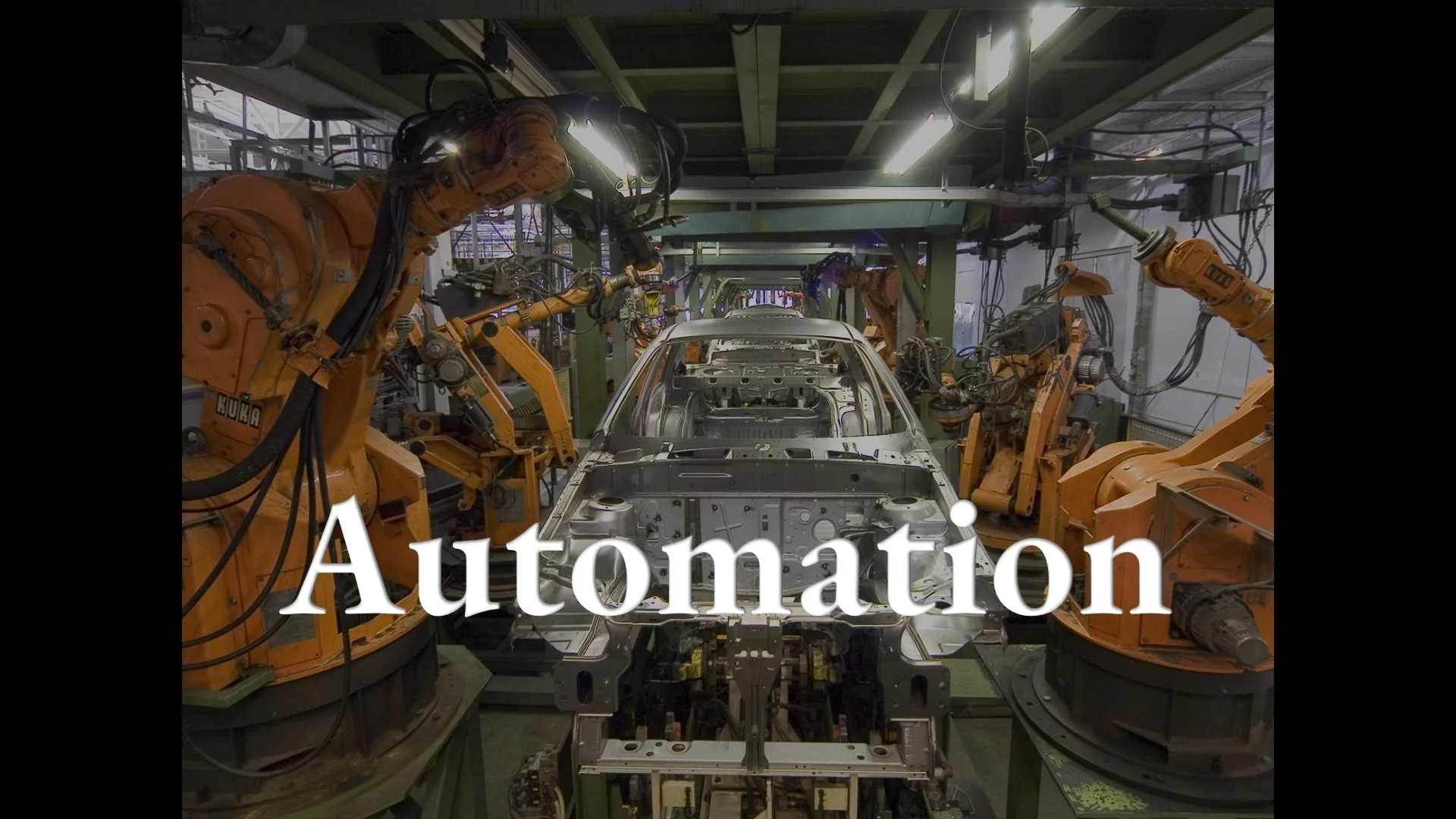




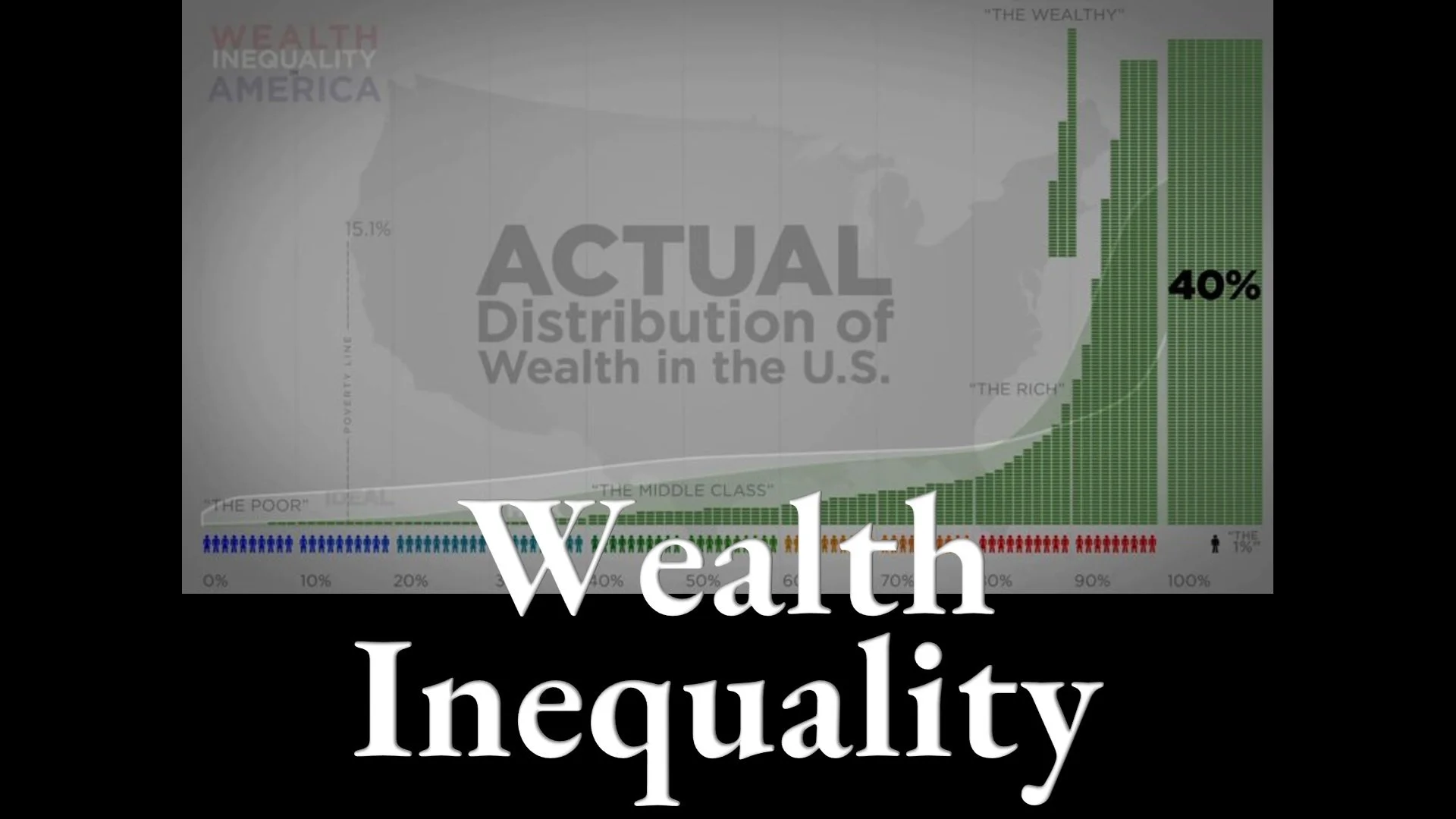
Christian Restorative Justice Critique of the Right: Domestic Policy Topics:





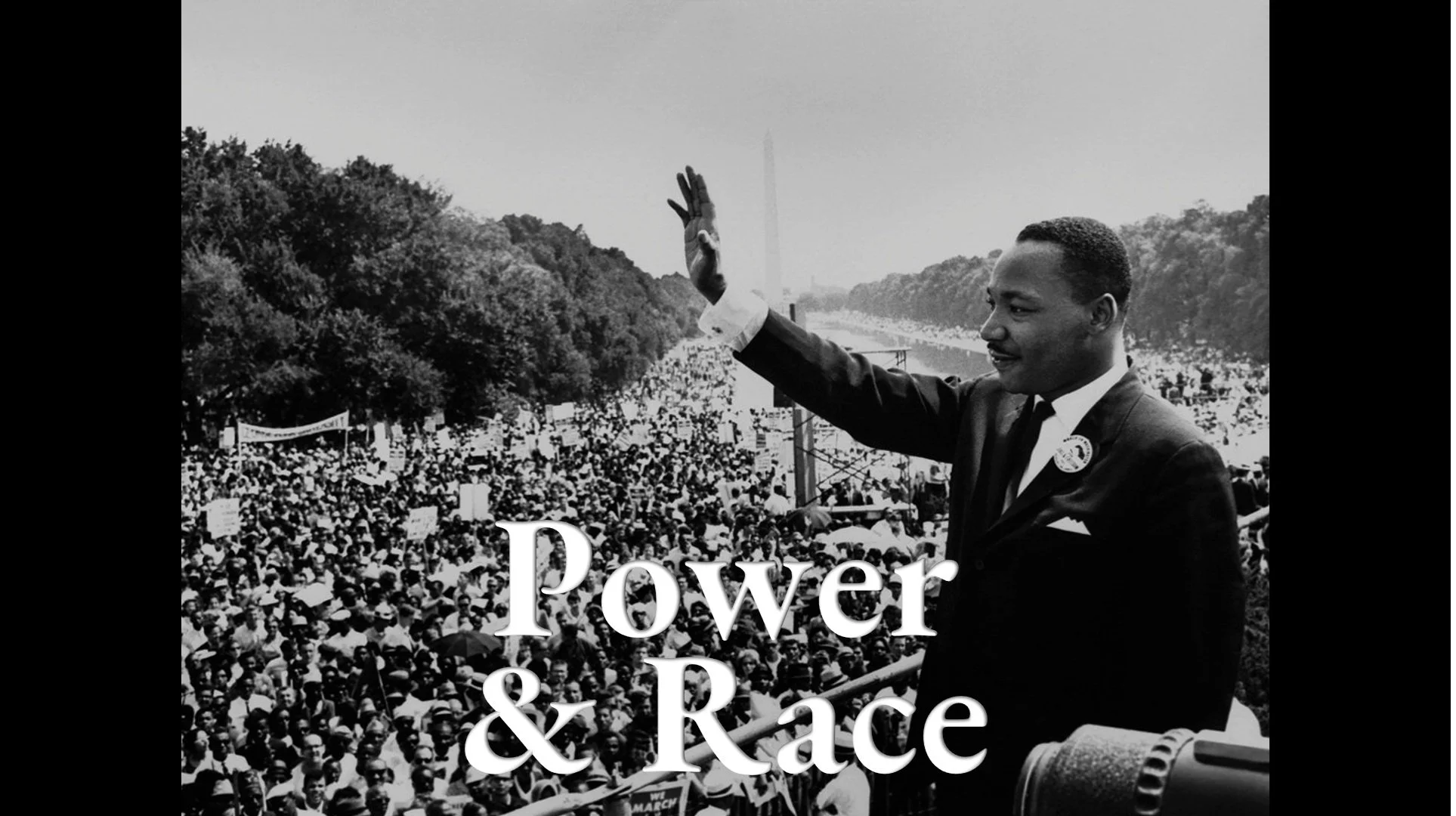



Christian Restorative Justice Critique of the Right: Philosophical Influences: