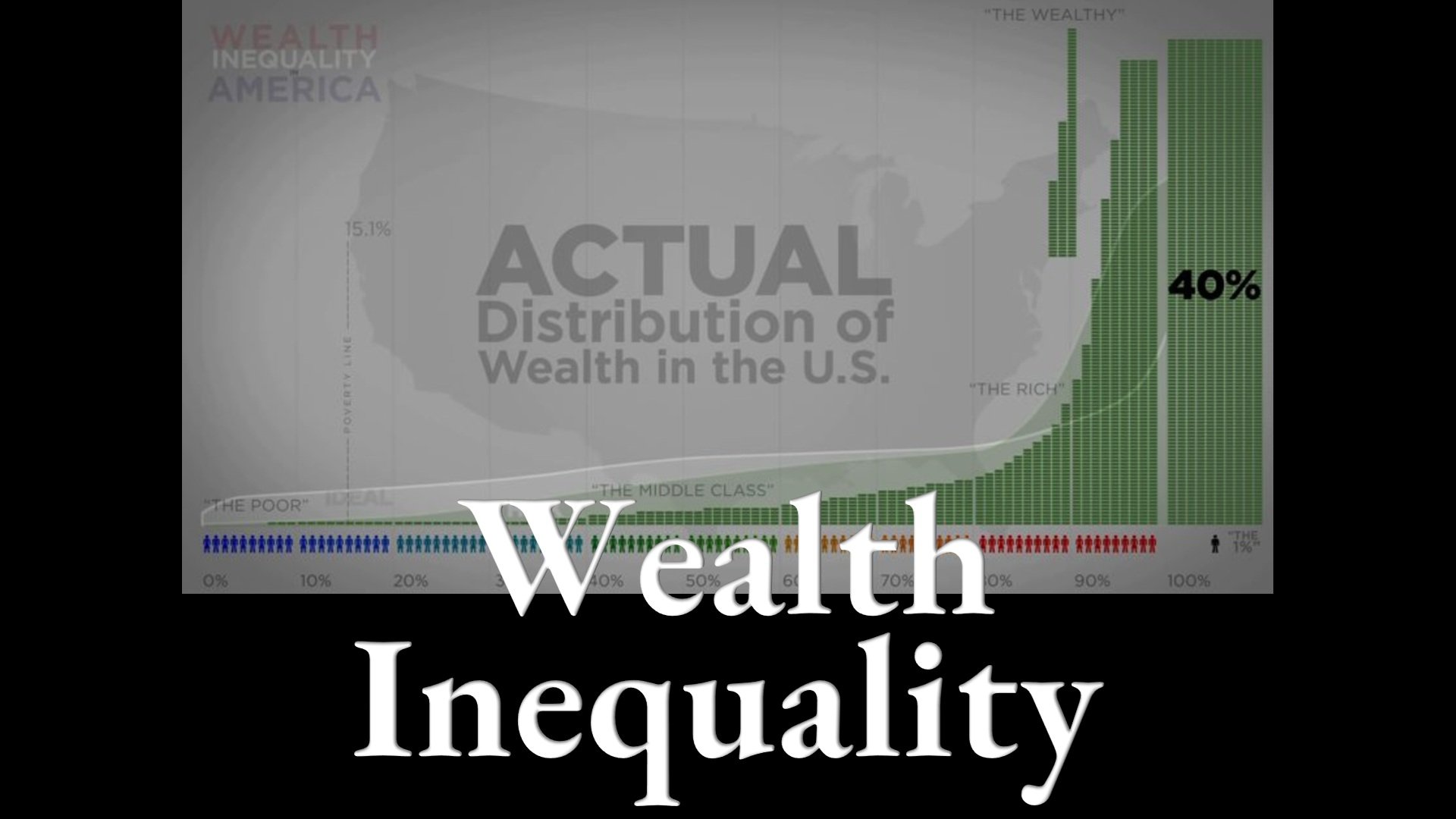
Photograph: Wealth Inequality In America.
Introduction
These resources explore God’s creation order and its meaning as God’s vision for relationships between human beings, and also between human beings and the created world.
Messages and Resources

How do Christian heresies contribute to America’s racial and political climate? Could Christian history have gone differently? Could it still? This series of blog posts explore how Christian (mostly Protestant) heresies started and continue to influence our modern political and racial challenges, including in housing, schooling, policing, and business systems. See the whole course or just the blog posts.

Plantation Capitalism vs. Jesus’ Jubilee Economy
Register for our Thinkific course using the link. If you are interested in ecology, environment, and climate change, you will especially appreciate Video 2: Plantations vs. Planet; Producer vs. Consumer. We examine Jesus’ teaching on the relationships of Plantations vs. Planet, and Producers vs. Consumers — the first 2 of the 12 relationships we will cover. And: Why do we take a public good, common good approach to Christian faith and public policy? Because Jesus’ teaching & story require us to be concerned about other-harm. He carries forward Israel’s wisdom impacting Gentiles in uplifting the poor and oppressed (we look at 5 examples). You will also appreciate Video 5: Labor vs. Capital; Privatizers vs. Common Goods. We examine Jesus’ teaching on the relationships of Labor vs. Capital and Privatizers vs. Common Goods. Jesus asserted his claim on all creation and all people. So he extended the relational vision of God for human flourishing, where human health and land health, along with human rights and labor rights took clear priority over the rights of capital and the ability of elites to use money to make more money.

Mako Nagasawa, John Locke’s Theology of Private Property, edited by Grace Tien and Maria Eugenia Funes, Religion and Racial Capitalism. Palgrave MacMillan, 2025.
American libertarians and private property absolutists appeal to John Locke, remembered as an English political philosopher. Locke originally positioned himself, however, as a biblical scholar and theologian. As such, Locke departed from Christian tradition. I argue the relationship between Locke’s political philosophy and the Bible is that of a parasite and its host. Christian leaders prior to Locke believed that the earth is the Lord’s, the fruit of the earth belongs to all, and the political community could modify property in various ways because it was ethically and chronologically prior to private property. Locke, however, argued that individuals first create private property by enclosing land and laboring on it, then bring their private properties into political society, which was meant by God to defend individual property rights. He thereby defended both the English Revolution of 1688 and also English colonialism in the Americas.
-
Matt Perman, 11 Objections on Giving to the Poor Answered by Jonathan Edwards. Matt Perman, Aug 11, 2014. An abbreviated outline of Jonathan Edwards’ sermon “The Duty of Christian Charity: Explained and Defended.”
Dawson Vosburg, Do the Poor Cause Their Own Poverty? Evangelical Labor Institute, May 19, 2021 “If the behaviors in and of themselves are not the cause of poverty but are simply indicators that someone is more likely to be poor, what is the additional factor causing the person to be poor? It is the distribution of income.”
-
Gary Stevenson, What Would an Honest Debate About a Wealth Tax Look Like? Gary’s Economics, Jul 12, 2026. Gary usually does not cover his data and analytics, but in this case he does, referring especially to economics Gabriel Zucman. Gary is excellent, however, at thought exercises and dispelling political distractions; and in this video, Gary is at his very best. Example: Rich people often say that it’s hard to correctly evaluate their wealth. But rich people do it all the time. Jeff Bezos’ wife Mackenzie Scott did it during their divorce.
Gary Stevenson, How COVID-19 Makes the Rich Richer - Gary Explains the Theory. Garys Economics, Jul 14, 2020. A step by step explanation for why the wealthy get richer: They loan money to the public by buying bonds, and buy private assets at lower costs during downturns.
The Infographics Show, Middle Class Crushed as Billionaires Take Everything. The Infographics Show, Aug 27, 2025.
“Are you rich? Odds are, you never will be. The system isn’t broken, it’s working exactly as designed. From stagnant wages and student debt, to skyrocketing housing costs and the tax loopholes that keep billionaires untouchable, the game was rigged before you even started playing. On today’s episode of The Infographics Show, we’re breaking down why wealth is harder than ever to build, and how the American Dream became a nightmare for most. We’ll explore why wages haven’t kept pace with inflation since the 1970s, how the decline of unions and the rise of mega-corporations crushed small businesses, and why home ownership, the single biggest wealth builder in history, is now out of reach for entire generations. You’ll see why the richest 1% continue to hoard nearly all new wealth, why financial advisors and elite universities serve only the already-privileged, and why social mobility in the U.S. has collapsed to one of the lowest rates in the developed world. From the myth of “work hard, get rich” to the cold reality of capital gains, inherited wealth, and exclusive networks, we’ll reveal the hidden mechanics keeping the rich rich, and everyone else stuck on the treadmill. If you’ve ever wondered why you’re working harder than ever but still can’t get ahead, this video explains the brutal truth.”
Daniel Markovitz, Why Meritocracy Is Fundamentally Flawed. The Institute of Art and Ideas, Mar 26, 2026. A 20 minute video. The current variation of US meritocracy is responsible for ever-increasing inequality and societal decay. Children do not start on a level playing field. Elites use wealth to protect themselves.
-
Wealth Inequality (website)
The Opportunity Atlas (website)
Earl Shorris, As a Weapon in the Hands of the Restless Poor. Harper's Magazine, Sep 1997.
Kevin Phillips, Wealth and Democracy: A Political History of the American Rich. Crown | Amazon page, 2002.
Jonathan Kozol, Shame of the Nation: Restoring Apartheid Schooling in America. Crown | Amazon page, 2005.
Travis Plunkett and Karen Kavanaugh, Financial Security and Mobility, Economic Mobility Project. Pew Research Trust.
The Racial Gap Increases Fourfold, Institute on Assets and Policy at Brandeis, May 2010. Brandeis University, 2010.
The U.S. Income Gap Triples, 1979 - 2007. Center on Budget and Policy Priorities, Jun 25 2010.
Wealth Inequality in America. Politizane, Nov 20, 2012. A 6 minute video.
Joseph Stiglitz, The Great Divide. New York Times, 2012 - 2014. A series on inequality — the haves, the have-nots and everyone in between — in the United States and around the world, and its implications for economics, politics, society and culture
Stacey Patton, The Ph.D. Now Comes With Food Stamps. Chronicle of Higher Education, May 6, 2012.
Heather Stewart, Wealth Doesn't Trickle Down - It Just Floods Offshore, Study Reveals. The Guardian, Jul 21, 2012.
Kenneth Rapoza, The China Miracle: A Rising Wealth Gap. Forbes, Jan 20, 2013.
Associated Press, Silicon Valley Adds Tech Jobs, Homeless. FoxNews, Mar 11, 2013.
The U.S. Income Gap Highest Ever. Boston Globe, Sep 28, 2010.
Joseph Stiglitz, Equal Opportunity, Our National Myth. New York Times, Feb 16, 2013.
Scott Timberg, Jason Lanier: The Internet Destroyed the Middle Class. Salon, May 12, 2013.
UBC Media Release, Poverty Impairs Cognitive Function. UBC News, Aug 29, 2013.
Elizabeth Warren, The Coming Collapse of the Middle Class. youtube video, Feb 1, 2008.
Jason DeParle, Harder for Americans to Rise from Lower Rungs. New York Times, Jan 4, 2012.
Dorothy Brown, How Home Ownership Keeps Blacks Poorer Than Whites. Forbes, Dec 10, 2012.
Chuck Collins, 99 to 1: How Wealth Inequality Is Wrecking the World and What We Can Do about It. 2012.
Chuck Collins, Wealth Inequality, Inherited Advantage, and Declining Mobility. Inequality.org, May 29, 2013.
Sendhil Mullainathan and Eldar Shafir, Scarcity: Why Having Too Little Means So Much. Times Books | Amazon page, Sep 2013.
“Busy people fail to manage their time efficiently for the same reasons the poor and those maxed out on credit cards fail to manage their money. The dynamics of scarcity reveal why dieters find it hard to resist temptation, why students and busy executives mismanage their time, and why the same sugarcane farmers are smarter after harvest than before. Once we start thinking in terms of scarcity, the problems of modern life come into sharper focus, and Scarcity reveals not only how it leads us astray but also how individuals and organizations can better manage scarcity for greater satisfaction and success.”
C.W. and A.J.K.D., Get a Life. The Economist, Sep 24, 2013. on working hours and productivity
Richard Reeve, The Glass Floor Problem. New York Times, Sep 29, 2013. about social mobility
Derek Thompson, How America's Marriage Crisis Makes Income Inequality So Much Worse. The Atlantic, Oct 2, 2013.
Annie Lowrey, Switzerland's Proposal to Pay People for Being Alive. New York Times, Nov 12, 2013.
Jenny Shank, Utah Is on Track to End Homelessness by 2015 With This One Simple Idea. Nation Swell, Dec 19, 2013.
Dylan Matthews, Everything You Need to Know About the War on Poverty. Washington Post wonkblog, Jan 8, 2014.
Economist, Sex, Brains, and Inequality: How Sexual Equality Increases the Gap Between Rich and Poor Households. Economist, Feb 6, 2014.
Mark Gongloff, Inequality Is So Bad Even the Super-Rich Are Getting Left Behind. Huffington Post, Feb 11, 2014.
Robin Hayes, Why Ivy League Schools Are So Bad at Economic Diversity. The Atlantic, Feb 27, 2014.
Paul Krugman, Why We're in a New Gilded Age. New York Times Review of Books, Mar 8, 2014.
Thomas Frank, There is No Meritocracy: It's Just the 1% and the Game is Rigged. Slate, Mar 16, 2014.
Richard Florida, The U.S. Cities Where the Poor Are Most Segregated From Everyone Else. The Atlantic Cities, Mar 24, 2014.
Mike Konczal, The Voluntarism Fantasy: Conservatives Dream of Returning to a World Where Private Charity Fulfilled All Public Needs, But That World Never Existed. Democracy Journal, Spring 2014.
Andrew Bouve, What if Walmart Paid Its Employees More? Marketplace, Apr 3, 2014.
Christopher Bergland, Social Disadvantage Creates Genetic Wear and Tear. Psychology Today, Apr 15, 2014.
Maxwell Strachan, The U.S. Is Even More Unequal Than You Realized. Huffington Post, May 1, 2014.
Mark Mellman, Why the Poor Can Have "Things" But Can't Escape Poverty. blog, May 16, 2014.
Les AuCoin, O’ Say! Can You See The Oligarchy? Stir, Jun 30, 2014.
“Rand, neoreactionaries, and the right wing’s revanchist financiers worship the untrammeled pursuit of self-interest as Man’s highest calling. They condemn government . e.g., “collectivism”. as a violation of natural law. They divide society into two types of people, “producers” and “parasites.” Do you really wonder why the Republicans in the House of Representatives refuse to increase the minimum wage or extend unemployment insurance? By their reckoning, either one would throw a bone to society’s leeches. And note how these individuals selectively omit the historic success of Land Grant colleges like Oregon State University and Montana State University, the GI Bill, or the Interstate Highway System—“collectivist” endeavors that helped build the world’s most industrious workforce and most powerful national economy.”
Nick Hanauer, The Pitchforks Are Coming...For Us Plutocrats. Politico, Jul/Aug 2014.
Mark Gongloff, The South is Essentially a Solid, Grim Block of Poverty. Huffington Post, Jul 2, 2014.
John Oliver, Wealth Inequality. Last Week Tonight, Jul 13, 2014.
Tyler Cowen, Income Inequality Is Not Rising Globally. It's Falling. New York Times, Jul 19, 2014.
Daniel Little, Tyler Cowen on Global Inequality. Understanding Society blog, Jul 20, 2014.
Nicholas Kristof, An Idiot's Guide to Inequality. New York Times, Jul 23, 2014.
Stephen Mihm, Where Slavery Thrived, Inequality Rules Today. Boston Globe, Aug 24, 2014.
Paul Krugman, Republicans Aren't Willing to Do the One Thing That Would Help Solve Poverty. Business Insider, Sep 22, 2014.
Charles Marohn, The Conservative Case Against the Suburbs. The American Conservative, Oct 15, 2014.
Pedro Nicolaci Da Costa, Janet Yellen Decries Widening Income Inequality Central Bank Chief Says Wealth Disparity Could Be Impeding Economic Mobility. Wall Street Journal, Oct 19, 2014.
Linda Tirado, Why Poor People Stay Poor. Slate, Dec 5, 2014.
Sally Kohn, Stop Denying the Gender Pay Gap Exists. Even Jennifer Lawrence Was Shortchanged. Washington Post, Dec 17, 2014.
Laura Sullivan, Tatjana Meschede, Lars Dietrich, & Thomas Shapiro, Amy Traub, Catherine Ruetschlin & Tamara Draut, The Racial Wealth Gap: Why Policy Matters. Institute for Assets and Social Policy at Brandeis University, Demos, 2015.
Jodi Kantor, A Brand New World in Which Men Ruled. New York Times, Dec 23, 2014. re: Stanford Class of 1994 and the gender pay gap in high-tech
Faith Karimi, Oxfam: Top 1% Will Own More Than Everyone Else. CNN, Jan 19, 2015.
Economist, America’s New Aristocracy: As the Importance of Intellectual Capital Grows, Privilege Has Become Increasingly Heritable. Economist, Jan 24, 2015.
Penn Loh, How One Boston Neighborhood Stopped Gentrification in Its Tracks. Yes! Magazine, Jan 28, 2015. re: Dudley Street Neighborhood Initiative
Quoctrung Bui, The Fall and Rise of U.S. Inequality, In 2 Graphs. NPR, Feb 11, 2015.
Peter R. Orszag, To Fight Inequality, Tax Land. Bloomberg View, Mar 3, 2015.
Ana Swanson, Max Roser, The Source of American Inequality in One Graph. Washington Post, Mar 9, 2015. on the Gini coefficient
Benjamin Schwarz, Building an Underclass. The American Conservative, Mar 25, 2015. How urban planners helped demolish Britain's working families
Laura Shin, The Racial Wealth Gap: Why A Typical White Household Has 16 Times The Wealth Of A Black One. Forbes, Mar 26, 2015. homeownership #1; education #2; labor markets #3
Christopher Jencks, The War on Poverty - Was It Lost? The New York Review of Books, Apr 2, 2015.
Connor Kilpatrick, Let Them Eat Privilege: Focusing On Privilege Diverts Attention Away from the Real Villains. Jacobin Magazine, Apr 11, 2015.
Orion Jones, For Biggest Economic Bang, Give Middle Class a Windfall. Big Think blog, Apr 2015.
Ana Patricia Munoz, et.al., The Color of Wealth in Boston. Federal Reserve Bank of Boston, Apr 27, 2015.
Richard Rothstein, From Ferguson to Baltimore: The Fruits of Government-Sponsored Segregation. Economic Policy Institute, Apr 29, 2015.
Annie Lowrey, David Brooks Isn't Buying Your Excuses, Poor People. New York Magazine, May 1, 2015.
Gregor Aisch, et.al., The Best and Worst Places to Grow Up: How Your Area Compares. New York Times, May 3, 2015.
Robert Reich, America's Economy is a Nightmare of Our Own Making. Salon, May 3, 2015.
Terrence McCoy, Meet the Outsider Who Accidentally Solved Chronic Homelessness. Washington Post, May 6, 2015.
Steve Roth, No: Rich People Don't Work More. Asymptosis blog, May 11, 2015.
Jason Furman, Smart Social Programs. New York Times, May 11, 2015.
Sam Fleming and Demetri Sevastopulo, US Economic Recovery Masks Tale of Many Cities. Financial Times, May 26, 2015.
Press Association, Well-Off Families Create Glass Floor to Ensure Children's Success, Says Study. The Guardian, Jul 26, 2015.
Stan Sorscher, Inequality — “X” Marks the Spot — Dig Here. Huffington Post, Jul 29, 2015. about cultural change around 1975, but what about legal?
Mike Konczal, How the Rich Can Keep Their Homes, Businesses, Artwork, and Wealth Tax-Free—Forever. The Nation, Jul 30, 2015.
Ester Bloom, The Decline of Domestic Help. The Atlantic, Sep 23, 2015. “The absence of maids—exploited, largely invisible workers who decades ago made keeping a house in order look much easier—is one of the biggest reasons today’s middle-class families feel stretched for time.”
Sam Fleming and Shawn Donnan, America's Middle Class Meltdown: Core Shrinks to Half of U.S. Homes. Financial Times, Dec 9, 2015.
University of Maryland, Society's Level of Mobility Influences How Members Treat Outsiders. University of Maryland, Dec 10, 2015.
Ben Casselman and Andrew Flowers, Rich Kids Stay Rich, Poor Kids Stay Poor. FiveThirtyEight, Feb 1, 2016.
Stacey Tisdale, The Black Elite: A Look Inside Black America’s Widening Wealth Gap. Black Enterprise, Mar 8, 2016.
Katie Johnston, Half of City's Residents Make Less Than $35,000 a Year, Study Says. Boston Globe, Mar 15, 2016.
Heather Knight, What San Franciscans Know About Homeless Isn't Necessarily True. San Francisco Chronicle, Apr 1, 2016.
Katha Pollitt, Evicted by Matthew Desmond Review – What If the Problem of Poverty Is That It's Profitable to Other People? The Guardian, Apr 7, 2016.
Michael A. McCarthy, Don’t the Rich Deserve to Keep Their Money? Jacobin Magazine, Apr 18, 2016.
Thomas B. Edsall, How the Other Fifth Lives. New York Times, Apr 27, 2016. about the self-segregation of the wealthy
Robert H. Frank, Why Luck Matters More Than You Might Think. The Atlantic, May 2016. subtitled "When people see themselves as self-made, they tend to be less generous and public-spirited"
Dean Mosiman and Doug Erickson, Minnesota Provides Ample Funding, Leadership, Direct Approach on Homelessness. Wisconsin State Journal, Jun 5, 2016.
Dennis Rasmussen, The Problem With Inequality, According to Adam Smith. The Atlantic, Jun 9, 2016. subtitled "The allure of extreme wealth can contort human sympathies, causing the public to admire the wealthy and shun the poor"
David H. Freedman, The War on Stupid People: American Society Increasingly Mistakes Intelligence for Human Worth. The Atlantic, Jul/Aug 2016.
C. Nicole Mason, The What Causes Poverty? Not a Lack of Money, But a Lack of Social Relationships. Big Think, Aug 24, 2016.
Molly Redden and Jana Kasperkevic, Wage Gap Between White and Black Americans Is Worse Today Than in 1979. Guardian, Sep 20, 2016.
Chuck Collins, Born on Third Base: A One Percenter Makes the Case for Tackling Inequality, Bringing Wealth Home, and Committing to the Common Good. Chelsea Green Publishing | Amazon page, Sep 23, 2016.
Derek Thompson, Obama's War on Inequality. The Atlantic, Sep 26, 2016.
David Leonhardt, The American Dream, Quantified at Last. New York Times, Dec 8, 2016. and Bill Chappell, U.S. Kids Far Less Likely To Out-Earn Their Parents, As Inequality Grows. NPR, Dec 9, 2016. about intergenerational mobility
Trymaine Lee, Geography of Poverty: A Journey Through Forgotten America. MSNBC News, Dec 2016.
The Economist, Place-Based Economic Policies as a Response to Populism . The Economist, Dec 15, 2016. with helpful comparison US vs. EU; noting history of land-grant universities
James Watkins, The Man Behind the Most Important Chart of 2016 . The Daily Dose, Dec 19, 2016.
Neil Gilbert, Prosperity, Not Upward Mobility, Is What Matters. The Atlantic, Jan 5, 2017.
Larry Elliot, World's Eight Richest People Have Same Wealth as Poorest 50%. Guardian, Jan 15, 2017.
Alana Semuels, America’s Great Divergence. The Atlantic, Jan 30, 2017.
Dunja Djudjic, Dramatic Drone Photos Show a Difference Between the Rich and the Poor. DIY Photography, Feb 1, 2017.
Peter Coy, The Big Reason Whites Are Richer Than Blacks in America. Bloomberg, Feb 8, 2017.
Adrian Florido, Black, Latino Two-Parent Families Have Half The Wealth Of White Single Parents. NPR, Feb 8, 2017.
Janelle Jones, The Racial Wealth Gap: How African-Americans Have Been Shortchanged Out of the Materials to Build Wealth. Economic Policy Institute, Feb 13, 2017.
Walter Scheidel, The Only Thing, Historically, That's Curbed Inequality: Catastrophe. The Atlantic, Feb 21, 2017.
Brian S. Feldman, The Decline of Black Business. Washington Monthly, Mar/Apr/May 2017. "and what it means for American democracy" illuminates the relationship between economic independence and political liberty
Zack Beauchamp, No Easy Answers: Why Left-Wing Economics Is Not the Answer to Right-Wing Populism. Vox, Mar 13, 2017. but critiqued by Marshall Steinbaum, No Easy Answers, Just Bad History. Jacobin Magazine, Mar 17, 2017.
Chris Ladd, Unspeakable Realities Block Universal Health Coverage In The US. Forbes, Mar 13, 2017. on "white socialism"
Janine Jackson, Housing, Community and Land Are Human Rights. Truthout, Mar 24, 2017.
Rutger Bregman, No, Wealth Isn’t Created at the Top. It Is Merely Devoured There. The Guardian UK, Mar 30, 2017.
“There is also a second way to make money. That’s the rentier way: by leveraging control over something that already exists, such as land, knowledge, or money, to increase your wealth. You produce nothing, yet profit nonetheless. By definition, the rentier makes his living at others’ expense, using his power to claim economic benefit… It may take quite a mental leap to see our economy as a system that shows solidarity with the rich rather than the poor. So I’ll start with the clearest illustration of modern freeloaders at the top: bankers. Studies conducted by the International Monetary Fund and the Bank for International Settlements – not exactly leftist thinktanks – have revealed that much of the financial sector has become downright parasitic. How instead of creating wealth, they gobble it up whole. Don’t get me wrong. Banks can help to gauge risks and get money where it is needed, both of which are vital to a well-functioning economy. But consider this: economists tell us that the optimum level of total private-sector debt is 100% of GDP. Based on this equation, if the financial sector only grows, it won’t equal more wealth, but less. So here’s the bad news. In the United Kingdom, private-sector debt is now at 157.5%. In the United States, the figure is 188.8%.”
Abby McCloskley, The American Dream Hinges on Family. National Review, Apr 13, 2017.
Lynn Parramore, America is Regressing into a Developing Nation for Most People. Institute for New Economic Thinking, Apr 20, 2017.
Marshall Steinbaum, Why Are Economists Giving Piketty the Cold Shoulder? Boston Review, May 12, 2017.
Thom Hartmann, Richard Wolff: A Labor Manifesto for the Global Left The Big Picture RT, May 16, 2017.
Economic Policy Institute, The Agenda to Raise America’s Pay. Economic Policy Institute, May 2017.
Richard Reeves, Dream Hoarder: How the American Upper Middle Class Is Leaving Everyone Else in the Dust, Why That Is a Problem, and What to Do About It. Brookings Institution Press | Amazon page, Jun 13, 2017. about how the top 20% builds institutional barriers against the bottom 80% from advancing: housing; zoning; schooling; internships; labor markets. See interview PBS News Hour, How the Upper Middle Class Keeps Everyone Else Out. PBS News Hour, Aug 5, 2017. See review by Rachel M. Cohen, This Is the Wrong Way to Fight Inequality . New Republic, Aug 3, 2017.
A.Q. Smith, It's Basically Just Immoral to be Rich. Current Affairs, Jun 14, 2017. Argues that the right to retain is different from the right to acquire.
Julie Zauzmer, Christians Are More Than Twice as Likely to Blame a Person's Poverty on Lack of Effort. Washington Post, Aug 3, 2017. White evangelicals believe in penal substitution and therefore believe that God's highest justice is meritocratic-retributive. See alsoMatthew Rozsa, Fox News Guest: Food Stamp Recipients Are "Watching Porn" Instead of Working. Salon, Jan 2, 2019. As an example of how discrediting someone's work ethic makes an argument assuming that meritocracy is factual and virtuous.
Dylan Matthews, You're Not Imagining It: The Rich Really Are Hoarding Economic Growth. Vox, Aug 8, 2017. Very helpful charts about income growth.
Noah Smith, How the Top 1% Keeps Getting Richer. Bloomberg, Aug 28, 2017. Less in land and more in stocks.
Amy Goodman, Yanis Varoufakis on Global Capitalism & How Trump’s Tax Plan is Class War Against the Poor. NPR, Nov 3, 2017.
Noah Kirsch, The 3 Richest Americans Hold More Wealth Than Bottom 50% Of The Country, Study Finds. Forbes, Nov 9, 2017.
Tanza Loudenback, According to One Estimate, Wealthy Couples in NYC Need $190 Million to Keep Their Heads Above Water. Business Insider, Nov 17, 2017.
Katharine Schwab, The Airbnb For Affordable Housing Is Here. Co.Design, Nov 21, 2017.
Ryan D. Enos, How Segregation Leads to Racist Voting by Whites. Vox, Nov 28, 2017.
Helaine Olen, Why Don't America's Rich Give More to Charity? The Atlantic, Dec 16, 2017.
Sunbeam Television, Study: Massachusetts Single Parents Spend More Than 70 Percent of Income on Child Care. News 7 Boston, Dec 27, 2017.
Noah Smith, Land is Underrated as a Source of Wealth. Bloomberg, Jan 2, 2018.
Henry Grabar, California Bill Would Allow Unrestricted Housing by Transit, Solve State Housing Crisis. Slate, Jan 5, 2018.
Rachel M. Cohen, The Fight for the Suburbs. New Republic, Jan 17, 2018.
Aaron Glantz and Emmanuel Martinez, Kept Out: How Banks Block People of Color from Homeownership. Associated Press, Feb 15, 2018.
Jason Silverstein, Trump's Alternative to Food Stamps Is Unrealistic, Unhealthy, and Offensive . Tonic, Feb 15, 2018.
Tom Keane, Let's Face It. There Will Never Be Room for the Middle Class in Boston . Boston Globe, Feb 20, 2018.
Emerging Technology from the arXiv, If You’re So Smart, Why Aren’t You Rich? Turns Out It’s Just Chance. MIT Technology Review, Mar 1, 2018. “So if not talent, what other factor causes this skewed wealth distribution? “Our simulation clearly shows that such a factor is just pure luck,” say Pluchino and co.”
Emily Badger, Claire Cain Miller, Adam Pearce, and Kevin Quealy, Extensive Data Shows Punishing Reach of Racism for Black Boys. New York Times, Mar 19, 2018.
Ralph Richard Banks, An End to the Class vs. Race Debate. New York Times, Mar 21, 2018. cites Raj Chetty's research at the Equality of Opportunity Project
Alieza Durana, Stop Tackling Poverty. Slate, Mar 27, 2018.
Alana Semuels, Chicago's Awful Divide. The Atlantic, Mar 28, 2018.
German Lopez, Christina Animashaun, and Javier Zarracina, How America Has — and Hasn’t — Changed Since Martin Luther King Jr.’s Death, in 11 Charts. Vox, Apr 4, 2018. From economic well-being to criminal justice issues, racial inequality is still very real in America.
Maura Dolan, Prior Salary Can't Justify Wage Gap Between Men and Women, U.S. Appeals Court Rules. Los Angeles Times, Apr 9, 2018.
Paul Heideman, Socialism and Black Oppression. Jacobin Magazine, Apr 2018.
The Atlantic, The 99% Is a Myth—Here's How It Breaks Down. The Atlantic, May 16, 2018. a 3 minute video about the 9.9% which comprises the new aristocracy because of income mobility loss, based on the article by Matthew Stewart, The 9.9 Percent Is the New American Aristocracy. The Atlantic, June 2018. although critiqued by Jordan Weissmann, Actually, the 1 Percent Are Still The Problem. Slate, May 18, 2018.
Alec MacGillis, Why Do Americans Stay When Their Town Has No Future? Bloomberg, May 23, 2018. about the importance of place-based economics and the sympathies of the public when it affects white people
Emily Peck, Everyone Is Missing A Key Reason The U.S. Birth Rate Is Declining In the U.S. Huffington Post, May 27, 2018. Women are essentially punished for having kids.
Lynn Parramore, Meet the Economist Behind the One Percent’s Stealth Takeover of America. Institute for New Economic Thinking, May 30, 2018. "Nobel laureate James Buchanan is the intellectual linchpin of the Koch-funded attack on democratic institutions, argues Duke historian Nancy MacLean"
Jessica McCrory Calarco, Why Rich Kids Are So Good at the Marshmallow Test. The Altantic, Jun 1, 2018. Affluence—not willpower—seems to be what’s behind some kids' capacity to delay gratification.
The Atlantic, Healing the Divide: An Atlantic Forum on Health Equity. The Atlantic, Jun 13, 2018.
Douglas Rushkoff, Survival of the Richest. Medium, Jul 5, 2018. Re: how the ultra-wealthy want safety and immortality as an escape from the rest of humanity.
New Economic Thinking, When Meritocracy Breeds Greed. New Economic Thinking, Jul 18, 2018.
Estelle Sommeiller and Mark Price, The New Gilded Age: Income Inequality in the U.S. by State, Metropolitan Area, and County. Economic Policy Institute, Jun 19, 2018.
Ian Bremmer, Trump’s Not the Problem. He’s a Symbol of 4 Bigger Issues. Big Think, Aug 1, 2018. Neoliberal globalization drains work and wealth from people, making them resent immigrants for the opportunities and benefits they receive in the country; veterans return from wars feeling dejected and despondent; technology automates jobs away and drives people apart through social media. Compares populist movements to Japan, which largely rejected neoliberalism, immigration, war, and social media.
Madison Matthews and Valerie Wilson, Separate Is Still Unequal: How Patterns of Occupational Segregation Impact Pay for Black Women. Economic Policy Institute, Aug 6, 2018. The myth of meritocracy shows itself to be a myth.
Nick Surgey, Zaid Jilani, The Koch Brothers Commissioned a Survey of Americans and Found Most Like a $15 Minimum Wage, Free College, and Universal Health Care. The Intercept, Aug 9, 2018.
Thomas Koulopoulos, Success Harvard, Stanford, and MIT Researchers Study 1 Million Inventors To Find Secret To Success, And It's Not Talent. Inc., Aug 14, 2018. Entrepreneurs are white, male, with rich parents; the myth of meritocracy shows itself to be a myth
Peter Georgescu, America's Real Economy: It Isn't Booming. Forbes, Aug 22, 2018.
Robert D. Martin, The Macho Sperm Myth. Aeon, Aug 23, 2018. “The idea that millions of sperm are on an Olympian race to reach the egg is yet another male fantasy of human reproduction” how men perceive biology through the lens of the myth of meritocracy.
Andrew Yang, Success in America Has Nothing To Do With Hard Work - and We're in the Middle of a 'War on Normal People'. Business Insider, Sep 1, 2018. the myth of meritocracy shows itself to be a myth
Matthew Desmond, Americans Want to Believe Jobs Are the Solution to Poverty. They’re Not. New York Times, Sep 11, 2018. The myth of meritocracy shows itself to be a myth.
Noah Smith, Ben Carson and HUD Get Ready to Take On the Nimbys. Bloomberg, Sep 12, 2018. Proposal to roll back "not in my backyard" zoning rules to allow more housing development.
Ted Knutson, Retirement Is In Peril For Most Working Class Americans, Warns New Report. Forbes, Sep 17, 2018. Nearly four of five working Americans are falling short of retirement savings targets, partly as a lingering effect of the financial crisis of 2008.
Joe Pinsker, ‘I Got Into Yale’ Isn’t a Moral Defense. The Atlantic, Sep 28, 2018. subtitled "When Brett Kavanaugh found his conduct in question on Thursday, he twice responded by referring to his Ivy League degrees" highlighting the rhetoric of "meritocracy" used to disguise inherited wealth"
Mehrsa Baradaran and Darrick Hamilton, Elizabeth Warren’s New Housing Proposal Is Actually a Brilliant Plan to Close the Racial Wealth Gap. Slate, Oct 26, 2018.
Jovanka Beckles, Solving California's Housing Crisis. Jacobin Magazine, Nov 5, 2018.
Joseph E. Stiglitz, The American Economy is Rigged. Smithsonian, Nov 1, 2018.
Alana Semuels, Amazon’s HQ2 Will Only Worsen America’s "Great Divergence". The Atlantic, Nov 13, 2018.
Sarah Jones, There’s More Evidence That Welfare Work Requirements Don’t Lift People Out of Poverty. NY Magazine, Nov 13, 2018.
John Harwood, These Charts Show How Democrats Represent the Growing Modern Economy – and How Republicans Are Left Behind. CNBC, Nov 15, 2018. Comparison by districts.
Christopher Ingraham, Politicians Have Caused a Pay 'Collapse' for the Bottom 90% of Workers, Researchers Say. Washington Post, Dec 17, 2018.
"While many economists pin much of the blame for wage stagnation on impersonal market forces, such as free trade and technological change, EPI’s Josh Bivens and Heidi Shierholz contend that specific policy decisions — including efforts to weaken unions, the decay of the minimum wage and monetary policy that prioritizes low inflation over full employment — are responsible for tilting the balance of power away from workers and toward their employers."
Christopher Ingraham, Companies' Pursuit of High Profits is Making the Rich Richer at Everyone Else’s Expense, According to New Research. Washington Post, Dec 31, 2018.
"In 2016, U.S. companies' pursuit of bigger profits through higher prices transferred three percentage points of national income from the pockets of low-income and middle-class families to the wealthy, according to new research on market concentration and inequality. The study, forthcoming in the Oxford Review of Economic Policy, examines how growing corporate power, particularly in industries dominated by shrinking numbers of huge companies, effectively “transfer[s] resources from low-income families to high-income families.”
James K. Galbraith, Piketty's World Inequality Review: A Critical Analysis. Institute for New Economic Thinking, Jan 2, 2019.
Steven K. Vogel, Elizabeth Warren Wants to Stop Inequality Before It Starts. New York Times, Jan 3, 2019. on employee ownership in corporate equity; limitations on executives; etc.
Shensheng Wang, Why Does It Feel Good to See Someone Fail? Salon, Jan 7, 2019. "to feel a pang of pleasure at the misfortune of others is to be human" shows an interesting psychological and spiritual dimension to the desire to believe in meritocracy
Eric Levitz, AOC Thinks Concentrated Wealth Is Incompatible With Democracy. So Did Our Founders. New York Magazine, Jan 24, 2019.
Joe Pinsker, The ‘Hidden Mechanisms’ That Help Those Born Rich to Excel in Elite Jobs. The Atlantic, Feb 26, 2019. "When two sociologists interviewed highly paid architects, TV producers, actors, and accountants, they encountered work cultures that favor the already affluent"; disproves the myth of meritocracy.
Molly Roberts, Ivanka vs. AOC, and the War Over Earning It. Washington Post, Feb 28, 2019. discusses the myth of meritocracy.
David Roberts, The Radical Moral Implications of Luck in Human Life. Vox, Mar 5, 2019. what you inherit by nature and nurture is not earned, but luck
Rebecca Hersher and Robert Benincasa, How Federal Disaster Money Favors The Rich. NPR, Mar 5, 2019. Both disaster damage and FEMA responsiveness.
John Horvat, Real Families Don’t Need Government Programs. The Imaginative Conservative, Mar 24, 2019. Ironic for all the overlooking of real history of government supporting white families.
Rajan Benon, American Meritocracy is a Myth. The Nation, Apr 2, 2019. Higher education and political scandals show how the wealthy cheat the system to tilt the playing field, buying college admissions and economic power.
Dan Meegan, Conservatives Have a Different Definition of ‘Fair’. The Atlantic, Apr 30, 2019. The root visceral impulse at the heart of the myth of meritocracy.
“And liberals ignore it at their peril.” “Conservatives tend to value equity, or proportionality, and they see unfairness when people are asked to contribute more than they should expect to receive in return, or when people receive more than they contribute. Consider a hypothetical comparison of two people who graduated from college five years ago with equal amounts of debt. Jessie successfully implemented a plan to pay off the debt in five years, while Sam still has much to repay. Warren’s plan [for student debt forgiveness] forgives Sam’s debt, but offers nothing to Jessie, despite her industriousness and self-discipline. To add insult to injury, Jessie must contribute tax dollars to the $640 billion fund necessary to forgive outstanding loans, including Sam’s.”
Hugh Son, Citigroup CEO Corbat Defends Bank’s Pay Gap: `I Started in 1983 at $17,000′ Salary. CNBC, May 2, 2019. the dangling carrot that fuels the myth of meritocracy
Katy Scott and Henrik Pettersson, South Africa is the World's Most Unequal Country. 25 Years of Freedom Have Failed to Bridge the Divide. CNN, May 7, 2019.
Governor Lael Brainard, Is the Middle Class within Reach for Middle-Income Families? Federal Reserve, May 10, 2019. points out, “The average wealth of black households in which the head had a bachelor's degree: $271,200, was 26 percent less than that of white households in which the head did not attend college: $367,800.”
Jordan Heller, One Of America’s Most Racially Unequal Cities Has A Plan To Close The Wealth Gap. Huffington Post, May 28, 2019. “The Boston Ujima Project wants to empower those left out of the economy by giving them an economy of their own” with its own currency and trading system
Jake Johnson, 'Eye-Popping': Analysis Shows Top 1% Gained $21 Trillion in Wealth Since 1989 While Bottom Half Lost $900 Billion. Common Dreams, Jun 14, 2019. “The top one percent owns nearly $30 trillion of assets while the bottom half owns less than nothing.”
Daniel Markovitz, The Meritocracy Trap: How America's Foundational Myth Feeds Inequality, Dismantles the Middle Class, and Devours the Elite. Penguis Press | Amazon page, Sep 10, 2019. See review by Thomas B. Edsall, The Meritocracy is Under Seige. New York Times, Jun 12, 2019. See also Sean Illing, How Meritocracy Harms Everyone – Even the Winners. Vox, Dec 14, 2019. See also Daniel Markovitz, Why Meritocracy Is Fundamentally Flawed. The Institute of Art and Ideas, Mar 26, 2026. A 20 minute video. The current variation of US meritocracy is responsible for ever-increasing inequality and societal decay. Children do not start on a level playing field. Elites use wealth to protect themselves.
“A new book by Yale Law professor Daniel Markovits, The Meritocracy Trap, is a fascinating attempt to poke holes in our conventional understanding of meritocracy and, in the process, make the case for something better. We typically think of meritocracy as a system that rewards the best and brightest. For Markovits, it is merely “a pretense, constructed to rationalize an unjust distribution of advantage.””
Anand Giridharadas, Winners Take All: The Elite Charade of Changing the World. Vintage | Amazon page, Oct 2019. See interview by The Majority Report w/ Sam Seder, Guest Destroys Bloomberg Panel On the American Dream Lie. The Majority Report w/ Sam Seder, Jan 19, 2019. how true meritocracy and democracy have been undermined by concentrations of wealth and power; see also Velshi & Ruhle, Is Taxing The Ultra-Wealthy ‘Punishing Success?’ Velshi & Ruhle | MSNBC, Feb 12, 2019.
Derek Thompson, Why Child Care Is So Ridiculously Expensive. The Atlantic, Nov 26, 2019.
“First… labor is the biggest line item for child-care facilities… The industry is highly regulated, perhaps reasonably so, given the vulnerability of the clientele—which is the second key driver of child-care costs… Finally, there’s the real estate. The most expensive child-care facilities tend to be situated near high-income neighborhoods or in commercial districts, where the rents are high.”
Cody Johnston, Katy Stoll, and Katie Goldin, The Dystopian Reality Of All Those "Inspirational" Stories. Some More News, Dec 4, 2019. A 20 minute video about workers getting low wages or no health benefits, in tandem with the rise of GoFundMe’s. “We discuss those feel-good stories about people pullin’ themselves up by their bootstraps that disguises economic suffering with a neatly tied bow.” Shows the myth of meritocracy.
Zeninjor Enwemeka, Women In Boston Still Make Far Less Than Men. For Women Of Color, It's Even Worse. WBUR, Dec 5, 2019.
“Latina women in Greater Boston earned just 45 cents for every dollar white men earn, while black women earned just 49 cents, according to new data unveiled Thursday by the Boston Women's Workforce Council… The new analysis also found that Asian women earned 67 cents for every dollar white men earn, while white women earned 70 cents for every dollar white men earn.”
Laura Flanders, A Growing Movement Shows There Is an Alternative to Capitalism. TruthOut, Jan 2, 2020. “Helping to unpack these ideas are Marjorie Kelly and Ted Howard of the Democracy Collaborative and co-authors of the book, The Making of a Democratic Economy.”
David Leonhardt and Stuart A. Thompson, How Working-Class Life Is Killing Americans, in Charts. New York Times, Mar 6, 2020. including suicide, marriage, chronic pain, alcohol rates.
Hari Sreenivasan, Is Meritocracy a Sham? Amanpour and Company, Mar 6, 2020. “Yale law professor Daniel Markovits says the system that values hard work and promotes the American dream is in itself a sham. He is taking aim at the very structure that made him a success.” The myth of meritocracy.
The Young Turks, Trump’s Stimulus Package Isn’t What You Think. The Young Turks, Mar 20, 2020. Commentary on the Senate Republicans’ stimulus package in response to COVID-19, compared to Joy Reid, Chuck Schumer, Senate Democrats Put Workers First in Coronavirus Bill. MSNBC, Mar 21, 2020. See critique by Rising, Saagar Enjeti Destroys Corporate Republicans’ Regressive Bailout Bill . Rising | The Hill, Mar 20, 2020. and Jake Tapper, Alexandria Ocasio-Cortez Criticizes Trump: This is Going to Cost Lives. CNN, Mar 22, 2020.
Christine Percheski and Christina Gibson-Davis, A Penny on the Dollar: Racial Inequalities in Wealth among Households with Children. American Sociological Association, Jun 1, 2020. and summary by Paul Caine, Study: Black Families Have 1 Cent for Every Dollar White Families Have. WTTW, Jun 10, 2020.
Krystal Ball, The American Dream is Dead, Good Riddance. Rising | The Hill, Jun 13, 2020. a brilliant takedown of the “myth of meritocracy” because of the vision of economic rights
Rob Lieber and Tara Siegel Bernard, The Stark Racial Inequity of Personal Finances in America. New York Times, Jun 16, 2020. “Economic equality is crucial to racial equality. But at nearly every stage of their lives, black Americans have less than whites.”
Abby Vesoulis, 12 Ways the Trump Administration Has Deepened Inequality. Time, Jun 25, 2020.
Matt Bruenig, The Racial Wealth Gap is About the Upper Classes. Jacobin Magazine, Jul 5, 2020. breaks down to deciles both white wealth and black wealth ; a very important analysis with important implications for policy and political discourse
Omri Wallach, How Big Tech Makes Their Billions. Visual Capitalist, Jul 6, 2020. By region, by product
Michael J. Sandel, Disdain for the Less Educated Is the Last Acceptable Prejudice. New York Times, Sep 2, 2020. Sandel challenges the idea myth of a total meritocracy with history and moral luck. Joe Biden’s candidacy “should prompt us to reconsider the meritocratic political project that has come to define contemporary liberalism… We should focus less on arming people for a meritocratic race and more on making life better for those who lack a diploma but who make important contributions to our society — through the work they do, the families they raise and the communities they serve. This requires renewing the dignity of work and putting it at the center of our politics. It also requires reconsidering the meaning of success and questioning our meritocratic hubris: Is it my doing that I have the talents that society happens to prize — or is it my good luck?” See Michael J. Sandel, The Tyranny of Merit: What’s Become of the Common Good? MacMillan Publishers, Sep 2020. See also Rana Foroohar, Why Meritocracy Isn’t Working. Financial Times, Sep 3, 2020. See also Julian Coman, Michael Sandel: ‘The Populist Backlash Has Been a Revolt Against the Tyranny of Merit’. The Guardian, Sep 6, 2020.
Richard Fry, Jeffrey S. Passel, and D’Vera Cohn, A Majority of Young Adults Live with Their Parents for the First Time Since the Great Depression. Pew Research Center, Sep 4, 2020. Suggests much about the rise of home prices, the effect of student loans, and the stagnation of wages. There are some racial differences but the differences have decreased over time.
Nick Hanauer, and David M. Rolf, The Top 1% of Americans Have Taken $50 Trillion From the Bottom 90%—And That's Made the U.S. Less Secure. Time, Sep 14, 2020.
“According to a groundbreaking new working paper by Carter C. Price and Kathryn Edwards of the RAND Corporation, had the more equitable income distributions of the three decades following World War II – 1945 through 1974 – merely held steady, the aggregate annual income of Americans earning below the 90th percentile would have been $2.5 trillion higher in the year 2018 alone. That is an amount equal to nearly 12 percent of GDP—enough to more than double median income—enough to pay every single working American in the bottom nine deciles an additional $1,144 a month. Every month. Every single year.”
See also Rick Wartzman, “We Were Shocked”: RAND Study Uncovers Massive Income Shift to the Top 1%. Fast Company, Sep 14, 2020. “The median worker should be making as much as $102,000 annually—if some $2.5 trillion wasn’t being “reverse distributed” every year away from the working class.”
Krystal Ball, New “Uber for Evictions” Startup Previews Our Hellish Future. Rising | The Hill, Sep 22, 2020. re: Civvl, a new company that subcontracts people to evict tenants. Our capitalist economy pits lower-income people against their brethren.
Adedayo Akala, Cost Of Racism: U.S. Economy Lost $16 Trillion Because Of Discrimination, Bank Says. NPR, Sep 23, 2020. intriguing argument that economic growth happens best when the poor and middle classes are assisted and provided a level playing field
Matt Bruenig, Millionaires and Billionaires Own 79% of All Household Wealth. People's Policy Project, Sep 28, 2020.
Saijel Kishan, Economist Found $16 Trillion When She Tallied Cost of Racial Bias. Bloomberg, Oct 20, 2020. Dana Peterson, who was a Citigroup global economist, recalled her own experiences of bigotry while researching how gaps between Black and White Americans eat into economic output.
Samuel Sigal, Everywhere Basic Income Has Been Tried, in One Map. Vox, Oct 20, 2020.
“The evidence so far suggests that getting a basic income tends to boost happiness, health, school attendance, and trust in social institutions, while reducing crime. But critics worry that it will disincentivize work, cheating economies out of productivity and cheating individuals out of the sense of meaning that work can bring. Plus, they say, it’s just plain unaffordable for the government to pay every citizen enough to live on regardless of whether they work. The evidence so far does not support these critiques, as you’ll see.”
Tom Dickinson, How Trump Took the Middle Class to the Cleaners. Rolling Stone, Oct 26, 2020. “The president promised a return to shared prosperity, but the benefits of his economic policies only bubbled up to the richest”
Christopher Ingraham, Now More Than Ever, the Stock Market Is Not the Economy. Washington Post, Oct 27, 2020.
“Rising 401. k. balances so often cheered by Trump are almost meaningless to most Americans, data show” “That point was underscored recently with the release of the Federal Reserve’s Survey of Consumer Finances, a snapshot of household financial health that is updated every three years. In 2019, it showed, 47.4 percent of U.S. families owned no stock whatsoever. That includes indirect ownership through retirement accounts like 401k plans.”
Economics Explained, How The Dutch Economy Shows We Can't Reduce Wealth Inequality With [Income] Taxes. Economics Explained, Nov 26, 2020. but wealth taxes and capital gains taxes might
Gracy Olmstead, Markets and the Strangulation of the American Family. Mere Orthodoxy, Nov 24, 2020. reviewing Alissa Quart, Squeezed: Why Our Families Can’t Afford America. Ecco | Amazon page, Jun 2018. and Maxine Eichner, The Free-Market Family: How the Market Crushed the American Dream (and How It Can Be Restored). Oxford University Press | Amazon page, Jan 2020. and Matt Bruenig, Family Fun Pack. People’s Policy Project.
Chuck Collins, US Billionaire Wealth Surges Past $1 Trillion Since Beginning of Pandemic . Inequality.org, Nov 25, 2020. “It’s going to be a Billionaire Thanksgiving. The combined wealth of U.S. billionaires has grown 34 percent since March 2020.”
Aimee Picchi, 50 Years of Tax Cuts for the Rich Failed to Trickle Down, Economists Say. CBS News, Dec 17, 2020.
Nicholas Kristof, We Are a Nation of Child Abusers. New York Times, Feb 3, 2021. “But Biden has offered a way to reduce child poverty by half. That would be transformative.” Regarding child poverty and other child-impacting policies.
Christopher Brito, Texas Mayor Resigns After Telling Residents Desperate for Power and Heat “Only the Strong Will Survive”. CBS News, Feb 18, 2021.
Michael Sandel, The Tyranny of Merit. Radboud Reflects, Mar 18, 2021.
Krystal Ball and Saagar Enjeti, Top 9 Billionaires Gain 360 Billion In Collective Wealth During Pandemic. Rising | The Hill, Mar 19, 2021.
Matt Bruenig, Social Wealth Fund for America. People’s Policy Project, Apr 2021. “Social wealth funds are generally defined as “collectively held financial funds, fully owned by the public and used for the benefit of society as a whole.” The concept is also sometimes referred to as “citizen’s wealth funds” or “sovereign wealth funds.” Whatever you call it, the idea is simple: the government directly owns a large pool of income-generating assets and then uses the return on those assets for social welfare purposes.”
Michael Mechanic, Research Proves It: There’s No Such Thing as Noblesse Oblige. The Atlantic, Apr 4, 2021.
“The [manipulated] Monopoly experiment wasn’t the most rigorous science ever, and Piff never published the results, although the study was later replicated by others and referenced in Piff’s popular TED Talk, “Does Money Make You Mean?” But his observations were consistent with a large body of social science finding that people of higher socioeconomic status, compared with those lower down the ladder, are more prone to entitlement and narcissistic behavior. Wealthier subjects also tend to be more self-oriented and more willing to behave unethically in their own self-interest . to lie during negotiations, say, or to steal from an employer. . In one study, Piff and his colleagues stationed a pedestrian at the edge of a busy crosswalk and watched to see which cars would let the person cross. Suffice it to say that Fords and Subarus were far more likely to stop than Mercedeses and BMWs.”
See also commentary by Second Thought, Is the U.S. Really a Meritocracy. Second Thought, May 28, 2021. Explodes the “myth of meritocracy” and links to good resources on social statistics.
Greg Rosalsky, There Is Growing Segregation In Millennial Wealth. NPR, Apr 27, 2021. “Black millennials have had it worst of all: They aren't just falling further and further behind white millennials in building wealth for their families — they're falling further and further behind what previous Black generations amassed in wealth.”
Joint Economic Committee of Congress, Hearing: Examining the Racial Wealth Gap in the United States. Joint Economic Committee, May 12, 2021. Features panelists Dorothy Brown (21:05) on tax policy’s impact on increasing the racial wealth gap, including (42:12) caring for family members who lived during Jim Crow and greater debt; Darrick Hamilton (26:30) on the financial system, Mehrsa Baradaran (31:45) on the financial and housing systems, and Ian Rowe (37:25) on educational systems.
H. Luke Shaefer and Kathryn J. Edin, A Simple Approach to Ending Extreme Poverty. The Atlantic, Jun 2021. “Buried deep in the latest pandemic stimulus package is a transformative idea for helping families.”
Martin Hällsten and Max Thaning, Wealth as One of the “Big Four” SES Dimensions in Intergenerational Transmissions. Social Forces, Oxford University, Jul 2, 2021. “We find that wealth is a distinct dimension of SES that is very different from education, occupation, and income. Parental wealth cannot be substituted for other SES dimensions in understanding child’s wealth attainment. Moreover, parental wealth substantially moderates intergenerational reproduction in other dimensions: The wealthiest have higher reproduction rates in all child outcomes, but in particular for children’s income and wealth. Excluding wealth leads to underestimating intergenerational inequality, aggravated by its qualitatively unique status as an SES resource. We conclude that—alongside the SES resources education, occupation, and income—wealth emerges as an integral and unique dimension of what we choose to call the “big four” of social stratification.”
Asianometry, What Eating the Rich Did For Japan. Asianometry, Oct 10, 2021. discusses the wealthiest families’ monopolistic control over corporations, politics, and natural resources; the Japanese government taxed these families and grew the Japanese economy
Luke Savage, US Billionaires Got 70% More Wealth Under COVID. They Didn’t Deserve Any of It. Jacobin Magazine, Oct 20, 2021.
Kat McKim, The Financial Literacy Gap Doesn’t Exist. Fortune, Nov 10, 2021. “The supposed financial literacy gap doesn’t exist. Kids across the income spectrum have similar levels of financial knowledge, but that knowledge doesn’t put money in the bank for low-income kids, and it won’t fill the United States’ approximately $14 trillion wealth gap.” Which points back to the original driver of wealth inequality: housing and housing policy.
Priya Fielding-Singh, How the Other Half Eats: The Untold Story of Food and Inequality in America. Little, Brown Press | Amazon page, Nov 2021. See interview by Dr. Priya Fielding-Singh, How The Other Half Eats. Thom Hartmann Program, Nov 18, 2021. SNAP benefits run out typically half-way through the month. Poverty influences whether a parent says no to junk food.
The Economist, Why It’s Harder to Earn More Than Your Parents. The Economist, Nov 25, 2021. Refers to socio-economic mobility declines, lack of government assistance on parental leave and child care, etc.; this is significant and telling for the mostly conservative Economist
Second Thought, The Myth of Upward Mobility. Second Thought, Dec 3, 2021. opportunity itself has been commodified, and thus stratified. There is no such thing as equal opportunity. Cites Stanford Center on Poverty and Inequality. Stanford University.
Amanpour and Company, Why Daycare in America Costs More Than College Tuition. Amanpour and Company, Dec 8, 2021. Claire Suddath from Bloomberg News reports. See also Claire Suddath, Why Child Care Is The Most Broken Business In The U.S. NPR, Dec 16, 2021. Suddath explains why child care is so unaffordable in the U.S. and why attempts to provide federal funding for care keep failing in Congress.
Mitchell Thompson, The Secret to the Weston Family’s Wealth Is Exploitation, Not Hard Work. Jacobin Magazine, Dec 23, 2021. “Canada’s ruling class is fond of praising the Westons for representing an ethical form of capitalism. This couldn’t be further from the truth. The Westons made their fortunes by ruthlessly exploiting workers.” Strangely, I initially read this as “the West.” Which is also true. The story drew predictable Christian support: “Disgraced ex-media magnate Conrad Black recently used the pages of his former newspaper to justify the fortunes of the Weston family, the owners of Loblaw Companies Ltd. The wealth of the retail family are, Black claimed, the result of “talent,” “savvy,” and “ability.” The article — an obit for Galen Weston in the National Post — is a pitch-perfect example of elite back slapping and mutual approbation. Black writes fondly of the Westons’ “novel form of Christian capitalism;” the “inborn altruism of their companies;” and their noble “policy of seeking no or minimal public recognition for their good works.””
Peter S. Goodman, Davos Man: How the Billionaires Devoured the World. Amazon page, Jan 2022. See interview by Amy Goodman, "Davos Man": How Billionaires Devour the World & Fuel Global Inequality, Prolonging the Pandemic. Democracy Now, Jan 21, 2022. Peter Goodman discusses Marc Benioff (Sales Force), Stephen Schwarzman (Blackstone Capital), Jeff Bezos (Amazon), etc. and the culture of celebrating CEOs and billionaires for philanthropy. “As many of the world's wealthiest people wrap up virtual talks today at the World Economic Forum based in Davos, Switzerland, Oxfam reports the incomes of 99% of the world's population dropped during the pandemic while the world's 10 richest men saw their wealth double. Meanwhile, vaccine profits have minted at least nine new billionaires at Moderna, BioNTech and China's CanSino, amassing a combined new wealth of over $19 billion.”
John Nichols, Coronavirus Criminals and Pandemic Profiteers: Accountability for Those Who Caused the Crisis. Verso Publishers | Amazon page, Jan 2022. Nichols examines corporate and political leaders who used the pandemic for their own financial gain. See interview by Ariella Thornhill, Billionaires Profited From Our Death & Immiseration During COVID — John Nichols. Jacobin Magazine, Feb 17, 2022.
Francisco Perez, How Do We Build Black Wealth? Understanding the Limits of Black Capitalism. Non-Profit Quarterly, Apr 27, 2022. Why “Black Capitalism” has failed to produce more racial equality economically.
Cody Johnston, A Brief Look at Jordan Peterson. Some More News, Aug 3, 2022. Cody critiques Jordan Peterson as a right-wing ideologue, showing that Peterson rests his claims on social hierarchy, and concentration of wealth and power, occurring in nature even when it does not occur in nature, and even when it is not morally justified. Peterson is a lazy and sloppy “scholar” who often relies on biased, even Nazi, sources. However, Cody provides many more critiques of pure meritocracy, capitalism, and patriarchy.
Claire Suddath, It’s Getting Harder to Be a Woman in America. Bloomberg, Aug 3, 2022. “The US welcomes the employment and economic advancement of women—yet doesn’t actually support them. We’ve finally hit a breaking point.”
Debra Kamin, Home Appraised With a Black Owner: $472,000. With a White Owner: $750,000. New York Times, Aug 19, 2022. “Nathan Connolly and his wife, Shani Mott, say an appraisal company undervalued their home based on their race. The couple has filed a lawsuit in Maryland.”
Gary Stevenson, Debunking Trickle Down Economics. Gary’s Economics, Oct 9, 2022. A 10 minute video. The rich buy houses and other assets, driving up housing prices and rental prices. If you give a lot of money to businesses, businesses might not invest in growth unless there are strong consumers.
Amy Goodman, Pandemic Poverty: Ray Suarez on How COVID-19 Set Back Low-Income Workers in the US, Especially Women. Democracy Now, Dec 27, 2022. “A new series of video reports by the Economic Hardship Reporting Project and The Intercept called “Insecurity” looks at women leaving the workforce, the impact of the expanded child tax credit, and the wave of union organizing during the pandemic. The series spotlights people navigating food, housing and healthcare insecurity — who are falling through the cracks of the social safety net in the process. We feature clips from the series and speak with the host, Ray Suarez, former PBS correspondent and longtime journalist and an author, and Alissa Quart, executive director of the Economic Hardship Reporting Project and author of “Squeezed: Why Our Families Can’t Afford America.””
James Li, Wall Street Is Destroying The American Dream. Breaking Points w/James Li, Feb 5, 2023. Re: Housing.
CNBC, Why the U.S. Can’t End Poverty. CNBC, Mar 7, 2023. 37.9 million Americans are currently living in poverty, accounting for 11.6% of the total population. That’s despite the fact that America ranks first as the richest nation in the world in terms of GDP. Poverty in the U.S. is not only a humanitarian crisis but an economic one as well. About 11% of the federal budget, or $665 billion goes to economic security programs every year. Child poverty alone is estimated to cost the U.S. over $1 trillion based on the latest research. So how did poverty become such a big issue in the U.S. and why is it so difficult to end it? Chapters: 0:00 — Introduction. 02:22 — Reasons. 06:50 — Measuring poverty. 10:59 — Solutions.
Gary Stevenson, The Asset Economy. Gary’s Economics, March 12, 2023. When you save up enough money, usually you go by housing, right? Why? Because you can raise the rent so that you can make passive income. So housing is an asset, and a form of concentrated power. The more the wealthy own housing, the more housing costs will go up, and the more rent will go up. See also Gary Stevenson, The Devaluation of Money. Gary’s Economics, May 21, 2023. Gary asks why it is politically acceptable to say, “Real estate prices have gone up because the market is healthy,” but it is not acceptable to say, “Your wages have been slashed.”
Amy Goodman and Juan Gonzalez, "Poverty, by America": Author Matthew Desmond on How U.S. Punishes the Poor & Rewards the Wealthy. Democracy Now, Apr 18, 2023. Highlights that the mortgage interest deduction is about twice the amount that goes to housing assistance. Desmond also points out successful economic programs like the child tax credit and financial assistance during the COVID pandemic.
“A new study published in the Journal of the American Medical Association finds that poverty is the fourth-greatest cause of death in the United States. Roughly 500 people die from poverty in the U.S. every day. Our guest, sociologist Matthew Desmond, is the author of the new book, Poverty, by America, the follow-up to his Pulitzer Prize-winning book Evicted: Poverty and Profit in the American City. "There's so much poverty in America, not in spite of our wealth, but because of it," says Desmond in an in-depth interview.”
Thom Hartmann, Alarming New U.N. Report Proves Feminists Right - Want to Know What Men Really Think About Women??? Thom Hartmann, Jun 12, 2023.
Luxury Zone, This Family Owns America. Luxury Zone, Jul 7, 2023. A 22 minute video featuring the 10 wealthiest families in the world, starting with #10: Koch family; #9: Ambani family; #8: Bettencourt family of the L’Oreal company; #7: Slim family in Mexico; #6: Wertheimer family which bought Chanel; #5: Mars family of Mars candy; #4: Walton family of Wal-Mart; #3: Arnault family in fashion; #2: Rothschild family of banking, mining, oil, and construction; #1: Saud family.
Andrew Van Dam, How Inheritance Data Secretly Explains U.S. Inequality. Washington Post, Nov 10, 2023.
The Financial Diet, How the Wealthy Gaslight America. The Financial Diet, Dec 27, 2023. Covers class privilege in various areas: The myth of the American dream; stealth wealth; Ivy League universities; rich people’s tax advantages; rich people’s leverage on laws; the Ivanka effect, or when identity politics fail; poverty and race; why money makes people more conservative.
Yanis Varoufakis, Technofeudalism: What Killed Capitalism. Melville House | Amazon page, Feb 2024. See interview by Politics Joe, Yanis Varoufakis Explains How Big Tech Is Economically Dominating Your Life. Politics Joe, Oct 6, 2023.
City Nerd, This Is the Thing That Will Destroy Our Cities. CityNerd, Feb 28, 2024. The top 10 cities with the most income inequality.
BBC, American History’s Biggest Fibs: The American Revolution. BBC, Apr 8, 2024. The U.S. told itself the story of an underdog David fighting the Goliath of the British Empire, but downplayed the decisive role of the French navy. We were dependent on a European power for our independence.
Noah Smith, How Latin America Started to Beat Inequality. Noahpinion | Substack, Apr 20, 2024.
“We study the causal impacts of income on a rich array of employment outcomes, leveraging an experiment in which 1,000 low-income individuals were randomized into receiving $1,000 per month unconditionally for three years, with a control group of 2,000 participants receiving $50/month. We gather detailed survey data, administrative records, and data from a custom mobile phone app. The transfer caused total individual income to fall by about $1,500/year relative to the control group, excluding the transfers. The program resulted in a 2.0 percentage point decrease in labor market participation for participants and a 1.3-1.4 hour per week reduction in labor hours, with participants’ partners reducing their hours worked by a comparable amount. The transfer generated the largest increases in time spent on leisure, as well as smaller increases in time spent in other activities such as transportation and finances. Despite asking detailed questions about amenities, we find no impact on quality of employment, and our confidence intervals can rule out even small improvements. We observe no significant effects on investments in human capital, though younger participants may pursue more formal education. Overall, our results suggest a moderate labor supply effect that does not appear offset by other productive activities.”
Megan McArdle, Cash Alone Prove Inadequate to Solve the Problems of the Poor. Washington Post, Sep 3, 2024. A critique and limited appreciation of UBI.
Michael Burns, Getting Old In America is a Nightmare. Wisecrack, Nov 8, 2024.
Jared Yates Sexton, A Thoroughly Confused Country: An Introduction to Class Politics and a Way Forward. Dispatches from a Collapsing State | Substack, Dec 17, 2024. Sexton argues for a reinvigoration of income and wealth as primary political categories.
Joeri Schasfoort, Economists Dropped $10M in Rural Africa. It Changed Economic Science Forever. Money and Macro, Dec 21, 2024.
“The year is 2014, this is Siaya county in rural Kenya, it is about to become part of one of the biggest free money experiments in history, distributing millions of Dollars to one of the poorest areas on earth. This program is about to fundamentally change the lives of people that are often struggling for food. It is also the first thorough experimental study ever to test the theories from two of the greatest economists who ever lived, Milton Friedman’s theory that rapid increases in the supply of money cause inflation, and John Maynard Keynes’s theory that big spending programs often benefit the economy by a multiple of what was spent… Therefore, I would argue that his statement about inflation that, “There has never in history been an extremely rapid increase in the quantity of money without an inflation has now been proven wrong by this experiment… [On the Keynes’ multiplier effect:]. By following up all transactions over two and a half years, and by comparing low to high treatment areas, Egger and his team calculated that overall GDP was boosted by just over $2.5 for each Dollar distributed by GiveDirectly. This multiplier is higher than most estimates for multipliers in richer economies such as Mexico, Brazil and the U.S.”
Based on the study by Dennis Egger, Johannes Haushofer, Edward Miguel, Paul Niehaus, and Michael Walker, General Equilibrium Effects of Cash Transfers: Experimental Evidence From Kenya. Econometrica, Nov 22, 2022. See Matt Stoller, The Cantillon Effect and GameStop. Matt Stoller Substack, Jan 31, 2021. “Why our politics centers around the unreal world of finance.” The Cantillon Effect is the impact of new currency, printed money, etc. on various players in the economy. This suggests that introducing money into the economy through people in poverty is more effective for stimulating the economy than through banks. A larger meta-analysis is a formal study by Tommaso Crosta, Dean Karlan, Finley Ong, Julius Ruschenpohler, and Christopher Udry, Unconditional Cash Transfers: A Bayesian Meta-Analysis of Randomized Evaluations in Low and Middle Income Countries. Mar 28, 2024.
Kyle Kulinski, Big Tech Robber Barons Make $1 Trillion In 2024. The Kyle Kulinski Show | Secular Talk, Jan 2, 2025.
Dania Perez, America’s Elite: How the Top 1% Could Purchase Nearly Every Home in the Nation. Vera Vita Real Estate, Mar 11, 2025.
The wealth disparity in America has reached a historic milestone. As of late 2024, the combined net worth of America's wealthiest 1% has surged to an unprecedented $49.2 trillion—a figure that nearly matches the total value of every home in the United States, estimated at $49.7 trillion.
The bottom 50% of Americans collectively hold just $3.9 trillion in net worth—less than 8% of what the top 1% possesses. For this lower wealth tier, real estate constitutes nearly half (46.4%) of their total assets, highlighting their heavy reliance on home equity as a store of value.
In comparison, real estate makes up only 12.3% ($6.1 trillion) of the top 1%'s wealth portfolio, with the majority invested in diverse financial assets that have appreciated rapidly in recent decades.
Even more revealing is the mortgage debt burden across wealth brackets:
The bottom 50% owns real estate valued at $4.9 trillion but carries a crushing $3.1 trillion in mortgage debt.
The top 1% holds property worth $6.5 trillion with a comparatively minuscule $411.5 billion in mortgage obligations.
Ashton Jackson, ‘Captain America’ Star Anthony Mackie: ‘We’re Lying to Our Kids’ When We Say Success Comes Just form Hard Work—Luck Is Key, Too. CNBC, Mar 17, 2025.
Ben Norton, Fake 'Populism': How Trump Helps the Rich and Hurts Everyone Else. Geopolitical Economy Report, Mar 25, 2025. Full of statistics and sources.
Steve Keen, Should We Tax the Rich? Prof Steve Keen, Mar 30, 2025. Keen engages with Gary Stevenson. Keen says in a comment, “a wealth tax levied on the increase in asset prices would certainly impact the rich rather than the poor. I’m sympathetic to Gary's agenda--I just want him to get it right on how the government is financed.” Keen argues that taxing wealth is important to help drive housing-asset prices down, although private banks are also driving housing prices up by lending money into the money supply, but also that the government can simply borrow money into existence through government bonds, and finance its operations. He compares to China: China has spent 9.5% of its GDP on infrastructure. Keen believes that the wealthy can evade income taxes, so advocates for wealth taxes. Keen mentions that we should have a form of money that decays over time, thus he seems to embrace inflation to depreciate the currency.
Oscar Ocampo, Wealth Expands After Higher State Taxes on High-Income Earners. Institute for Policy Studies, Apr 28, 2025. A study on revenue and potential in Massachusetts, New York, Rhode Island, and Washington.
“Progressive taxation and a wealth tax on the ultrarich are both effective policy tools that can help reverse inequality and ensure that communities have the health care, schools, and infrastructure they need to thrive. New data produced and analyzed by the Institute for Policy Studies and the State Revenue Alliance show that Massachusetts and Washington State have seen tremendous growth in the number of people with more than $1 million in total wealth since raising taxes on higher earners. The revenue generated from these tax payments exceeded expectations and is helping fund essential programs that expand economic opportunity for all.”
Megan Cerullo and Alain Sherter, Most Americans Don’t Earn Enough to Afford Basic Costs of Living, Analysis Finds. CBS News, May 14, 2025.
Kyle Kulinski, Professor Reveals Dark Truth Of Trump’s America. The Kyle Kulinski Show, Jul 8, 2025. Professor Scott Galloway says, “The bottom line is that rights in democracy has become purely a function of wealth in America. The wealthiest 1% are protected by the law but not bound by it. The bottom 99% are bound by the law but not protected by it.” Your rights are correlated to your wealth.
Heather Long, The Economy is Cracking. This Trend is Most Alarming. Washington Post, Aug 6, 2025. “The U.S. economy is growing ever more reliant on top earners. It’s risky — and tough for the middle class.”
The Infographics Show, Middle Class Crushed as Billionaires Take Everything. The Infographics Show, Aug 27, 2025.
“Are you rich? Odds are, you never will be. The system isn’t broken, it’s working exactly as designed. From stagnant wages and student debt, to skyrocketing housing costs and the tax loopholes that keep billionaires untouchable, the game was rigged before you even started playing. On today’s episode of The Infographics Show, we’re breaking down why wealth is harder than ever to build, and how the American Dream became a nightmare for most. We’ll explore why wages haven’t kept pace with inflation since the 1970s, how the decline of unions and the rise of mega-corporations crushed small businesses, and why home ownership, the single biggest wealth builder in history, is now out of reach for entire generations. You’ll see why the richest 1% continue to hoard nearly all new wealth, why financial advisors and elite universities serve only the already-privileged, and why social mobility in the U.S. has collapsed to one of the lowest rates in the developed world. From the myth of “work hard, get rich” to the cold reality of capital gains, inherited wealth, and exclusive networks, we’ll reveal the hidden mechanics keeping the rich rich, and everyone else stuck on the treadmill. If you’ve ever wondered why you’re working harder than ever but still can’t get ahead, this video explains the brutal truth.”
CNBC, McDonald’s CEO: Middle- and Lower-Income Consumers Are Under a Lot of Pressure Right Now. CNBC, Sep 2, 2025. McDonald’s CEO Chris Kempczinski says the US is a two-tier economy. And, “In our industry, traffic for lower-income consumers is down double digits.” People are skipping breakfast. McDonalds created new options on the value ladder at the lower end.
This Kairos Moment, The Last Look at American Poverty? This Kairos Moment, Sep 26, 2025. Very good statistics as of the end of 2024.
History Meets Finance, How One Family Secretly Controls Italy’s Economy. History Meets Finance, Nov 22, 2025.
“One Italian family controls Ferrari, Fiat, Jeep, Chrysler, Maserati, and Juventus. They own Italy's largest newspaper and manage $200 billion in assets. Meet the Agnellis—Italy's shadow rulers for over a century. From backing Mussolini's fascist regime to becoming NATO's favorite industrialists, the Agnellis perfected the art of playing all sides. They survived two world wars, countless economic crises, and massive corruption scandals—each time emerging richer and more powerful.”
Michael Hirschorn, The Billionaires Have Gone Full Louis XV. New York Times, Dec 14, 2025.
“Just six years ago, 69 percent of respondents to a Cato Institute poll agreed that billionaires “earned their wealth by creating value for others.” An only slightly smaller majority agreed with the statement “We are all better off when people get rich.” Today, one poll after another shows that Americans want the rich to be taxed at higher, even much higher rates… According to the most recent edition of an annual Harris Poll, for the first time, a majority of Americans believe billionaires are a threat to democracy. A remarkable 71 percent believe there should be a wealth tax. A majority believe there should be a cap on how much wealth a person can accumulate.”
Barry Ferns, Epstein Isn’t an Aberration. He’s an Inevitable Outcome. Barry’s Economics, Feb 8, 2026.
“The Epstein Scandal Should Be Called "The Billionaire Scandal." Everyone thinks Jeffrey Epstein was an aberration. The science says he was inevitable. This video breaks down the neuroscience, psychology, and economics that explain how extreme wealth concentration doesn't just create inequality. but manufactures monsters.”
Therese Lee, Epstein Was Not an Aberration. Therese, Feb 9, 2026. Therese examines Thomas Jefferson, the Marquis de Sade, Gilles De Rais, Thomas Thistlewood.
“The release of the Epstein files has reignited global outrage, but treating Jeffrey Epstein as an anomaly misses the terrifying reality: he is not unique. Throughout history, powerful men have utilized their status to exploit and abuse with impunity. In this video, we move beyond the sensationalism of true crime to analyze the historical parallels, comparing Epstein’s network to other figures who leveraged their influence to evade justice. This is a deep dive into the systems that protect abusers and why Epstein Island is just one chapter in a much longer story of patriarchal power.”
Clara Mattei, Why Economics Can't Explain Poverty — It Was Designed Not To | Ingrid Harvold Kvangraven. Forum for Real Economic Emancipation, Mar 18, 2026.
“Oxfam reports the super rich in the Global North extracted over $30 million per hour from the Global South in 2024. So why does mainstream economics keep telling these countries they just need better institutions? Ingrid Harvold Kvangraven (Senior Lecturer in International Development, King's College London; co-author of Decolonizing Economics) explains how the economics discipline systematically erases colonialism, imperialism, and uneven development from its models — and what that erasure costs the majority of people on the planet.”
The People’s Forum, The Story of Capital: Book Launch with David Harvey in Conversation with Adam Tooze. The People’s Forum NYC, Mar 30, 2026.
Martin Wolf, Why the Right Swapped Economics for Culture Wars. The Institute of Art and Ideas, Apr 7, 2026. A 17 minute video. Wolf says in Europe, fascism followed economic decline marked by the decline of manufacturing and the rise of finance. The story of market success doesn’t work well after a colossal economic crisis.
Justine Underhill, This Building Explains the 'American Dream' Scam. Justine Underhill, Jun 27, 2026. Less dense suburbs pay less per acre than more dense city centers.
Barry Ferns, The Dark Side of Meritocracy: Why 'Hustling' is a Trap. Barry’s Economics, Aug 30, 2026.
“We like to think meritocracy rewards the people who are most talented, driven and capable. But what happens when the very things you're told will help you get ahead can actually work against you? In this second part of the meritocracy series, I look at the "hustle penalty" and the hidden costs of how you present yourself when you're trying to move up. Sometimes the harder you try to look like you belong, the more obvious it becomes that you don't. I’m Barry, a comedian whose personal journey through failure, homelessness, and rebuilding led me to explore the socio and behavioural economics of inequality.”
Christian Restorative Justice, Business, and Economics: Topics:








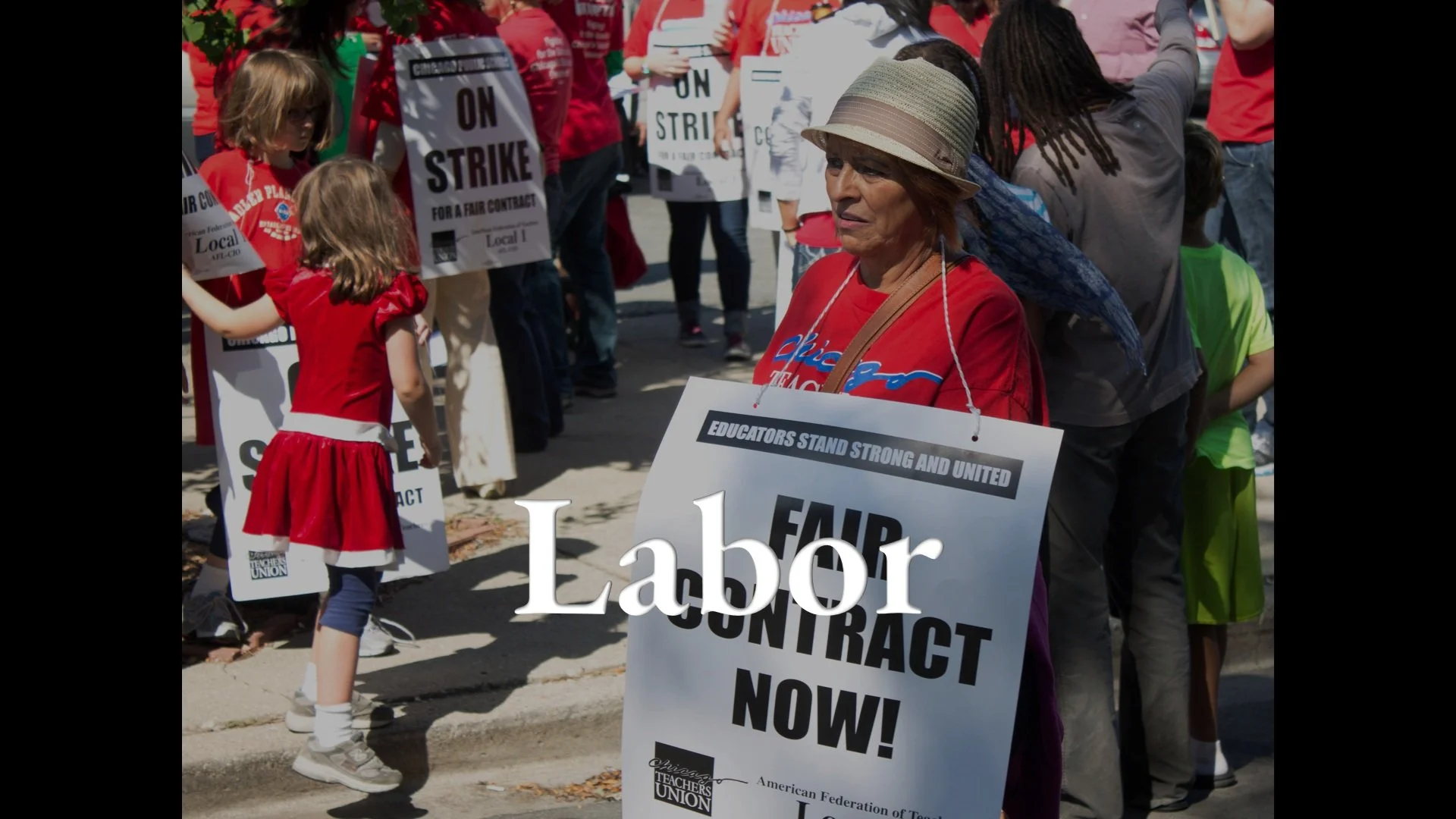
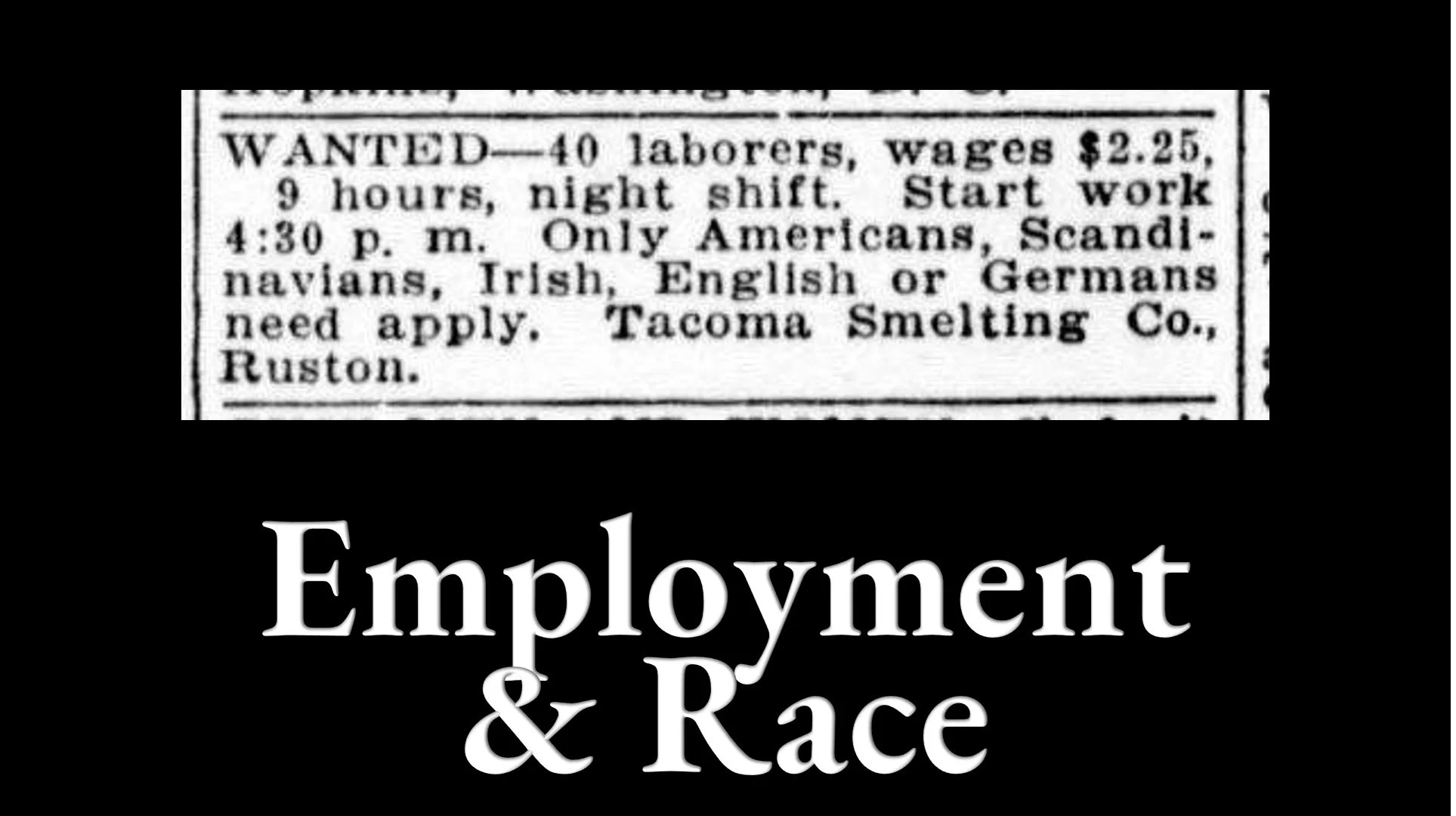






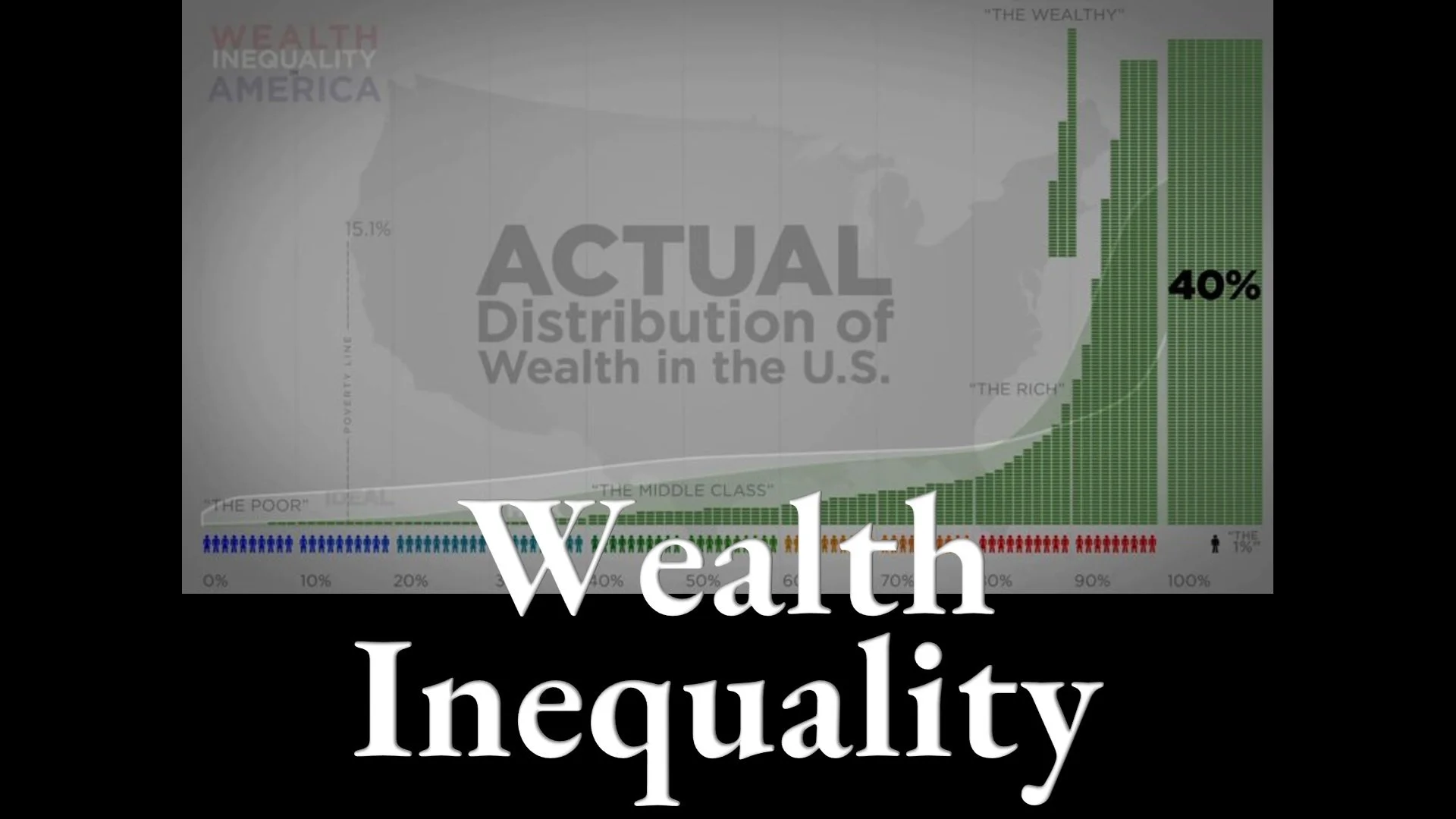
Christian Restorative Justice Critique of the Right: Domestic Policy Topics:








Christian Restorative Justice Critique of the Right: Philosophical Influences: