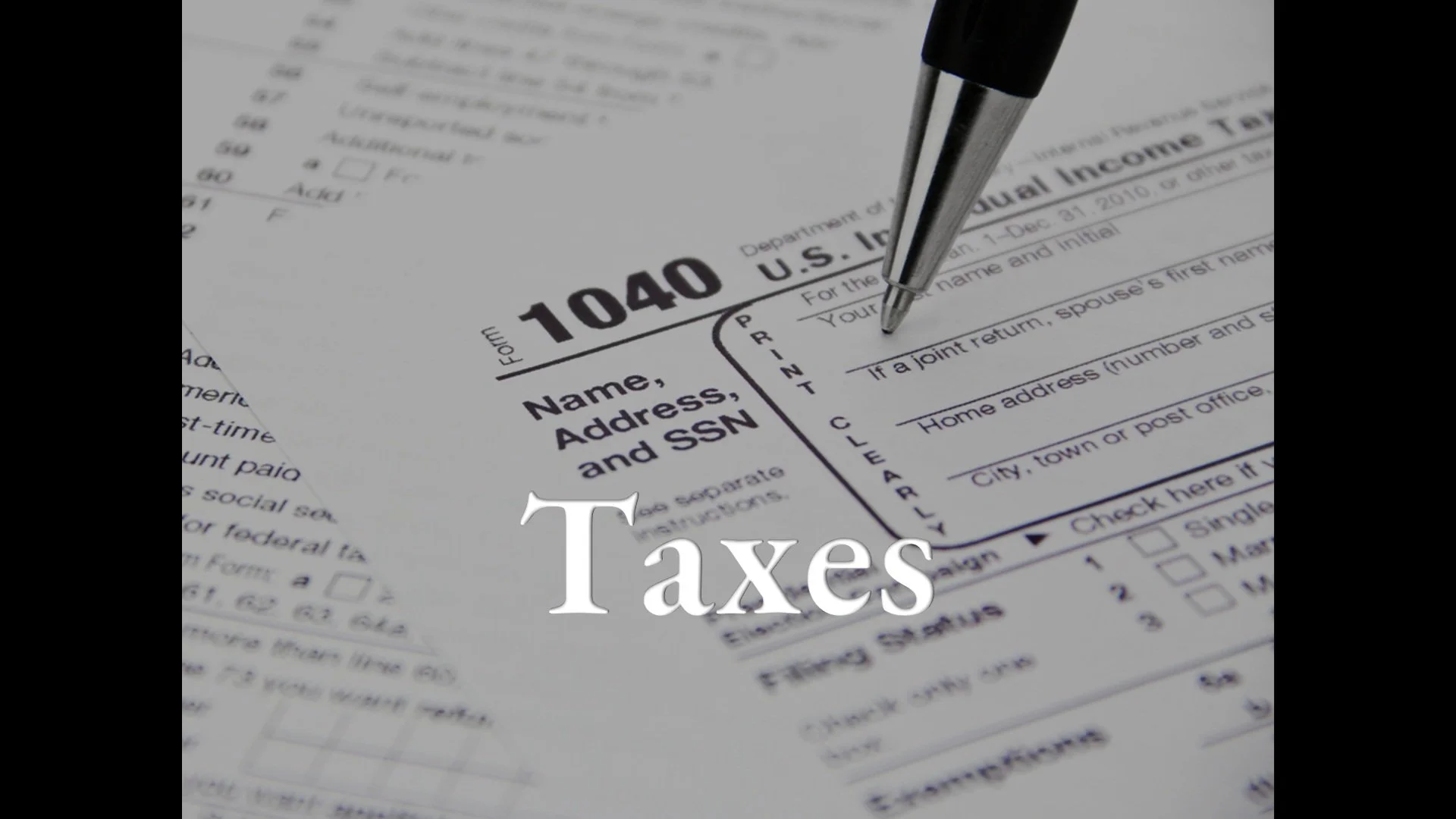
Photograph: IRS Tax Form being filled out. Photo credit: Ken Teegarden | CC2.0, Flickr.
Introduction
This page has resources on various taxes, proposed and implemented. They list arguments for and against, paying special attention to taxes as at least potentially constructive and beneficial. This view coincides with the traditional Christian moral argument that human community comes before private property, so taxation is not in principle immoral. Nor is it intrinsically theft, as libertarians argue. Taxation funding public investment is a way to express the value of community — especially investment in all our children. The principle of meritocracy is violated when we allow inequalities among our children: What have children done to deserve all the advantages or disadvantages they inherit? It's not fair. Furthermore, in the United States, credit is assigned to people unfairly: Goods that are funded by taxpayers and created by the government and/or the military — technology, infrastructure, medicine, etc. — become privatized for private gain. Almost every component of Apple’s iPhone, for example, was developed by the military and funded by the public. Ideally, the public should share credit and a 50% ownership stake in the patents and profits. It's not fair to overlook that. So, given that we do not structure our patent and ownership laws in this way, taxation is a second-best way to express the fact that the public deserves credit for our past investment. The issues covered below focus on philosophical and historical issues related to taxes on individuals and households. See Corporate Taxes for more on corporate taxes.
Messages and Resources

Mako Nagasawa, John Locke’s Theology of Private Property, edited by Grace Tien and Maria Eugenia Funes, Religion and Racial Capitalism. Palgrave MacMillan, 2025.
American libertarians and private property absolutists appeal to John Locke, remembered as an English political philosopher. Locke originally positioned himself, however, as a biblical scholar and theologian. As such, Locke departed from Christian tradition. I argue the relationship between Locke’s political philosophy and the Bible is that of a parasite and its host. Christian leaders prior to Locke believed that the earth is the Lord’s, the fruit of the earth belongs to all, and the political community could modify property in various ways because it was ethically and chronologically prior to private property. Locke, however, argued that individuals first create private property by enclosing land and laboring on it, then bring their private properties into political society, which was meant by God to defend individual property rights. He thereby defended both the English Revolution of 1688 and also English colonialism in the Americas.
-
Matt Perman, 11 Objections on Giving to the Poor Answered by Jonathan Edwards. Matt Perman, Aug 11, 2014. An abbreviated outline of Jonathan Edwards’ sermon “The Duty of Christian Charity: Explained and Defended.”
-
Gary Stevenson, What Would an Honest Debate About a Wealth Tax Look Like? Gary’s Economics, Jul 12, 2026. Gary usually does not cover his data and analytics, but in this case he does, referring especially to economics Gabriel Zucman. Gary is excellent, however, at thought exercises and dispelling political distractions; and in this video, Gary is at his very best. Example: Rich people often say that it’s hard to correctly evaluate their wealth. But rich people do it all the time. Jeff Bezos’ wife Mackenzie Scott did it during their divorce.
Scott Galloway and Ed Elson, Trade War Chaos Drives Massive Volatility — ft. Gary Stevenson. Prof G Markets, Apr 10, 2025. At the 38 minute mark, the hosts and London School of Economics professor Gary Stevenson point out that the middle class after WWII for fifty years was an anomaly. It does not occur through free markets naturally. It needs to be consciously supported by government because otherwise, the rich will take control of government and buy up assets and extract wealth from the poor. Gary Stevenson argues that we should tax wealth that does not move out of country, or is harder to do so. Taxing income allows people to move around or away. Joeri Schasfoort, Economist Reacts to TikToks About the Economy. Money and Macro, Aug 8, 2025. Joeri reviews and affirms Gary Stevenson’s basic argument. Joeri adds that from 1945 - 1979 we had stringent capital controls that made it hard for people to move capital across borders. However, Joeri also says that, in support of Gary, there is a lot of good data, and against Gary, that there are other factors than taxes that impact inequality or that other factors than inequality impact economic well-being. See Joeri Schasfoort, Economist fact-checks Gary’s Economics. Money and Macro, Sep 15, 2025. Steve Keen, Debunking Gary Stevenson on Income & Taxes: Top Economist. Prof Steve Keen, Sep 14, 2025. Keen agrees with taxing the rich. His critique of Gary is twofold. Keen, as a theorist of Modern Monetary Theory (MMT), believes that government spending on the poor is worth the investment, despite budget deficits which will stabilize, because government spending creates money; that the private banking system is its own entity that creates money via debt, whereas Gary Stevenson sees as merely a mechanism for the rich to use to keep others indebted.
-
Seth Hanlon, The Mortgage Interest Deduction. Center for American Progress, Jan 26, 2011. See also Derek Thompson, The Shame of the Mortgage-Interest Deduction. The Atlantic, May 14, 2017. "It’s not just a failure of housing policy. It's a symbol of everything that’s wrong with the American tax code." See also Wikipedia, Home Mortgage Interest Deduction (Wikipedia article)
Wikipedia, Hidden Welfare State (Wikipedia article)
Tax Justice Network (website)
Mike P. Sinn, Government Spends More on Corporate Welfare Subsidies than Social Welfare Programs. Think by Numbers, Mar 6, 2011. “About $59 billion is spent on traditional social welfare programs. $92 billion is spent on corporate subsidies. So, the government spent 50% more on corporate welfare than it did on food stamps and housing assistance in 2006.”
Lawrence Lessig, Republic, Lost: How Money Corrupts Congress - and a Plan to Stop it. Twelve | Amazon page, Oct 2011.
Rachel Maddow, How Reaganomics Destroyed the Middle Class...And Maybe America. MSNBC, Dec 4, 2010.
Jonathan Chait, How Conservatives Tax the Poor. New Republic, Apr 1, 2011.
Henry Blodgett, The Truth About Taxes: Here's How High Today's Tax Rates Really Are. Business Insider, Jul 12, 2011.
John Horgan, Dear Occupy Wall Street: Read Jeffrey Sachs! Scientific American, Oct 11, 2011. "According to Sachs, Google funnels billions in profits into off-shore subsidiaries, which pay lower tax rates than the U.S. corporation does. Sachs points out that Sergey Brin's "ingenious work in creating Google's search engine" was supported by the National Science Foundation, which means that our tax dollars helped Brin get his start."
John Horgan, Education Isn't Helping Americans Overcome Deepening Inequality. Scientific American, Feb 13, 2012. Horgan comments on taxes and structural, institutional factors.
Heather Stewart, Wealth Doesn't Trickle Down - It Just Floods Offshore, Study Reveals. The Guardian, Jul 21, 2012.
Shamus Khan, The Rich Haven't Always Hated Taxes. Time, Sep 18, 2012.
Zachary Mider, Accidental Tax Break Saves Wealthiest Americans $100 Billion. Bloomberg, Dec 17, 2013.
Jillian Berman, Any Hope Of American Equality Died In The 1980s (And Here's Proof). Huffington Post, Dec 20, 2013.
Zachary Mider, Moguls Rent South Dakota Addresses to Dodge Taxes Forever. Bloomberg, Dec 27, 2013.
Jena McGregor, Beware, Study Says, Money is Addictive. Washington Post, Jan 20, 2014.
Margaret Newkirk, Baton Rouge's Rich Want New Town to Keep Poor Pupils Out: Taxes. Bloomberg, Feb 6, 2014.
C. Robert Gibson, This Billionaire Governor Taxed the Rich and Increased the Minimum Wage — Now, His State’s Economy Is One of the Best in the Country. Huffington Post, Feb 24, 2015. although Louis Jacobson, Meme Touts Mark Dayton's Economic Successes as Governor of Minnesota; Is It Accurate? Politifact, Apr 1, 2015.
Kathleen Miles, This Map Shows Why the Plan to Split Up California Would Be a Dystopian Nightmare. Huffington Post, Mar 7, 2014.
Nicholas Kristof, A Nation of Takers? New York Times, Mar 26, 2014.
Thomas Piketty, Capital in the 21st Century. Harvard University Press | Amazon page, Mar 2014. See reviews: Paul Krugman, America's Taxation Tradition. New York Times, Mar 27, 2014. John Cassidy, Piketty's Inequality Story in 6 Charts. New Yorker, Mar 26, 2014. Andrew Hussey, Occupy Was Right: Capitalism Has Failed the World. The Guardian, Apr 12, 2014.
Robert Shiller, Better Insurance Against Inequality. New York Times, Apr 12, 2014.
Bernie DeGroat, What Do Tax Policy Experts Think About U.S. Tax Policy? University of Michigan News, Apr 11, 2013.
Jonathan Chait, Why Republicans Love Taxing the Poor. New York Magazine, May 22, 2014.
Peter R. Orszag, To Fight Inequality, Tax Land. Bloomberg View, Mar 3, 2015.
Eric Levitz, The Republican Party Must Answer for What It Did to Kansas and Louisiana. New York Magazine, Mar 18, 2016.
Brooke Harrington, Inside the Secretive World of Tax-Avoidance Experts. The Atlantic, Oct 26, 2015.
Thom Hartmann, How Reaganomics Killed America's Middle Class. The Big Picture RT, Nov 11, 2015.
Jeff Guo, Why a German Billionaire Says That Pledges Like Mark Zuckerberg's Are Really Bad. Washington Post, Dec 2, 2015.
Jared Wolczak, Which States Rely the Most on Federal Aid? Tax Foundation, Jan 6, 2016.
Kevin D. Williamson, Slouching Towards Tax Reform. National Review, Jan 19, 2016. about corporate taxes, although I'm not for a flat tax
Alec MacGillis, The Billionaire's Loophole. The New Yorker, Mar 14, 2016. On charitable giving being tax-deductible: is it fair?
Eric Levitz, The Republican Party Must Answer for What It Did to Kansas and Louisiana. New York Magazine, Mar 18, 2016.
Anu Partanen, I Moved to the US 7 Years Ago from Finland — Here's What Americans Don't Understand About Nordic Countries. Business Insider, Mar 19, 2016.
Drew Schwartz, Here's Why You Should Give a Shit About the Panama Papers. Vice, Apr 4, 2016.
Colin Holtz, The Panama Papers Prove It: America Can Afford a Universal Basic Income. The Guardian UK, Apr 8, 2016.
Uri Friedman, The Geography of Financial Secrecy. The Atlantic, Apr 9, 2016. on tax havens; includes per country lost tax revenue.
Dylan Matthews, The Greatest Trick the Rich Ever Pulled Was Making Us Believe They Pay All the Taxes. Vox, Apr 15, 2016.
Robert Reich, What is the Racial Wealth Gap? Inequality Media, Apr 27, 2016. Reich examines taxes and raising welfare limits to allow for more wealth accumulation.
Charles Derber and Yale Magrass, How Unchecked Capitalism and Massive Inequality Made America the Bully Nation: A Guide to the Systemic Origins of America's Bully Culture. Alternet, May 26, 2016.
Narayana Kocherlakota, The Rich Are Different, and It Matters. Bloomberg Jun 3, 2016.
Jim Tankersley and Max Ehrenfreund, The Interesting Thing That Happened When Kansas Cut Taxes and California Hiked Them. Washington Post, Jun 17, 2016.
Christopher Helman, What America's 25 Most Profitable Companies Pay in Taxes. Forbes, Jul 4, 2016.
Seth Meyers, Kansas Tax Cuts: A Closer Look. Late Night, Mar 21, 2016. A comedic report.
Hunter Blair, Trump's Tax Plan Blatantly Contradicts His Populist Rhetoric. Economic Policy Institute, May 13, 2016.
Robert Reich, A Little Goes a Long Way: Why a Small Tax on Wall Street Trades Is a Good Idea. Salon, Aug 11, 2016.
Valerio Pellegrini, How Apple - and the Rest of Silicon Valley - Avoids the Tax Man. Wired, Aug 30, 2016.
Andrew Ross Sorkin, When It Comes to Tax Avoidance, Donald Trump’s Just a Small Fry. New York Times, Oct 4, 2016. Fortune 500 companies shelter trillions offshore, referring to this report: Citizens for Tax Justice, Offshore Shell Games 2016
New York Times Editorial Board, Affordable Child Care: The Secret to a Better Economy. New York Times, Aug 19, 2016.
Hunter Blair, $916 Million Losses Aside, There Are Many Ways Trump Could Avoid Paying Taxes. Economic Policy Institute, Oct 3, 2016. A good explanation of real estate tax loopholes.
Robertson Williams, Donald Trump's Tax Plan Would Hit Single Parents Hard. Forbes, Nov 4, 2016.
Howard Gleckman, Trump's Campaign Rhetoric May Have Been Populist But His Tax Plan Isn't. Forbes, Nov 10, 2016.
Rupert Neate, Trump's Tax Plan: Massive Cuts for the 1% Will Usher 'Era of Dynastic Wealth'. The Guardian UK, Nov 23, 2016.
Steven Johnson, Why Blue States Are the Real 'Tea Party'. New York Times, Dec 3, 2016.
Kathleen Pender, Who Really Wins or Loses from Proposition 13? San Francisco Chronicle, Dec 6, 2016.
Jim Tankersley, Republicans Have a Double Standard When It Comes to Trump's Threats of 'Retribution'. Washington Post, Dec 6, 2016.
Robert Reich, Tax Experiment. Inequality Media, Dec 9, 2016. On Kansas and Texas vs. California.
Matt Bruenig, The Rich Already Have UBI. Jacobin Magazine, Jan 2, 2017. “10 percent of all national income is paid out to the 1 percent as capital income. Why not give it to all as a universal basic income?” Dividends, interest, rents, etc.
Josh Bivens, It's Time for Corporations to Pay Their Fair Share of Taxes. Economic Policy Institute, May 18, 2017. Compares the effective vs. statutory corporate tax rates.
Dean Baker, A Tax on Wall Street Trading is the Best Solution to Income Inequality. CounterPunch, May 29, 2017.
Rutger Bregman, No, Wealth Isn’t Created at the Top. It Is Merely Devoured There. The Guardian UK, Mar 30, 2017. “There is also a second way to make money. That’s the rentier way: by leveraging control over something that already exists, such as land, knowledge, or money, to increase your wealth. You produce nothing, yet profit nonetheless. By definition, the rentier makes his living at others’ expense, using his power to claim economic benefit… It may take quite a mental leap to see our economy as a system that shows solidarity with the rich rather than the poor. So I’ll start with the clearest illustration of modern freeloaders at the top: bankers. Studies conducted by the International Monetary Fund and the Bank for International Settlements – not exactly leftist thinktanks – have revealed that much of the financial sector has become downright parasitic. How instead of creating wealth, they gobble it up whole. Don’t get me wrong. Banks can help to gauge risks and get money where it is needed, both of which are vital to a well-functioning economy. But consider this: economists tell us that the optimum level of total private-sector debt is 100% of GDP. Based on this equation, if the financial sector only grows, it won’t equal more wealth, but less. So here’s the bad news. In the United Kingdom, private-sector debt is now at 157.5%. In the United States, the figure is 188.8%.” See Laura Paddison, Historian Lays Into Billionaires At Davos For Dodging The 1 Thing To Solve Inequality. Huffington Post, Jan 30, 2019.
A.Q. Smith, It's Basically Just Immoral to be Rich. Current Affairs, Jun 14, 2017. argues that the right to retain is different from the right to acquire
Matt Bruenig, Massive Rise Of Top Incomes Is Mostly Driven By Capital. People's Policy Project, Aug 9, 2017. Great charts comparing income from capital vs. from wages
Hunter Blair, Corporations Pay Between 13 and 19 Percent in Federal Taxes — Far Less Tthan the 35 Percent Statutory Tax Rate. Economic Policy Institute, Aug 10, 2017.
Michael Hiltzik, Did Steve Mnuchin and Louise Linton Really "Give More to the Economy" Than They Took? They Record Says No. Los Angeles Times, Aug 23, 2017. A good examination of tax policy.
Noah Smith, How the Top 1% Keeps Getting Richer. Bloomberg, Aug 28, 2017. Less in land and more in stocks.
Tim McDonnell, Forget the Paris Agreement. The Real Solution to Climate Change is in the U.S. Tax Code. Washington Post, Oct 2, 2017.
Noah Smith, Faster Growth Begins with a Land Tax in U.S. Cities. Bloomberg, Oct 24, 2017.
Amy Goodman, Yanis Varoufakis on Global Capitalism & How Trump’s Tax Plan is Class War Against the Poor. NPR, Nov 3, 2017.
Paradise Papers Reporting Team, Tax Haven Secrets of the Ultra-Rich Exposed. BBC, Nov 4, 2017.
German Lopez, The Senate's Tax Plan Would Cut Alcohol Taxes. That Would Be a Public Health Disaster. Vox, Nov 15, 2017.
Cristobal Young, If You Tax the Rich, They Won't Leave: US Data Contradicts Millionaires' Threats. The Guardian, Nov 20, 2017.
Eric Levitz, Republicans Want You to Know They're for Corporations, Not the Middle Class. New York Magazine, Nov 24, 2017.
Hunter Blair, CEOs Agree: Corporate Tax Cuts Won't Trickle Down. The Hill, Dec 3, 2017. "There is no evidence in recent American economic history, no evidence from international comparisons and no evidence from individual U.S. states that corporate tax cuts will boost the wages of American workers. This is a case we’ve been making for a while." See links.
Derek Thompson, This Is the Long Game of Republican Economics. The Atlantic, Dec 7, 2017.
Stephen Ohlemacher, AP Fact Check: Blue High-Tax States Fund Red Low-Tax States. Associated Press, Dec 9, 2017. Andrew Van Dam and Linda Chong, Do Blue-State Taxes Really Subsidize Red-State Benefits? Washington Post, Jul 7, 2023. Very helpful analysis, charts. “Eight of the 10 states that get the most money back from the federal government per dollar they pay into the system voted for Trump in 2020. Nine of the 10 states that got the least voted for Biden. The typical red state gets back 19 cents more for each dollar sent to Washington than its blue-state friends.” Although this methodology was earlier contested by Skip Estes, legislative manager at the ALEC Center for State Fiscal Reform, we must consider the source as well as his objections. Skip Estes, No, ‘Blue States’ Do Not Bail Out ‘Red States’. The Hill, Jun 11, 2020. Estes argues, for example, that the red-blue distinction by vote for President isn’t enough, and that federal deficit spending throws off the numbers. On the former, state-level elections can also be problematic because of partisan gerrymandering that has generally favored Republicans. On the latter, deficit spending can be assumed to be paid for in the future in the general proportions that states pay in today.
Justin Fox, Must-Reads of 2017: Getting Serious About Land. Bloomberg, Dec 27, 2017.
Noah Smith, Land is Underrated as a Source of Wealth. Bloomberg, Jan 2, 2018.
Julia Belluz, The Case for a Junk Food Tax. Vox, Jan 17, 2018.
Thom Hartmann, How the GOP Used a Two Santa Clauses Tactic to Con America for Nearly 40 Years. Alternet, Feb 11, 2018.
BBC News, Trump Tax Reform Gives Buffet $29bn Boost. BBC, Feb 24, 2018.
Derek Thompson, Busting the Myth of 'Welfare Makes People Lazy'. The Atlantic, Mar 8, 2018.
John Oliver, Corporate Taxes. Last Week Tonight, Apr 15, 2018.
Aaron Tolbert, The Trump Administration Is Waging War On The Poor. Huffington Post, Apr 18, 2018.
Chris Pope, Degenerate Federalism. National Review, May 10, 2018. Pope takes the question of Amazon's second headquarters back into taxation in law and practice
Mary Papenfuss, U.S. Companies Shelter 40 Percent Of Foreign Profits, Study Finds. Huffington Post, Jun 11, 2018. Republican corporate tax cut won’t likely encourage the return of sheltered money to America
PayScale, National U.S. Pay Trends. PayScale, Jul 10, 2018. wage growth is -0.9% for Q2, 2018; accounting for inflation, wages have dropped 1.4% in the past year; since 2009, wages down 9.3%
Annie Lowrey, Fixing America's Forgotten Places. The Atlantic, Jul 24, 2018. Re: Trump's tax code incentives private capital investment into blighted urban areas like Fresno, California; an example of how conservative policies can preserve the illusion of "meritocracy"
David Doel, Ocasio-Cortez Makes Cuomo Look Dumb For 'How Do You Pay' Question. The Rational National, Aug 10, 2018.
The Young Turks, Betsy DeVos Caught Not Paying Taxes. The Young Turks, Aug 11, 2018. re: DeVos' yacht, untied from an Ohio dock, was flying a flag from the Cayman Islands because DeVos skirted $11 million in taxes, not to mention wage regulation of workers on the yacht, by using the loophole created by and for the super-rich
Doug Bandow, Corporate Welfare Lives On and On. The American Conservative, Aug 29, 2018.
Owen Jones, We Don’t Want Billionaires’ Charity. We Want Them to Pay Their Taxes. The Guardian, Oct 26, 2018.
Matt O'Brien, The Trump Tax Cuts Were Supposed to Set Off an Investment Boom. They Haven't So Far. Washington Post, Oct 27, 2018. . See also Jim Tankersley and Matt Phillips, Trump’s Tax Cut Was Supposed to Change Corporate Behavior. Here’s What Happened. New York Times, Nov 12, 2018. . See also Jim Tankersley and Matt Phillips, Trump’s Tax Cut Was Supposed to Change Corporate Behavior. Here’s What Happened. New York Times, Nov 12, 2018. . See also Matt Egan, Corporate America Gives Out a Record $1 Trillion in Stock Buybacks. CNN, Dec 17, 2018. The December 2018 jobs report suggests some upside, see Glenn Kessler, Trump's Claim that Job Growth Is Due to Companies 'Moving Back'. Washington Post, Jan 10, 2019.
Veronique De Rugy, Alexandria Ocasio-Cortez Is Right About Amazon’s Corporate Welfare. National Review, Nov 13, 2018. and Lee Moran, Fox News’ Tucker Carlson Stuns Himself By Agreeing With Alexandria Ocasio-Cortez. Huffington Post, Nov 14, 2018.
Jim Tankersley, Amazon’s New York Home Qualifies as ‘Distressed’ Under Federal Tax Law. New York Times, Nov 14, 2018.
Kari Paul, Climate Change Has Cost the Government $350 Billion — Here’s What It Will Cost You. MarketWatch, Nov 24, 2018. estimates $35 billion per year. See also Rex Nutting, Calamitous Weather Destroyed $175 Billion of Wealth. MarketWatch, Nov 13, 2018.
The Young Turks, Alexandria Ocasio-Cortez Owns Biased '60 Minutes' Interview. The Young Turks, Jan 7, 2019. On the proposal of the marginal tax rate being 70%, with good economic history of the pre-Reagan era, why the U.S. had the biggest economic expansion of any country ever, why a low tax rate encourages wealth extraction in the form of high executive pay as opposed to reinvestment in companies' infrastructure and wages. See also Brian Tyler Cohen, Hannity Tries to Embarrass Alexandria Ocasio-Cortez, She Responds Brilliantly. Brian Tyler Cohen, Jan 24, 2019. On Hannity’s exaggerated lies about AOC's proposal for a 70% marginal tax rate
Paul Krugman, How Much Does Heterodoxy Help Progressives? (Wonkish). The New York Times, Feb 12, 2019. "Their agenda still needs to be tax-and-spend, not just spend"
Barbara Boland, Ignoring America’s Abyss of Debt. The American Conservative, Feb 15, 2019. Regarding mostly public and federal debt.
John Horgan, House Revolt Against the Rich. Scientific American, Feb 18, 2019. "Nobel laureates, a new congresswoman and others urge raising taxes on the ultrawealthy to counter surging inequality"
Catherine Rampell, The Biggest Lesson from Michael Cohen’s Explosive Testimony. Washington Post, Feb 28, 2019. Give more funding to the IRS so it is more effective
Alvin Chang, A Better Way to Tax the Rich. Vox, Mar 5, 2019. Re: Elizabeth Warren’s idea of taxing wealth.
Jane G. Gravelle and Donald J. Marples, The Economic Effects of the 2017 Tax Revision: Preliminary Observations. Every CRS Report, May 22, 2019.
Robert Reich, Where Your Tax Dollars Really Go. Robert Reich and Move On, Jul 30, 2019. illustrates how the military is over 50% of federal discretionary spending; see also Robert Reich, The Military-Industrial Drain. Robert Reich and Move On, Jun 14, 2018.
William D. Cohan, Only the Fed Can Save Us. New York Times, Aug 31, 2019. “In large part, the explosion of debt issuance has been driven by central-bank policies that have kept interest rates at historically low levels, in effect rewarding entities for issuing more and more debt. Interest payments on corporate debt are tax deductible, in most jurisdictions. We live in a world awash in debt. But that’s the risk we can see. There is plenty of additional risk hiding in the undisclosed obligations of private companies and in the “shadow banking system,” nonbank financial institutions that have sprung up in the past decade to hold the risk that the Federal Reserve insisted, after the 2008 financial crisis, that Wall Street avoid. So what would happen if interest rates did increase slightly, or if the economy dipped into a recession, and some of those overleveraged companies could no longer meet their interest payments? It wouldn’t be pretty.”
The Young Turks, Trump’s Newest Scam to Steal from the Poor and Give to the Rich. The Young Turks, Sep 4, 2019. capital gains tax exemptions -- claimed by only 7% of the US population -- for reinvestment in “opportunity zones” that have no relation to poverty, but target high-income areas, often resulting in inflated high-end housing which sit vacant and reap a tax writeoff windfall. See Jesse Drucker and Eric Lipton, How a Trump Tax Break to Help Poor Communities Became a Windfall for the Rich. New York Times, Aug 31, 2019. See also Paul Krugman, The Great Tax Break Heist. New York Times, Sep 2, 2019.
The Young Turks, Trump’s Next Giveaway to the Rich. The Young Turks, Oct 9, 2019. More corporate tax loopholes to off-shore locations, even though Trump’s last tax law brought only 3% of corporate money to U.S. shores to be taxed.
Annie Lowrey, Tax the Patriarchy. The Atlantic, Nov 13, 2019. “The U.S. tax code helps entrench gender divisions. It doesn’t have to be that way.”
Justin Elliot, Jeff Ernsthausen, and Kyle Edwards, A Trump Tax Break To Help The Poor Went To a Rich GOP Donor’s Superyacht Marina. ProPublica, Nov 14, 2019. “Wealthy donors Wayne Huizenga Jr. and Jeff Vinik lobbied then-Gov. Rick Scott for the lucrative tax break — and won it. Poorer communities lost out.”
Caitlin Yoshiko Kandil, How Local Governments Punish Poor People with Fines. Christian Century, Nov 22, 2019. “When a parking ticket spirals into homelessness”
Heather Vogell, Trump Tax Records Reveal New Inconsistencies — This Time for Trump Tower. ProPublica, Nov 27, 2019. “Documents show the president’s company reported different numbers — higher ones to lenders, lower ones to tax officials — for Trump’s signature building. Last month, ProPublica revealed a similar pattern in two other Trump buildings.” Chris Hayes, Trump Kept Two Sets Of Books For Trump Tower. All In | MSNBC, Nov 27, 2019.
Jason DeParle, The Tax Break for Children, Except the Ones Who Need It Most. New York Times, Dec 16, 2019. “The child tax credit, begun in 1997 as a tax cut, has become an anti-poverty program. But more than a third of children don’t receive it because their parents earn too little.”
Lawrence O’Donnell, NYT Report Reveals Truth About President Donald Trump Tax Cuts. The Last Word | MSNBC, Dec 30, 2019. The corporate behavior resulting from Trump’s poorly written tax law - it costed much more to the deficit and debt than what was promised
Nick Sibilla, The Court Case That Could Finally Take Down Antiquated Anti-Catholic Laws. The Atlantic, Jan 12, 2020. “Thirty-seven states still have Blaine Amendments on the books. The Supreme Court now has a chance to get rid of them for good.” “Blaine Amendments weren’t truly devoted to the separation of Church and state. Instead, they were mainly focused on separating the Catholic Church and state. Although public schools are largely secular today, that wasn’t the case in the 19th century. Public or “common” schools typically instilled in their students a nondenominational form of Protestantism, requiring them to sing hymns, pray, and read from the King James Bible—in direct conflict with Catholic dogma.”
Jesse Drucker, Trump Tax Break That Benefited the Rich Is Being Investigated. New York Times, Jan 15, 2020. “The Treasury Department’s watchdog said it was looking into the Opportunity Zone program, a multibillion-dollar tax break that is supposed to help low-income areas.”
Democracy Now, Report: Six Banks Reaped $18 Billion Last Year from Trump Tax Cuts. Democracy Now, Jan 17, 2020.
Brian Tyler Cohen, Kellyanne Conway Caught Mid-Lie, Called Out by Fox News Live on Air. Brian Tyler Cohen, Mar 8, 2020. Facts about Trump’s 2020 budget cutting Social Security and Medicare, statements that he will cut those programs if re-elected, and hypocritical lying about Obama’s deficit vs. his
Emmanuel Saez and Gabriel Zucman, Jobs Aren’t Being Destroyed This Fast Elsewhere. Why Is That? New York Times, Mar 30, 2020. “The government should impose excess profits taxes, as it has done several times in the past during periods of crisis. In 1918, all profits made by corporations above and beyond an 8 percent rate of return on their capital were deemed abnormal, and abnormal profits were taxed at progressive rates of up to 80 percent. Similar taxes on excessive profits were applied during World War II and the Korean War. These taxes all had one goal — making sure that no one could benefit outrageously from a situation in which the masses suffered. To help make this happen, the next bill needs an excess profits tax. If Congress fails to act, the pandemic could well reinforce two of the defining trends of the pre-coronavirus American economy: the rise of business concentration and the upsurge of inequality.”
Michael Harriot, Can Coronavirus Cure White Supremacy?. The Root, Apr 1, 2020. includes a summary of tax policy, and how white supremacy turned against the high taxes of the New Deal after the Civil Rights Movement
Amanda Holpuch, Millionaires to Reap 80% of Benefit from Tax Change in US Coronavirus Stimulus. The Guardian, Apr 15, 2020.
Terry Gross, How The CARES Act Became A Tax-Break Bonanza For The Rich, Explained. NPR, Apr 30, 2020.
Laura Davison, IRS Fails to Pursue Thousands of Rich Tax Cheats, Watchdog Says. Bloomberg News, Jun 1, 2020. “The Treasury Inspector General for Tax Administration found that 879,415 high-income individuals who didn’t file returns cumulatively failed to pay $45.7 billion in taxes from 2014 to 2016 and that the agency hasn’t tried to collect from many of those taxpayers.”
Richard V. Reeves and Christopher Pulliam, The Tax Cut for the Rich That Democrats Love. New York Times, Sep 7, 2020. re: the state and local tax cap of $10k
David Sirota, Billionaire GOP Donor’s Firm Reports Sub-Zero Tax Rate. The Daily Poster, Sep 30, 2020. “Blackstone’s Steve Schwarzman has spent nearly $25 million to help Trump & GOP Senators win the election, which would ensure the tax breaks enriching his private equity firm remain in place.”
Saagar Enjeti, Here's The Real Reason Trump's Losing, Despite Media's Lies. Rising | The Hill, Oct 30, 2020. Trump’s lowest popularity rating was when he passed his massive tax cut
Libby Hattersley et.al., Taxes on Sugar-Sweetened Beverages: International Evidence and Experiences. World Bank, Oct 2020.
David Hope, Julian Limberg, The Economic Consequences of Major Tax Cuts for the Rich. International Inequities Institute, London School of Economics and Political Science, Dec 2020. summarized by Craig Stirling, Fifty Years of Tax Cuts for Rich Didn’t Trickle Down, Study Says. Bloomberg, Dec 15, 2020. re: an 18 country study over 50 years. Aimee Picchi, 50 Years of Tax Cuts for the Rich Failed to Trickle Down, Economists Say. CBS News, Dec 17, 2020.
Richard Wolff, We Must Tax Wealth in the Form of Stocks and Bonds, and Progressive Income Tax Rate. Democracy at Work, Feb 2, 2021. “If you have a $100,000 house in a community in America, you pay a property tax to that town. If you sell that house and use the $100,000 to buy $100,000 worth of stock in some company, you know what your property tax is? Zero. There is no property tax on stocks and bonds. And who owns the bulk of stocks and bonds in our society? Here's the answer: the 10% at the top own 80% of the stocks. This is an enormous tax exemption for people who qualify for it, because they're rich enough to buy stocks and bonds, which most Americans aren't. The inequality and the injustice of this tax system is stupefying.”
Davarian Baldwin, In the Shadow of the Ivory Tower: How Universities Are Plundering Our Cities. Bold Type Books, Mar 2021. See interview by Christine Amanpour, How Ivy Leagues Are "Plundering Our Cities" - Davarian Baldwin Explains. Amanpour and Company, Apr 27, 2021. See also Davarian Baldwin, The Rise of the UniverCity. Jacobin Magazine, Sep 2, 2021.
Christopher Berry, Reassessing the Property Tax. University of Chicago, Mar 1, 2021. See summary by Christopher Ingraham, Homes in Poor Neighborhoods Are Taxed at Roughly Twice the Rate of Those in Rich Neighborhoods, Study Shows. Washington Post, Mar 12, 2021. “The methods cities use to assess property values skew the final effective tax rates dramatically, according to a review of 26 million home sales” “Homeowners in America’s poorest neighborhoods face effective property tax rates roughly double those levied on the richest ones, according to a massive new study by a University of Chicago researcher. In theory, all homeowners in a given jurisdiction are subject to the same property tax rate, regardless of home value. But the methodology cities use to assess property values skews the final effective tax rates dramatically: Some homes are assigned considerably lower assessments than their actual market prices, while others are given much higher valuations.”
Ben Steverman, A Tax Code Optimized for White Wealth Leaves Black Americans Behind. Business Insider, Mar 10, 2021. “With The Whiteness of Wealth, Brown has turned a notoriously boring topic into a surprisingly accessible and lively 288-page book, relying on examples from real families, including her own, to guide readers through the intricacies of a tax code provisioned for just about every milestone in a person’s life—education, marriage, homeownership, childbearing, death and inheritance. Generations of lawmakers have optimized the system for White people, she argues, with the result that in the U.S.’s supposedly progressive and race-neutral tax code, Black people end up paying more than White people with the same incomes.”
Chye-Ching Huang, How Biden Funds His Next Bill: Shrink the $7.5 Trillion Tax Gap. New York Times, Mar 10, 2021. “The I.R.S. is often unable to detect or fight blatant tax cheating by the rich and big businesses. Restoring the missing revenue is a solution that pays for itself.”
Krystal Ball and Saagar Enjeti, Michael Tubbs: Groundbreaking UBI Experiment Has Stunningly Good Results. Rising | The Hill, Mar 11, 2021. Michael Tubbs is mayor of Stockton, CA
Krystal Ball and Saagar Enjeti, Katie Porter Eviscerates Lying Oil Executive. Rising | The Hill, Mar 12, 2021. tax policy of exempting 70% of all drilling costs
Elizabeth Bruenig, Why Are We Worrying About Women’s Work?. New York Times, Mar 19, 2021. “Commenters on the right and left are concerned that the child tax credit in the American Rescue Plan Act — up to $3,600 for children 5 and under, and up to $3,000 for kids 6 to 17 — will discourage women from working outside the home.” Includes important labor law history protecting working mothers from the 1970s.
Dorothy Brown, The Whiteness of Wealth: How the Tax System Impoverishes Black Americans--and How We Can Fix It. Crown | Amazon page, Mar 2021. Examines many aspects of the tax code, as well as tax code history, to show that the tax code privileged life situations of white Americans. See also Ryan Grim, Race and Taxes. The Intercept, Jun 4, 2021. “If Joe Biden is serious about tackling the racial wealth gap, Emory law professor Dorothy Brown says he should start with the tax code.” Excellent highlights of Dorothy Brown’s book.
Robert Reich, What if We Actually Taxed the Rich? Robert Reich, Apr 1, 2021. A 6 minute video explaining various steps to raise tax revenue
Patricia Cohen, No Federal Taxes for Dozens of Big, Profitable Companies. New York Times, Apr 2, 2021. “FedEx and Nike are among those found to have avoided U.S. tax liability for three straight years.” “Just as the Biden administration is pushing to raise taxes on corporations, a new study finds that at least 55 of America’s largest paid no taxes last year on billions of dollars in profits.”
John Oliver, The National Debt. Last Week Tonight, Apr 5, 2021. A 30 minute video which can serve as a good introduction to the economics and political history of the national debt
Saagar Enjeti, Dan Crenshaw's Idiotic Argument Against Stimulus Checks On Joe Rogan. Rising | The Hill, Apr 7, 2021. money in your pockets due to tax cuts vs. money in your pockets due to stimulus checks — a difference?
Daniel Marans, New York Raises Taxes On The Rich As State Shifts Leftward. Huffington Post, Apr 11, 2021. “New York’s overwhelmingly Democratic state legislature passed a budget for the 2022 fiscal year that will raise $4.5 billion in taxes on millionaires and corporations to fund economic relief for undocumented immigrants, schools and housing assistance.”
Saagar Enjeti, Inside Ultra-Wealthy Freakout Over Slightly Higher Taxes. Rising | The Hill, Apr 28, 2021.
Matt Stoller, One Benefit of Biden's Capital Gains Tax Hike: Fewer Mergers. Matt Stoller Substack, Apr 28, 2021. “Joe Biden's tax changes would slow the merger boom, if it passes. And it would hit private equity particularly hard.”
The Young Turks: Ben Shapiro: Tax the Poor!. The Young Turks, Apr 30, 2021. highlight how right-wing media outlets claim that the poor don’t pay their fair share based on “net federal income taxes”
Sarah Anderson and Sam Pizzigati, Pandemic Pay Plunder. Institute for Policy Studies, May 2021. See also summary by Jake Johnson, Report Reveals How Big Corporations Rigged Rules to Boost Pandemic Pay of CEO’s as Workers Suffered. Alternet, Common Dreams, May 11, 2021. How the Tax Excessive CEO Pay Act could address this by tethering CEO pay to lowest worker pay to a ratio of 50 to 1. Companies that do not will be subject to major corporate tax penalties.
H. Luke Shaefer and Kathryn J. Edin, A Simple Approach to Ending Extreme Poverty. The Atlantic, Jun 2021. “Buried deep in the latest pandemic stimulus package is a transformative idea for helping families.”
Krystal Ball and Saagar Enjeti, Fox Host Called Out Live for Lying to Viewers About Tax Enforcement On Rich. Rising | The Hill, May 24, 2021.
Jesse Eisinger, Jeff Ernsthausen, and Paul Kiel, The Secret IRS Files: Trove of Never-Before-Seen Records Reveal How the Wealthiest Avoid Income Tax. ProPublica, Jun 8, 2021. outstanding analysis as well as history of federal taxes. See also Krystal Ball and Saagar Enjeti, Secret Docs Reveal Billionaires Paid Nothing In Taxes. Breaking Points, Jun 10, 2021. a 13:30 min video making it digestible. See also Second Thought, How Billionaires Pay Less In Taxes Than You. Second Thought, Jun 18, 2021. “buy, borrow, die.” See also Abigail Disney, I Was Taught From a Young Age to Protect My Dynastic Wealth. The Atlantic, Jun 2021. “A common ideology underlies the practices of many ultra-wealthy people: The government can’t be trusted with money.”
Ryan Grim and Emily Jashinsky, Matt Stoller: It’s Time To Break Up The Ivy League Cartel. Rising | The Hill, Jun 11, 2021. on the problem with endowments and power; the struggles of lower to middle tier colleges; the comparison between the Ivy Leagues with the great land-grant universities that were the result of Reconstruction. Includes the idea of taxing the endowments.
Anis Chowdhury and Jomo Kwame Sundaram, Powerful States Push Tax Race to the Bottom. Inter Press News Agency, Jun 15, 2021. “On 5 June, the Group of Seven largest rich countries -- G7 -- agreed that TNCs should all pay GMCIT of at least 15%. This rate is just over half President Biden’s promise of a 28% US CIT rate during last year’s election campaign. The G7’s 15% GMCIT rate is also almost 30% less than US Treasury Secretary Janet Yellen’s 21% proposal. Her proposal was aligned with Trump’s much reduced CIT rate, rather than Biden’s 28% vow. Unbelievably, this cut rate has been hailed as a “game changer” by the new Australian Organization for Economic Co-operation and Development OECD chief and the UK Chancellor of the Exchequer, among others.”
Walker Bragman, Nothing Is More Important Than You Paying Them. The Daily Poster, Jun 23, 2021. “Governments are hiring private debt collectors exempted from key rules — and the collectors are profiting off Americans’ $27 billion of court debt.” “States and municipalities are increasingly relying on court fees as revenue streams, creating at least $27.6 billion in debt for Americans. To handle that debt's collection, those states and municipalities, and even the IRS, are increasingly turning to private firms, which can add up to 40 percent surcharges onto the fees.”
Jonathan Swan and Alaina Treene, GOP Tax Attack. Axios, Jul 1, 2021. “Republican senators are rallying against one of the main ways President Biden wants to pay for his infrastructure deal — a $40 billion infusion to help the Internal Revenue Service collect $100 billion more in taxes.”
Madeline Marshall, How the Rich Avoid Paying Taxes. Vox, Jul 8, 2021. capital gains taxes, explained
Cody Johnston, The Racist History of Austerity Politics In America. Some More News, Jul 19, 2021. also called “Racism and Capitalism - A Love Story” starting with Reconstruction and the Southern resistance to taxes and black empowerment; the argument was “fiscal responsibility” based on the interests of “the taxpayer.”
Second Thought, How The US Should Have Spent The Afghanistan War Budget. Second Thought, Aug 27, 2021. considers how the $2.26 trillion from 2001 - 2021, or $300 million per day for 20 years.
Ryan Grim, Kim Iversen, and Robby Soave, Top 1% Richest Owe $136 Billion In Taxes, Receive Over 80% Of Trump's Tax Cuts. Rising | The Hill, Sep 9, 2021. comment on the politics of Republicans defunding the IRS, and its impact. The IRS lost staff while population and complexity grew due to Affordable Care Act. So they wind up regulating and suing ordinary people more than rich people.
Noam Scheiber, Can a Green-Economy Boom Town Be Built to Last?. New York Times, Sep 13, 2021. “In recent years, makers of electric vehicles and their components, like Tesla, Lucid Motors and Lordstown Motors, have collectively spent billions building or renovating factories in Nevada, Texas, Arizona and Ohio. The challenges are enormous, given that few of these companies have brought a vehicle to market. But if some succeed, the impact could be maNew York Times greater than the thousands of manufacturing jobs they create directly.” Is there any wisdom to abolishing corporate taxes at the city and state level, and just having one uniform national corporate tax rate? It seems like letting city and state fortunes depend on corporate fortunes is bad. Plus, letting cities and states compete for jobs by bidding down corporate tax rates leads to a race to the bottom.
Emily Cochrane, House Democrats Outline Tax Increases for Wealthy Businesses and Individuals. New York Times, Sep 13, 2021. Contains good detail. “The draft proposal includes raising the corporate tax rate to 26.5 percent for the richest businesses to help pay for President Biden’s sweeping expansion of the social safety net.” Recall that President Trump hit his lowest approval rating when he passed his tax cut.
Alex Hemingway, Robust Wealth Tax Could Raise $363B Over 10 Years. Policy Note, Sep 14, 2021. Hemingway analyzes Canada’s current wealth inequality and a tax proposal. He compares his proposal to the Sanders and Warren proposals for the U.S., which include an exit tax on billionaires who flee the country. The reason is that the country where the wealth was made has contributed to the wealth.
Ari Melber, Hypocritical GOP Pushes ‘Socialism’ Narrative While Pushing For Corporate Tax Cuts. The Beat | MSNBC, Oct 1, 2021. points out that the GWBush tax cut cost $1.5 trillion, the Trump tax cut cost $1.9 trillion, and the post 9-11 war spending cost $8 trillion. On Sep 23, 2021, Congress passed an annual Pentagon budget of $768 billion, which would be $7.6 trillion over 10 years.
Emilia Díaz-Struck, Delphine Reuter, Agustin Armendariz, Jelena Cosic, Jesús Escudero, Miguel Fiandor Gutiérrez, Mago Torres, Karrie Kehoe, Margot Williams, Denise Hassanzade Ajiri and Sean McGoey, The Pandora Papers: An Offshore Data Tsunami. International Consortium of Investigative Journalists, Oct 3, 2021. See summaries by Michael Liedtke and Jonathan Mattise, Leaked ‘Pandora’ Records Show How the Rich and Powerful Hide Trillions of Dollars in Assets. Associated Press, Oct 4, 2021. and Ryan Grim and Robby Soave, Financial Secrets Revealed: Pandora Papers Unveil Offshore, U.S. Tax Havens For Rich & Powerful. Rising | The Hill, Oct 4, 2021.
Amber Ruffin, Why Rich People Are The Reason America Is Broke. The Amber Ruffin Show, Oct 15, 2021. catching rich tax evaders could fund the government, but the IRS audits lower-income people, in the poorest counties, instead. People who claim the Earned Income Tax Credit — the working poor — are more likely to get audited than people making 20x as much. Cites Paul Kiel and Hannah Fresques, Where in The U.S. Are You Most Likely to Be Audited by the IRS? ProPublica, Apr 1, 2019. to show the overwhelming correlation between counties the IRS audits and counties that are more non-white. Also cites Michael Harriot, Racism by the Numbers: How the Internal Revenue Service Targets Poor Black Taxpayers. The Root, Apr 11, 2019.
Judd Legum and Tesnum Zekeria, Banks Engaged in Multi-Million Dollar Lobbying Effort to Protect Wealthy Tax Cheats. Popular Information, Oct 21, 2021. “The Biden administration is proposing a simple fix to catch wealthy tax cheats. It would require banks to report to the IRS accounts with more than $10,000 annually in deposits and withdrawals. But the banking industry has launched a multi-million dollar lobbying campaign to defeat the proposal. Banks have attempted to justify this under the guise of protecting "customer privacy." But most of their customers already have their precise income reported to the IRS.”
Ryan Grim, A Wild Tax Strategy Called “Buy, Borrow, Die” Saves Elon Musk Billions. Rising | The Hill, Oct 27, 2021.
Team Rising, GOP Halloween Ad Spooks Viewers With Dem's Plan To Make IRS SPY On Transactions More Than $600. Rising | The Hill, Oct 31, 2021. Ryan Grim and Nomiki Konst have informative comments
Johnny Harris and Binyamin Applebaum, Liberal Hypocrisy is Fueling American Inequality. Here’s How. New York Times Opinion, Nov 9, 2021. Looks at blue states. CA, WA, NY, IL and the failure to act on housing, taxes, and education. Uses Palo Alto, CA as an example of NIMBYism and rezoning for lower density neighborhoods.
David Doel, 'SALT' Turns Biden's Budget Bill Into A Joke. The Rational National, Nov 17, 2021.
Tonantzin Carmona, Inequitable Fines and Fees Hurt Vulnerable Communities. Now, Policymakers Have an Opportunity for Reform. Brookings Institute, December 17, 2021.
William G. Gale, Swati Joshi, Christopher Pulliam, and John Sabelhaus, Revenue and Distributional Effects of Untaxed Business Income. Brookings Institute, December 21, 2021. “A major finding of our forthcoming work is that more than half of the income generated by closely held businesses. that is, businesses other than corporations) is untaxed. This discrepancy between earned and taxed income is due to some combination of tax rules, taxpayer avoidance strategies, and outright evasion of liabilities.”
William G. Gale, Swati Joshi, Christopher Pulliam, and John Sabelhaus, How Much Economic Income Shows Up On Tax Forms? Brookings Institute, December 21, 2021.
Krystal Ball and Saagar Enjeti, Biden Pushes Billionaire Tax For Deficit Reduction. Breaking Points, Apr 4, 2022. Krystal is for the billionaire tax. Enjeti argues that people should not be allowed to leverage massive loans against unrealized asset gains, and that heirs should be taxed by changing the step-up basis.
Associated Press, Canada Bans Foreign Home Buyers for Two Years to Cool Market. Star Examiner, Apr 7, 2022. Shows the home-buying policies could be geared to serve citizens and immigrants, centering labor and families.
Paul Kiel, Ash Ngu, Jesse Eisinger and Jeff Ernsthausen, America’s Highest Earners And Their Taxes Revealed. ProPublica, Apr 13, 2022. “Secret IRS files reveal the top US income-earners and how their tax rates vary more than their incomes. Tech titans, hedge fund managers and heirs dominate the list, while the likes of Taylor Swift and LeBron James didn’t even make the top 400.” See Lauren Aratani, Wealthiest Americans Pay Just 3.4% of Income in Taxes, Investigation Reveals. The Guardian, April 13, 2022.
CNBC, How Companies Like Amazon, Nike and FedEx Avoid Taxes. CNBC, Apr 14, 2022.
David Hope, Julian Limberg, The Economic Consequences of Major Tax Cuts for the Rich. King’s College London, Apr 2022.
“The last 50 years has seen a dramatic decline in taxes on the rich across the advanced democracies. There is still fervent debate in both political and academic circles, however, about the economic consequences of this sweeping change in tax policy. This article contributes to this debate by utilizing a newly constructed indicator of taxes on the rich to identify all instances of major tax reductions on the rich in 18 Organisation for Economic Co-operation and Development (OECD) countries between 1965 and 2015. We then estimate the average effects of these major tax reforms on key macroeconomic aggregates. We find tax cuts for the rich lead to higher income inequality in both the short- and medium-term. In contrast, such reforms do not have any significant effect on economic growth or unemployment. Our results therefore provide strong evidence against the influential political-economic idea that tax cuts for the rich 'trickle down' to boost the wider economy.”
David Doel, Bernie Sanders Shreds ‘Chips Act' In Incredible Speech. The Rational National, Jul 26, 2022. The CHIPS Act is important to increase domestic production of semiconductors, which Bernie supports. The US Senate voted 64 - 32 to advance the bill. All Democratic Senators voted in favor. Independent Vermont Senator Bernie Sanders, however, voted against it because of the tax breaks given to semiconductor companies. What tax breaks? The CBO projects that the CHIPS Act will increase deficits by $79 billion over 10 years. If a bill is designed to help working people, or even bring infrastructure jobs, and then increase the deficit, it would be denounced by most Senators, including all Republicans and also Joe Manchin (D-WV), and the corporate media. Bernie accurately called this “corporate welfare.” Bernie proposed changes to the CHIPS Act which would have prohibited these companies from offshoring jobs, buying back their own stock, and cracking down on unionization efforts; but these changes were rejected from the bill itself. Even more outrageous is that the semiconductor companies are profitable enough that they can make these investments themselves. Over the last 20 years, the industry has shut down over 780 manufacturing plants and other establishments in the US, moving 150,000 American jobs overseas, after receiving federal grants and loans much smaller than the CHIPS Act. So the crisis is caused by the corporations themselves. And they are demanding that they get a blank check to get even more cash. Compare that to putting “means testing” and other requirements on working people when it comes to “entitlements.” Finally, Nancy Pelosi’s husband, Paul Pelosi, a successful investor, just bought millions in Nvidia stock. Incredibly, Nancy Pelosi (D-CA) denied that she tells her husband anything about legislation that might impact companies’ stock prices.
Robert Reich, Gas Companies Owe You Money -- Here’s How You Can Get It. Robert Reich, Aug 2, 2022. Reich gives a data-driven analysis of price gouging. He advocates a Windfall Profits Tax that would rebate consumers.
Krystal Ball and Saagar Enjeti, How Sinema Bailed Out Private Equity Billionaires At Last Minute. Breaking Points, Aug 8, 2022. Krystal and Saagar analyze the Inflation Reduction Act of August 2022, which just passed the Senate 51-50. Kyrsten Sinema’s carveout for private equity firms means that private equity now has a tax advantage, which will feed its power. Also, the Bush 2 tax cut and Trump tax cut were preserved, which further entrenches the power of the wealthy.
David Sirota, The Wall Street Vote That Screamed The Quiet Part Out Loud. The Lever, Aug 9, 2022. “The seven Democrats who joined the GOP to give private equity firms that $35 billion gift were: Sens. Kyrsten Sinema and Mark Kelly of Arizona, Raphael Warnock and Jon Ossoff of Georgia, Jacky Rosen and Catherine Cortez-Masto of Nevada, and Maggie Hassan (N.H.).” Briahna Joy Gray, Corrupt Chuck’s Inflation Deceit Exposed. Rising | The Hill, Aug 10, 2022. Gray analyzes Bernie Sanders’ critique, and the Democratic Party’s ignoring of Bernie’s policy amendments. Chuck Schumer and the Democratic Senators hid behind the Senate Parliamentarian, an advisory role.
Oxfam Policy and Practice, Carbon Billionaires: The Investment Emissions of the World’s Richest People. Oxfam International, Nov 7, 2022. This is a 32 page report. See summary by Oxfam International, A Billionaire Emits a Million Times More Greenhouse Gases Than the Average Person. Oxfam International, Nov 7, 2022. Amy Goodman, “Carbon Billionaires”: Oxfam Calls for Taxing Rich Who Profit from Emissions Fueling Climate Crisis. Democracy Now, Nov 11, 2022. 125 billionaires produce CO2 output equal to France.
Gary Stephenson, Who Actually Pays Taxes? Gary’s Economics, Nov 13, 2022. A British economist explains why working people pay more taxes than landowners who pay no taxes on their wealth.
TRAC IRS, IRS Audits Few Millionaires But Targeted Many Low-Income Families in FY 2022. TRAC IRS, Jan 4, 2023.
Amanda Nettles, Saving Black Homes Lost to Tax Inequity. Boston Globe, Feb 22, 2023. “A decades-old practice of selling tax debt is still causing families to lose their homes.” “Losing one’s home because of unpaid taxes hurts not only homeowners and their families but entire communities, according to University of Chicago Prof. Chris Berry, and Max Schmidt, authors of “Selling Distress: How the Tax Foreclosure System Exacerbates Disinvestment in Cook County Communities.” Investors who buy foreclosed properties frequently sit on them and aren’t given incentives to reinvest or maintain those homes, until they deteriorate, according to a 2022 University of Chicago study examining how 13 cities handle tax delinquency. This cycle contributes to neighborhood decay and exists in places such as Detroit, Los Angeles, Phoenix, and Columbus, Ohio.”
Gary Stevenson, The Asset Economy. Gary’s Economics, March 12, 2023. When you save up enough money, usually you go by housing, right? Why? Because you can raise the rent so that you can make passive income. So housing is an asset, and a form of concentrated power. The more the wealthy own housing, the more housing costs will go up, and the more rent will go up. See also Gary Stevenson, The Devaluation of Money. Gary’s Economics, May 21, 2023. Gary asks why it is politically acceptable to say, “Real estate prices have gone up because the market is healthy,” but it is not acceptable to say, “Your wages have been slashed.”
Ben Meiselas, Kevin McCarthy Big Mishap on Live TV Exposes GOP Destructive Plan. Meidas Touch, Mar 29, 2023. On the debt ceiling, McCarthy admitted, “the federal budget has nothing to do with the debt ceiling.” That is after he said, in 2017 in the Trump administration, that they had to raise the debt ceiling to pay for things that were already spent. This is a disingenuous flip-flop. Similarly, many GOP lawmakers say that more guns will make us safer. That is untrue. It would be more honest to say that high rates of gun deaths are simply the cost of having little to no controls on gun sales, like registration and background checks.
Niels Johannesen, Daniel Reck, Max Risch, Joel Slemrod, John Guyton & Patrick Langetieg, The Offshore World According to FATCA: New Evidence on the Foreign Wealth of U.S. Households. NBER, March 2023. See summary by Max, U.S. Billionaires Hoarding $4 TRILLION in Tax Havens. New Report! UNFTR, Apr 23, 2023. Oxfam reports that during the pandemic since 2020, the richest 1% captured 63% of all new wealth ($26 trillion), while the rest of the world put together captured the other 37% ($16 trillion). Many hid their gains in offshore tax havens. The Pandora Papers show that billionaires set up dynastic trusts in states with no income taxes: SD, FL, DE, TX, NV. So there’s double avoidance. Money in tax havens grow at a faster rate, which increases influence and power. In 2022, Open Secrets reported that $295 million+ were spent by dark money entities on the 2022 elections alone.
Amy Goodman and Juan Gonzalez, "Poverty, by America": Author Matthew Desmond on How U.S. Punishes the Poor & Rewards the Wealthy. Democracy Now, Apr 18, 2023. Highlights that the mortgage interest deduction is about twice the amount that goes to housing assistance. Desmond also points out successful economic programs like the child tax credit and financial assistance during the COVID pandemic. “A new study published in the Journal of the American Medical Association finds that poverty is the fourth-greatest cause of death in the United States. Roughly 500 people die from poverty in the U.S. every day. Our guest, sociologist Matthew Desmond, is the author of the new book, Poverty, by America, the follow-up to his Pulitzer Prize-winning book Evicted: Poverty and Profit in the American City. "There's so much poverty in America, not in spite of our wealth, but because of it," says Desmond in an in-depth interview.”
Franziska Mager and Sergio Chaparro-Hernandez, Delivering Climate Justice Using the Principles of Tax Justice. Tax Justice Network, Jun 22, 2023. This position paper presents a range of tax policies to meet some of the challenges facing the climate justice movement.
Adam Conover, The Real Cause of Poverty with Matthew Desmond - Factually! - 215. Adam Conover, Jun 23, 2023. “The United States is one of the wealthiest nations on the planet, so why is it that our poverty rates surpass those of so many other countries? In this episode, sociologist Matthew Desmond shares a hard truth with Adam: we are constantly reinforcing wealth inequality in invisible ways. The good news is that we're capable of divesting from the ways we may inadvertently contribute to the system.” In short, it’s because the rich are dependent on the government. The lesson is to get the rich off government welfare.
Deutsche Welle, A System for the Rich? Tax Avoidance Could Cost Governments $5 Trillion in Next Decade. DW Business, Jul 25, 2023. “Tax avoidance will cost the world nearly $5 trillion over the next decade. That's the conclusion of a new report by the Tax Justice Network, a campaign group calling for global tax reform. According to its research, the use of tax havens by multi-nationals and wealthy individuals deprives countries of $472 billion in tax revenue every year. To put that into perspective, that is more than the entire world spends on public health annually. DW Business spoke to Alex Cobham, chief executive at the Tax Justice Network about why attempts to reform the tax system have so far failed and why his organization wants responsibility to move from the OECD to the UN.” See Mark Bou Mansour, World to Lose $4.7 Trillion to Tax Havens Over Next Decade Unless UN Tax Convention Adopted, Countries Warned. Tax Justice Network, Jul 25, 2023. See also State of Tax Justice 2023. Tax Justice Network, Jul 25, 2023.
Strong Towns, How Our Property Tax System Robs The Poor to Pay For The Wealthy. Strong Towns, Sep 8, 2023. In 1873 in NY state, property assessors inspect the local property tax rolls. They found that poorer neighborhoods and homes are assessed at high values and therefore pay higher property taxes proportionally, whereas richer neighborhoods and homes are assessed at a low level. This study starts in Asheville, NC. See also Richard Wolff, The Property Tax Scandal in The US. Richard D. Wolff, Dec 11, 2011. Why is “property” defined only as land and a house? What about other types of property? What about stocks and bonds? The US used to tax stocks and bonds.
Emma Vigeland, Republican Stunned By Simple Answer To His Childcare Question. The Majority Report, Sep 25, 2023. “Republican Senator John Kennedy asked a panel of experts on childcare policy how they expect the US government to fund expanded childcare for parents since the COVID pandemic. Economist Kathryn Anne Edwards notes that government revenue comes from taxes, so the idea should be to raise taxes, and that the $2 trillion dollar tax cuts for the wealthy that have passed through Congress in the last 20 years have done nothing to make childcare more affordable.”
Andrew Van Dam, How Inheritance Data Secretly Explains U.S. Inequality. Washington Post, Nov 10, 2023.
David S. Mitchell, Six Years Later, More Evidence Shows the Tax Cuts and Jobs Act Benefits U.S. Business Owners and Executives, Not Average Workers. Equitable Growth, Dec 23, 2023. See Christine Dobridge, Patrick Kennedy, Paul Landefeld, and Jacob Mortenson, The TCJA and Domestic Corporate Tax Rates. Board of Governors of the Federal Reserve System, Dec 2023.
The Financial Diet, How the Wealthy Gaslight America. The Financial Diet, Dec 27, 2023. Covers class privilege in various areas: The myth of the American dream; stealth wealth; Ivy League universities; rich people’s tax advantages; rich people’s leverage on laws; the Ivanka effect, or when identity politics fail; poverty and race; why money makes people more conservative.
Poly Matters, The Strange, Broken Economics of Ireland. Poly Matters, Dec 29, 2023. How Apple and other companies use shell companies in Ireland and elsewhere to avoid taxes.
Johnny Harris, There’s a Tax Season Villain, and It’s Not the I.R.S. New York Times Opinion, Feb 7, 2024. Turbotax/Intuit lobbied Congress.
Helen Santoro, Ending The Ivy League’s Tax Dodge. The Lever, Feb 26, 2024. “As efforts mount to finally tax private universities’ massive endowment funds, wealthy institutions are fighting back.”
Maryann Cousens, Americans Support Raising Taxes on the Wealthy and Big Corporations. Navigator Research, Feb 27, 2024.
Laura Davison, Tax the Rich is Actually a Popular Bipartisan Stance, Poll Shows. Bloomberg, Mar 26, 2024. Swing-state voters also like tax hikes on those earning $400,000 and more
Lucy Dean Stockton and Helen Santoro, CEOs Got Raises As They Cut Workers’ Pay. The Lever, Apr 18, 2024. “CEO pay at many of America’s largest companies is skyrocketing while those executives slash the median pay for their workers, according to new government filings. The revelation comes as congressional lawmakers consider new legislation that would raise corporate taxes on companies with a wide CEO-to-worker pay gap. A new report from the corporate research firm Equilar found that last year, executive compensation packages at some of the country’s largest companies increased by just over 11 percent.” “A version of this tax exists in Portland, Oregon. San Francisco voters also passed a CEO tax in 2020, which has since generated $137 million for the city… In 2022, a nationwide survey found that 75 percent of Democrats and 62 percent of Republicans support capping CEO pay relative to worker pay, up from 66 percent of Democrats and 52 percent of Republicans in 2016.”
More Perfect Union, 2025 Could Be The Biggest Wealth Transfer In US History. More Perfect Union, Jun 5, 2024. A critique of Trump’s tax cut and Reagan’s supply-side economics.
Black Real Estate Dialogue, These States Want to Eliminate Property Taxes. Black Real Estate Dialogue, Jun 27, 2024. Spotlights the problem of soaring property values causing soaring property taxes.
Chris Hayes: ‘Sheer Insanity’: Chris Hayes Slams Trump for Not Understanding His Own Economic Plan. All In | MSNBC, Sep 18, 2024. Quotes from Gabriella Beaumont-Smith, Do No Harm: Tariffs and Quotas Hurt the Homeland. Heritage Foundation, May 30, 2019.
Frank Newport, Where Americans Stand on Taxes. Gallup, Oct 16, 2024. Complaints about taxes vary widely by party
Wall Street Journal, Why Economists Hate Trump's Tariff Plan. Wall Street Journal, Oct 17, 2024.
Patrick Boyle, What Went Wrong With California? Patrick Boyle, Oct 20, 2024. CA has used high capital gains taxes. While progressive, it is irregular and pro-cyclical, meaning when the stock market does poorly, CA tax revenues also goes down. But in the global context, if we factor out GDP contributions from tax havens, CA has the largest economy in the world, without counting the U.S. itself. And in the U.S. context, CA has to play the race to bottom because states have to compete to keep rich people.
Katya Schwenk and Lucy Dean Stockton, Musk Could Reap Huge Tax Gift From Trump Win. The Lever, Oct 22, 2024.
Morning Joe, Steve Rattner: Trump’s Mass Deportation and Trade War Plans Will Tank the Economy. Morning Joe | MSNBC, Oct 24, 2024.
David Sirota, My DOGE Job Application. The Lever, Nov 22, 2024. A satirical piece replete with valuable nuggets of information.
“The federal government now spends roughly $1.5 trillion a year through preferential tax subsidies. These so-called tax expenditures mostly benefit the wealthiest 20 percent of the country, at the expense of everyone else.
For example, five years of the home mortgage tax deduction will cost taxpayers more than $200 billion, but 80 percent of the deduction’s benefits will go to the top 20 percent of households, and just 4 percent of that will go to middle-income households. Similarly, the annual cost of retirement tax benefits is projected to reach $657 billion per year by the middle of President Donald Trump’s second term. Again, many of these tax breaks are structured to disproportionately benefit the wealthy — people like your friend Peter Thiel, who now has a $5 billion tax-free Roth IRA. Ending or limiting these expensive tax preferences — and perhaps using the recovered money to expand benefits from an already-efficient Social Security system — could quickly save hundreds of billions of dollars, boost financial aid to the working class, and make the retirement system far more straightforward. One added benefit: Fewer Wall Street middlemen extracting ever-larger fees from the overly complicated tax-preferenced private retirement system.”
“Through tax-exempt municipal bonds, the federal government has spent billions subsidizing the cost of professional sports stadiums, despite almost no evidence that these subsidies significantly boost local economies or job creation. DOGE can recommend preventing such bonds from being used to finance stadium construction. Through the U.S. Agriculture Department, the federal government spends hundreds of billions of dollars on farm subsidies. As the Department of Health and Human Services Secretary nominee Robert F. Kennedy, Jr. recently noted, these subsidies not only disproportionately benefit the largest and wealthiest farms, they also support commodities for processed foods at the heart of the country’s chronic disease crisis. They can be significantly reformed or limited. Through special tax breaks, the federal government massively subsidizes the fossil fuel industry, which distorts the energy market as cleaner energy becomes cost-competitive and fortifies an industry responsible for an increasingly expensive climate crisis. These and so many other corporate welfare programs often waste money that could be used to make other efficiency measures — like tax code simplification — budget neutral.”
More Perfect Union, Mailmen Used to Be Middle Class. Now They're Living in Poverty. More Perfect Union, Nov 26, 2024.
Type Ashton, Is Your City Broke? USA vs. Germany. Type Ashton, Dec 15, 2024. A study of public debt by cities, focusing on corporate taxes and tax abatement.
Tim Miller, Sarah Longwell, and Jonathan V. Last, MAGA in Chaos Before 2025 Even Begins. Bulwark Podcast, Dec 31, 2024. They comment on Laura Loomer’s critique of Elon and Vivek when she was on Steve Bannon’s podcast. At 15:40, J.V. Last agrees with Loomer.
“There's a difference in Silicon Valley between the founder class and the working class. Elon and Vivek are founder class (Vivek isn't really; Vivek didn’t do anything to make his money; he did the scam about Alzheimer’s). The worker class, though, are just drones. They rely on a worker class of network engineers and coders and developers. And those people are always kept in the back of the house and they're disposable. What this is really about is the founder class wanting access to cheap labor. That's all it is. So you get to pay H1B visa type workers something like $0.70 on the dollar and they can't leave. Once they're with you they're basically indentured servants. And so it is no surprise that the Elon Musks of the world want more of these people. They want to lower their labor costs and not have to worry about guys who are going to go and pick up a better job someplace else because they’re tethered there because of their visa status. And that’s bad.
What I want most in the world is: I want Elon Musk to have to hire for SpaceX and Tesla and Twitter entirely from the audience of the Madison Square Garden MAGA event. I mean look: There's 30,000 people there. Surely he can find some really top notch devs and engineering talent there who are just true American patriots. Is he saying that these mouth breathing cletus types are idiots? Is that what he’s saying?
[Tim Miller: Yes! He saying, “They’re retarded.” He agreed with autism capital who tweeted that MAGA Americans are too retarded to do these jobs. Elon said, “Spot on.” That's what Elon thinks. I think he would argue that he isn't looking for cheap labor, it's just that he can't find the Americans that he needs to do the job.]
Here's the thing: This is a big country. There's 330 million people in this country. The H1B numbers I think are [85,000] in the low 6 figures or high 5 figures a year. You can find them. And if you can't, do you know what businesses are supposed to do? They're supposed to pay taxes. The government can use the taxes to create a skilled labor force. Skilled labor forces don't just appear; they're not sui generis; you have to spend money on infrastructure; you have to spend money on education; you have to have a social support network to go into disadvantaged communities and find bright people and build pathways to have them elevated and realize their potential. But of course these guys don't want to do any of that. They want no part of paying for the infrastructure of a government that actually runs a society that creates human capital. They just want the human capital so that they can make money. And for them, the H1B visa program is a way of short circuiting all obligations to the society in which they luxuriate and operate and make so much money. F*** that. Pay your taxes.
This is also the Obama critique. Remember: “You didn't build that”? Which is right. You have a business selling widgets. Well, your business depends on the fact that there's a police force to enforce the rule of law and a government which isn't going to govern by fiat. Your business depends on the entire society functioning and that's why you pay taxes. And instead these guys wanna pay fewer taxes or no taxes at all. And they want their labor to just magically appear and even better if that magically appearing labor will be cut rate and can't leave.”
For a Twitter debate among MAGA adherents revealing the importance of schools as public investment and Musk’s billionaire proclivities to not pay taxes, see Ben Meiselas and Michael Popok, Trump Derails his Entire Term before New Year. Meidas Touch, Jan 1, 2025 at the 5:08 mark because the relevant tweets have been deleted. One person said, “Open a school. We have brains.” Musk replied, “If you need a school, you’ve lost already.” A third person said, “Incredible. At this rate, you’re going to make me side with the leftists…”
Esmy Jimenez, Mass. Residents Are the Biggest Lottery Players in the US. But the Wealth Isn’t Shared Equitably. Boston Globe, Jan 19, 2025.
Feli from Germany, The Truth About German Taxes! Feli from Germany, Jan 19, 2025.
More Perfect Union, Trump Said He’d Close This Wall Street Loophole. Will They Let Him? More Perfect Union, Jan 29, 2025. Carried interest of 20% was originally what ship captains charged during the days of colonialism. Hedge fund managers started charging 20% for money management. Reagan in 1986 signed a tax code act allowing a “pass through entity” to avoid taxes by shifting it to the capital gains category rather than the income category. The documentary features the political history of presidential candidates and presidents who tried to change the carried interest loophole. Blackstone, led by Steven Schwarzman, becoming the largest private homeowner and a huge lobbyist, always won the political battle.
Politics Joe, Economist Spells Out Why Stopping Immigration Won't Save the Economy | Gary Stevenson interview. Politics Joe, February 1, 2025. At the 54:50 minute mark, Gary asks: How much did the economy grow by GDP last year? 1%. How much did the top 1% see their wealth grow last year? More than that. And where did that wealth come from?
Anika Dandekar, GOP Proposals That Cut Social Safety Net to Give Tax Breaks to the Wealthy Are Unpopular. Data for Progress, Feb 11, 2025. Great charts measuring the popularity of Social Security, Medicare, Medicaid, SNAP, taxing the wealthy, taxing corporations, etc.
The Wall Street Journal, Economists on How Trump’s 2017 Tax Cuts Actually Played Out. Wall Street Journal, Feb 28, 2025. Trump’s Tax Cut and Jobs Act of 2017 cut taxes for the largest corporations from 35 to 21%. Trump promised it would spur investment and growth and therefore bring in more taxes. It did not. In 2018-19, corporate tax revenue went down substantially, even though investments slightly increased. Household income: Trump claimed households would benefit by increased wages of $4,000 - $9,000. It was $750. Small to medium business owners only got a tax cut on “pass through income,” using the 199A deduction. But this did not increase economic activity; it wildly disproportionately benefited people who work from home and therefore the top 1% netted 55% of the benefits. Trump’s TCJA therefore was targeted to benefit the wealthiest of the wealthy. If the Trump corporate tax cut is extended, it will reduce federal revenue by $684 billion over the next 10 years. If the individual tax cuts are extended, the wealthy will again disproportionately benefit, and it will reduce federal revenue by $3.25 trillion over the next 10 years, and more than $400 billion in interest.
Lawrence Gibbs, Fred T. Goldberg Jr., Charles Rossotti, Mark Everson, John Koskinen, Charles Rettig, and Daniel Werfel, Trump Just Fired 6,700 I.R.S. Workers in the Middle of Tax Season. That’s a Huge Mistake. New York Times, Feb 28, 2025. I.R.S. commissioners in Republican and Democratic administrations since Ronald Reagan. The firings “will shift the burden of funding the government from people who shirk their taxes to the honest people who pay them.” “Every year, the government receives much less in taxes than it is owed. Closing that gap, which stands at roughly $700 billion annually, would almost certainly require maintaining the I.R.S.’s collection capacity. Depleting it is tantamount to a chief executive saying something like: “We sold a lot of goods and services this year, but let’s limit our ability to collect what we’re owed.”” See interview by Laura Barron-Lopez, Why a Former IRS Commissioner Says Musk's Mass Layoffs Are a ‘Huge Mistake’. PBS News Hour, Feb 24, 2025. Trump is pursuing the oligarchs’ agenda of shifting the tax burden from the wealthy to the middle and working class by not funding the tax police.
Laura: Hello. Why do you see these layoffs as a mistake?
Daniel Werfel: Well we got together as former commissioners and we tried to understand why this was being undertaken and we understood that it was being undertaken in the interest of cost efficiency. And this made no sense to us. All of us, all the previous commissioners have experience in the private sector. And from our experience, we know that the bottom line is not just about cutting costs. It's also about maintaining and increasing revenue. So by cutting the IRS and depleting the ability of the US government to collect revenue, you really are becoming less cost efficient, not more cost efficient. And we wanted to put that right up in front in our op-ed, and ask the question, “Why cut the part of the government that collects the revenue if you're going to try to be more cost efficient?”
Laura: What kind of impact could this have on Americans especially in this season and will it make it easier for tax cheats?
Daniel: Well it's my understanding that they're really focusing on those that are collecting overdue or balance due taxes and so immediately you will see a reduction in the revenue coming in to fund the US government. But also a big layoff like this right in the middle of tax filing season is likely to be very disruptive. And it's absolutely important that the IRS during this time is answering the phone, is maintaining those appointments in the walk-in centers, and really important, processing tax returns and getting people their refunds as quickly as possible. And all the commissioners – we all talked about the fact that during filing season, we try to not increase risk. We try to maintain a lot of stability to make sure that people are getting their refunds on time. And a giant layoff like this is bound to increase risk and it's very concerning.
Laura: The White House says that Treasury Secretary Scott Bessent thinks that there should be more firings on top of the current ones. And all of this, Elon Musk says, is being done under the banner of fraud and waste which you mentioned. Do you think that there is a case for streamlining this agency? What's your response to those claims of fraud?
Daniel: I certainly think there's an opportunity to modernize. And during the transition when I was at the IRS talk to the Trump transition team about opportunities to automate and add technology. But there's work to be done before you start terminating employees because you're gonna lose performance if you're not ready to automate while you're cutting staff. So really I do think there's opportunity in the future to streamline the IRS but it has to be done thoughtfully. I wouldn't do it during filing season. And you raised the question about fraud. There is absolutely too much fraud in the government. There's too many tax scams. And the IRS workforce has worked tirelessly to try to address that fraud and address those tax scams. And there's a lot of expertise and people at the IRS that you want to maintain to help protect people from these scams and to protect taxpayer dollars. But here's the thing about fraud and error. And I've been involved in fraud and error for pretty much my entire career trying to prevent it. And I never believe that I've the monopoly on the right answer. But I have lessons learned. And one of the lessons learned is we don't know when payments are going out the door, whether they're fraudulent or not. In order to get smarter about it, typically what you do is 2 things: You collect more information about the person or the organization receiving the payment about American taxpayers or businesses. And you take more time and you do more diligence to validate whether the payment is an error or not. And when this has been tried, when we have tried as a government to collect more information from the public to get a better sense of whether a payment is fraudulent or not, there has rightfully been pushback. I don't want the government to have all this information. I don't want this additional paperwork burden. And I don't want the government to take so long to make the payment. So a balance is made where, in the interest of speed and the interests of reducing paperwork burden on Americans, there is error in payments that go out. And work has been done over time to reduce that error. But if we're going to eliminate fraud and error, the way the Trump administration is describing, tough questions need to be presented on, what does that mean in terms of the information you're going to collect from Americans and businesses, and does that mean delays in payments that are going out.
Laura: I want to ask you about Elon Musk and his DOGE workers getting access to the IRS system which contains personal tax information that you're talking about for individuals and businesses. Why should taxpayers care that Musk who's unelected whose polls who says that he's policing his own conflicts of interest – why should they care about him having access to such material and who typically has access to it?
Daniel: What the government does when somebody comes in, whether it's an employee or a contractor, and says I need access to this information, the government just doesn't hand it over. They ask questions. They ask questions like why do you need this information? How long do you need it for to achieve your objective? And what is your proven trustworthiness to have this information? And that's exactly what the government is doing. People are coming in and asking for broad amount of information information about every taxpayer: your bank account information, your address, your household makeup. And before that information is just handed over en masse, civil servants and the government are saying, OK tell us why you need it and for how long you need it? And if the answer doesn't match up, if the answer that comes across is, well we really don't have a good explanation of why we need everybody's information, and we don't know how long we need it for, well then these civil servants are going to ask more questions before they have the data over. And as a citizen, where my information is in those systems, and your information, I'm glad that the government is asking those questions before they just knee-jerk hand the data over.”
David French, Elon Musk and the Useless Spending-Cut Theater of DOGE. New York Times, Mar 5, 2025. An interview with Jessica Reidl. See also Mona Charen, DOGE Could Be Great, Too Bad It's The Dumbest Thing Ever (w/ Jessica Reidl). The Mona Charen Show | The Bulwark, Mar 10, 2025. Jessica Reidl is a federal budget expert and has serious proposals to cut Social Security, Medicare, and Medicaid. Of federal spending, 75% goes to Social Security, Medicare, Medicaid, Defense, Veterans, and interest on the debt. Discretionary spending is about 30% of the total budget, includes Defense and Veterans, and border security, which goes through the budget process. Reidl explains the saying, “The bond market have a vote.” The bond market reflects the cost of borrowing. The more the federal government borrows, the more the private economy suffers because there is less money to lend out. Also, the government’s credit rating is vital, because borrowing could become more expensive, i.e. at a higher interest rate. At current rates of taxing and spending, interest on the debt is going to be $2 trillion per year in the 2030’s. Reidl says DOGE is spending cut theater because of constitutional law, and because Musk has gone after rounding errors and not real cuts. By contrast, OMB identified $191 billion in payment errors. The GAO estimates as much as $400 billion as true fraud, waste, and abuse. Reidl also points out that our economy is set to not grow because of population decrease, aging, and migration loss. Reidl makes an important point that taxing billionaires’ wealth can make an important one-time difference, but is not long-lasting fiscal balance, and that people get back more than, not less than or the same as, they put in via Social Security. Reidl points out that European models of taxation include value-added taxes which hit the middle class the most; her model shows that the government has to contain costs for housing and health care via antitrust, market caps, social housing, prosecuting our predatory food corporations, and public banking.
Luke Goldstein, Musk Has Triggered a Corporate Deregulation Bomb. The Lever, Mar 10, 2025. A Delaware bill would award Elon Musk $56 billion, shield corporate executives from liability, and strip away voting power from shareholders. Another race to the bottom feature of US tax law, because Delaware is a tax haven for corporations.
“IIn an effort to appease Elon Musk, Delaware’s Democratic-controlled legislature is expected to vote on a bill this month that would not only award Musk the largest compensation package in history, but also shield many of the country’s most powerful corporate executives from accountability for their companies’ misbehavior.
If lawmakers don’t enact the law, which was written by Musk’s own lawyers, the billionaire mogul and his allies are threatening a mass exodus of companies out of the state. This pressure campaign is part of a long-running race to the bottom between states competing to attract businesses with offers to shield corporate executives from scrutiny by their companies’ own shareholders and workers.
Delaware, which has long been perceived as a billionaire playground and corporate tax haven, is the incorporation home to more than 60 percent of all Fortune 500 companies. That means, if enacted, the wide-ranging regulatory handouts in the bill will have sweeping consequences for corporate behavior across the country.
Shareholder lawsuits — used to hold corporations accountable for misconduct — would become much more difficult to bring to court. The law could wipe out many Delaware legal practices, a major state industry, and it could disempower company stakeholders including regular everyday stockholders and workers via their pension funds.
The law would set an extremely high bar for plaintiffs to obtain internal company documents, records, and communications — the core pieces of evidence needed to build a lawsuit against a company. Corporate executives and investors with a controlling stake in a firm would no longer be required to hold full shareholder votes on various transactions in which management has a direct conflict of interest.
“This law would basically end civil litigation as a mechanism for holding fiduciaries accountable and to ensure that they act in the best interests of shareholders and don’t just line their own pockets,” said Joel Fleming, a partner at Equity Litigation Group, a boutique Delaware-based firm that takes on shareholder lawsuits.
The bill amounts to a wishlist of reforms advocated for by a radical fringe of Silicon Valley titans and corporate defense lawyers. If enacted, experts say similar legislation will likely spread across the country as other states like Texas and Nevada compete to hobble their own shareholder protections, fundamentally eroding corporate governance in America.”
Roge Karma, Buy, Borrow, Die. The Altantic, Mar 17, 2025. “How to be a billionaire and pay no taxes”
Andy Cerda, Most Americans Continue to Favor Raising Taxes on Corporations, Higher-Income Households. Pew Research Trust, Mar 19, 2025. Pew surveyed 5,086 U.S. adults from Jan. 27 to Feb. 2, 2025.
More than six-in-ten U.S. adults (63%) say tax rates on large businesses and corporations should be raised. This includes 34% who say they should be raised a lot. Another 19% say large businesses’ tax rates should be lowered, while 17% say they should be kept the same as they are now.
About six-in-ten (58%) say tax rates on household income over $400,000 should be raised, including 23% who say these tax rates should be raised a lot. Much smaller shares say taxes on higher-income households should be lowered (19%) or kept the same (21%).
As has been the case in recent years, views differ substantially by party. Democrats are overwhelmingly supportive of raising taxes on these groups, while Republicans are more divided. 81% of Democrats and Democratic-leaning independents support raising taxes on large businesses and corporations. Nearly as many (74%) say taxes should be raised on household income over $400,000. By contrast, 43% of Republicans and Republican leaners say taxes on each group should be raised, while roughly three-in-ten say taxes for these groups should be lowered.
Brendan Duke, New Analysis Quantifies Low- and Moderate-Income Families’ Losses Under House Budget Resolution. Center on Budget and Policy Priorities, Mar 19, 2025.
Spencer Woodman, The IRS Unit That Audits Billionaires Has Lost 38% of Its Employees Since January, New Data Shows. International Consortium of Investigative Journalists, Mar 28, 2025. See also Robert Frank, Tax Evasion by Millionaires and Billionaires Tops $150 Billion a Year, Says IRS Chief. CNBC, Feb 22, 2024.
“The IRS’s unit that audits billionaires and other ultrawealthy individuals has lost 38% of its employees this year amid the Trump administration’s slashing of the federal workforce, according to new data obtained by ICIJ. The office, known as Global High Wealth, employed 353 people before the cuts and has experienced a far higher rate of terminations compared to the IRS as a whole, the data shows.
The unit’s losses have left behind unfinished audits of ultrawealthy individuals and cases that have either stalled or are being closed, according to four current revenue agents within the high-wealth office. The agents spoke on the condition of anonymity because they were not authorized to speak to the press.
The losses are a big reversal for the IRS’s recent effort to step up its tax enforcement among the wealthiest Americans, who authorities say account for a disproportionately high share of tax cheating. Under the 2022 Inflation Reduction Act, Congress allocated the IRS $80 billion in additional funding, in part to strengthen its efforts to audit wealthy individuals and large corporations. However, Congressional Republicans have clawed back half of that funding, while the IRS has become a central target of the Trump administration’s cost-cutting effort led by billionaire Elon Musk.
Earlier this year, the IRS had roughly 100,000 employees overall. Last month, the Trump administration terminated more than 7,000 IRS probationary staff members across the agency. The IRS also reportedly lost another 4,000 or 5,000 workers, who took the administration’s much-publicized buyout offer.”
Steve Keen, Should We Tax the Rich? Prof Steve Keen, Mar 30, 2025. Keen engages with Gary Stephenson. Keen says in a comment, “a wealth tax levied on the increase in asset prices would certainly impact the rich rather than the poor. I’m sympathetic to Gary's agenda--I just want him to get it right on how the government is financed.” Keen argues that taxing wealth is important to help drive housing-asset prices down, although private banks are also driving housing prices up by lending money into the money supply, but also that the government can simply borrow money into existence through government bonds, and finance its operations. He compares to China: China has spent 9.5% of its GDP on infrastructure. Keen believes that the wealthy can evade income taxes, so advocates for wealth taxes. Keen mentions that we should have a form of money that decays over time, thus he seems to embrace inflation to depreciate the currency.
Editorial Board, Trump’s Smart Tax Decision. Wall Street Journal, Apr 25, 2025. See archived copy. Ultimately, they are putting forward a political consideration for the Republican Party: to not divide their party, and not give Democrats an opportunity to raise taxes further.
Hanna Ali, Not Fleeing: New Report Shows More Wealthy Residents in Mass., 2 Years Into ‘Millionaire’s Tax’. WBUR, Apr 28, 2025.
Oscar Ocampo, Wealth Expands After Higher State Taxes on High-Income Earners. Institute for Policy Studies, Apr 28, 2025. A study on revenue and potential in Massachusetts, New York, Rhode Island, and Washington.”
“Progressive taxation and a wealth tax on the ultrarich are both effective policy tools that can help reverse inequality and ensure that communities have the health care, schools, and infrastructure they need to thrive. New data produced and analyzed by the Institute for Policy Studies and the State Revenue Alliance show that Massachusetts and Washington State have seen tremendous growth in the number of people with more than $1 million in total wealth since raising taxes on higher earners. The revenue generated from these tax payments exceeded expectations and is helping fund essential programs that expand economic opportunity for all.”
More Perfect Union, They Made Billionaires Pay Their Taxes. Now They're Fired. More Perfect Union, May 8, 2025. A 9 minute video.
Forbes Breaking News, Almost Unwatchable: Warren Literally Reads Off Rule Word-by-Word to Trump IRS Commissioner Nominee. Forbes, May 20, 2025. Trump wants the IRS to revoke Harvard’s non-profit status. Senator Warren (D-MA) questioned William Long, nominee.
Epic Real Estate Investing, Treasury Boss Confesses: Your Home Will Pay America's Debt. Epic Real Estate Investing, Jun 5, 2025. The government wants to inflate asset prices, especially for property. Property tax increases can increase faster than property values. That way, the government can collect more in taxes, but this puts homeowners in a bind whether they sell or stay.
Richard J. Murphy, Wealth Taxes Sound Like a Good Idea, Except, Increasing Taxes on Income from Wealth Makes More Sense. Richard J. Murphy, Jun 9, 2025. Murphy would prefer to tax wealth in the UK because more equality itself is economically and politically valuable. But taxing income derived from wealth is simpler. He gives practical proposals and estimates for tax revenue.
Jennifer Rubin, MAGA’s Ugly Budget at Odds with Its Creepy Pronatalism. Contrarian | Substack, Jul 10, 2025. “Republicans’ legislation hurts kids and makes child-rearing more expensive.”
Samantha J. Gross, Massachusetts Collected More Than $2 Billion More in Tax Revenue Than Expected Because of Millionaires’ Tax. Boston Globe, Aug 8, 2025.
Saagar Enjeti, Saagar RIPS Boomer Anti-Property Tax Propaganda. Breaking Points, Aug 21, 2025. In some states, property taxes are frozen when the owner is 65, while they get inflation-increased Social Security checks. But some conservatives want to cancel property taxes, which shifts the entire tax burden for schools and services to younger people. See also Saagar Enjeti, Saagar Attacked By DeSantis Over Abolishing Property Tax. Breaking Points, Nov 18, 2025. Florida Governor Ron DeSantis advocates cutting property taxes in Florida, to shift the tax burden from older to younger people. Florida has no state income tax.
Katie Phang, Fed Up Millionaires Flip the Script with Shocking Proposal. Katie Phang, Nov 11, 2025. “Tax the rich, pay the people, and spread the power. That is the mission of Patriotic Millionaires, an organization founded by Erica Payne. She joins Katie Phang to talk about eliminating the wealth disparity in our country & making sure that politicians know who really holds the power in this country, and it’s not the billionaires.” The argument is that since 1975, billionaires have stolen $80 trillion from the working class. The agenda has four main points. First, raise the minimum wage to the cost of living, which would be $21 today. Second, eliminate the federal income tax burden up to the cost of living, which would be on incomes of up to $45k per year (which would be a tax cut for 130 million people), and raise taxes on the first dollar after a million. Third, treat all money equally by equalizing tax rates for capital gains and earned income. Fourth, break up monopolistic wealth, i.e. oligarchy, because after a certain point, money is not money but power. Patriotic Millionaires focusing especially on closing the carried interest loophole.
How Money Works, If We Tax Rich People... They Will Just Leave! How Money Works, Nov 16, 2025. This 13 minute video shows that well designed tax policies do not actually incentivize wealthy people to move. The video also explores some high capital flight from the City of London to Dubai because of the CoL’s very unusual tax privileges historically. The video also explores movement from CA to TX as a function of tech workers during the COVID pandemic, which seems to be reversing to some degree. Finally, skilled workers matters more than wealthy individuals.
Michael Hirschorn, The Billionaires Have Gone Full Louis XV. New York Times, Dec 14, 2025.
“Just six years ago, 69 percent of respondents to a Cato Institute poll agreed that billionaires “earned their wealth by creating value for others.” An only slightly smaller majority agreed with the statement “We are all better off when people get rich.” Today, one poll after another shows that Americans want the rich to be taxed at higher, even much higher rates… According to the most recent edition of an annual Harris Poll, for the first time, a majority of Americans believe billionaires are a threat to democracy. A remarkable 71 percent believe there should be a wealth tax. A majority believe there should be a cap on how much wealth a person can accumulate.”
Julian Hinz, Aaron Lohmann, Hendrik Mahlkow, Anne Vorwig, Americaʼs Own Goal: Who Pays the Tariffs? Kiel Policy Brief, January 2026. Americans pay 96% of the tariffs. See Rebecca Schneid, Americans Are Paying For Trump’s Tariffs, Study Finds. Time, Jan 20, 2026. “The study concludes that the $200 billion increase in customs revenue that the U.S. government raised in 2025 was a “tax paid almost entirely by Americans.” … This corroborates findings from other think tanks and institutes that have tracked corporate activity since the tariffs dropped. According to the Institute on Taxation and Economic Policy (ITEP), in disclosures at the end of 2025, “industry executives have publicly told investors they are protecting profits by passing the costs of tariffs on to consumers.” Other researchers at the Harvard Business School, the libertarian think tank Cato Institute, and the Brookings Institution have also argued that consumers are most affected by tariffs.” See also Diccon Hyatt, Americans Have Paid For 96% of Tariff Costs, Study Finds. Investopedia, Jan 20, 2026. “Other economists have different estimates for how much of the tariff cost has been passed on to U.S. businesses and consumers, but they have mostly concluded that Americans bear a significant portion of the cost—if not all of it. In October, economists at Goldman Sachs estimated U.S. customers were paying 55% of the tariff costs, rising to 70% this year.
Ezra Klein, Our Tax System Should Make You Furious | The Ezra Klein Show, Apr 17, 2026. A 65 minute video interview with Professor Ray Madoff, The Second Estate: How the Tax Code Made an American Aristocracy. University of Chicago Press | Amazon page, Oct 21, 2025.
“Jeff Bezos, Michael Bloomberg and Warren Buffett are three of the richest people in the world, but they pay little in income tax relative to their wealth. In 2021, ProPublica published an investigation built on leaked tax documents that reveal what some of the richest Americans really pay — or don’t. Warren Buffett had a true tax rate of 0.1 percent. Jeff Bezos: 0.98 percent. Michael Bloomberg: 1.3 percent. Ultra-wealthy Americans have essentially been written out of the tax system. “It’s wrong as a matter of principle. It’s wrong because we need their money. It’s wrong as a matter of fairness. It is wrong for so many reasons,” the law professor Ray Madoff told me. She’s the author of the new book “The Second Estate: How the Tax Code Made an American Aristocracy,” and she’s interested in helping people understand how broken the American tax system is and how to fix it. In this conversation, we discuss the techniques the ultra-wealthy use to evade the tax system, why they think “salaries are for suckers” and what tax reform could look like.”
Leeja Miller, Tax Resistance 101. Leeja Miller, Apr 16, 2026.
Richard Florida, The One Tax the Rich Can’t Escape. The Atlantic, May 4, 2026. “New York’s proposed pied-à-terre tax is unlikely to chase anyone away.”
Gary Stephenson, Should You Be Scared of the Bond Markets? Gary’s Economics, Jun 28, 2026. A government bond is a loan the government takes out from rich people, who expect interest on their return. Gary presents data on how Western governments sold wealth-yielding assets like land, water, utilities, etc. to the rich, and then now borrows money from the rich to use those assets. This is the path to debt-bondage. The bond market is what amount rich people will demand in order to make a loan to the public. The alternatives are to tax the rich, tax the middle and working classes, or cut public investments and social welfare for the people.
Joeri Schasfoort, What Happens When You Stop Taxing Billionaires? Money & Macro, Jul 3, 2026. A negligible departure of billionaires, a meaningful increase in tax revenues, but a flight into unincorporated companies. Discusses Katrine Jakobsen, Henrik Kleven, Jonas Kolsrud, Camille Landais, Mathilde Muñoz, Taxing Top Wealth, Migration Responses and Their Aggregate Economic Implications. NBER, Feb 2024, revised Jan 2026. An excellent and thorough paper.
Justine Underhill, This Building Explains the 'American Dream' Scam. Justine Underhill, Jun 27, 2026. Less dense suburbs pay less per acre than more dense city centers.
Unlearning Economics, A Wealth Tax Won’t Work the Way You Think. Unlearning Economics, Jul 3, 2026. A 30 minute video that gets into details of Gabriel Zucman’s proposal of a tax on billionaires’ wealth. The creator is generally in favor, but has a healthy dose of skepticism because of tax avoidance.
Matt Theriault, The Supreme Court Just Made a Brutal Call on Your Home Equity. Epic Real Estate, Jul 4, 2026.
“Supreme Court Ruling: A county in Michigan foreclosed on a family's home and sold it for $76,008 — a house its own assessor valued at $194,400 — over a property tax bill of $2,242. Last week, the U.S. Supreme Court ruled 9-0 on what that family was owed and NOT home equity theft. And the decision quietly changed what YOUR home equity is worth the moment a property enters tax foreclosure. In this breakdown, I walk through the ruling in plain English: what "just compensation" now means after a tax sale, why the auction price — not your home's real market value — is the number that counts, and how a paid-off home can actually leave you more exposed, not less. Justice Thomas called what happened "wrong, and… likely unconstitutional" — in the very ruling that upheld it. Then I show you the one move that keeps your house out of the machine in the first place: your property tax bill. If your assessed value has crept up on a home that hasn't changed, you may be overpaying every year — and a property tax appeal is how you push back.”
Paige Osburn, Justin Wolfers: Trump’s New Tax Trick Won’t Benefit Everyone Equally. Slate and Platypus Economics, Jul 9, 2026. There are two policies wrapped up into one, and it is vital to distinguish them.
Gary Stevenson, What Would an Honest Debate About a Wealth Tax Look Like? Gary’s Economics, Jul 12, 2026. Gary usually does not cover his data and analytics, but in this case he does, referring especially to economics Gabriel Zucman. Gary is excellent, however, at thought exercises and dispelling political distractions; and in this video, Gary is at his very best. Example: Rich people often say that it’s hard to correctly evaluate their wealth. But rich people do it all the time. Jeff Bezos’ wife Mackenzie Scott did it during their divorce.
Steve Keen, Top Economist Destroys "Tax The Rich" Narrative With Facts. Prof Steve Keen, Jul 12, 2026. Keen takes California as the example and argues why a state-level wealth tax on billionaires would not work because wealth taxes should be implemented at the federal level. However, Keen does not seem to differentiate different types of assets. Fixed assets like water, land, utilities can be taxed because they do not move, even though their “owners” might.
Danielle Kurtzleben, Companies Are Getting Tariff Refunds of Up to $2 Billion from the Trump Administration. NPR, Aug 16, 2026.
-
Richard J. Murphy, The Financial Times Says the Poor Should Pay for the Bond Crisis. I Say We Fight the Bond Dealers. Richard J. Murphy, Sep 3, 2026. Inflation means the poor pay for the failures of neoliberal leaders. Murphy points out several ways the UK government could protect the people: stop new bond issuance, issue a Spahn tax which taxes bond speculation during times of financial distress, increase taxes on those who are benefiting from unearned income from bond interest and dividends, increase taxes on banks.
Christian Restorative Justice, Business, and Economics: Topics:





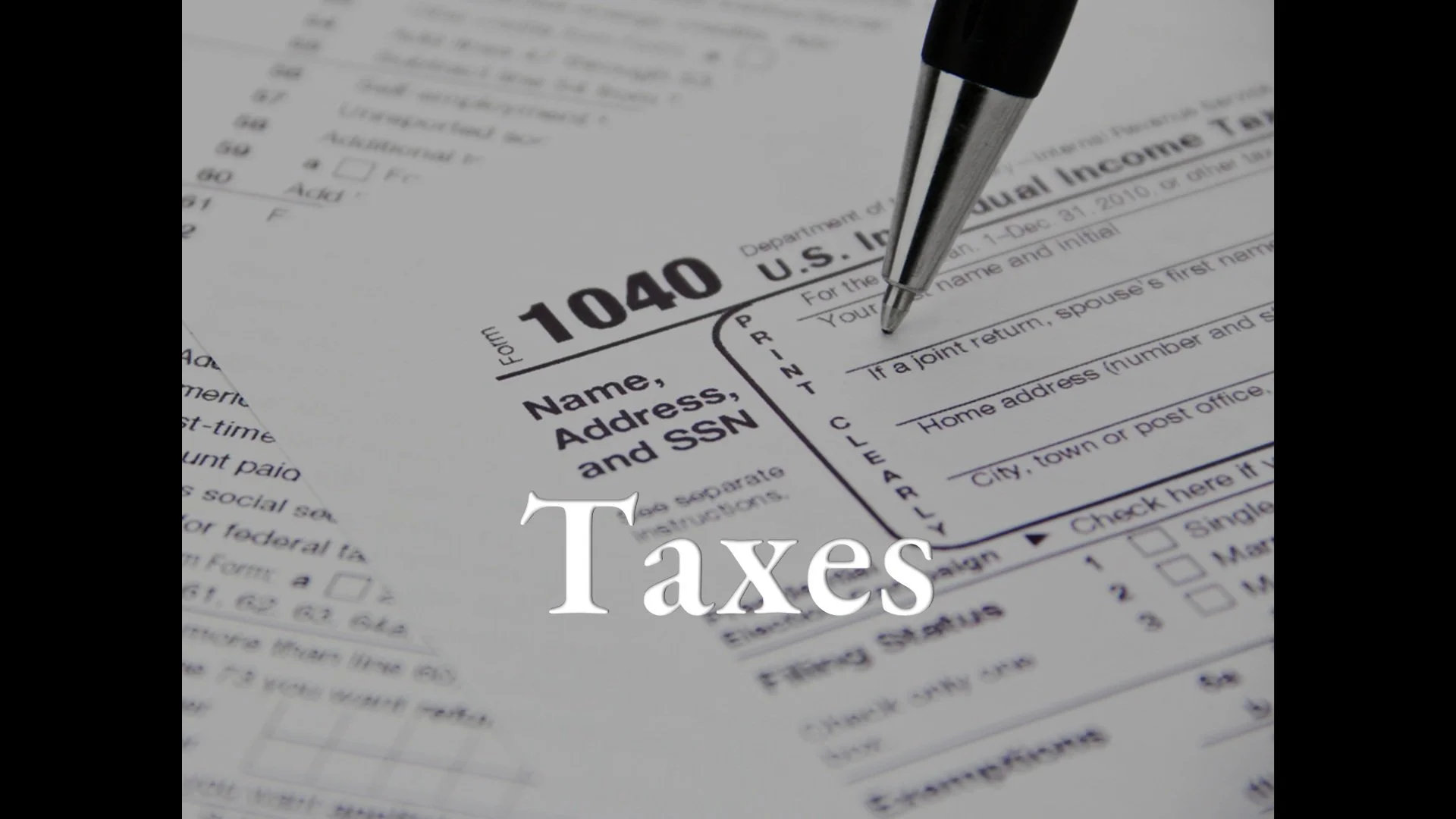

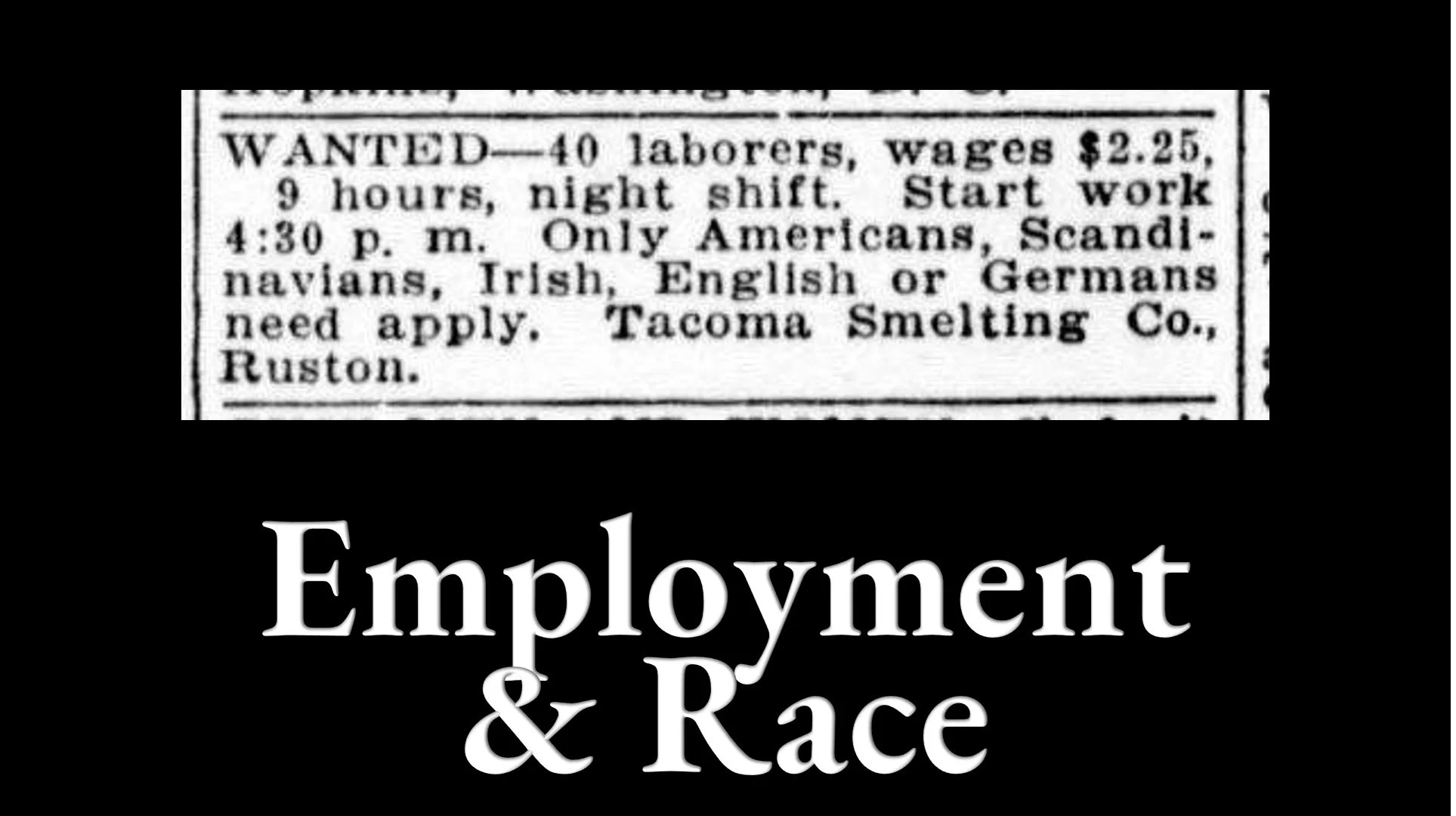





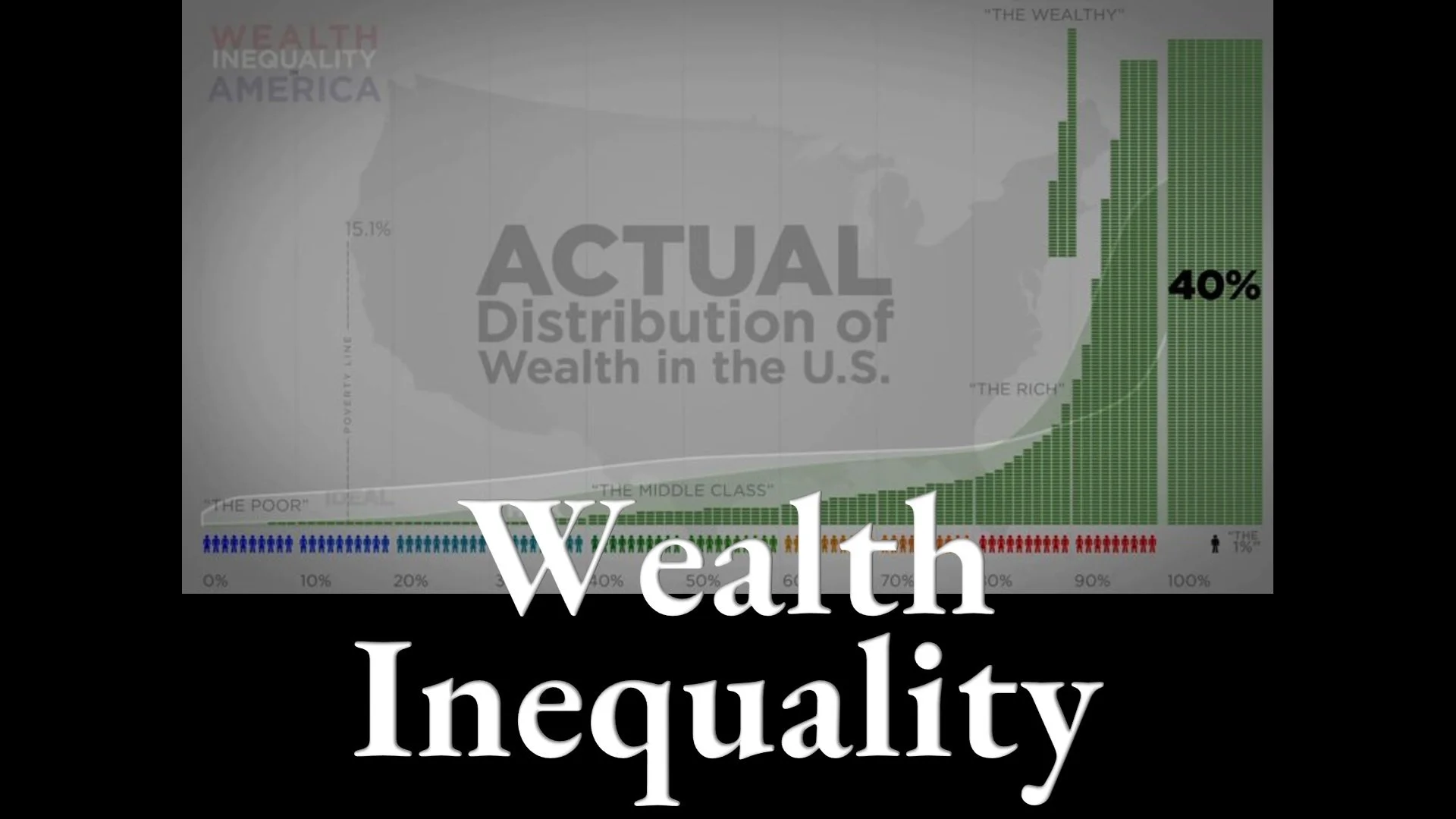
Christian Restorative Justice Critique of the Right: Domestic Policy Topics:







Critique of the Right: Philosophical Influences: