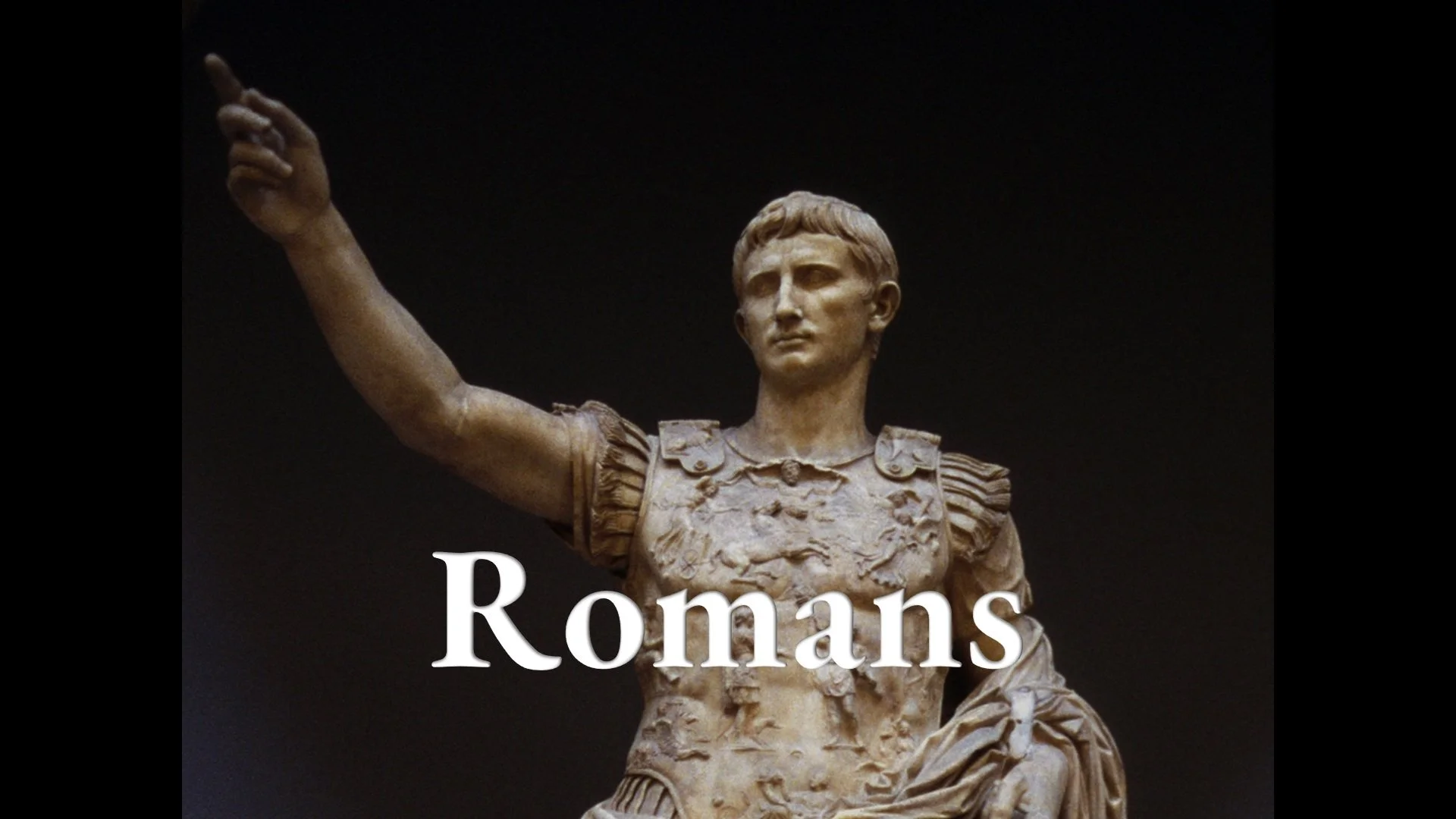
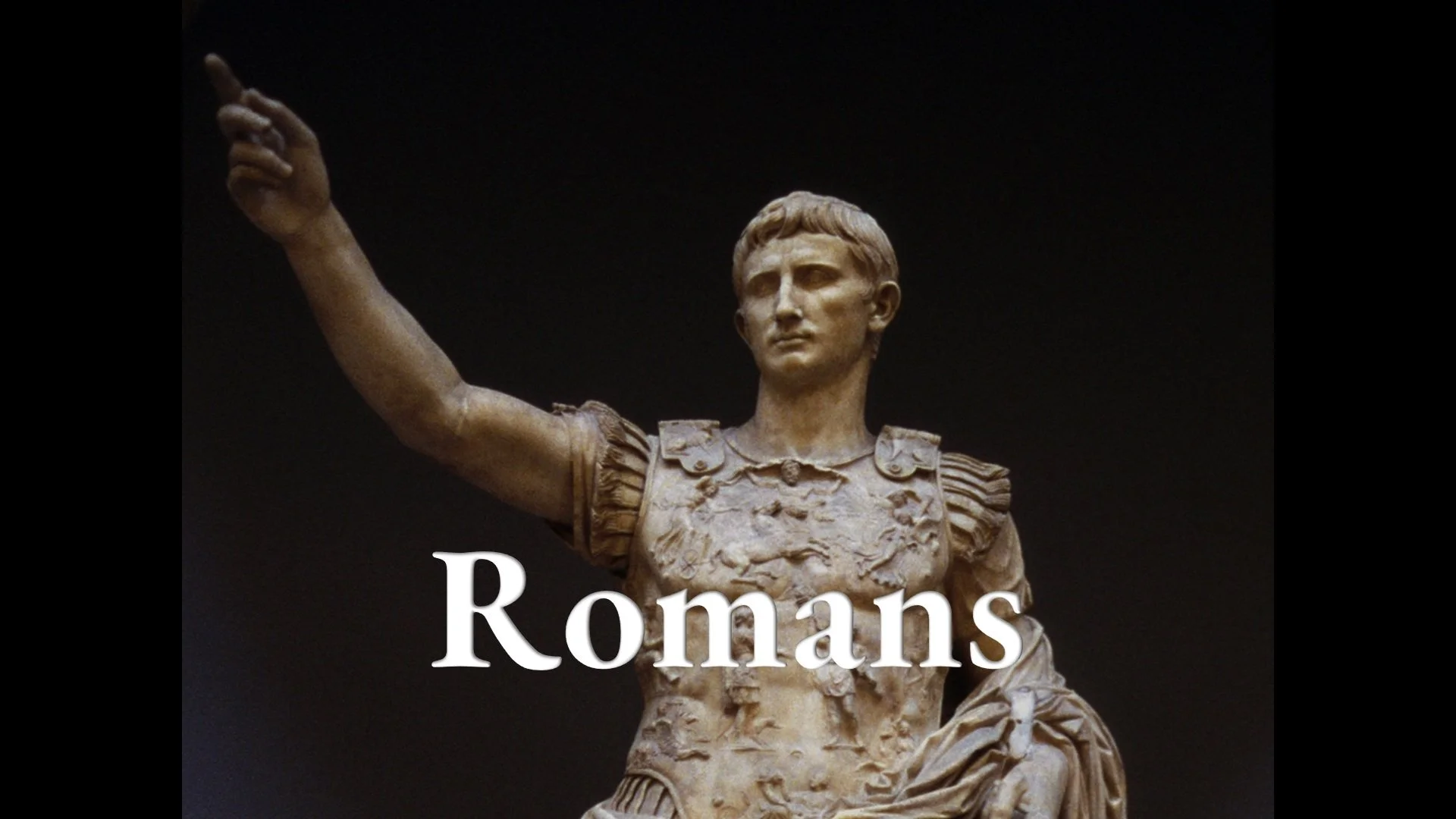
Photograph: Augustus of Prima Porta, in the Vatican Museum; photo credit: Tyler Bell, Flickr | Creative Commons.
Below are messages, small group leader notes, and exegetical notes on Paul’s Letter to the Romans.
Spotlight
-
Most of us were taught that Jesus died to save us from God’s punishment. But what if we’re missing the real story? In Romans 5:10, the Apostle Paul makes a startling claim: we are reconciled to God by Jesus’ death, and we are saved even more by his life. If "being saved" means "being reconciled to God," then how does Jesus' life save us even more? In this first video of our deep-dive series on the Book of Romans, Ian Macdonald from the Anástasis Center explores why the common view of "Penal Substitutionary Atonement" (PSA) struggles to explain Romans 5:10. We contrast modern views from John Calvin and John Piper with the "Healing Atonement" model held by the Early Church. In this video, we discuss:
Retributive vs. Restorative Justice: Why God’s justice is about undoing harm, not extracting suffering.
The Sin-Disease: Moving from a "legal" view of sin to a "medical" view of healing.
Athanasius & the Early Church: How the 4th-century church viewed God’s love for creation.
Neos vs. Kainos: The Greek distinction that changes how we view our "New Life" in Christ.
One minute teaser video:
-
Romans 1:1 - 7 Jesus in the Midst of Other Heroes
Romans 1:8 - 17 I Am Not Ashamed of the Gospel
Romans 1:18 - 20 God’s Wrath Against the Corruption in Human Nature
Romans 1:21 - 32 Patient A in God’s Hospital: The Control Freak
Romans 2:1 - 16 Patient B in God’s Hospital: The Judger
Romans 2:17 - 3:8 Patient C in God’s Hospital: The Jewish Person
Romans 3:9 - 20 God’s Diagnosis of the Infection
Romans 3:21 - 26 God’s Response to Evil: The Faithfulness of Jesus
Isaiah 52:13 - 53:12 Is There Any Hard Evidence that Jesus Was Really Amazing? (and ppts)
Romans 3:27 - 31 The Power of Jesus’ Faithfulness
Romans 4:1 - 25 What is Faith, Exactly? What Are We Believing?
Romans 5:1 - 11 Our Confidence: Christ in Us, the Hope of Glory
Romans 5:12 - 21 The Dreams that Refuse to Die
Romans 5:12 - 21 Jesus is God’s New Humanity
Romans 6:1 - 11 God’s Victory Over Human Evil: Our Death and Resurrection With Jesus
Romans 6:12 - 14 God’s Victory Over Human Evil: We Present Ourselves to God
Romans 6:15 - 23 God’s Victory Over Human Evil: We Are Bondservants of Jesus
Romans 7:1 - 13 Our New Identity in Christ: Married to Christ
Romans 7:7 - 8 Jesus and Jealousy
Romans 7:14 - 8:4 Jesus’ Redemption of Human Desire
Romans 8:5 - 11 The Spirit of Jesus and God’s New Humanity: Indwelled by the Spirit
Romans 8:12 - 17 We Are Adopted into God’s Family
Romans 8:18 - 25 Though We Suffer Now, We Hope for Renewal
Romans 8:26 - 39 The Christian’s Identity: God is Absolutely For Us!
Romans 9 - 11 Predestination and Free Will, Hardening of Hearts, and Outreach to the Jewish Community (ppts)
Romans 12:1 - 2 Be Transformed
Romans 12:3 - 8 Be Unified in the Body of Christ
Romans 12:3 - 8 Developing the Gift of Giving (video, Nov 16, 2014)
Romans 12:9 - 16 Love in Action
Romans 12:17 - 13:10 Responding to Violence and Evil
Romans 13:11 - 14 The Day is Coming Soon
-
TBA
-
A paper written for Dr. Bruce Beck, for his class on Paul at Holy Cross Greek Orthodox Seminary, Fall 2018. The paper is a summary of exegetical commentary, with special attention to atonement language and the theme of participation in Christ
God Condemned Sin in the Flesh of Christ: An Examination of Romans 8:3 - 4
A paper written for Dr. Bruce Beck, for his class on Paul at Holy Cross Greek Orthodox Seminary, Fall 2018. I explore how Paul derived his statement that the Law was "weak" and how Qumran shared that view. I also explain why "in the likeness of sinful flesh" means that Jesus assumed a fallen human nature and battled his way through it.
My Journey in Understanding Romans
A short, two page reflection.
Predestination and Free Will in Romans 9 - 11: What It Is and What It Isn't
A short, three page reflection.
Paul's Letters and Christian Political Identity in the First Century World
Slides to a presentation depicting Jewish and Gentile political identities as a backdrop behind Paul’s ministry and his language of identity in Christ and union with Christ.
Paul's Language of Motivation: Our Union with Christ
An analysis of Paul’s motivational language as rooted in relational identity, or union with Christ. The contrast is to extrinsic and transactional forms of motivational language.
Paul's Terminology for the Human Person
Quotations from various scholars analyzing Paul’s terms for the human person and parts or modes of human existence: body, soul, spirit, mind, etc.
Whose Family? Which Union? Reflections on Scripture, Human Sexuality and God's Purposes
A paper summarizing the five Letters to a Gay Friend. This is an exegetical and pastoral paper examining biblical passages that are important in the discussion about what God’s vision for human sexuality is: Genesis 1 - 2; Leviticus 18 and 20; Matthew 19; Romans 1; 1 Corinthians 6 - 7; 1 Timothy 1. Ultimately, we have to look at the the nature of human desire in general, as a gift from God to move us towards extending ourselves towards Him and others. However, we are called to submit our desires to Jesus, who demonstrated the normative human emotions and desires.
Mako Nagasawa, Debate with a Christian Libertarian on the Role of Government in Romans 13
Facebook, Nov 10 - 12, 2020.
-
Biblical Hermeneutics, Why is δεδικαίωται Translated “Freed” In Many English Versions? Romans 6:7. Biblical Hermeneutics website.
Leander Keck, The Law and “the Law of Sin and Death” (pdf file) edited by James L. Crenshaw and Samuel Sandmel, The Divine Helmsman. Amazon book, 1980. Keck’s chapter is a very good treatment of Romans 8:1 - 4. Keck says:
“Had the Son not participated in this kind of flesh, the “condemnation” would not have been liberating; it could only have exposed even more powerfully the human dilemma, so that the net result of knowing about such a Son would, like hearing the law, have only made one conscious of sin (3:20). This formulation of the radical identification of the Son with the full depths of the human condition is similar to that of 2 Cor.5:21... Christian theology, and especially Christian piety, has found it exceedingly difficult to follow Paul here because of the doctrine of Jesus’ sinlessness. Whatever one may think about Jesus’ sinlessness, Paul’s formulations move on a different plane. They do not have in view the question of whether Jesus committed sins but whether the Son participated in the human condition sufficiently to achieve that which the human dilemma required.”
N.T. Wright, Paul's Gospel and Caesar's Empire. NT Wright Page, May 1998.
Cristina Grenholm and Daniel Patte, Reading Israel in Romans: Legitimacy and Plausibility of Divergent Interpretations (Romans Through History & Culture). Amazon book, Jun 2000.
Thomas Seraphim Hamilton, The True Beauty of Romans 9. OrthoCath blog, Aug 2, 2012.
Daniel Patte and Vasile Mihoc, Greek Patristic and Eastern Orthodox Interpretations of Romans (Romans Through History & Culture). Amazon book, Feb, 2013.
N.T. Wright, New Perspectives on Paul. NT Wright Page, Tenth Edinburgh Dogmatics Conference, May 2014.
N.T. Wright, We Arrive at Romans 8 - Session One. video, May 2014.
N.T. Wright, No Condemnation - Session Two. video, May 30, 2014.
N.T. Wright, New Creation - Session Three. video, Jun 2, 2014.
N.T. Wright, New Exodus, New Tabernacle - Session Four. video, Jun 2, 2014.
N.T. Wright, New Vision of God - Session Five. video, Jun 2, 2014.
N.T. Wright, New Vocation for the Christian - Session Six. video, Jun 2, 2014.
N.T. Wright, God's Powerful Foolishness in a World of Foolish Power - Session Seven. video, Jun 3, 2014.
Munther Isaac, Palestinian Christian Response to Christian Zionism. Bethlehem Institute for Peace and Justice, Feb 18, 2015. Isaac comments on Romans 11, in particular, and offers reflections on the theology and ethics of land.
Archimandrite Vassilios Papavassiliou, Original Sin: Orthodox Doctrine or Heresy? Pemptousia, Feb 25, 2017. Vassilios comments on Romans 5, Augustine vs. Pelagius vs. John Chrysostom and John Cassian.
Jackson Wu, Is the Glory of God Intrinsic to Humanity? Rethinking Romans 3:23.. Patheos, Nov 15, 2017. A very helpful introduction to defining “glory” not as a commodity that God hoards, but the presence and revealing of God
Dr. Steve McVey, What Is God's Wrath. GCI You're Included, date unknown. McVey gives a helpful commentary on Romans 1:18 and other passages.
Jackson Wu, Why Is God Justified in Romans?: Vindicating Paul’s Use of Psalm 51 in Romans 3:4. Patheos, Feb 14, 2018.
N.T. Wright, Faith: What Does Paul Mean? N.T. Wright Online, Oct 7, 2019. This is a 5.5 minute video summarizing the “faith in” or “faithfulness of” Jesus debate; NTW lands on the “faithfulness of" Jesus interpretation and anchors that interpretation in Romans 3
Marg Mowczko, A Note on Junias, Junia, and Julia in Early Commentaries of Romans 16:7. Marg Mowczko, Nov 13, 2019.
Ephram Radner, The Cost of High-mindedness: Jews and Gentiles in the Wake of the Fulfillment of Romans 11:20 - 21. Canada Christian College, Oct 20, 2021. Radner critiques Christian anti-Semitism, imperialism, and colonialism through Paul’s warning.
Michael Gorman, Determinetruth Interview, Aug 22, 2022. Rob Dalrymple and Vinnie Angelo interview New Testament scholar Michael Gorman on Romans, especially 13:1 - 7. Gorman wrote a commentary, Romans: A Theological and Pastoral Commentary (2022).
Spotlight: Long Form Videos
-
See also slides to this presentation. This is a deep dive into Romans 9 - 11 based on literary and biblical-intertextual exegesis, and patristic interpretation. Everyone but Augustine of Hippo believed that God granted and maintained human free will, because we are partners with God in shaping our own human nature. Romans 9 - 11 refers to God accomplishing His purposes in history, delivering Israel from Egypt and delivering Jesus from sin and mortality. Romans 9 - 11 does not refer to God accomplishing a “double predestination” into the realm of the eternal. Some consideration is given to Ephesians 1:1 - 14 and John 6.
-
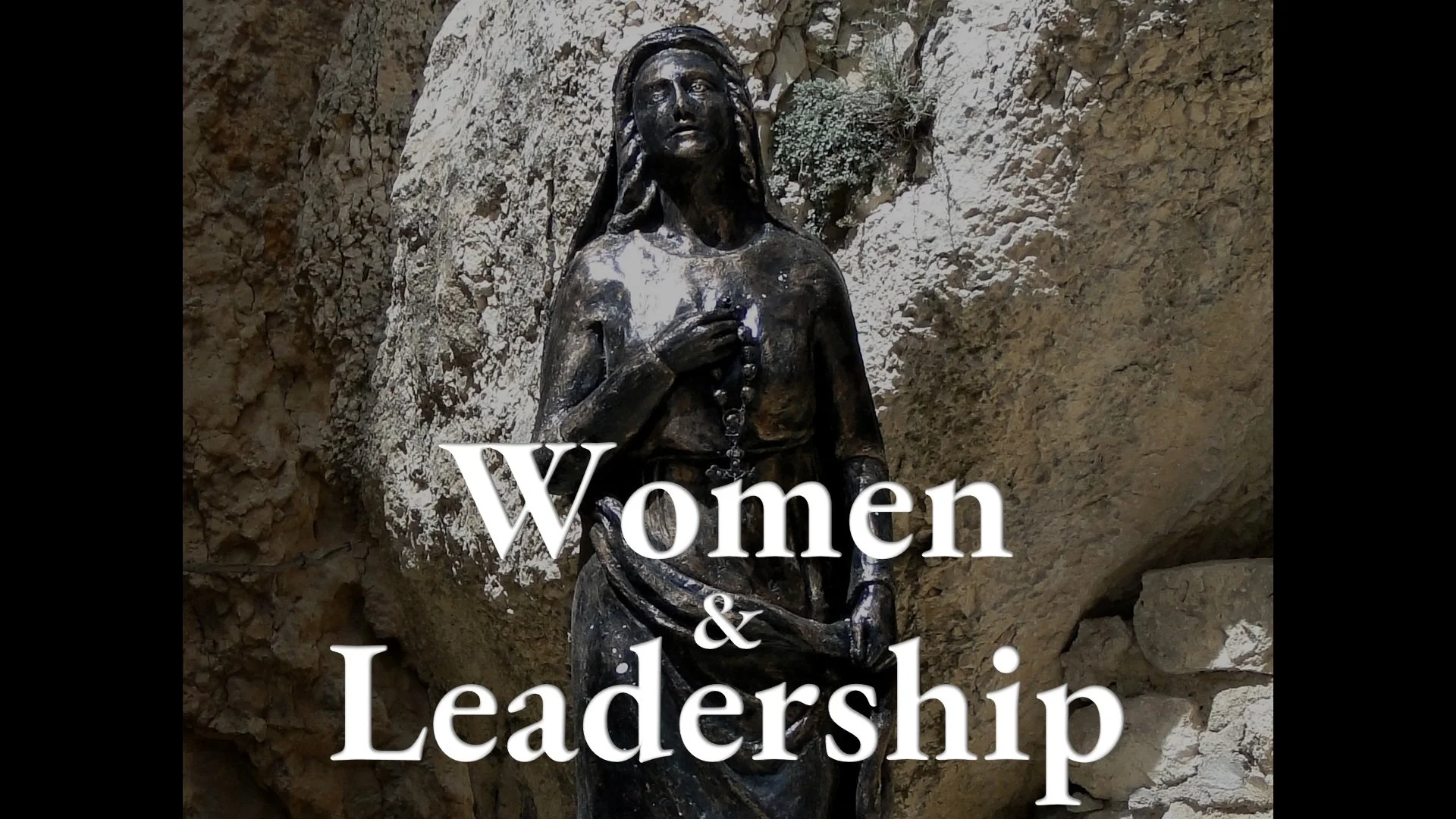
See also the slides to this presentation. Greek and Roman views of the inferiority of women began with Plato and Aristotle (4th century BC). But Pulcheria was a Christian woman who became Roman augusta in 414 AD and presided over the Third and Fourth Ecumenical Councils. Empress Theodora was very influential in the 500s. And Irene became Emperor of the Romans by 800 AD. How did this happen? This presentation explores vocation as the main category by which Christians empowered women in roles distinct from family, examining the Catacombs of Priscilla, Irenaeus of Lyons, The Acts of Paul and Thecla, the Martyrdom of Perpetua and Felicitas, Montanism and the orthodox reaction to it, Melania the Elder, Paula of Rome, Nino of Georgia, Brigit of Ireland. The presentation discusses Phoebe and Priscilla from Romans 16, and also discusses the disagreements between Irenaeus, Tertullian, and Origen about how to interpret women in 1 Corinthians 11. This presentation and the video are the second of the 2022 Reconstruction class topics on the early church. See also our YouTube channel Reconstruction playlist for all the videos.
Bible Studies and Messages from The Anástasis Center: Paul:


Bible Studies and Messages from The Anástasis Center: The New Testament:
Bible Studies and Messages from The Anástasis Center: