Photograph: Photo credit: Unknown | Creative Commons
Introduction
God’s goodness is seen in human being and human becoming, even when people reject Jesus, because God made us co-creators with Him. God calls us into a partnership in the shaping of our own human desires and human nature.
The understanding of hell discussed below, the original understanding of the church, is related to the healing view of atonement, which we nickname medical substitutionary atonement, as well as a comprehensive literary exegesis of Scripture.
This short video clip highlights God’s call to purify us in Christ, with our partnership.
Messages and Resources
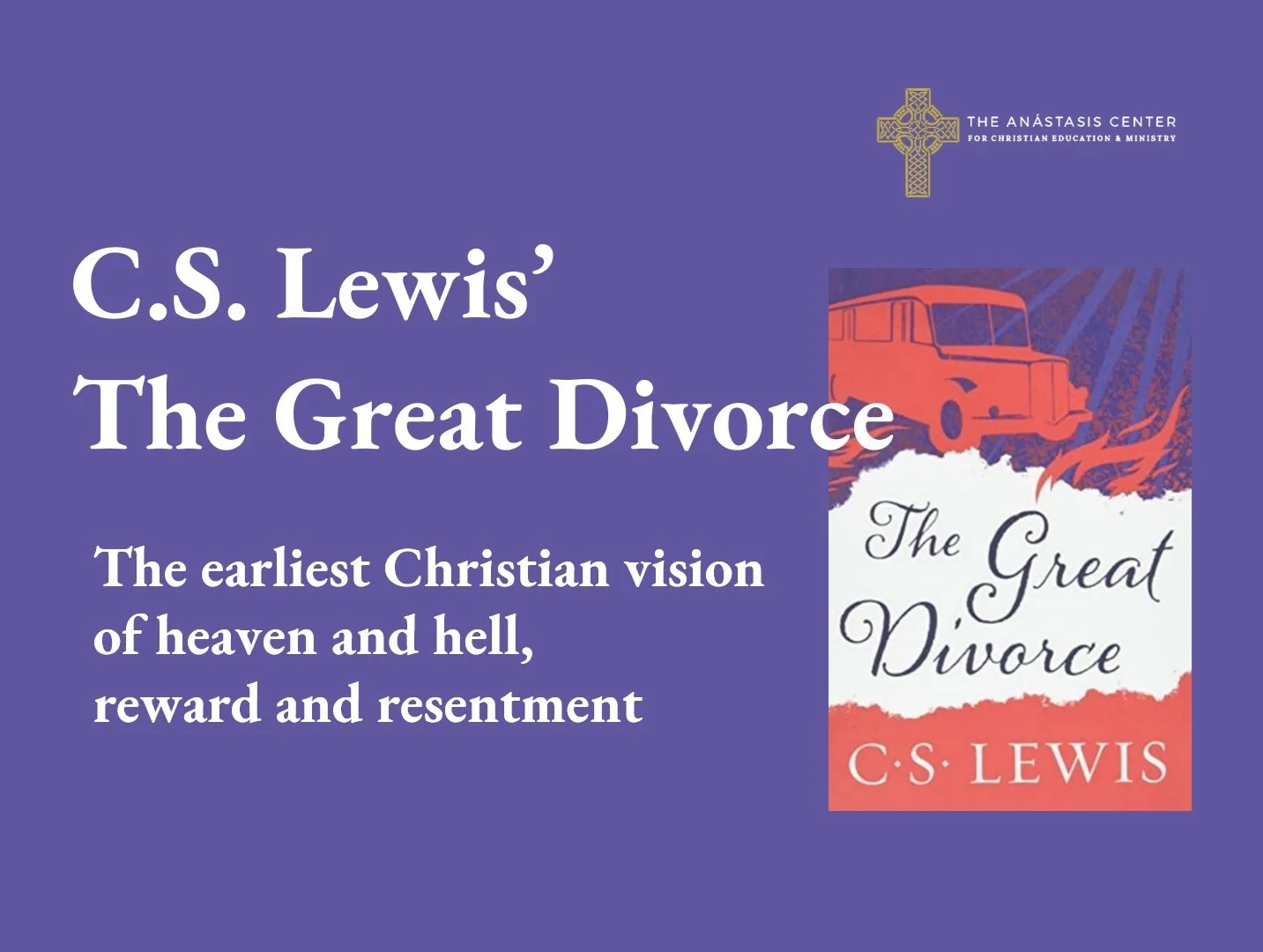
Would people in Hell choose Heaven if given the chance? In the popular modern show The Good Place, people can and do. In C.S. Lewis’ classic portrayal of a bus ride from Hell to Heaven, all but one do not. That may be surprising. See more.
See also the slides to this presentation. It covers the early Christian understanding of human being, human becoming, and how we co-create with God our human desires and human nature. To the right is the video from the class. This is a full exploration of how hell is the love of God because (1) the united church taught that for over a thousand years; (2) God's Triune nature requires all other activity of God to flow out of His love; (3) literary exegesis of fire shows that it is God's call to purification. This study largely depends on the theme of fire in Scripture.
Smeagol-Gollum and Boromir are case studies of human being and human becoming. Their choices towards addiction and freedom are vital to understand. Tolkien’s vision of what humanness means is rich, insightful, and sobering. To browse all our Theology of Tolkien videos, see our Arts and Theology page, or Arts and Theology playlist on our YouTube channel.
Tolkien presents evil as a creature’s deviation from goodness, which acquires a deadly attraction and power over us. Evil is a self-deception, then becomes addictive, corrupting, and self-defeating. To browse all our Theology of Tolkien videos, see our Arts and Theology page, or Arts and Theology playlist on our YouTube channel.
This video examines how each of the heroes in Tolkien's Lord of the Rings retold and redeemed the stories of tragic heroes. Gandalf retold Saruman's story. Aragorn retold Isildur's story. Galadriel retold multiple stories of Elven mistakes. But Frodo only partially retold Smeagol's story. What does all this tell us about Jesus? And what does this imply about the possibility of people becoming so addicted to some kind of sin — like the Ring — that they resist and refuse the One who offers to heal them? To browse all our Theology of Tolkien videos, see our Arts and Theology page, or Arts and Theology playlist on our YouTube channel.
Aragorn and Frodo became illuminated with light from within. This raises the question of whether becoming a light-bearer is a matter of choice, or birth (like with Luthien). Becoming a light-bearer was a special calling for the Children of Iluvatar: for the Elves, by beholding the Two Trees of Valinor, and for Humans, by moral choices of integrity, love, and hope. Compare this to the biblical motifs of light-bearing by Moses seeing God's face on Mt. Sinai, and by Jesus, and by us. See also the intertwined (pun intended) themes of light and trees in Scripture! Second century Christian leader Irenaeus of Lyons recognized these themes of light, and also cautioned that we can blind ourselves to it, creating eternal darkness for ourselves because we fail to care for our eyes. To browse all our Theology of Tolkien videos, see our Arts and Theology page, or Arts and Theology playlist on our YouTube channel.
-
A full essay exploration of how hell is the love of God because (1) the united church taught that for over a thousand years; (2) God's Triune nature requires all other activity of God to flow out of His love; (3) literary exegesis of fire shows that it is God's call to purification. These notes serve as the basis for slides of a longer presentation and shorter presentation.
Hell as Fire and Darkness: Remembrance of Sinai as Covenant Rejection in Matthew's Gospel
This is a long essay exploring how Jesus' use of the phrase "fire and darkness" is a motif that comes from the story of God at Mount Sinai, where Israel rejects the covenant, and resists being purified by God. “Fire” is an intertextual connection to the Old Testament appearances of God; the paper briefly explores virtually all the New Testament texts dealing with "fire" as a motif. There is some discussion of Jesus’ statement in Mark 9:48, “everyone will be salted with fire” and its implications for Mark’s Gospel as well as Isaiah 66:24 and the entire Book of Isaiah.
Divine Fire and Justice in 2 Thessalonians 1
An exploration of what fire and justice mean in 2 Thessalonians 1:9.
C.S. Lewis' Theology of Atonement
This paper explores Lewis' The Great Divorce and The Last Battle as depictions of hell. Lewis was consistent in his theology, and was informed by the early and medieval church, in saying that hell is the attempt to eternally lock God out.
The Theology of J.K. Rowling's Harry Potter
Rowling, following Tolkien and Lewis, portrayed evil as self-defeating, which is how the Scriptures portray it.
Timothy Keller on Hell: A Response to Keller's The Reason for God
This short essay points out the inconsistencies in Keller's presentation. He holds to penal substitution on the one hand, yet on the other, resorts to a C.S. Lewis-inspired self-imprisonment for hell.
Atonement Theories & Anger, Part 5: Why Penal Substitution Stunts People’s Emotional Development
This is a blog post from February 10, 2021. About 20 minute read. “But what if God in eternity is not punishing people for stealing cookies, but rather setting a banquet where each new course is more nutritious and exquisite than the last, but some people refuse to acquire the appetite to enjoy it? What if God is preparing our eyes to see by the bright light of His presence, but some people refuse to train their eyes and instead pamper them in the dark? What if God is preparing us to develop musical instruments and vocalizations that are challenging and difficult and rewarding and provide whole new possibilities for music, but some people refuse to practice and acquire an appreciation for the discipline? What if God is preparing us to swim in the river of life, but some people refuse to learn to swim and instead choose laziness? What if Jesus wants to lead the family of God on a grander vacation, replete with gardening and exertion and shared responsibility and adventure, but some people want to stay in the car and be miserable?”
Building Identity in an Age of Multiple Identities
Text of a message on Matthew 3:13 - 4:11 given at Neighborhood Church of Dorchester in October 2022. Mako reflected on his mother’s passing in early October, interpreting her resistance to Jesus but small signs of a softening heart.
This link will open Facebook, Dec 25, 2020. It is a sprawling discussion that started with a quote by Athanasius, explores God’s activities in both the Old Testament and in Christ, shows the importance of including “human nature” in the atonement and not just “human personhood,” and “human desires” in salvation and not just “human deeds.”
-
-
Encyclopedia.com, Purification in Judaism. Encyclopedia.com. “These priestly regulations concerning ritual impurity and the process of purification avoid any suggestion that they should be understood as punitive measures. Contracting a ritual status of impurity does not constitute a transgression in any way, neither of a legal nor a moral kind. On the contrary, in most cases impurity is the result of a natural occurrence in a person's life, such as birth, ejaculation, menstruation, and death. Also, ritual impurity is a temporary status, which can easily be ameliorated. In this context, the legal rhetoric merely suggests that if ritual impurity is contracted, a process of purification specified in the text should be undergone.” Refers to Jacob Milgrom, Mary Douglas, Jacob Neusner, Jonathan Klawans, and Christine Hayes.
Sam Berrin Shonkoff, A Burning Within. My Jewish Learning. This is a reflection and commentary on the “burning bush” story in Exodus 3. “Midrash actually draws a linguistic connection between the “flame (lavah) of fire” and a heart (lev) of fire. Something burns within Moses that will not go away–his visceral opposition to the slavery in Egypt. This is the message that emanates from the eternal flames, the awareness that arises in his heart of fire.”
Eric Cohen and Mitchell Rocklin, The Jewish Tradition Unfolds in Fire. Here's How, and Why. Mosaic, Dec 29, 2016.
-
Martyrdom of Polycarp, chapter 15 says that the fire into which Polycarp was thrown functioned like divine fire:
“And he appeared within not like flesh which is burnt, but as bread that is baked, or as gold and silver glowing in a furnace. Moreover, we perceived such a sweet odour [coming from the pile], as if frankincense or some such precious spices had been smoking there.”
Irenaeus of Lyons, Against Heresies book 4, chapter 29, paragraph 1 uses the image of the sun for God, where human free will determines how we experience the sun; judgment will be more in the New Testament than in the Old
Irenaeus of Lyons, Against Heresies book 4, chapter 39, paragraphs 1 - 4 again explains God as light, and free will as determining the state of our eyes, thus hell is self-blinding
Irenaeus of Lyons, Against Heresies book 5, chapter 8, paragraphs 2 - 4 describes how humans are meant to ascend from the animal to above the angel, but “hell” is a condition in which the humans descend towards the animal, by letting our desires overtake God’s commands.
Clement of Alexandria, The Instructor book 1, chapter 6 speaks of the death and resurrection of Christ as a divine fire, having a similar effect upon his body that earthly fire has on dough, making it rise as bread.
“Here is to be noted the mystery of the bread, inasmuch as He speaks of it as flesh, and as flesh, consequently, that has risen through fire, as the wheat springs up from decay and germination; and, in truth, it has risen through fire for the joy of the Church”
Origen of Alexandria, On First Principles book 3, paragraph 11 says that God is the sun, and we become either like softened wax or hardened clay by our choices. See also Dragoş A. Giulea, The Heavenly Fire Working the Earth of the Heart: Origen, Antony, Pseudo-Macarius, and the Internalization of the Image of Divine Fire. Academia, Scrinia V, 2009. Although see my assessment of Origen’s universalism in Neuroscience and the Theological Anthropologies of Irenaeus and Origen:
“Origen’s system actually collapses back into the endless cycles of the karma-dharma system of Hinduism. Whether this resemblance reflects logic or an intuition shared by various Indo-European peoples (Greeks and Indians are both Indo-European) is intriguing. The Origenist system holds out an appealing (on some level) universalism with apparent and inevitable certainty, but it cannot actually deliver on that certainty. For the theological anthropology built into it, supporting it, and required by it strongly suggests the cycle will repeat itself. In fact, Origen’s system requires a deliberate openness to the uncertainty: Evil could start again, at any point. Origen himself expresses this idea. Hence, Origen’s universalism, as with any universalism, actually ceases to be a real option. At best, it is a misnomer disguising a cyclical view of time.”
Antony of Egypt, Philokalia volume 1, On the Character of Men and On the Virtuous Life 150 says,
“God is good, dispassionate, and immutable…Thus to say that God turns away from the wicked is like saying that the sun hides itself from the blind” (in the link to the Philokalia, see page 246)
Aphrahat the Assyrian, Demonstration 1, paragraph 12 says that the righteous will be like precious metals, the wicked like straw
Aphrahat the Assyrian, Demonstration 6, paragraph 14 says that God entrusts the Holy Spirit to us, for us to keep uncontaminated by impurity, in order to present the Spirit and ourselves back to God - the emphasis on purity fits into the theme of fire
Athanasius of Alexandria, Festal Letter #3, paragraphs 3 - 4 explains the expression that God is a consuming fire, traces the theme of fire through Scripture
Athanasius of Alexandria, Life of Antony paragraphs 24 speaks of the fiery appearance of demons as God's judgment on sin which is already unfolding
Anaphora of St. Athanasius, Liturgy of the Ethiopian Orthodox Tewahedo Church. Athanasius of Alexandria (298 - 373) was bishop of Alexandria, and appointed Frumentius to be the first abuna of the Ethiopian Church. This prayer over the eucharist was named for him, although authorship cannot be ascertained. Lines 90 - 91 read:
“How great will be the shout of that time, how great will be the cry of that time, and how much will be the tears of that time when the Creator will weep for His creatures formed with His hand, when He will see them going in the way of destruction. At that time the sinners will weep for themselves, the righteous will weep for their relatives and the angels of heaven will be sad for the creation of man.”
Ambrose of Milan, On the Holy Spirit book 1, chapter 14 explains how the biblical motif of fire is used to describe God
Ambrose of Milan, On the Psalms chapter 18, paragraphs 103 - 105 says,
"Spiritual grace burns out our sins through fire… for sin is burnt away… but he himself shall be saved, yet so as by fire… This fire is hidden in the time of captivity, during which sin reigns, but in the time of liberty it is brought forth."
Ambrose of Milan, Commentary on Luke 14 says,
“So it is not a question of the creaking of the material teeth, nor of some eternal fire of material flames, nor of a material worm. But this is to note that, as excess food causes fevers and worms, so too, if one does not somehow cook one’s sins by using sobriety and abstinence, but if, piling up sins on sins, one contracts as indigestion old and new faults, one will be burned by his own fire and devoured by his verses. So Isaiah says, “Walk in the light of your fire and the flame that you have lit” (Isa.50:11). The fire is the one engendered by the sadness of faults; the worm comes from the fact that the insane sins of the soul attack the mind and the senses of the guilty, and gnaw at the entrails of his conscience (Sag.12:5); as the worms are born of each, so to speak of the body of the sinner. So the Lord said it through Isaiah, saying, “And they shall see the members of men who have averred against me; and their worm will not die, and their fire will not be extinguished” (Isa.66:24). The grinding of teeth also expresses a feeling of indignation, because too late we repent, too late we moan, too late we take it upon ourselves to have sinned with a perversity so tenacious.”
Cyril of Jerusalem, Catechetical Lecture 6, paragraph 29 refers to God being like a sun, whose nature is not to blind, but a person's eyes can be diseased and hurt, and thus blinded
Cyril of Jerusalem, Catechetical Lecture 15, paragraph 2 comments on Malachi 3 and God being a refining fire
Cyril of Jerusalem, Catechetical Lecture 17, paragraph 15 comments on the fire of the Spirit at Pentecost reopening the garden
Ephrem the Syrian, Hymns on the Nativity describes the Son of God as divine fire: “Fire entered the womb, put on a body, and came forth.” (14:22) And:
“Fire [of incense] commended Your Birth, which drew away worship from it.— The magi used to worship it: they who have worshipped before You.— They left it and worshipped its Lord; they exchanged fire for the Fire. Blessed is He Who has bathed us in His light! In place of the senseless fire that eats up its own body of itself — the magi adored the Fire Who gave His Body to be eaten.— The live coal drew near and sanctified, the lips that were unclean. Blessed is He Who has mixed His Fire in us!' (15:13 - 14) And: 'O Woman, you whom no man knew — how can we behold the Son you have borne?— For no eyes suffice to stand — before the transfigurations of the glory, that is on Him.— For tongues of fire abide in Him — Who sent tongues by His Ascension. — Be every tongue warned — that our questioning is as stubble, and as fire our scrutiny.” (18:15)
Ephrem the Syrian, Hymns on the Epiphany describes the Son of God as divine fire:
“The fire of grace has come down, has consumed utterly your offenses, and cleansed and hallowed your bodies.' (3:10) And: 'He is the fire that secretly, seals also His flock” (5:2).
“That visible fire that triumphed outwardly — pointed to the fire of the Holy Ghost — which is mingled, lo! And hidden in the water.— In the flame Baptism is figured — in that blaze of the furnace. — Come, enter, be baptized, my brethren — for lo! It looses the bonds;— for in it there dwells and is hidden — the Daysman of God — Who in the furnace was the fourth. Two words again our Lord spoke — which in one voice agree in unison:— He said, I have come to send fire,— and again, I have a baptism to be baptized with.— By the fire of Baptism is quenched the fire — that which the Evil One had kindled:— and the water of Baptism has overcome — those waters of contention — by which he had made trial — of Joseph who conquered and was crowned. Lo! The pure fire of our Redeemer — which he kindled in mankind of His mercy!— Through His fire He quenched that fire — which had been kindled in the defiled and sinful. — This is the fire wherein the thorns — are burnt up and the tares.— But happy are your bodies — that have been baptized in the fire — which has consumed your thickets — and by it your seeds have sprung up to heaven!' (8:6 - 8)
“The Prophets have called the Most High a fire —a devouring fire, and who can dwell with it?” (8:22)
“How can one openly grasp — in his hands the fire that burns?— O You that are fire have mercy on me — and bid me not come near You, for it is hard for me!” (14:11)
“The waters in My Baptism are sanctified, — and fire and the Spirit from Me shall they receive — and if I be not baptized they are not made perfect — to be fruitful of children that shall not die. Fire, if to Your fire it draw near — shall be burnt up of it as stubble.— The mountains of Sinai endured You not — and I that am weak, wherein shall I baptize You? I am the flaming fire — yet for man's sake I became a babe — in the virgin womb of the maiden. — And now I am to be baptized in Jordan.” (14:32 - 34)
Ephrem also describes baptism and the life in Christ as a purification by fire:
“Whosoever puts on the robe of glory — From the water and the spirit, — Will destroy with its burning — The thorny growth of his sins.” (4:19 - 20)
Ephrem the Syrian, Homily on Our Lord, paragraph 27
“For I saw a light from heaven that excelled the sun, and its light shone upon me [Acts 26:13]. So then mighty rays streamed forth without moderation, and were poured upon feeble eyes, which moderate rays refresh. For, lo! The sun also in measure assists the eyes, but beyond measure and out of measure it injures the eyes. And it is not by way of vengeance in wrath that it smites them. For lo! It is the friend of the eyes and beloved of the eyeballs. And this is a marvel; while with its gentle lustre it befriends and assists the eyes; yet by its vehement rays it is hostile to and injures the eyeballs. But if the sun which is here below, and of kindred nature with the eyes that are here below, yet injures them, in vehemence and not in anger, in its proper force and not in wrath; how much more should the light that is from above, akin to the things that are above, by its vehemence injure a man here below who has suddenly gazed upon that which is not akin to his nature? For since Paul might have been injured by the vehemence of this sun to which he was accustomed, if he gazed upon it not according to custom, how much more should he be injured by the glory of that light to which his eyes never had been accustomed? For behold, Daniel also [Daniel 10:5-6] was melted and poured out on every side before the glory of the angel, whose vehement brightness suddenly shone upon him! And it was not because of the angel's wrath that his human weakness was melted, just as it is not on account of the wrath or hostility of fire that wax is melted before it; but on account of the weakness of the wax it cannot keep firm and stand in presence of fire. When then the two approach one another, the power of the fire by its quality prevails; but the weakness of the wax on the other hand is brought lower even than its former weakness.”
Gregory of Nazianzus, Oration 28, paragraph 31 explains the presence of God in the sanctuary as fire, purifying in nature
Gregory of Nazianzus, Oration 30, paragraphs 6 and 18 explains the incarnation of Jesus as fire burning sin away (6), and comments on the etymology of the name-title "God" itself as related to burning away evil (18)
Gregory of Nazianzus, Oration 37, paragraph 4 explains why God is called fire, because He burns away worthless matter
Gregory of Nazianzus, Oration 40, paragraph 36 explains the motif of fire in hell
Gregory of Nazianzus, Oration 45, paragraph 16 deploys passages about God as fire for the purpose of purifying us
Basil of Caesarea, Hexaemeron, Homily 6, chapter 3 refers to divine fire as both purifying and then destroying, based on our response to God
Basil of Caesarea, Letter 46 to a Fallen Virgin, paragraphs 5 - 6 applies healing atonement, and restoration from sin, in contrast to hell as an exposure and revelation of sin stored up in the soul
Basil of Caesarea, from J.P. Migne, Patrologia Graeca, vol.32, columns 1263 - 1266. See commentary by Michael Pakuluk, Theological Fraud. First Things, Feb 6, 2020. Pakuluk argues against David Bentley Hart’s universalism and specifically, Basil’s quotation.
“Now, the Lord says in one passage that they will proceed to everlasting (aiōnios) punishment [Mt. 25:46], and in another passage he sends some people to the everlasting (aiōniov) fire that is prepared for the devil and his angels [Mt 25:41], and yet another time he mentions the Gehenna of fire, and adds: “where their worm does not die, and the first is not extinguished”. . . [Mk 9:44, 48]. In the divinely inspired Scripture there are these and similar passages in many places.”
Gregory of Nyssa, On Infants' Early Deaths refers to death and/or the afterlife as involving being purged with fire
Gregory of Nyssa, On the Soul and Resurrection says,
“It is not punishment chiefly and principally that the Deity, as Judge, afflicts sinners with; but He operates... only to get the good separated from the evil and to attract it into the communion of blessedness.”
Gregory of Nyssa, On the Soul and Resurrection says,
“We may understand this truth by the example of the eyes. To see is their natural state; but to fail to see results to them either from choice or from disease. This unnatural state may supervene instead of the natural, either by wilful shutting of the eyes or by deprivation of their sight through disease. With the like truth we may assert that the soul derives its constitution from God, and that, as we cannot conceive of any vice in Him, it is removed from any necessity of being vicious; that nevertheless, though this is the condition in which it came into being, it can be attracted of its own free will in a chosen direction, either wilfully shutting its eyes to the Good, or letting them be damaged by that insidious foe whom we have taken home to live with us, and so passing through life in the darkness of error; or, reversely, preserving undimmed its sight of the Truth and keeping far away from all weaknesses that could darken it.”
Gregory of Nyssa, The Life of Moses, book 2, paragraphs 87 says,
“What we are describing is like some destructive and bilious humor which arises in the intestines because of a dissipated life. When the physician induces vomiting by his medicines, he does not become the cause of the sickness in the body, but on the contrary it is disorderly eating habits which bring it about; medical knowledge only brought it into the open. In the same way, even if one says that painful retribution comes directly from God upon those who abuse their free will, it would only be reasonable to note that such sufferings have their origin and cause in ourselves.” See also Craig Truglia, Questioning Gregory of Nyssa’s Universalism: In Illud. Orthodox Christian Theology, Jul 31, 2020. Noted here, but needs more investigation.
Pseudo-Macarius of Egypt, Fifty Spiritual Homilies, Homily 4, paragraphs 8 - 27 comments on how the choice to be hardened or softened by divine fire is ours. See also Dragoş A. Giulea, The Heavenly Fire Working the Earth of the Heart: Origen, Antony, Pseudo-Macarius, and the Internalization of the Image of Divine Fire (Academia, Scrinia V, 2009)
Pseudo-Macarius of Egypt, Fifty Spiritual Homilies, Homily 11 discusses how divine fire is purifying; also says the serpent in the wilderness (Num.21:4 - 8; Jn.3:14 - 15) represents Jesus first healing the wound in his own humanity so he can heal the wound in ours
Pseudo-Macarius of Egypt, Fifty Spiritual Homilies, Homily 16, paragraphs 1 - 6 discusses the relation between God and evil; how God contains all things but evil is a disorder in the human soul; God contains even hell and Satan, because He is everywhere, but is not injured by them
Pseudo-Macarius of Egypt, Fifty Spiritual Homilies, Homily 25, paragraph 8 - 9 comments on the theme of divine fire throughout Scripture and how God cleanses and purifies us
John Chrysostom, Homilies on Matthew's Gospel, Homily 16 writes,
“In order then that we also may extinguish all the furnace of disordered pleasure here, and so escape the hell that is there, let these each day be our counsels, our cares, and our practice, drawing towards us the favor of God, both by our full purpose concerning good works, and by our frequent prayers. For thus even those things which appear insupportable now, will be most easy, and light, and lovely. Because, so long as we are in our passions, we think virtue rugged and morose and arduous, vice desirable and most pleasing; but if we would stand off from these but a little, then both vice will appear abominable and unsightly, and virtue easy, mild, and much to be desired.”
John Chrysostom, Homilies in Praise of Paul, Homily 3, paragraph 9 says,
“Paul was so great in love, the chief of the virtues, that he was more fervently ardent than any flame. And just as iron when it lands in fire becomes completely fire, so also Paul, ignited with the fire of love, has become completely love.” Found in Margaret M. Mitchell, The Heavenly Trumpet: John Chrysostom and the Art of Pauline Interpretation. Westminster John Knox Press | Amazon book, 2002, p.456.
John Chrysostom, Homily for Holy Thursday says,
“I give counsel to everyone among you, whether man or woman, whether great or small, to anyone of you that may be guilty of sin, convicted by your own counsels, that first you must repent and confess your sins, that you may dare, considering yourself unworthy, to approach and touch the Divine Fire Itself. For our God is a consuming Fire, and they, therefore, who with faith and fear draw near to the God and King and Judge of us all, shall burn and scorch their sins; and It shall enlighten and sanctify their souls. But It shall burn and scorch with shame, the souls and bodies of them that draw near with unbelief. Therefore, many among you are ill and sleep in sickness, that is, many are dying unconfessed and unrepentant. And furthermore, my brethren, I beseech you, and I say: no one that swears oaths, nor a perjurer, nor a liar, nor one that finds fault with others, nor a fornicator, nor an adulterer, nor a homosexual, nor a thief, nor a drunkard, nor a blasphemer, nor one that envies his brother, nor a murderer, nor a sorcerer, nor a magician, nor a charmer, nor an enchanter, nor a robber, nor a Manichean, shall, unconfessed and unprepared, approach, touch, or draw near the dread Mysteries of Christ, for it is terrible to fall into the hands of the Living God.”
Patrick of Ireland, Letter to the Soldiers of Coroticus, chapter 21 writes, “May God inspire these men sometime to come to their senses in regard to God again, so that they may repent, however latter day, of their grave crimes, namely homicide against the brothers of the Lord, and that they free these baptized women whom they have taken, so that then they may deserve to live to God and be made whole once more, here, now and for eternity.” In context, Patrick is not arguing for “works righteousness,” but partnership with Christ in purification. Many times, Patrick warns Coroticus and his soldiers about eternal conscious torment in hell if they do not repent, turn to Christ, and release the slaves (chapters 4, 8, 9, 12, 13, 17, 18, 20). Patrick arrived in Ireland circa 432 and wrote this letter in Latin circa 450 - 490 AD.
Augustine of Hippo, Confessions book 1, chapter 12 writes, “every inordinate affection should bring its own punishment”
Augustine of Hippo, Confessions book 5, chapter 4 speaks of God as a consuming fire and the impact of human choices upon our human nature
Augustine of Hippo, Confessions book 11, chapter 29 writes, “until I flow together unto You, purged and molten in the fire of Your love”
Jacob of Serug, Homily on Habib the Martyr speaks of fire in Scripture and contemporary martyrdom as purifying or not, based on one's choices, which is consistent with medical substitutionary atonement and the rest of the patristic interpretation of divine fire in Scripture
Maximus the Confessor, Chapters on Knowledge, paragraph 12 says,
“God is the sun of justice, as it is written, who shines rays of goodness on simply everyone. The soul develops according to its free will into either wax because of its love for God or into mud because of its love for matter.”
Maximus the Confessor, Ad Thalassios, Question 59.8 says,
“I mean the divine and incomprehensible pleasure of God, which God inherently brings about by nature when He unites Himself according to grace to those who are worthy. When, on the other hand... I mean the privation of grace producing unspeakable pain and suffering, which God is accustomed to bring about by nature when He unites Himself contrary to grace to those who are unworthy. For God, in a manner known only to Himself, by uniting Himself to all in accordance with the quality of the disposition that underlies each...”
John of Damascus, Exposition on the Orthodox Faith book 1, chapter 9 repeats Gregory of Nazianzus' etymology of the title 'God' as linked to the verbs 'to run' (as in courses through all things) and 'to burn' (as in consuming all evil)
John of Damascus, Exposition on the Orthodox Faith book 2, chapter 4 writes:
"All wickedness, then, and all impure passions are the work of their mind. But while the liberty to attack man has been granted to them, they have not the strength to over master any one: for we have it in our power to receive or not to receive the attack. herefore there has been prepared for the devil and his demons, and those who follow him, fire unquenchable and everlasting punishment. Note, further, that what in the case of man is death is a fall in the case of angels. For after the fall there is no possibility of repentance for them, just as after death there is for men no repentance."
John of Damascus, Exposition on the Orthodox Faith book 3, chapters 8, 11, 15, 17, 19 explains the Son of God taking human nature as fire inhabiting a coal or iron, co-existing in it and purifying it
John of Damascus, Exposition on the Orthodox Faith book 4, chapter 27 writes:
"We shall therefore rise again, our souls being once more united with our bodies, now made incorruptible and having put off corruption, and we shall stand beside the awful judgment-seat of Christ: and the devil and his demons and the man that is his, that is the Antichrist and the impious and the sinful, will be given over to everlasting fire: not material fire like our fire, but such fire as God would know. But those who have done good will shine forth as the sun with the angels into life eternal, with our Lord Jesus Christ, ever seeing Him and being in His sight and deriving unceasing joy from Him, praising Him with the Father and the Holy Spirit throughout the limitless ages of ages."
Isaac the Syrian, Mystic Treatises 84 writes,
“The sorrow which takes hold of the heart which has sinned against love, is more piercing than any other pain. It is not right to say that the sinners in hell are deprived of the love of God…But love acts in two different ways, as suffering in the reproved, and as joy in the blessed.”
Peter of Damascus, A Treasury of Divine Knowledge, Book 1, says,
“We do not all receive blessings in the same way. Some, on receiving the fire of the Lord, that is, His word, put it into practice and so become softer of heart, like wax, while others through laziness become harder than clay and altogether stone-like. And no one compels us to receive these blessings in different ways. It is as with the sun whose rays illumine all the world: the person who wants to see it can do so, while the person who does not want to see it is not forced to, so that he alone is the blame for his lightless condition. For God made both the sun and man’s eyes, but how man uses them depends on himself. Similarly, then, God irradiates knowledge to all and at the same time He gives us faith as an eye through which we can perceive it.”
Rabanus Maurus Magnentius (c. 780 – 4 February 856)
O Holy Spirit, by whose breath;
Life rises vibrant out of death;
Come to create, renew, inspire;
Kindle in our hearts your fire.
You are the seeker's sure resource,
Of burning love the living source,
Protector in the midst of strife,
The giver and the Lord of life.
Flood our dull senses with your light;
In mutual love our hearts unite.
Your power the whole creation fills;
Confirm our weak, uncertain wills.
From inner strife grant us release;
Turn nations to the ways of peace.
To fuller life your people bring
That as one body we may sing:
Praise to the Father, Christ his Word,
And to the Spirit: God the Lord,
To whom all honor, glory be
Both now and for eternity.
John of the Cross, The Living Flame of Love (1585) English translation
-
Edwin Hatch, Breathe on Me, Breath of God. 1878. Hatch was an Anglican clergyman and, notably, a Professor of Classics at the University of Trinity College in Canada and author of The Influence of Greek Ideas and Usages on the Christian Church. He wrote this hymn which refers to the divine fire as purifying:
Breathe on me, Breath of God, Fill me with life anew,
That I may love what you do love, And do what you would do.
Breathe on me, Breath of God, Till I am wholly thine,
Till all this earthly part of me Glows with your fire divine.
Breathe on me, Breath of God, Until my heart is pure,
Until with you I will one will, To do and to endure.
Breathe on me, Breath of God, So shall I never die,
But live with you the perfect life Of your eternity.
Fyodor Dostoyevski, The Brothers Karamozov. Public domain | Amazon page, 1880. In chapter 41, Dostoyevski says:
“What is hell? I maintain that it is the suffering of being unable to love.”
See Freedom in Thought, Dostoevsky - Hell is Being Unable to Love. Freedom in Thought, Sep 9, 2021. The creator of this video reasons from the ground up that inner pain is the result of wanting something you don’t have, and having a gap of time between the wanting and the having. Loving and giving of yourself, such as attention, has no gap of time. And if you want to give of yourself more than anything else, then you never feel the pain of wanting something you don’t have.
Samuel Taylor Chadwick, The Way of Pentecost, 1932. chapter 15. Chadwick, a Methodist minister, writes:
“It is Fire that prevails. For fifty days the facts of the Gospel were complete, but no conversions were recorded. Pentecost registered three thousand souls. It is the cause that sets men ablaze that wins converts. Gladstone's fiery passion routed Parliaments and slew the giants of oppression. Wesley, Whitefield, and General Booth wrought wonders by the Fire kindled of the Holy Ghost. Men ablaze are invincible. Hell trembles when men kindle. Sin, worldliness, unbelief, hell, are proof against everything but Fire. The Church is powerless without the Fire of the Holy Ghost. Destitute of Fire, nothing else counts; possessing Fire, nothing else really matters. The one vital need is Fire. How we may receive it, where we may find it, by what means we may retain it, are the most vital and urgent questions of our time. One thing we know: it comes only with the presence of the Spirit of God, Himself the Spirit of Fire. God alone can send the Fire. It is His Pentecostal gift.”
C.S. Lewis, The Great Divorce. HarperOne | Amazon page, 1945, reprint 2015. Lewis offers a classic articulation of the early Christian understanding of human being and human becoming.
J.R.R. Tolkien, Letter 181 to Michael Straight, 1956. From The Letters of J.R.R. Tolkien, edited by Humphrey Carpenter and Christopher Tolkien. George Allen and Unwin | Amazon page. 1981. Tolkien comments on whether Gollum could go to Valor and “be saved.”
“Into the ultimate judgement upon Gollum I would not care to enquire. This would be to investigate [God’s private matters], as the Medievals said. Gollum was pitiable, but he ended in persistent wickedness, and the fact that this worked good was no credit to him. His marvelous courage and endurance, as great as Frodo or Sam’s or greater, being devoted to evil was portentous, but not honorable. I am afraid, whatever our beliefs, we have to face the fact that there are persons who yield to temptation, reject their chances of nobility or salvation, and appear to be ‘damnable.’ […] But he would have never had to endure it if he had not become a mean sort of thief before it crossed his path.” (pages 234 - 235). “Gollum had had his chance of repentance, and of returning generosity with love; and had fallen off the knife-edge.” (p.252 from Letter 191)
Henri Nouwen, In the Name of Jesus: Reflections on Christian Leadership. Crossroad Publishing Company | Amazon page, 1993.
“Power offers a toxic substitute for the hard task of love. It seems easier to be God than to love God, easier to control people than to love people, easier to own life than to love life.”
Clyde S. Kilby, Tolkien and The Silmarillion. Harold Shaw Publishers, 1976, p.59, writes: “Professor Tolkien talked to me at some length about the use of the word 'holy' in The Silmarillion. Very specifically he told me that the 'Secret Fire sent to burn at the heart of the World' in the beginning was the Holy Spirit." If so, then to Tolkien’s mind, all things participate by nature in the Holy Spirit, but are still called to grow and develop by the Spirit, as in his legendarium, all things participate by. nature in the Secret Fire but are still called to grow and develop in consonance with the music of Eru Iluvatar. Departing from the music involves self-corruption. And self-corruption made touching the Silmarils painful, or seeing the sun a torment, etc.
Alexandre Kalomiros, The River of Fire. Glory to God for All Things, 1980. Kalomiros discusses heaven and hell in sections 9 - 18 (IX - XVIII). He criticizes Origen’s universalism.
Dictionary of Paul and His Letters, “Judgment" from Dictionary of Paul and His Letters. InterVarsity Press, 1993 and also Dictionary of Jesus and the Gospels. InterVarsity Press, 1992 (pdf file)
Dictionary of Paul and His Letters, “Wrath" from Dictionary of Paul and His Letters. InterVarsity Press, 1993 (pdf file) identifies God's wrath as an activity, not an attribute.
Dictionary of Paul and His Letters, “Expiation, Propitiation, Mercy Seat" from Dictionary of Paul and His Letters. InterVarsity Press, 1993 (pdf file) interprets "hilasterion" as "mercy seat" and not as "propitiation."
Dictionary of Paul and His Letters, “Righteousness" from Dictionary of Paul and His Letters. InterVarsity Press, 1993 (pdf file)
Dragoş A. Giulea, The Heavenly Fire Working the Earth of the Heart: Origen, Antony, Pseudo-Macarius, and the Internalization of the Image of Divine Fire. Academia, Scrinia V, 2009.
Steve McVey, What Is God's Wrath. Grace Communion International | You're Included (date unknown). McVey offers a helpful commentary on Romans 1:18 and other passages.
Michael Stutman, Joey Prusak: Dairy Queen Teen Does The Right Thing. Inspire My Kids, Sep 2013?. “While serving customers at his Dairy Queen recently, Joey observed someone on line drop a $20 bill. He also noticed that this person was either fully or partially blind and did not see the $20 fall to the ground. Another customer quickly picked up the $20, but instead of returning it to the person who dropped it, put it in their own pocket!
When Joey saw this, he asked the other customer to return the $20 to the person that dropped it. They refused. So Joey asked that person to leave his store and property immediately.”
Things We Love to See, Facebook, May 26, 2025 adds, “Prusak then instructed the woman to return the money. After she said no, the teenager made her leave. “I told her, ‘Ma’am, you can either return the $20 bill or you can leave the store, because I’m not going to serve someone as disrespectful as you.'" The woman left. But then, Prusak returned to the blind man and gave him $20 of his money.”
Joshua Ryan Butler, The Skeletons in God’s Closet: The Mercy of Hell, the Surprise of Judgment, the Hope of Holy War. Thomas Nelson | Amazon page, Oct 2014.
“Hell is not a place God creates to torture people, but a power God excludes to protect the flourishing of the new creation. Its construction is not a chamber God locks from the outside, but a coffin we latch from the inside through our desire for freedom from God.” (p.16 - 17)
Fr. Lawrence Farley, David Bentley Hart’s "The New Testament: a Translation". No Other Foundation blog, Oct 9, 2017. Farley offers comments about the Greek word aionion critiquing the Origenist theory of universalism. See also SF, The Multivalence of Aiо̄n and Aiо̄nios in the New Testament: A Rejoinder to David Bentley Hart. Semitica, Feb 7, 2020.
Ari Melber, Watch Joe Arpaio Learn His Pardon Was An Admission Of Guilt. The Beat With Ari Melber | MSNBC, Jan 12, 2018. Sheriff Arpaio squirms and denies that he admitted his own guilt when he accepted the pardon, which is much like how Jesus’ forgiveness is conditional upon admission of guilt. For some, Jesus’ forgiveness is itself the torment.
Super Carlin Brothers, Dumbledore is a Phoenix | Harry Potter Theory. Super Carlin Brothers, Aug 13, 2019. The Carlin brothers offer a delightful, close reading of Rowling’s Harry Potter books exploring the motif of fire connecting Fawkes the phoenix and Albus Dumbledore. See also their video Fawkes’ Original Owner. Super Carlin Brothers, Mar 1, 2018. They tie the phoenix vs. basilisk to the Griffindore vs. Slytherin and Voldemort vs. Harry Potter battles.
Vinson Cunningham, How the Idea of Hell Has Shaped the Way We Think. The New Yorker Magazine, Jan 21, 2019. Cunningham offers helpful cultural commentary on how the idea of divine retribution in the Western notion of hell has shaped other institutions: prison, plantation, etc.
David Bradshaw, Is There No Repentance After Death? Another City, Aug 16, 2019. Bradshaw, a patristics scholar, gives helpful insights drawing especially from Maximus the Confessor.
David Bradshaw, No Repentance After Death: Facing Hard Questions about Salvation. Orthodoxy and Heterodoxy | Ancient Faith, May 26, 2020. Bradshaw examines Clement of Alexandria, Gregory of Nyssa, John Chrysostom, Theophylact, Dorotheus of Gaza, Dionysius the Areopagite, and Maximus the Confessor.
Brad Jersak, The River of Fire: the Sovereignty of Infinite Love. Brad Jersak | Patheos, Mar 30, 2020.
Filup Molina and Tommy Bechtold, The Mandalorian Season 2, Episode 7 Reaction! (Chapter 15). The New Rockstars, Dec 11, 2020. Molina and Bechtold explore the question, “Are we sure we’re the good guys?” The Believer, the title of this episode, is the character Mayfield, who comes to believe that the Empire is not the same as the Republic, that not all forms of order are the same, which is what he believed before. Molina and Bechtold do a great job exploring color, costume, etc. in the Star Wars universe to substantiate their point. The Believer is also Mando Din Djarin, who is coming to believe in another variation of the Way of the Mandalore, and the way of the Force. See also James Hunt, Who Is The Believer? The Mandalorian Season 2, Episode 7 Title Explained. Screen Rant, Dec 11, 2020. “The Mandalorian season 2, episode 7 is called "Chapter 15: The Believer," and the title applies to several characters in the installment.” This points to the personal investment we have to believe we are on the side of “the good guys” in the end. Something in us wants to believe it. That something, in Christian theology, is the image of God.
Jonathan Chait, Why Are Conservatives So Angry Biden Denounced White Supremacy? New York Magazine, Jan 21, 2021. “Biden is implicitly demanding Republicans renounce those fringe groups. That’s what makes his speech so offensive to Trump enthusiasts… Carlson, MacDonald and Paul heard Biden denounce white supremacy, and decided he was talking about them. That’s a choice they made, and it says more about them than it does about Biden.” See also Philip Bump, Biden’s Targeting of Racial Extremism Is Being Portrayed as an Attack on the Right Itself. Washington Post, Jan 21, 2021.
Closer to Truth, What is God's Judgment? | Episode 412 | Closer To Truth, Jan 21, 2021. Host Robert Lawrence Kuhn first interviews Christian scholars Richard Swinburne (Oxford philosopher) and John Polkinghorne (Cambridge physicist and Anglican priest). Both explain the human being as a human becoming, and therefore hell as the condition of having destroyed our sense of agreement with God’s definition of good and evil, healing and addiction. Kuhn also interviews representatives of Islam, Hinduism, and Buddhism.
Aymann Ismail, “We Were Invited by the President of the United States”. Slate, Feb 11, 2021. “We will stop the steal,” Trump is shown telling the enormous rally. “We won this election, and we won it in a landslide. This was not a close election,” he assured them. “After this, we’re going to walk down—and I’ll be there with you—we’re going to walk down to the Capitol.” Trump’s “big lie” illustrates how people want to be the heroes of their own story.
CNN, When Parents Become Strangers: How QAnon is Tearing Families Apart. CNN, Feb 11, 2021. This demonstrates how people can believe lies so fervently that repeating the truth to them only drives them further into other lies and conspiracies. The conviction that what is false is true drives people further away, even though the truth-tellers draw near.
In Deep Geek, Did Sauron Know About Gandalf? In Deep Geek, Aug 1, 2022. Sauron interpreted Gandalf through his own ambitions of power and colonization. Hence Sauron’s own ambitions and desires would have had the rebounding effect back on himself that imprisoned him in his own perspective.
Jon Meachum, And There Was Light: Abraham Lincoln and the American Struggle. Random House | Amazon page, Oct 2022. Meachum points out that the Confederates were so self-deceived that good triumphing over evil made their resistance worse. This kind of self-delusion is why I believe it is possible that some people will resist Jesus for all eternity. More time will just make their resistance worse.
“To John Blair Dabney, a Virginia lawyer who had become an Episcopal clergyman, defeat was a signal of the Apocalypse — a precursor to the end of history itself. “The signs of the times clearly indicate important changes in the constitution of human society, and the face of the world,” Dabney preached on Sunday, March 26, 1865. “The elements of discord are at work, and the explosion cannot be much longer delayed…. It behooves us to be prepared for this awful event: for we know not at what moment it may come. Then we shall see our blessed Lord ‘coming in the clouds of heaven with power and great glory’ to judge the world.”
“That the defeat of a cause designed to perpetuate the enslavement of others could not be the triumph of the right but a harbinger of Armageddon illustrates the depth of the white South’s ambitions, self-regard, and self-certitude. Such delusions about its own virtue would fuel the rise of the Lost Cause in the postwar world. Where Lincoln had seen the pain of the war as a national Good Friday leading to an Easter of emancipation and of union, the rebels chose to view their loss as a sustained Passion — a theological worldview that precluded their conversion from enslavers to fellow citizens.”
Eleonore Stump, Can Hell and the God of Love Coexist? University of Notre Dame Church Life Journal, Apr 13, 2023.
Girl Next Gondor, Redemption and Villainy in Middle-earth: Tolkien’s ‘Trembling Moment’. GirlNextGondor, Apr 19, 2023. Each person’s strongest characteristics and concerns become twisted, and the person turns away from seeking forgiveness and feeling remorse.
Stephen Freeman, Truth, Lies, and Icons. Glory to God for All Things | Ancient Faith, May 17, 2023.
“The struggle to speak the truth transcends mere morality. At its most fundamental level, it is a struggle to rightly relate to and participate in reality itself. To “live a lie” borders on not living at all – and is a synonym for hell.”
Eliot Cohen and Eric Edelman, An American Blunder in Munich. Shield of the Republic | The Bulwark, Feb 23, 2025. At the 43 minute mark, these two former public servants and now political commentators talk about how our moral and spiritual nature must play a part in politics and political truth-telling (e.g. directing drones under Obama, etc.):
Cohen: “Once you go over a certain line, you’re not going to find yourself again. What you just said about Rubio’s soul leaving him -- you know I think of some of the people we know these are damaged souls. These are no longer intact human beings at a certain level. Actually i was talking to somebody today who knew one of the senior responsible people in the first term and -- they just seen this person -- and they said you know he's still not over it; he's still wrestling with what he did; and what he had to go along with, and and he'll never be whole again.”
Edelman: “The thing that separates mankind from the lower biological orders is that only mankind is capable of deceiving ourselves. When you’re faced with these choices, there’s a very easy out. The out is: If I don’t do this, someone worse will take my place… That way lies the road to perdition. After how many times do you end up completely consumed by the many compromises you’ve made? And in fact, part of Trump’s M.O. is to make people assert — this is what Hannah Arendt called “the annihilation of truth” — make people say the most ridiculous things you can imagine, on your behalf, because then you own them, forever. Make everybody say, it’s the Gulf of America.”
Edelman: “Those who are actually kind of in the line of fire and have to deal with this: I guess the adjunct to what I was saying about don't deceive yourself is where do you draw the line. It goes to your point and how do you know where the line is and that's that's a difficult thing. I think it comes out in Daniel Sassoon and what the folks at the Southern District of New York did. You can't let them make you lie. This is Vaclav Havel’s Living in Truth: you know this is what they're seeking to do is to obliterate truth and your job is to maintain the truth as you see it.”
Cohen: “Well there's that wonderful Solzhenitsyn line which is from his Nobel Laureate speech which i quoted in different articles which says, ‘Let the lie come into the world; let it even triumph, but not through me.’ I think that's a creed to live by.”
Richard Beck, The Dark Night in an Eschatological Key. Experimental Theology with Richard Beck | Substack, Jun 11, 2025.
Chuck DeGroat, When the Mask Becomes the Face. Sit With Chuck Conversations | Substack, Dec 15, 2025.
““Now I become myself.” Not improve myself. Not fix myself. But by becoming myself—suggesting a slow, unfolding return rather than a dramatic reinvention—the kind of dramatic and performative reinvention late-stage capitalism demands. In this sense, character formation is not primarily about behavior modification. It is about cultivating the conditions for deep, autonomic change—internal safety, reconnection, differentiation, self-compassion—all fueling habit change from the heart.
Tragically, when we remain fused to our persona, we inevitably ask others to collude with it. We recruit admiration, compliance, or reassurance to stabilize an identity that cannot bear scrutiny. But when we begin to separate from the mask—when we become more real—we become safer, to ourselves and to others.
Safer to be around. Safer to disagree with. Safer to love.
This is the paradox: the persona often looks impressive, but it is the integrated self that is trustworthy and sure. The mask may radiate, but it is your beautifully unhidden face that can bear the weight of responsibility, repentance, and repair.
And perhaps this is the deepest invitation of character formation—not to become someone else, but to finally become someone whole. To let the face we show the world be shaped not only by survival, but by truth.”
A Country Pastor, “Rot in Hell”: The Irony Trump Cannot See. A Country Pastor | Facebook post, Jan 2, 2026. “Trump cannot see this irony, not because he lacks smarts. He will tell us himself, often, how smart he is. Scripture is clear that this kind of blindness has nothing to do with intelligence or cleverness. It is a condition of the heart. When the heart hardens around pride, fear, and the hunger for power, the ability to see truth is lost. Jesus speaks of people who have eyes but do not see and ears but do not hear, not because truth is hidden, but because the heart will not receive it. This is not a lack of smarts. It is spiritual blindness. When someone lives from grievance and self-glorification long enough, irony disappears. Accountability feels like persecution. Truth feels like betrayal. And the hell they create for others becomes invisible to them.
When Trump tells others to rot in hell, he is describing the very condition he creates. Hell here on earth does not arrive with flames and spectacle. It arrives through rage, denial, fear, and moral collapse. Families fracture. Churches split. Communities harden. This is the fruit of his way.
The deeper truth in the Peters case is not found in the prison cell. Tina Peters was already living in hell long before the sentence was handed down. She was living in hell when she convinced herself that loyalty to Trump was righteousness. She was living in hell when belonging mattered more than truth. She continues to live in that hell now, not because of concrete walls, but because there is no remorse, no repentance, only grievance and self-justification.
This is Trump’s most effective tactic. He does not merely deceive people. He pulls them into a way of being. A way of seeing the world where humility is weakness, repentance is betrayal, and power becomes salvation. Proverbs describes a path of darkness where people stumble without knowing why. Paul describes minds becoming futile and hearts darkened because truth is constantly suppressed. Hell, biblically, is not only a future destination. It is a present condition of the soul.”
Tripp Fuller, Bonhoeffer's Warning, Unheeded: The Moral Collapse of White Evangelicalism. Process This | Substack, Jan 19, 2026 “Why the Most Devout White American Evangelicals Are the Most Captured”. Human being, human becoming, in the negative direction.
“There’s a concept that historians use when studying how ordinary people become complicit in extraordinary evil. They call it sequential complicity. The idea is deceptively simple and profoundly unsettling.
Here’s how it worked in Nazi Germany: the regime implemented its radical agenda not all at once but in small, manageable increments. The persecution of Jews developed over several years, starting with civil disabilities—losing jobs, restrictions on movement, social ostracism—and only later culminating in genocide. Because the horror unfolded gradually, many individuals found themselves locked into the system by the time its full nature became apparent.
The key insight is this: once a person took an initial step of compliance—something as seemingly mundane as registering their ancestry or joining a professional organization that excluded Jews—they entered a new psychological situation. The pressure to continue was powerful, and disengagement became increasingly difficult.
Each step didn’t simply add to previous steps. Each step changed the person taking it. It created new psychological needs—to justify what they’d already done, to protect their previous investment, to avoid the social cost of reversal. The person who had defended yesterday’s compromise was no longer in a position to clearly evaluate today’s demand.”
Stephen Freeman, The Good That Lies Within. Glory to God for All Things, Jan 22, 2026.
“Solzhenitsyn’s statement that “even within hearts overwhelmed by evil, one small bridgehead of good is retained,” is, I think, the single most hopeful statement regarding humanity that I have ever encountered. It is, first, an axiom of Orthodox Christian belief. A notion of total depravity, of human evil so thorough that nothing good remains, is alien to Orthodoxy. Whether it is Dostoevsky’s story of the old woman saved by a rotten onion (or “potentially saved” by that single miserable act of generosity), or the last-minute salvation of the thief on the Cross, the faith celebrates the extreme mercy found in such stories.
C.S. Lewis, in The Great Divorce, offers an interesting take on the presence of this tiny bridgehead of goodness. People from what might become hell take a bus-ride to the edge of heaven, and may stay. It is an offer that reveals the innermost heart – the in’s and out’s of how someone might walk away from heaven itself.”
Tolkien’s Legacy, The Terrifying Truth of Sauron's Fate After Mount Doom. Tolkien’s Legacy, Apr 11, 2026. Sauron became a disembodied spirit who remembers and desires, but cannot interact with anything else, especially the material world. He becomes irrelevant, unable to dominate yet still desiring to do so.
Emma Richardson, Why Talk Therapy Failed for 7 in 10 Adults: Developmental Psychologists Traced It to Patterns Encoded Before Age 7. Health Post, Apr 29, 2026. “A 15-year research initiative across leading developmental labs found that 80% of adult behavioral patterns are laid down in pre-verbal memory. 127,400 adults have now mapped their own in a 12-minute assessment most therapists have never heard of.” “Your personality isn’t really ‘yours.’ About 80% of your behavioral patterns — how you react in relationships, how you handle stress, what triggers you — were encoded as neural pathways between ages 0 and 7.” Intriguing because this parallels the theological anthropology of the infected self in Romans 7:14 - 25, and the need to explain salvation on the basis of a desire to be liberated and not the habituated will that is consistently victorious over the wound in human nature.
God’s Goodness: Topics:





Bible Studies and Messages from The Anástasis Center: