Photo credit: Public Domain Images/716 Images, Creative Commons Zero.
Introduction

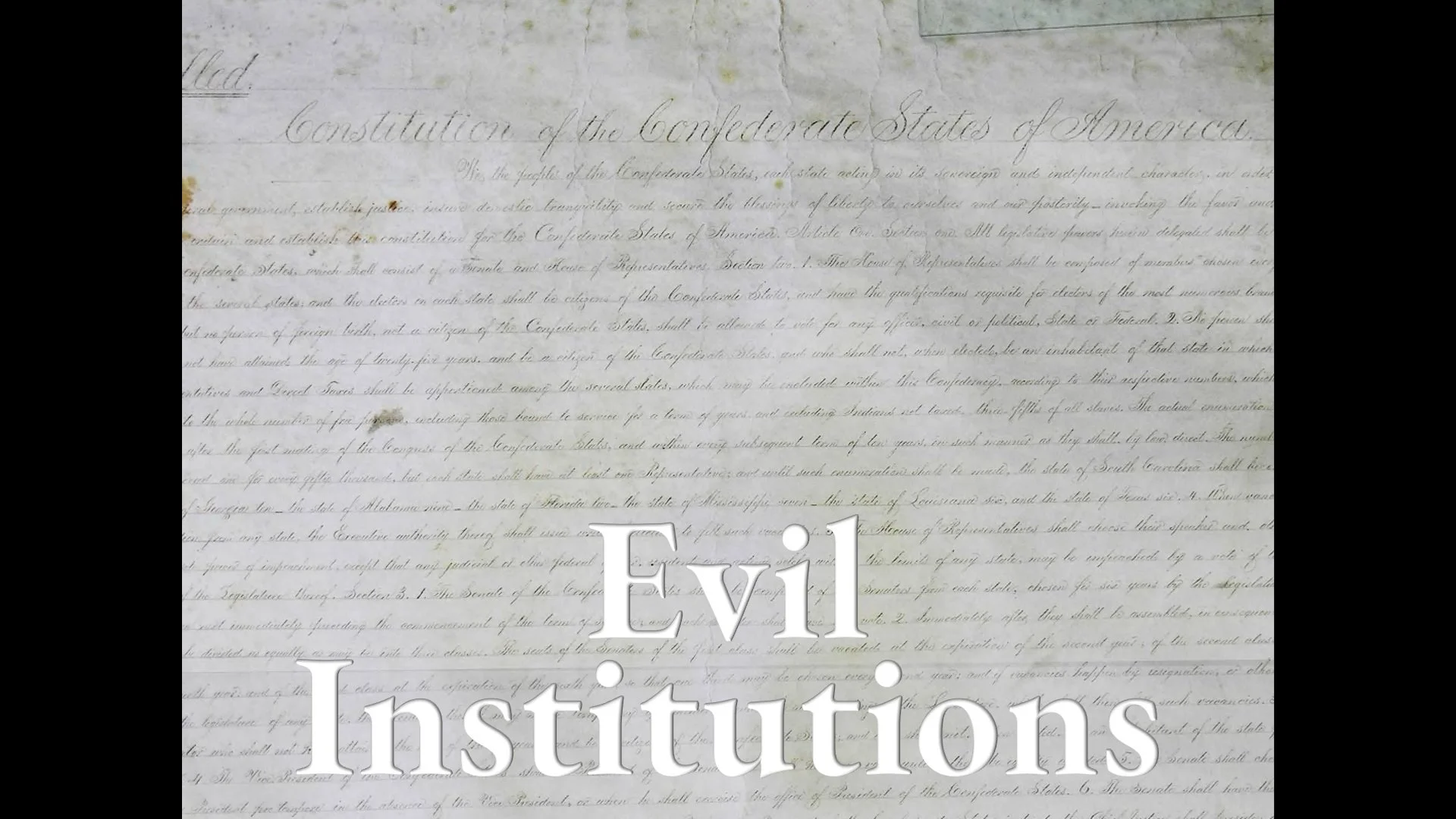
The resources below are examples of evil — evil directly done through laws and policies. They are also examples of the need to believe in good and evil as moral categories that can and should shape laws, as well as the need for a loving God to heal human nature in a loving way and help humans design laws for human flourishing.
As Mark Meadows, then Chief of Staff for Donald Trump, demonstrated as he abused and manipulated the language of “good and evil,” it is also important to define our terms well.
The following video clips are from our 2019 Conference: Healing Atonement. The first highlights the importance of restorative over retributive justice in both our theology and our laws. The second is an introduction to what restorative justice in our housing system might mean, mentioning how Christian heresy contributes to racial and ecological problems in U.S. housing.
Spotlighted Resources
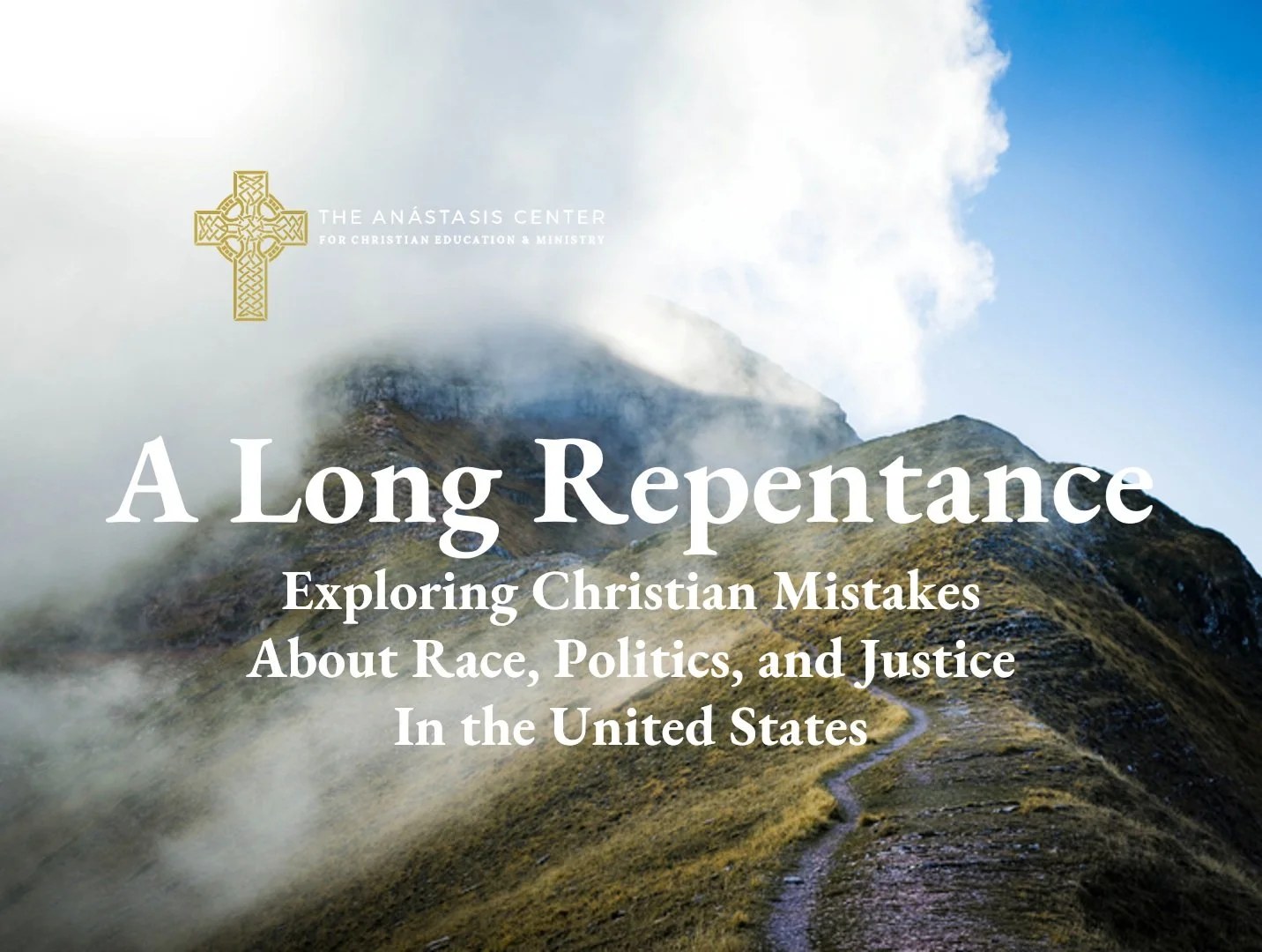
Searching for faithful ways of understanding and engaging our political and racial climate? Examine U.S. history from the standpoint of church history. This series of blog posts explore how Christian (mostly Protestant) heresies started and continue to influence our modern political and racial challenges, including in housing, schooling, policing, and business systems. Christians must take responsibility for these heresies in the framework of repentance. We lead the material in online discussion groups, but you can use the study guide with the blog posts for personal reflection or discussion in your family, church, organization, etc. See the whole course or just the blog posts.
Not sure about the “pro-life” vs. “pro-choice” binary? See the Study and Action Guide for Abortion Policy. The material is drawn from Mako Nagasawa’s 2021 book, Abortion Policy and Christian Social Ethics in the United States. Session 1 examines Scripture, the early Christian approaches to this issue, what the science of embryology tells us about fetal development, and how Christians can and should support contraceptive care. Session 2 examines the relationship between poverty and the abortion rate, comparing the Roman Catholic wholistic approach following the Great Depression to the white evangelical retributive approach from the Reagan years. Session 3 examines the issue in restorative vs. retributive justice frameworks.

A nine week study and action guide for small groups to discuss, compare belief systems, and consider advocacy and action steps. Gilliard identifies five pipelines to prison, contributing to mass incarceration: drug policy, immigration, lack of mental health, the school-to-prison pipeline, and private prisons. Gilliard holds up restorative justice to contrast with retributive justice, and says the Church must act restoratively because God in Christ acts restoratively.

A seven week guide for groups to discuss, compare belief systems, and consider advocacy and action steps. Constitutional law professor Michelle Alexander examines the war on drugs as a political tool, and how it eroded the Fourth, Sixth, Eighth, and Fourteenth Amendment rights of American citizens. Implicit racism has affected the criminal justice system at every level: policing, prosecution, plea bargaining, jury selection, sentencing, and reintegration.
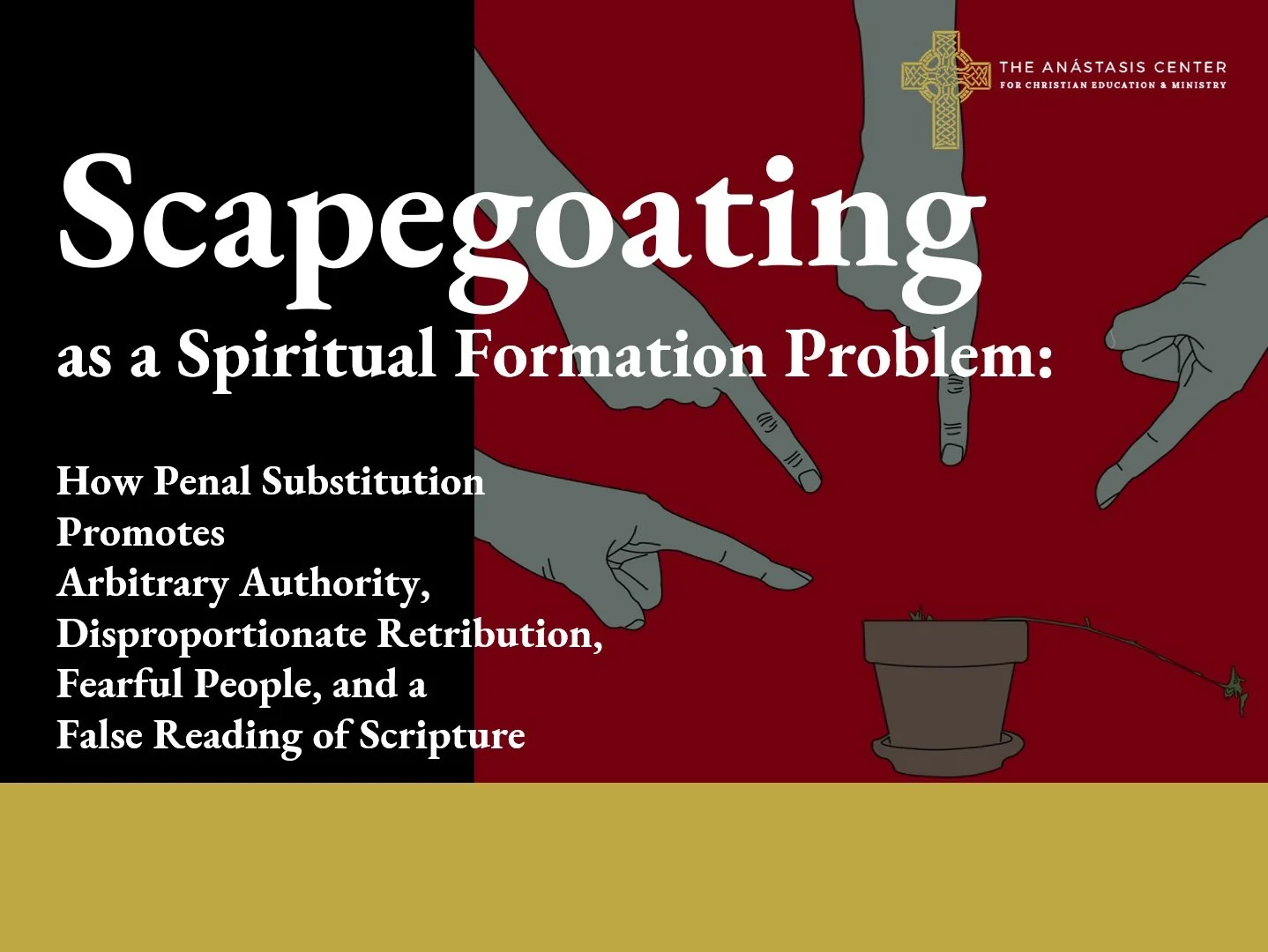
Why is it so easy for people — including Christians, especially Christians — to scapegoat people who are considered other for their own feelings of anxiety, anger, and disgust? Like fallen Adam in the garden, we desire to deflect blame, and therefore we scapegoat others. On the political level, this builds group cohesion and creates a social outsider, who is blamed for the group’s woes, who the group must exile or kill or marginalize in order to maintain a hopeful lie. See more about the course. See more about the overall topic.
Christ vs. Empire, Part 2: Empire, Exploitation, and Jesus’ Resistance
Video of a message given at Neighborhood Church of Dorchester, Aug 2, 2020. The New Testament understands structural, systemic injustice perfectly well, as shown by Luke 3:12 - 13. Tax collectors were given special instructions about how to resist being tools of imperial exploitation. This message explores the U.S. as founded as a legal gray zone for Christians to exploit people, and escape responsibility for Christian ethics. See also text in pdf format. This is part of our Church and Empire material.
Christ vs. Empire, Part 3: Police Terror and Jesus’ Peace (link to YouTube video)
Video of a message given at Neighborhood Church of Dorchester, Aug 9, 2020. This message explores the fact that the New Testament understands structural, systemic injustice perfectly well, as shown by Luke 3:14. The Roman soldiers performed a police terror function and extorted conquered peoples. We explore the police today in general as a way racial terror has been inflicted on American citizens. See also text in pdf format. This is part of our Church and Empire material.
Christ vs. Empire, Part 4: Pentecost vs. White Christian Nationalism (link to YouTube video)
Video of a message given at Neighborhood Church of Dorchester, Aug 16, 2020. Pentecost in Acts 2:1 - 11 is the expression of Jesus’ new humanity for all humanity. It is outward, self-giving, missional, and embracing of other languages and cultures. It is not monocultural, monolingual, self-protective, and fearful. Explains why Christian nationalism in the U.S. is such a problem, and wrong. See also text in pdf format. This is part of our Church and Empire material.
Christian Restorative Justice: Financial Reform (link to YouTube video)
A message given to New Hope Fellowship Baltimore, MD, May 2015. This explores multiple biblical passages criticizing interest rate lending. Not only was such behavior exploitative of people in poverty, even if they “consented” to their own exploitation, it reflected a relational dynamic that cannot be grounded in the Trinitarian relations between Father, Son, and Holy Spirit. See also the slides.
Lessons on Power from The Shire, Rohan, and Gondor: Plantation Capitalism, Empire, Women, and Property (link to YouTube video)
This video, the tenth in our video series on Tolkien found on our Arts and Theology page and our YouTube channel, looks at lessons about power and leadership from those three contexts. The Scouring of the Shire teaches us why we should resist "plantation capitalism." Rohan has lessons about migration, conflict, treaties, and peace. Gondor sifts its legacy from Numenor: an influential blessing at first, an imperial terror at the end. As usual, we look at Christian theology and ethics: the biblical theme of Empire, the question of women in power and leadership, and land, property, and hospitality. Due to length, timestamps:
00:10:36 The Shire
00:25:57 Rohan
00:38:14 Gondor
00:53:25 The Biblical Theme of Empire
01:07:08 Women Ruling and Leading
01:26:45 Land and Property
-
God as the Foundation of Human Rights
Text of a message on Genesis 1 - 11. Genesis 1 - 11 was aware of other Ancient Near Eastern and Mediterranean creation stories, and argued against them, as shown by literary analysis. Topics of disagreement include: the value of every human being; the relations of humans and God/gods; the reason for catastrophes like the Flood; the resolution or movement.
Human Dignity: Does Every Individual Matter?
An essay. Science, philosophy, existentialism, other religions, and double-predestination based theologies mean that some human beings do not matter. Only a fully Trinitarian theology with a medical substitutionary atonement can provide an adequate foundation.
The Importance of Being Inclusive
Text of a message given to students at Harvard Business School, on Luke 14:12 - 14. Jesus commands his followers to include others in table fellowship, which had expansive meaning, not narrow. Importantly, much injustice occurs when people are not included in decisions that impact them, especially by “shareholders” narrowly defined to the exclusion of “stakeholders.” See more Christian resources critiquing modern Corporate Law, especially Limited Liability.
Text of a message given on Zaccheus in Luke 19:1 - 10 as a Jew “wanting to be Roman,” with my experience as a Japanese-American “wanting to be white” at different points in my life, Asian Americans wanting to “be white” in the U.S., and Boston College wanting to “be white” among historically WASP Ivy League universities. This message highlights how “race” and “whiteness” has always been centered but not strictly bounded, for the purpose of protecting wealth and belonging. This was given as message 3 at a retreat for Boston College Asian Christian Fellowship, in January, 2011. This message was preceded by another message and workshop, Racism at Boston College and the United States so as to understand injustice using a 2x2 matrix: relational vs. systemic, intentional vs. unintentional.
The Role of Jesus in Revolution and the Pursuit of Justice
A written message, graphics included, on how Jesus inspired twentieth-century non-violent resistance movements around the world, and why. Spotlights Tolstoy in Russia; Gandhi in South Africa and India; Ahn Chang-ho in Korea; the Civil Rights Movement in the U.S.; the Filipino People Power Revolution; Solidarity in Poland; the Velvet Revolution in Czechoslovakia; the Truth and Reconciliation Commission in South Africa; the Women’s Movement and Liberia’s Civil War. This is a shining thread of moral clarity, courage, and hope during humanity’s bloodiest century. A 15 - 20 minute read.
A written message and slides on how Jesus brought about a radical change to human history. Christian faith brought about dramatic improvements in health care and hospitals, abolition, education and schools, science and technology, criminal justice reform, and beauty and the arts.
-
These are the images used in artistic physical displays. They are survey questions and conversation starters that are topically and thematically organized. They demonstrate how Jesus is relevant to each topic or theme. You can also just view the images on your device. If you would like, see all our Conversation Stations; below are the ones that relate to the topic of Evil Within Us.
What Can We Do About Evil? (and instructions and conversation tree) and smaller version and brochure version
What Story Do You Live In? (and associated message)
Does the Good Outweigh the Bad? (and instructions)
Find Your Heart's Desire? (and instructions and theological essay)
How Much Truth is in Harry Potter?
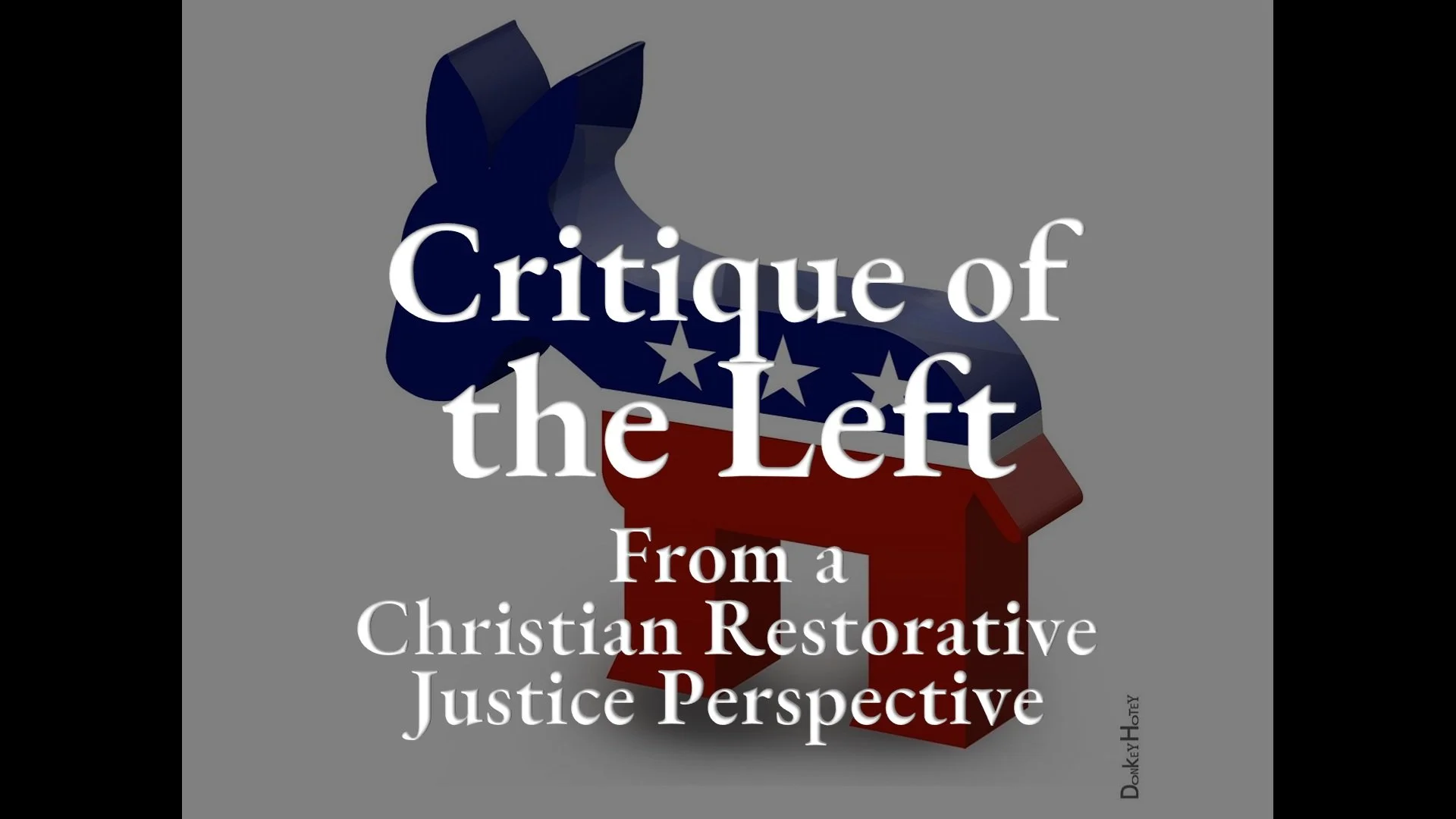
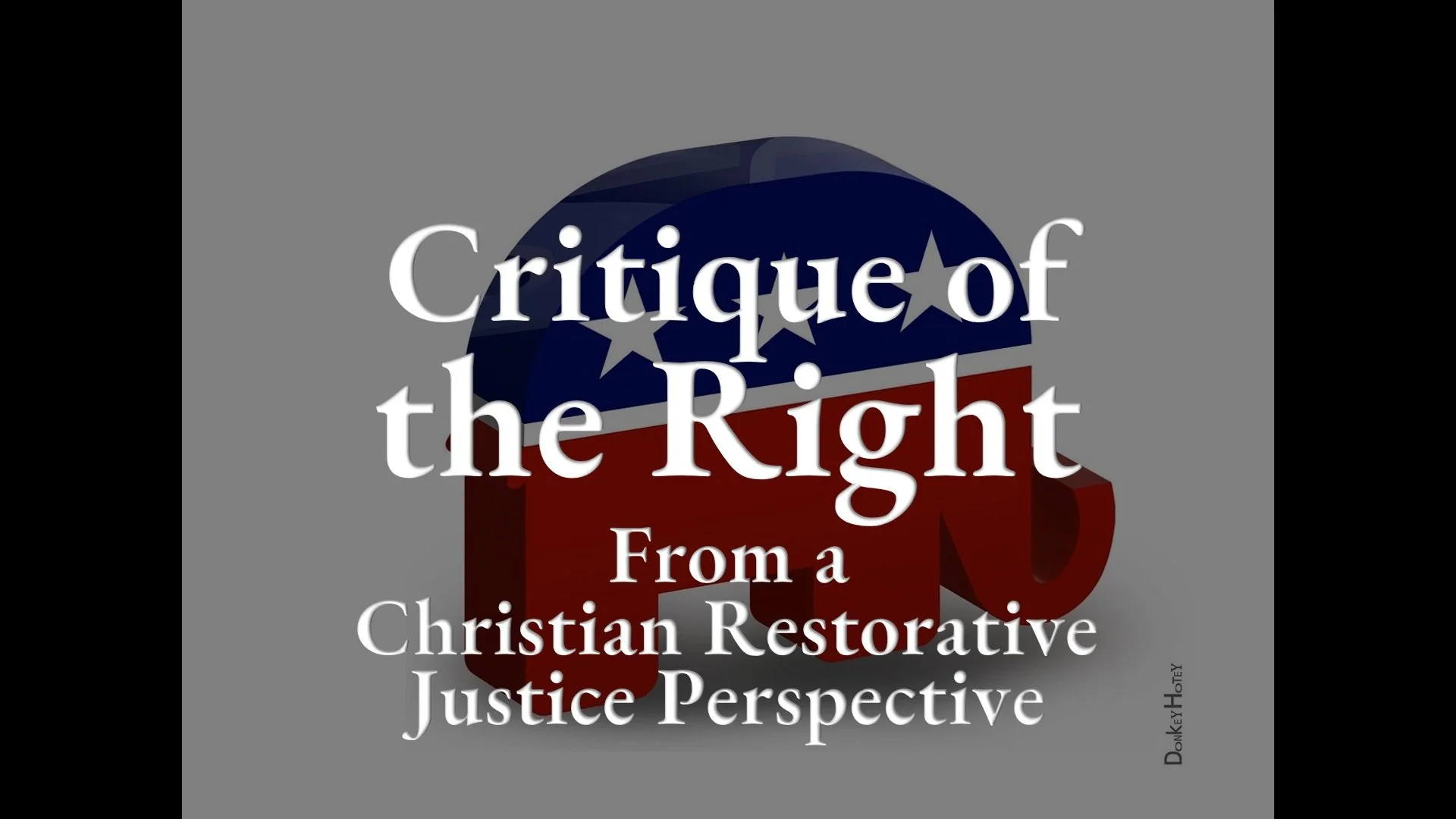
Christian Restorative Justice Critique of U.S. Politics
Evil: Topics
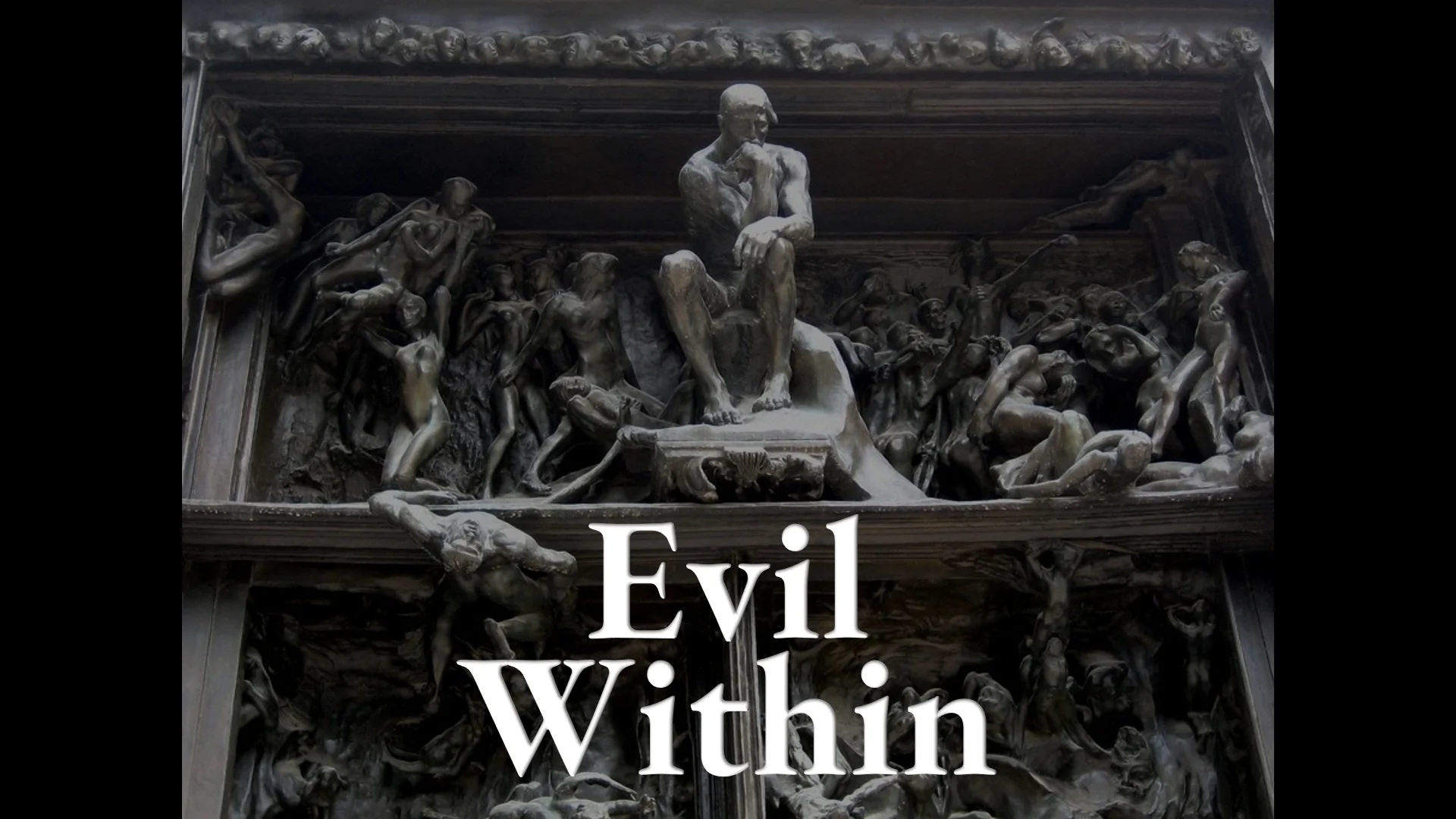
Christian teaching explains the Evil Within as the source of the Evil Between, Evil Laws, and Evil Institutions. Evil and God’s Goodness spotlights God’s call for our partnership in undoing evil, via the theme of divine fire in Scripture. So if you are on a spiritual search, consider browsing through our materials in that sequence.