Photo credit: Negative Space.
Introduction
Our interest in the biblical theme of desire and our experience of desire lead us to stay aware of what we know about Human Moral and Emotional Development, especially as we learn more about Attachment Theory which aligns with the relational vision of the human, from scientific studies and personal reflection.
Spotlight
This is a curriculum for small group discussion or personal reflection. While healthy shame means regret, toxic shame is the desire to hide the self. Either way, glory is the response of God to invest Himself in us and renew His image in us. This material explores humanity as fundamentally good, but corrupted by sin, and not entirely in control of our own desires and emotions. Part of the spiritual and emotional struggle, then, is to know ourselves, know how God sees and loves us, and to receive into ourselves the Spirit of Christ. Peppered with insights from the early Christians, including some “desert fathers and mothers” who were the earliest “spiritual directors.” See more here.
Jesus demonstrated very human emotions and called forth our participation in God’s joy, sorrow, etc. In fact, Jesus’ emotions seem to heal and shape our emotions. The passages in this series of Bible studies and reflections give us valuable insights into God’s character and love for us. See more here.
Atonement, Justice, and Scapegoating
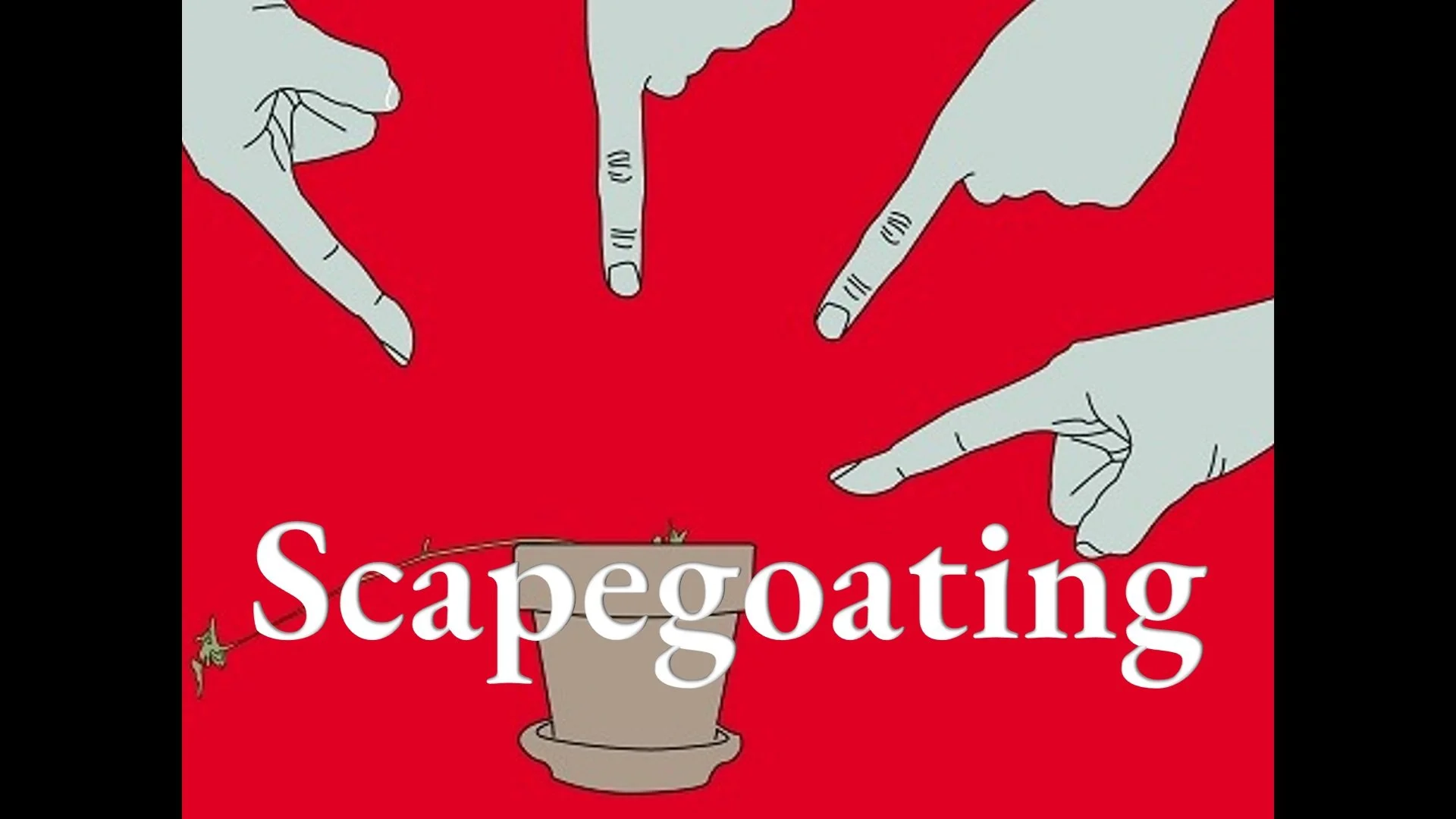
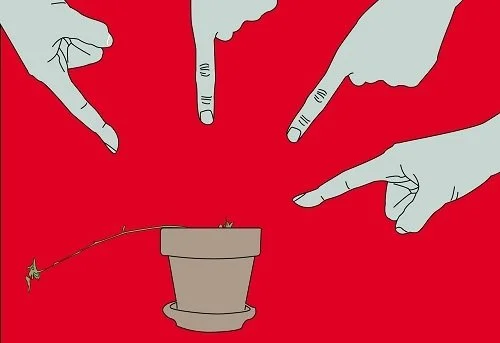
Why is it so easy for people — including Christians, especially Christians — to scapegoat people who are considered other for their own feelings of anxiety, anger, and disgust? See more about the course. See more about the overall topic.
Human Being, Human Becoming in Tolkien and Christian Theology
This video is part 5 of our series on The Theology of J.R.R. Tolkien’s The Lord of the Rings. It looks at Smeagol-Gollum and Boromir as case studies of human being and human becoming. Their choices towards addiction and freedom are vital to understand. Tolkien’s vision of what humanness means is rich, insightful, and sobering.
Our video series, The Theology of J.R.R. Tolkien’s The Lord of the Rings, is found on our Arts and Theology page and our YouTube channel, where we put brief descriptions of each video. It’s a great way to engage people who have an appreciation for the stories. Each video has questions for group discussion and/or personal reflection.
This video is part 6 of our series on The Theology of J.R.R. Tolkien’s The Lord of the Rings. It examines Tolkien's presentation of evil as a deviation from goodness, which acquires a deadly attraction and power over us. Evil is a self-deception, then becomes addictive, corrupting, and self-defeating.
How Pagan Virtue Ethics Opens Up to Christian Faith, Hope, and Love
This video is part 11 of our series on The Theology of J.R.R. Tolkien’s The Lord of the Rings. It shows how the noble pagan search for virtue ethics was a precursor to Christian love, hope, and faith. The Hobbits grow in love: from mere loyalty to the Shire to sacrificial love for all. Eowyn grows in hope: from hoping for a glorious death in battle to hoping that life and love will outlast death and violence. Finrod, and perhaps Andreth too, grow in faith: to believe that Eru must enter into Arda to heal the Marring.
00:06:43 Pippin and Merry Grow in Love
00:27:00 Eowyn Grows in Hope
00:40:49 Finrod and Andreth Grow in Faith in Eru
01:27:40 How Do We Know?
The Person, the Face, and the Climb Up the Mountain: Gregory of Nyssa and the Vision of Ecstasy
Slides of a presentation given to the 2022 Reconstruction class. This material explores the biblical theme of human being and human becoming. God created us with good desires for more goodness and beauty, as well as the freedom to determine the direction of our love as constituting our human becoming. The biblical motif of meeting God on mountains is important. We glance at various Christian leaders, but do a deeper dive into Gregory of Nyssa’s Life of Moses, in his interpretation of Moses meeting God on Mount Sinai, and returning with shining face.
-
Text of a message on Exodus 3:1 - 12 given to Neighborhood Church of Dorchester in Boston, MA. When God appeared to Moses at the burning bush by Mount Sinai, (1) He was revealing Himself in Moses’ ordinary routine of tending sheep; (2) using the burning and climbing mountains motifs as symbolic of the refinement and strengthening of Moses’ character; and (3) retelling the story of the fiery sword outside Mount Eden, showing Moses that the way back home was there. This is a nice example of biblical patterns and intertexuality, with the application of God’s restorative, not retributive, justice, for the sake of our spiritual formation.
How Our Choices Shape Our Desires: Experiencing the Triune God
Text of a message from Genesis 1 - 2 and Proverbs 2, leading into questions for reflection and/or discussion. God made us to grow, and to develop our desires as we choose Him and the good He wants for us. This is why our desire to be more loving expands when we choose to be more loving, just as our palette is stretched when we eat more diverse food.
The Desire for a Happy Ending: Interpreting the Movies, Songs, and Stories Around Us
Slides to a presentation. We like happy ending stories because we long for an actual happy ending for the world. This workshop groups all belief systems into not happy ending vs. happy ending stories; and then internal vs. external villains.
Text of a message that reflects on our desire for love, meaning, and justice. Where do these desires come from? Are they connected to the God who reveals Himself in Jesus Christ? This might be called the “problem of goodness,” specifically human goodness. This was the first of three messages at a retreat. The second is Jesus Is God’s New Humanity, from Romans 5:12 - 21. This message explores how Jesus became a “new Adam,” fulfilling the role that God originally set forth for Adam and Eve. The third was God's Victory Over Human Evil in Jesus — the text of a message from Romans 6:1 - 11 about how Jesus’ death and resurrection was the way he triumphed over the corruption of sin in the human nature he took on, and how we die and rise with Jesus to share in that victory.
Desires, Beliefs, and How We Know Truth
This is a presentation on how desires are a consideration, but not the first, in how we know truth. Our desires suggest that we have both good and evil in us. This does not prove, but agrees with, the biblical story. After all, we are made in the image of God and wounded by sin. Some desires can be taken up and expanded by Jesus; other desires, Jesus reshapes or transforms. Also, belief systems have an implied story and metaphysics, which results in an ethics, and contains an epistemology, which is a way by which we can examine whether it is true. A 15 minute read.
Your Personality, Desires, and Spirituality
Chart and text of a message that groups people into the four main Meyers-Briggs Temperament Indicator typology: NF’s who desire identity and personal growth; NT’s who desire impact, vision, and significance; SJ’s who desire to belong to a meaningful community; and SP’s who desire adventure and meaningful experiences. The message highlights likely core sins; suggested biblical passages that would help each type; resources that each type would likely enjoy; and likely contributions to a ministry. Read this critique of the MBTI, however.
Jesus' Mission and Passion: Being Light in Darkness
Text of a message on Ephesians 5:8 - 14, which uses the image of being light in darkness. The challenge of Jesus is to be different and involved, not separate and similar. This message addresses social and interpersonal tension that is sometimes associated with being a missional Christian.
Christian Spiritual Development Based on the Gospels: A Diagram
Slides to a presentation based on the structure of the Gospel of Matthew, and how Jesus’ Great Commission is built on the faith, desires, character, and skills that he was building in his disciples. It uses UCLA Basketball Coach John Wooden’s “Pyramid of Success” and translates it into a diagram for Christian growth. This presentation connects these stages or challenges to various resources on this website.
Developing a Spiritual Rhythm of Life to Cultivate Godly Desires
Text of a message or workshop on how to pray about and write a monastic “rule of life,” or “rhythm of life.” This is a very important tool, as it can function in the Christian’s life as a spiritual fitness plan, or health regimen. It discusses spiritual disciplines in daily, weekly, monthly, etc. frameworks, as well as how to choose some that bring you joy and rest, challenge your flat sides, and build your skills.
Beauty's Transformation of the Ugly in Gregory of Nyssa's Life of Moses
An essay for Dr. Maximos Constas and Dr. Evie Holmberg, for their respective classes at Holy Cross Greek Orthodox Seminary, Fall 2018; examines Gregory's work (c.390 AD) as a critical engagement with the Platonic tradition on beauty and desire, especially Origen and Plotinus; pays special attention to Gregory's statements about Jesus' atonement
HonorShame blog, Nov 11, 2015. “Then a few years later, when I was asked to preach Romans 6:1-11, I floundered and fumbled. I expected Paul to say, “Shall we sin that grace may abound? By no means! …Don’t you know how much Jesus/God sacrificed for you?” But Paul was not cultivating the gratitude or the debt-obligation motivation. He did not say, “Jesus died instead of you.” Rather, he said, “Jesus died, and you died with him; he rose, and you rose with him.” Jesus didn’t die instead of me. He died ahead of me… Even though gratitude was a command in itself, he never uses gratitude as a motivation for more obedience. That was liberating. I no longer felt like God saw me as a burden. I knew He treasured me, because He wanted to recover His image in me, clean it off, and shine through me by joining Himself to me by the Spirit.”
-
Amanda McCracken, How Longing [for Love] Keeps Us from Healthy Relationships. TEDx Talks, Sep 29, 2023. McCracken shares her personal journey of realizing that she had become addicted to the longing for love, which was rooted in a sense of personal shame and also neuro-chemical realities about how we can become addicted to unrealistic fantasies, rather than believing she was worthy of love and understanding what healthy love is. This insight is going to be increasingly important to Christian spiritual formation.
Empowered to Connect (website) founded by Dr. Karyn Purvis, along with Texas Christian University's Institute of Child Development
Toxic Stress: The Facts. Harvard Center on the Developing Child.
Kevin T. McCauley, Addiction Q&A. Institute for Addiction Study.
George Santayana, The Sense of Beauty: Being the Outline of Aesthetic Theory. Palala Press | Amazon page, 1896.
Daniel A. Hughes, Building the Bonds of Attachment: Awakening Love in Deeply Troubled Children. Rowman & Little Publishers | Amazon page, 1998.
Sianne Ngai, Ugly Feelings. Harvard University Press | Amazon page, Mar 1, 2007. A groundbreaking cross-cultural study of envy, irritation, anxiety, paranoia and how they are expressed
Robin Nixon, Individuals with Rare Disorder Have No Racial Biases. Live Science, Apr 12, 2010. How social anxiety is at the root of race perception, showing the importance of dealing with fear.
Daniel R. Hawes, When Ignorance Begets Confidence: The Classic Dunning-Kruger Effect. Psychology Today, Jun 6, 2010.
David Schnark, People Who Can't Control Themselves Control the People Around Them, part 1. Psychology Today, May 23, 2011.
David Schnark, People Who Can't Control Themselves Control the People Around Them, part 2. Psychology Today, May 27, 2011.
Michael Murray, Roughhousing With Dad Crucial for Development, Researchers Say. ABC News, Jun 17, 2011.
Eric Barker, The Shortcut to Bonding with a Romantic Partner on a Deeper Level. Barking Up the Wrong Tree, Aug 2011.
Marc Lewis, Defining Addiction: Disease, Choice, or Self-Medication? Psychology Today, Jun 21, 2012.
Mark Manson, The "Do Something" Principle. Mark Manson blog, Dec 26, 2011. and 7 Strange Questions That Help You Find Your Life Purpose. Mark Manson blog, Sep 18, 2014. Cites Amy Wrzesniewski, et.al., Jobs, Careers, and Callings: People’s Relations to Their Work. Journal of Research in Personality, 1997. Desires are often the result of action.
Amy Cuddy, Your Body Language Shapes Who You Are. TED Talk, Jun 2012.
Joe Fassler, What Flannery O'Connor Got Right: Epiphanies Aren't Permanent. The Atlantic, Jan 4, 2013.
Shankar Vedantam, Why You Love That Ikea Table, Even If It's Crooked. NPR, Feb 6, 2013, on why laboring leads to loving.
Alain de Botton, 12 Rude Revelations About Sex. Psychology Today, Jan 2, 2013.
Matt Smethurst, Do You Still Want to Be Like Mike? Michael Jordan at 50. The Gospel Coalition, Feb 20, 2013.
Daniel Reisel, The Neuroscience of Restorative Justice. TED talk, Feb 2013.
Annie Murphy Paul, Reading Literature Makes Us Smarter and Nicer. Time, Jun 3, 2013.
Tamara Jacobi, How I Healed My Metabolism By Rewiring My Brain. Mind Body Green, Jul 11, 2013.
Damon Young, The Wisdom of Gardens. Aeon, Jun 14, 2013. Gardens expand our thinking, console us in times of crisis, school us in emotional generosity, and show us that life goes on
Brett and Kate McKay, What Strengthens and Weakens Our Integrity - Part 1: Why Small Choices Count. The Art of Manliness blog, Aug 5, 2013.
Brett and Kate McKay, What Strengthens and Weakens Our Integrity - Part 2: Closing the Gap Between Our Actions and Their Consequences. The Art of Manliness blog, Aug 7, 2013.
Brett and Kate McKay, What Strengthens and Weakens Our Integrity - Part 3: How to Stop the Spread of the Immorality Virus. The Art of Manliness blog, Aug 12, 2013.
Brett and Kate McKay, What Strengthens and Weakens Our Integrity - Part 4: The Power of Moral Reminders. The Art of Manliness blog, Aug 19, 2013.
Jennifer Kahn, Can Emotional Intelligence Be Taught? New York Times Magazine, Sep 11, 2013.
Matthew Hutson, Morality, Secret to Popularity. Boston Globe, Oct 27, 2013.
Mark Manson, The Most Important Question of Your Life. Mark Manson blog, Nov 6, 2013. What pain are you willing to endure, to grow?
Rod Dreher, But Now He Sees. The American Conservative, Nov 13, 2013.
SeventhVoice, Theory Finds That Individuals With Asperger's Syndrome Don't Lack Empathy - They Empathize Too Much. Seventh Voice blog, Nov 16, 2013.
Joseph Stromberg, The Microscopic Structures of Dried Human Tears. Smithsonian Magazine, Nov 19, 2013. “Photographer Rose-Lynn Fisher captures tears of grief, joy, laughter and irritation in extreme detail.”
Claire Hannum, Casual Sex Might Be Making Teenagers Sad. xojane, Nov 26, 2013.
Carolyn Gregoire, How Emotionally Intelligent Are You? Here's How to Tell. Huffington Post, Dec 5, 2013.
Brooke Donatone, Why Millennials Can’t Grow Up: Helicopter Parenting Has Caused My Psychology Clients to Crash Land. Washington Post, Dec 2, 2013.
Roman Krznaric, The Six Ancient Greek Words for Love. And Why Knowing Them Could Change Your Life. Yes Magazine, Dec 27, 2013.
Thomas Jivanda, Brain Boosted for Several Days After Reading a Novel. The Independent, Dec 28, 2013.
Jacqueline Howard, Reading Changes Brain's Connectivity, Study Suggests. Huffington Post, Dec 30, 2013.
Jenn Choi, How to Teach Kids to Be Grateful: Give Them Less. The Atlantic, Jan 6, 2014.
Lisa Endlich Heffernan, The Case for Nagging Kids About Their Homework. The Atlantic, Jan 6, 2014.
Adam Alter, The Powerlessness of Positive Thinking. The New Yorker, Feb 19, 2014.
Jon Hamilton, Orphans' Lonely Beginnings Reveal How Parents Shape a Child's Brain. NPR, Feb 24, 2014.
Alan White, A Photographer Asked Convicts to Write to Their Younger Selves and the Results Were Gut-Wrenching. Buzzfeed, Feb 27, 2014.
Cris Rowan, 10 Reasons Why Handheld Devices Should Be Banned for Children Under the Age of 12. Huffington Post, Mar 6, 2014.
We Don’t See Things As They Are, We See Them As We Are. Quote Investigator, Mar 9, 2014.
Leonid Bershidsky, Want a Lasting Relationship? Give Up Sex. Bloomberg, Mar 13, 2014.
Isaac Saul, After Going Undercover To A Brothel Selling Kids For Sex, This Man Is Now Fighting Child Trafficking. Huffington Post, Mar 18, 2014.
David Wood, When Right and Wrong Are Hard to Tell Apart. Huffington Post, Mar 19, 2014.
Sue Shellenbarger, The Power of Earliest Memories: Parents, Not Snapshots, Are the Way Kids Benefit from Memories. Wall Street Journal, Apr 7, 2014.
Greater Good, Why Practice Gratitude? Greater Good, Apr 2014.
Michael Rosenwald, Serious Reading Takes a Hit from Online Scanning and Skimming, Researchers Say. Washington Post, Apr 6, 2014.
Adam Grant, Raising a Moral Child. New York Times, Apr 11, 2014.
David Brooks, The Moral Power of Curiosity. New York Times, Apr 11, 2014.
Austin Tedesco and Josh Coyne, An Emotional Look at Gratitude. Boston College Heights interview and video, Apr 14, 2014.
Christopher Bergland, Social Disadvantage Creates Genetic Wear and Tear. Psychology Today, Apr 15, 2014.
Aaron Taube, These Job Applicants Were Told They’d Be Paid Nothing If They Were Hired — Then They Found Out Why. Business Insider, Apr 16, 2014.
Drake Baer, 14 Surprising Things That Affect Your Willpower and Decision Making. Business Insider, Apr 18, 2014.
Nikil Saval, The Secret History of Life-Hacking. Pacific Standard, Apr 22, 2014.
Earth We Are One, Nurse Reveals the Top 5 Regrets People Make on Their Deathbed. Earth We Are One, May 21, 2014.
True Activist, Scientists Link Selfies to Narcissism, Addiction, and Mental Illness. True Activist blog, Jun 13, 2014.
Eileen Shim, Psychologists Have Uncovered a Troubling Feature of People Who Seem Nice All the Time. Mic, Jun 30, 2014.
Matthew Hutson, People Prefer Electric Shocks to Being Alone With Their Thoughts. The Atlantic, Jul 3, 2014.
Arthur C. Brooks, Love People, Not Pleasure. New York Times, Jul 18, 2014.
David Brooks, The Mental Virtues. New York Times, Aug 28, 2014.
Dr. Nadine Burke Harris, How Childhood Trauma Affects Health Across a Lifetime. TED Talk, Sep 2014. When a child experiences abuse, neglect, parental mental illness, substance abuse, incarceration, separation or divorce, domestic violence
Paul Bloom, Against Empathy. Boston Review, Sep 10, 2014. On the dangers of empathy clouding your judgment
Rachel Grate, Science Shows Something Surprising About People Who Love to Write. Mic Sep 15, 2014.
Sam Stein, How A Failed Experiment On Rats Sparked A Billion-Dollar Infant-Care Breakthrough. Huffington Post, Sep 18, 2014.
Travis Bradberry, Multitasking Damages Your Brain and Career, New Studies Suggest. Forbes, Oct 8, 2014.
Melissa Dahl, Emotional Abuse Can Be As Damaging As Sexual Abuse. New Yorker Magazine, Oct 8, 2014.
Gary Lewandowski, Everyday Stress Can Poison a Relationship. New Yorker Magazine, Oct 9, 2014.
Eileen Shim, Scientists Have Discovered an Activity Just as Pleasurable as Sex, Drugs and Gambling. Mic, Oct 28, 2014.
David Brooks, The Agency Moment. New York Times, Nov 13, 2014.
Peggy Drexler, Why We Love to Gossip. Huffington Post, Nov 15, 2014.
Jeff Guo, People Around You Control Your Mind: The Latest Evidence. Washington Post, Dec 4, 2014.
Jesse Singal, Don't Threaten to Punish Your Kids for Lying. New York Magazine, Dec 8, 2014.
Michael Schulman, Why "Into the Woods" Matters. The New Yorker, Dec 24, 2014.
Johann Hari, The Likely Cause of Addiction Has Been Discovered, and It Is Not What You Think. Huffington Post, Jan 20, 2015.
Fresh Air, Why Teens Are Impulsive, Addiction-Prone And Should Protect Their Brains. NPR, Jan 28, 2015.
Guy Winch, How to Practice Emotional First Aid. TED, Feb 16, 2015. Winch, a psychologist, argues that we should care for our minds and emotions like we care for our bodies. He focuses on how loneliness and failure become self-imprisoning yet we can fight feelings of loneliness and helplessness and failure. We can stop emotional bleeding.
Angela Duckworth, et.al., Will Not Want: Self-Control Rather Than Motivation Explains the Female Advantage in Report Card Grades. Science Direct, Mar 2, 2015.
Jesse Singal, How Children Become Narcissists. New York Magazine, Mar 9, 2015.
David Brooks, The Moral Bucket List. New York Times, Apr 11, 2015.
David Brooks, Building Spiritual Capital. New York Times, May 22, 2015.
Shane Parrish, How Play Enriches Our Creative Capacity. Time, May 27, 2015.
Sue Shellenbarger, Moms, Let Dad Be Dad. Wall Street Journal, Jun 16, 2015. and Roughhousing Lessons from Dad. Wall Street Journal, Jun 11, 2014.
Carol Dweck, The Power of Believing That You Can Improve. TED Talk, Dec 17, 2014.
Kali Holloday, 10 Careers With the Most Psychopaths. Salon, Jun 23, 2015.
Elizabeth Gilbert, Confessions of a Seduction Addict. New York Times, Jun 24, 2015.
Roman Krznaric, Welcome to the Empathy Wars. Transformation, Jun 29, 2015.
Spencer Kornhaber, Empathy: Overrated? The Atlantic, Jul 3, 2015. on the dangers of empathy clouding your judgment
Esther Crain, The Skills That Make Kids More Likely to Grow Up to Be Successful. Yahoo News, Jul 17, 2015.
Julie Suratt, Spoiled Rotten. Boston Magazine, Jul 2015. on parenting
Roberto A. Ferdman, The Remarkable Thing That Happens to Poor Kids When You Give Their Parents a Little Money. Washington Post, Oct 8, 2015.
Theresa E DiDonato, Should You Play Hard to Get? Psychology Today, Oct 31, 2015. on being wanted vs. being liked
Wikipedia, Inside Out (Wikipedia) The movie, about how coming to terms with sadness and suffering is important to personality
Robb Willer and Matthew Feinberg, The Key to Political Persuasion. New York Times, Nov 13, 2015. appealing to moral commitments, principles, or authorities that the other person shares
Jeremy Lin, A Reflection. Jeremy Lin blog, Dec 8, 2015. On achievement, stress, and identity
Gretchen Kelly, This is How a Lifetime of Potentially Dangerous Situations Affects Every Woman. Upworthy, Dec 10, 2015.
W. Bradford Wilcox, The Latest Social Science is Wrong. Religion is Good for Families and Kids. Washington Post, Dec 15, 2015.
Online Psychology Degrees, The Psychology of Spanking. Online Psychology Degrees.
Vicki Abeles, Is the Drive for Success Making Our Children Sick? New York Times, Jan 2, 2016.
Yekaterina Murashova, A Thought-Provoking Experiment Showed What Happens When Children Don't Have the Internet for a Whole Day. Signs of the Times, Jan 28, 2016. “Only three of the 68 participants reached the end of the experiment — one girl and two boys. Three of the participants had suicidal thoughts. Five of them experienced intense panic attacks. Twenty-seven experienced symptoms such as nausea, sweating, dizziness, hot flushes and abdominal pain. Almost everyone who took part experienced feelings of fear and anxiety. The novelty of the situation, and their interest and joy at being alone with themselves faded in almost all the participants by the beginning of the second or third hour. Only ten people who withdrew from the experiment started to experience anxiety only after three hours of solitude or more.”
Amanda Taub, The Unsexy Truth About Why the Arab Spring Failed. Vox, Jan 27, 2016. about humility, patience, and stable institutions in Tunisia
Adam Grant, How to Raise a Creative Child. Step One: Back Off. New York Times, Jan 30, 2016.
Arthur C. Brooks, Narcissism is Increasing, So You're Not Special. New York Times, Feb 13, 2016.
Tracy Gillett, Simplifying Childhood May Protect Against Mental Health Issues. Raised Good blog, Mar 4, 2016.
Daniel Engber, Everything is Crumbling. Slate, Mar 6, 2016. About the theory of ego depletion. limited willpower.
David Niose, Beware America's Shocking Loss of Empathy. Psychology Today, Mar 6, 2016.
John Elder Robison, An Experimental Autism Treatment Cost Me My Marriage. New York Times, Mar 18, 2016.
Annie Holmquist, Psychologist: "Authoritative Parenting" is Best for Children. Intellectual Takeout, Apr 14, 2016.
Krista Tippett, Beauty is an Edge of Becoming. On Being, May 2, 2016. An exploration of beauty in science, and our desire to perceive beauty
Olga Khazan, Why Self-Compassion Works Better Than Self-Esteem. The Atlantic, May 6, 2016.
Rachel Gillett and Drake Baer, Science Says Parents of Successful Kids Have These 13 Things in Common. Business Insider, May 6, 2016.
Jessica McCrory Calarco, Why Rich Kids Are So Good at the Marshmallow Test. The Altantic, Jun 1, 2018. Affluence—not willpower—seems to be what’s behind some kids' capacity to delay gratification; see also Meilan Solly, Why Delayed Gratification in the Marshmallow Test Doesn’t Equal Success Read Rich Kids Are So Good at the Marshmallow Test. The Smithsonian, Jun 5, 2018.
David Brooks, Why America’s Leadership Fails. New York Times, Aug 23, 2016. contrasts vocation vs. career
Bec Cranford-Smith, Progressive Evangelical Female's Story of Pornography and Sexual Addiction. Patheos, Sep 10, 2016.
Tyler J. VanderWeele and John Siniff, Religion May Be a Miracle Drug. USA Today, Oct 28, 2016. Regular church attendance connected with longer life and sense of meaning.
Brian Resnick, The Myth of Self-Control. Vox, Nov 24, 2016. It’s about rhythm, finding joy in mundane things, and the choice before the choice.
Olga Khazan, The Simple Psychological Trick to Political Persuasion. The Atlantic, Feb 1, 2017. reflects Jonathan Haidt's moral psychology
Drake Baer, Psychologists Think They Found the Purpose of Depression. New York Magazine, Feb 9, 2017.
Simon Smart, The Generation Brought Up on Self-Esteem is Struggling. Sydney Morning Herald, Apr 15, 2017.
Katherine Sellgren, Babies with Involved Fathers Learn Faster, Study Finds. BBC, May 10, 2017.
Denis Campbell, Facebook and Twitter 'Harm Young People's Mental Health'. The Guardian, May 19, 2017. Poll of 14- to 24-year-olds shows Instagram, Facebook, Snapchat and Twitter increased feelings of inadequacy, anxiety
Andrew Brown, The Danger of Porn Goes Beyond Sex - It Normalizes Unchecked Desire. The Guardian, Jul 17, 2017. insightful, longs for limits, and exposes the weakness in secular leftist thought that there are no limits to individualism
Aurelian Craiutu, Moderation May Be the Most Challenging and Rewarding Virtue. Aeon, Jul 17, 2017.
Livia Gershon, The Future is Emotional. Aeon, Jun 22, 2017. Emotional work in human jobs, valuable but underpaid, outlook on the future
Anna Sanford, Babies Are Losing Sleep - And Touch Screens Are to Blame. Salon, Aug 9, 2017.
Jean M. Twenge, Have Smartphones Destroyed a Generation? The Atlantic, Sep 2017. and rebuttal by Alexandra Samuel, Yes, Smartphones Are Destroying a Generation, But Not of Kids. JSTOR Daily, Aug 8, 2017. Argues that it affected parents and parenting.
Benoit Denizet-Lewis, Why Are More American Teenagers Than Ever Suffering From Severe Anxiety? New York Times, Oct 11, 2017. Should parents, therapists, and schools protect teenagers or help them face their fears?
Patricia A. Alexander and Lauren M. Singer, A New Study Shows That Students Learn Way More Effectively From Print Textbooks Than Screens. Business Insider, Oct 15, 2017.
James Taranto, The Politicization of Motherhood. Wall Street Journal, Oct 27, 2017. Research on the first three years of child development, and the political reception of this science.
Scott Atran and Pam Weintrab, Alt-Right or Jihad? Aeon, Nov 6, 2017. “Unleashed by globalisation’s dark side and the collapse of communities, radical Islam and the alt-Right share a common cause”. Atran is an anthropologist who studies how youth are drawn to far-right movements. See also Hammad Sheikh, Ángel Gómez, and Scott Atran, Empirical Evidence for the Devoted Actor Model. Current Anthropology, Jun 2016. “The “devoted actor” hypothesis: people will become willing to protect nonnegotiable sacred values through costly sacrifice and extreme actions when such values are associated with groups whose individual members fuse into a unique collective identity.” See also Scott Atran, The Devoted Actor: Unconditional Commitment and Intractable Conflict across Cultures. Current Anthropology, Jun 2016. “Devoted actors of the global jihadi archipelago militate within such a novel transcultural niche, which is socially tight, ideationally narrow, and globe spanning. Nevertheless, its evolutionary maintenance depends on costly commitments to transcendental values, rituals and sacrifices, and parochial altruism, which may have deep roots even in the earliest and most traditional human societies.”
John Bargh, At Yale, We Conducted an Experiment to Turn Conservatives Into Liberals. The Results Say a Lot About Our Political Divisions. Washington Post, Nov 22, 2017.
Scott Berson, How Often You Hold Your Baby Actually Affects Their DNA, Study Finds. Miami Herald, Nov 28, 2017.
Alexis C. Madrigal, Should Children Form Emotional Bonds With Robots? The Atlantic, Dec 2017. “For better and worse, toys powered by AI are becoming an intimate part of kids’ lives.”
Ashley Fetters, The Exceptional Cruelty of a No-Hugging Policy. The Atlantic, Jun 20, 2018. and Charlie Baily and Schuyler Henderson, The Clinical Case for Keeping Families Together. The Atlantic, Jun 20, 2018.
Andrew Jacobs, U.S. Opposition to Breast-Feeding Resolution Stuns World Health Officials. New York Times, Jul 8, 2018.
The Atlantic, How to Raise a Generous Child. The Atlantic, Jul 12, 2018. interesting developmental insights, with a stress on agency, though I remain persuaded that parents should structure time and expectations
Olga Khazan, 'Find Your Passion' Is Awful Advice. The Atlantic, Jul 12, 2018.
Ferris Jabr, How Beauty Is Making Scientists Rethink Evolution. New York Times, Jan 9, 2019. "The extravagant splendor of the animal kingdom can’t be explained by natural selection alone — so how did it come to be?"
Amanda Mull, Who Really Gets Hurt by Violent Fantasies? The Atlantic, Jan 22, 2019. how anger-outburst catharsis might not work to dissipate anger
David Brooks, Morality and Michael Cohen. New York Times, Feb 28, 2019. observing how Cohen’s arrest jarred him into more moral and emotional clarity about greed - his own and Trump’s.
Barbara Bray, Maslow’s Hierarchy of Needs and Blackfoot Nation Beliefs. Rethinking Learning, Mar 10, 2019. Summarizing the work of Cindy Blackstock who pointed out how Abraham Maslow worked with and changed Blackfoot concepts involving self and community
Benjamin Wallace-Wells, David Brooks’ Conversion Story. The New Yorker, April 29, 2019. about Brooks’ pursuit of goodness and moral beauty. “I can’t unread Matthew…Jesus is the person who shows us what giving yourself away looks like.”
Daily Health Post Editorial, New Study: The More you Hug your Kids, the More Their Brains Develop. Daily Health Post, Jul 1, 2019.
Rachel Kramer Bussel, I Thought I Could Handle Being The ‘Other Woman.’ Then Jealousy Turned Me Into A Cyberstalker.. Huffington Post, Oct 8, 2019. a case study of sexuality and jealousy, nurtured and then consuming
Laura Cathcart Robbins, Is There Such A Thing As A Harmless Crush When You’re Married?. Huffington Post, Oct 14, 2019. an honest and accurate assessment that no, the dangers of self-bargaining, delusional thinking, and minimizing are too great
David T. Courtwright, The Age of Addiction: How Bad Habits Became Big Business. Harvard University Press, May 2019. and discussion by Sean Illing, Capitalism Is Turning Us Into Addicts. Vox, Oct 19, 2019. “How Big Business shapes our habits and desires”
David Pakman, Former Cult Member on How to Deprogram Trumpists. The David Pakman Show, Oct 28, 2019. Interview with Steve Hassan, The Cult of Trump: A Leading Cult Expert Explains How the President Uses Mind Control (| Amazon page, Oct 2019. Cites the evangelical right-wing DC group “The Family,” the Catholic right-wing group Opus Dei. of which William Barr is a member. The New Apostolic Reformation where leaders call themselves “apostles.” Perspectives like this are important to understanding how authoritarianism is appealing to people, especially those who are religious.
Peggy Orenstein, The Miseducation of the American Boy. The Atlantic, Dec 20, 2019. “Why boys crack up at rape jokes, think having a girlfriend is “gay,” and still can’t cry—and why we need to give them new and better models of masculinity”
Brianne Davis-Gantt, I’m A Sex And Love Addict. Here’s How I Realized I Had A Problem. Huffington Post, Mar 9, 2020. A window into one person’s desires and experience, and also the recovery group that helped her leave that lifestyle.
Melissa Fay Greene, Decades Ago, Romania Deprived Thousands of Babies of Human Contact. The Atlantic, Jul-Aug 2020. This history raises profound questions: Can an unloved child learn to love? Can strict anti-contraception and anti-abortion policies overwhelm parents’ mental and physical health, leading to emotionally deprived children? And what will be the cost to the children? To others? The article explains the work of clinicians and neuroscientists like John Bowlby and Mary Ainsworth in attachment theory.
“This past Christmas Day was the 30th anniversary of the public execution by firing squad of Romania’s last Communist dictator, Nicolae Ceaușescu, who’d ruled for 24 years. In 1990, the outside world discovered his network of “child gulags,” in which an estimated 170,000 abandoned infants, children, and teens were being raised. Believing that a larger population would beef up Romania’s economy, Ceaușescu had curtailed contraception and abortion, imposed tax penalties on people who were childless, and celebrated as “heroine mothers” women who gave birth to 10 or more. Parents who couldn’t possibly handle another baby might call their new arrival “Ceauşescu’s child,” as in “Let him raise it.” […]
The Romanian orphans were not the first devastatingly neglected children to be seen by psychologists in the 20th century. Unresponsive World War II orphans, as well as children kept isolated for long periods in hospitals, had deeply concerned mid-century child-development giants such as René Spitz and John Bowlby. In an era devoted to fighting malnutrition, injury, and infection, the idea that adequately fed and medically stable children could waste away because they missed their parents was hard to believe. Their research led to the then-bold notion, advanced especially by Bowlby, that simply lacking an “attachment figure,” a parent or caregiver, could wreak a lifetime of havoc on mental and physical health.”
Sinan Aral, The Hype Machine: How Social Media Disrupts Our Elections, Our Economy, and Our Health--and How We Must Adapt. Currency | Amazon page, Sep 2020. on how desires interact with social media to create a hyper-marketed, hyper-partisan media ecosystem, and how we must resist our own partisanship. See also Gilad Edelman, Social Media CEOs Can’t Defend Their Business Model (Wired, Mar 25, 2021. “Everyone knows Facebook, Twitter, and YouTube make money by keeping users engaged. Why won’t their executives admit it to Congress?”
Steve Taylor, The Abdication Syndrome. Psychology Today, Sep 12, 2020. “Why we are vulnerable to authoritarian leaders, corrupt gurus, and cults.”
Lisa Feldman Barrett, People’s Words and Actions Can Actually Shape Your Brain — A Neuroscientist Explains How. TED, Nov 17, 2020. “How do the people around you influence your body budget and rewire your adult brain? Your brain changes its wiring after new experiences, a process called plasticity. Microscopic parts of your neurons change gradually every day. Branch-like dendrites become bushier, and their associated neural connections become more efficient. Little by little, your brain becomes tuned and pruned as you interact with others. Some brains are more attentive to the people around them and others less so, but everybody has somebody. Ultimately, your family, friends, neighbors and even strangers contribute to your brain’s structure and function and help your brain keep your body humming along. This co-regulation has measurable effects. When you’re with someone you care about, your breathing can synchronize, as can the beating of your hearts — whether you’re in casual conversation or a heated argument. This sort of physical connection happens between infants and caregivers, therapists and clients, even people taking a yoga class or singing in a choir together.”
James Kimmel, Jr., What the Science of Addiction Tells Us About Trump. Politico, Dec 12, 2020. “It turns out that your brain on grievances looks a lot like your brain on drugs. And that’s a problem not just for the outgoing president, but for the rest of us.”
Saagar Enjeti, QAnon Supporters Melt Down As Biden Takes Office. Trump Is To Blame. Rising | The Hill, Jan 21, 2021. points to a lack of meaning and community; the most sensitive and sympathetic reflection on QAnon Trumpists that I know of.
Dan Shapiro, Robert Sapolsky et.al. The Science Behind ‘Us vs. Them’. Big Think, May 9, 2021. re: oxytocin and the limbic system in the brain increasing both the “us” and the “them” sensibilities; facial recognition and trustworthiness; political behavior rewards loyalty — this explains why economic issues may overlap with, but are not synonymous with, ethnic-racial groupings.
David C. Burris, Rejecting the Culture of Authenticity. Public Discourse, Jun 30, 2021. “Unless and until the excesses of authenticity culture are able to be moderated, we can expect the widespread relational fragmentation, loneliness, and loss that flows from it to continue unabated. Nevertheless, authenticity should not be discarded as an ideal. Instead, we must articulate a more constructive and reasonable conception of authenticity that can be passed on to the next generation.” Neuroscience and attachment theory are also other important considerations.
Elitsa Dermendzhiyska and Marina Benjamin, Feeling, In Situ. Aeon, Oct 8, 2021. Summarizes numerous studies about how emotions are culturally defined and differ across cultures, called collectively the Diversity Thesis, compared to the Basic Emotion or Universality Thesis. The meaning of facial expressions differ. Language plays a part. Shame experiences are triggered differently for Americans, Belgians, and Japanese. Americans experience depression as emotional sadness, but Chinese experience it as bodily symptoms like goosebumps, sweaty palms, and muscle aches.
Luke Burgis, The Ugly Psychology Behind Scapegoating. Big Think, Nov 14, 2021. says that because we deflect blame for things, groups develop scapegoats. Based on the work of Rene Girard. Exiling or sacrificing the scapegoat then becomes a release, a pressure valve, for people: cathartic, relief-inducing, group-building.
Luke Burgis, How to Know What You Really Want. Big Think, Nov 18, 2021. “There are two kinds of desire, thin and thick. Thick desires are like layers of rock that have been built up throughout the course of our lives. These are desires that can be shaped and cultivated through models like our parents and people that we admire as children. But at some level, they're related to the core of who we are. They can be related to perennial human truths: beauty, goodness, human dignity. Thin desires are highly mimetic. imitative. and ephemeral desires. They're the things that can be here today, gone tomorrow. Thin desires are subject to the winds of mimetic change, because they're not rooted in a layer of ourselves that's been built up over time. They are like a layer of leaves that's sitting on top of layers of rock. Those thin desires are blown away with a light gust of wind. A new model comes into our life; the old desires are gone. All of a sudden we want something else.”
Luke Burgis, Rivalry: How to Beat a Basic Instinct. Big Think, Dec 19, 2021. features Rene Girard’s theory of mimetic. imitative. desire. Girard pointed out how sibling rivalry stories are present in many if not all cultures and religious traditions. We are creatures who do not know what to want. Burgis proposes renunciation, forgiveness, and other decisions that set us free from rivalry.
Kellie Carter Jackson, Grief Is Evidence of Love. The Atlantic, Dec 20, 2021. “Yes, mourning is an acknowledgment of loss. But the late scholar bell hooks argued that it is also a way of honoring our commitment to those who have died.” ““Only love can heal the wounds of the past,” hooks wrote. Fourteen years later, I know that she was right. My grief will always be unending, because so is my love.
Ryan Chapman, Fascism: An Introduction. Ryan Chapman, Mar 8, 2022. Highlights theorists of crowd-based politics like Gustave Lebon and Georges Sorel which made nationalism the simplest idea to motivate crowds.
Ryan Chapman, Why Are Identity Politics So Intense in America? Ryan Chapman, Nov 25, 2022. Starts with the communitarian, group-oriented behaviors of human beings historically and presently. We desire recognition and respect, and groups are the primary way we achieve that. Chapman critiques white supremacy. Samuel Huntington argues that national identity in countries forms over time and via organic channels, but not in the U.S.
Amanda McCracken, How Longing [for Love] Keeps Us from Healthy Relationships. TEDx Talks, Sep 29, 2023. McCracken shares her personal journey of realizing that she had become addicted to the longing for love, which was rooted in a sense of personal shame and also neuro-chemical realities about how we can become addicted to unrealistic fantasies, rather than believing she was worthy of love and understanding what healthy love is. This insight is going to be increasingly important to Christian spiritual formation.
Thom Hartmann, Why Anchoring Positive States Is Useful. Wisdom School, Mar 3, 2024.
Rory Sutherland, Are We Too Impatient to Be Intelligent? Behavioral Scientist, Sep 17, 2024.
David Brooks, Be Careful About What You Want. New York Times, Jul 24, 2025. Ambition vs. aspiration.
Tudor Tarita, This Study Finds a Chilling Link Between Personality Type and Trump Support. ZME Science, Jul 30, 2025. “Malevolent traits and reduced empathy go hand in hand.”
“A new study, published this month in the Journal of Research in Personality, suggests part of the answer may lie deep within the personalities of his supporters.
The research, led by psychologist Craig Neumann of the University of North Texas, examined whether certain personality traits—those associated with callousness, manipulation, and even enjoyment of others’ suffering—correlate with conservative ideology and support for Trump. The findings are striking: people who view Trump favorably are more likely to score higher on measures of malevolent traits and lower on empathy and compassion.
“People who view malevolent political figures favorably also report less empathy for others and enjoy the suffering of others,” Neumann told PsyPost.”
Rosemary Ferreri, Why His Cabinet Behaves Like This — The Trauma Bond No One Wants to Talk About. Facebook, Dec 2, 2025. An intriguing theory (Stockholm Syndrome?) which would require more evidence to prove, but is intriguing nonetheless.
Courtney Furlong, James Benjamin Hinnant, Childhood Adversity and Sex Trafficking Experiences Linked to Economic and Psychological Outcomes for U.S. Survivors of Commercial Sexual Exploitation. Frontiers in Psychiatry, Mar 12, 2026.
Introduction: This investigation sought to develop a deeper understanding of the lived experiences of survivors of commercial sexual exploitation by considering the links between childhood background, trafficking experiences, and outcomes.
Methods: To that end, 350 survivors of commercial sexual exploitation living in the US were surveyed. Guided by ecological and life course frameworks, variables included adverse childhood experiences, socioeconomic disadvantage, educational achievement, trafficking experiences, and several outcomes, including income, employment status, posttraumatic stress symptoms, dignity, and sobriety.
Results: Results suggested that adverse childhood experiences were strongly linked to more severe exploitation and poorer outcomes. Educational achievement improved income and employment without reducing trafficking severity. Socioeconomic disadvantage showed no significant risk, contradicting prior research. Further, more severe trafficking experiences were significantly linked to poorer economic stability. Findings went on to suggest that trafficking-related experiences may play a mediating role in the negative effects of early adversity on income, employment, and sobriety.
Discussion: This investigation highlights the diverse and individualized needs of survivors of commercial sexual exploitation, indicating that tailored interventions are essential for addressing the complex interplay of childhood adversity, trafficking experiences, and recovery trajectories.
Kaeley Triller Harms, Men Are Attracted to Weakness: A Theology of Small Women. Honest to Goodness | Substack, Mar 20, 2026.
“News broke this week that another Duggar son has been arrested on charges involving sexual crimes against children. At some point, we have to stop treating these as isolated moral failures and start asking what kind of environment keeps producing them.
Michelle Duggar didn’t just model submission. She modeled a kind of cultivated smallness that bordered on the pre-adult. The baby voice. The careful softening of every edge. The constant signaling of gentleness and non-threat. Even the aesthetic choices that leaned into exaggerated girlishness. I remember watching her dot her i’s on one episode of the show. Instead of a standard dot, she drew bubbly hearts like a 12-year-old collecting Lisa Frank stickers. And according to her own niece, Amy King, none of it was incidental. In the 2023 documentary Shiny Happy People, Amy described the baby voice as a deliberate performance, a way of projecting meekness and avoiding any appearance of authority or assertiveness. A “quiet spirit,” performed on command.”
Barry Ferns, Why The Rich Think The Poor Are Lazy. Barry’s Economics, Aug 23, 2026. Barry highlights multiple scarcity studies from psychology. Poverty causes people to do a lot of internal work. Which means we absolutely need to remove threats and support social safety nets and community.
-
These are the images used in artistic physical displays. They are survey questions and conversation starters that are topically and thematically organized. They demonstrate how Jesus is relevant to each topic or theme. You can also just view the images on your device. If you would like, see all our Conversation Stations; below are the ones that relate to the topic of Desire.
Find Your Heart's Desire? (and instructions and theological essay)
Is a Good Friend Hard to Find? (and instructions and conversation tree)
What Story Do You Live In? (and associated message)
Does the Good Outweigh the Bad? (and instructions)
Whose Justice? (and instructions and Christian Restorative Justice Study Guide)
Whose Justice? for Harvard Law School
What Can We Do About Evil? (and instructions and conversation tree) and smaller version and brochure version
Desire: Topics:
Here’s how to understand this section on Desire: God made us as Human Becomings, not as static. We believe Jesus’ own human desires, journey, and teaching are normative for human becoming, so we pursue Christian Formation to help us better understand questions that come up as we pursue Jesus’ vision for human flourishing. Human Destiny itself is best understood through the lens of desire. We stay aware of research and reflections on human emotional and Moral Development. We are helped by insights into the mind-brain-body connection in Brain, Genes and Rest. We follow research and reflections on Friendship and Happiness. Scapeogating is a dangerous impulse to wrongly blame others. Greed is dangerous, not least because more money makes us more greedy. Addiction and overconsumption challenges the notion that we are “sovereign individuals.” We maintain the biblical critique of interest rate Debt as a way people fund overconsumption and entrap themselves. Sex is part of human moral and emotional development; we critique the Sex Industry for how it distorts us.