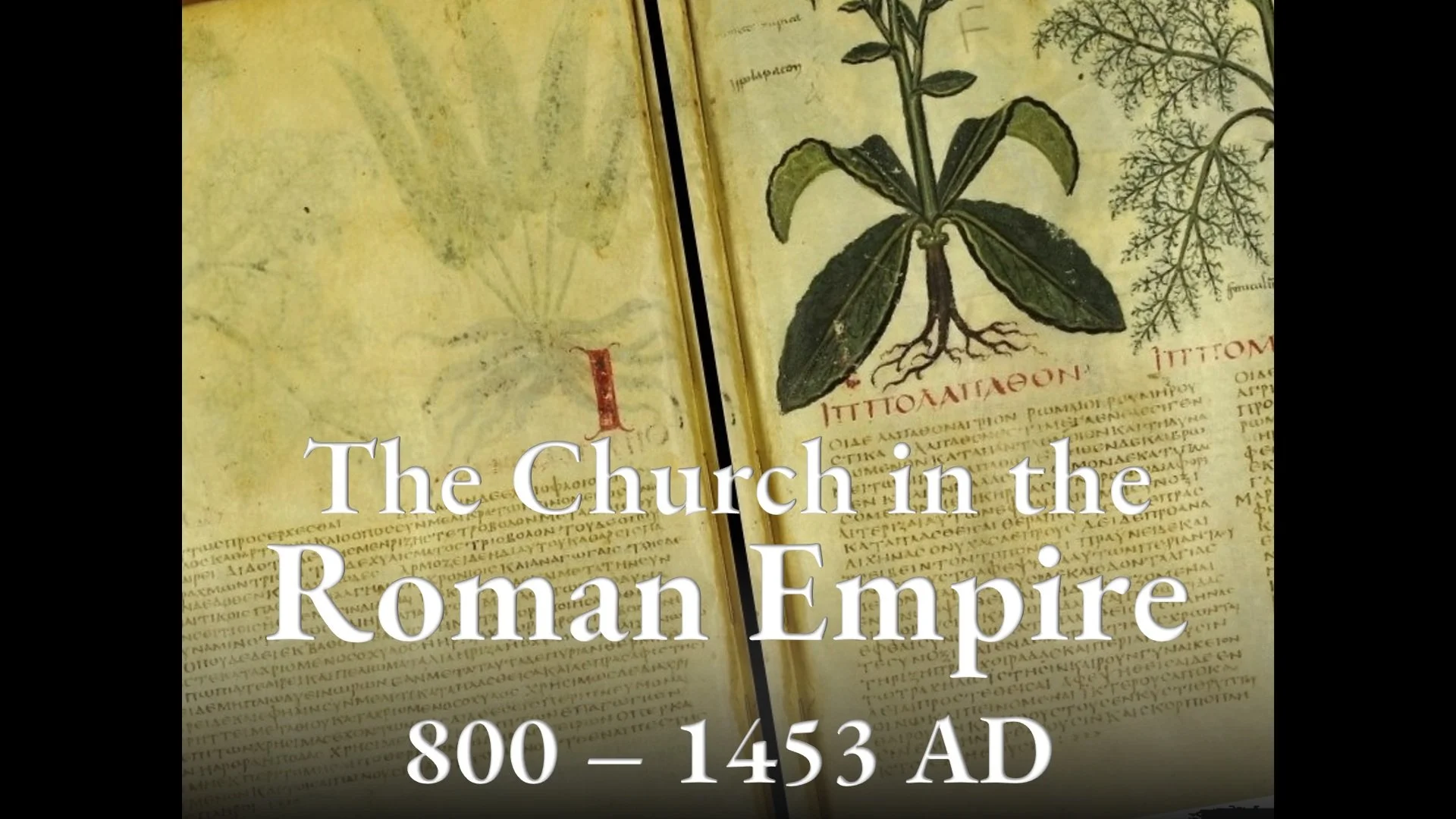
Photograph: A 7th century manuscript of Naples Dioscurides, a 7th century Greek manuscript of Dioscurides De Materia Medica (Of Medical Substances). Photo credit: World Digital Library. The Orthodox Byzantine Roman Empire invested in medical care through the development of hospitals, all the way until the Ottoman Turks conquered Constantinople in 1453 AD. Medical and biological knowledge was preserved in books like the 7th century manuscript of Naples Dioscurides, a 7th century Greek manuscript of Dioscurides De Materia Medica (Of Medical Substances). Byzantine doctors were the first to surgically separate conjoined twins - in 942 AD; see Dr. Denys Montandon, The Unspeakable History of Thoracopagus Twins' Separation. The next example was in Germany in 1689.
Introduction
The selection of perspectives on church history in this section — Church and Empire — has been guided by three factors: (1) to demonstrate that Christianity has not been a “white man’s religion”; (2) the study of empire as a recurring motif in Scripture by recent biblical studies scholars; and (3) explorations of biblical Christian ethics on issues of power and polity, to understand how Christians were faithful to Christ or not. Christian relational ethics continues a Christian theological anthropology that began with reflection on the human nature of Jesus, and the human experience of biblical Israel.
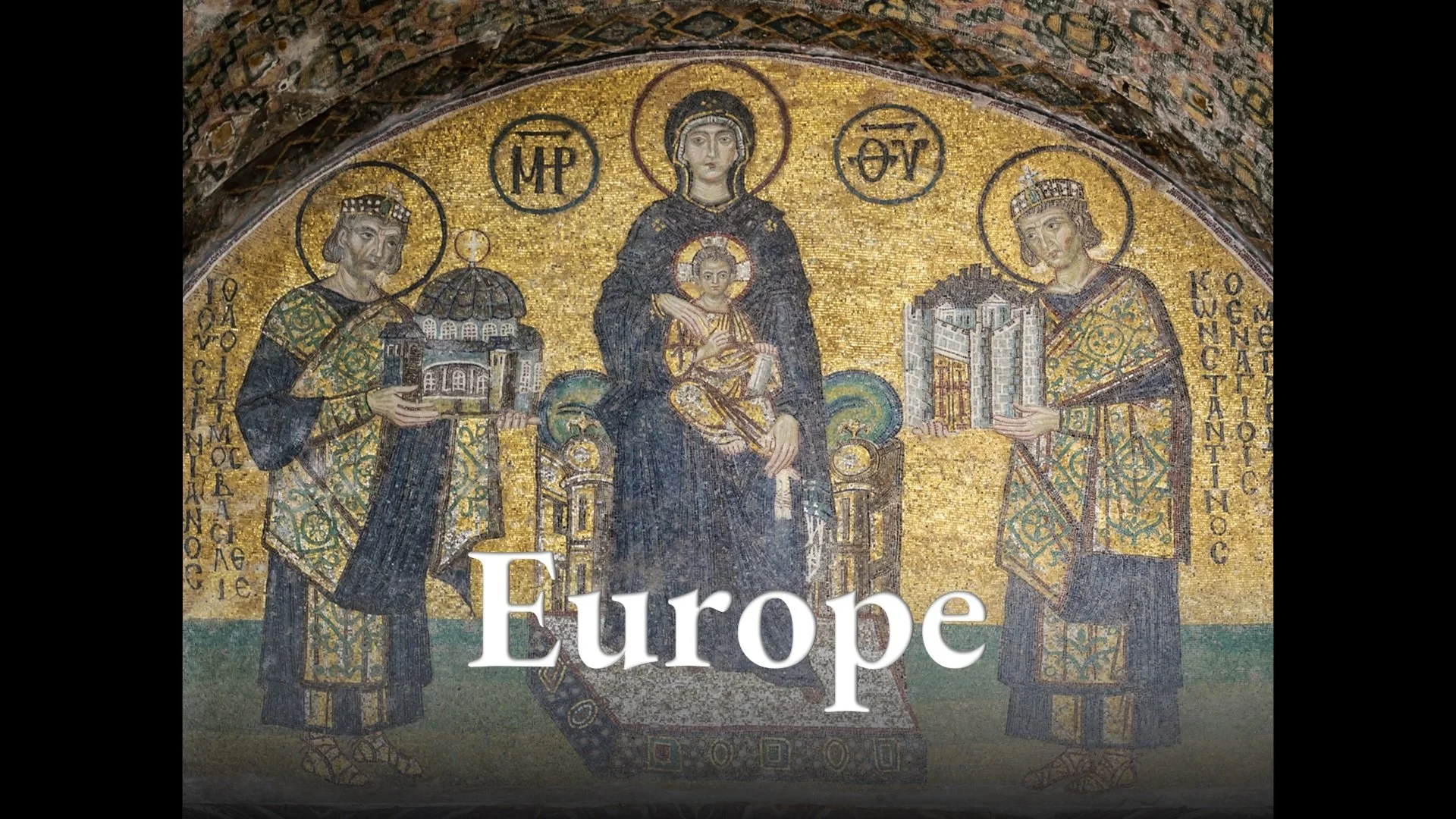
This section explores the experience and activities of Christians under the “Eastern” or “Byzantine” Roman Empire from the year 800, when Charlemagne, King of the Franks, claimed the title, “Emperor of the Romans,” while Emperor Irene ruled from Constantinople as Emperor of the Romans, until the year 1453, when the Ottoman Empire conquered Constantinople. We acknowledge that the term “Roman Empire” was in continuous use until 1453, and that calling it “Eastern” or “Byzantine” is itself a concession to Western European sensibilities carrying with it the danger of importing the “West vs. East” “culture war.” Its use here is only an acknowledgement of popular usage and Charlemagne’s contestation. See Roman Empire 313 - 800 for the earlier history.
Messages
Text and slides of a message about the role Christian faith played in history, bringing about hospitals, abolition of slavery, education, science and technology, beauty and the arts.
-
David Marshall Lang, Lives and Legends of the Georgian Saints. Routledge | Amazon page, 1956, 2021 3rd printing. See Tamar of Georgia (Wikipedia): Lived 1160 - 1213. She reigned as King Tamar 1184 - 1213 and presided over the Georgian Golden Age. Her story illustrates what the Christian faith made possible for women — in her case, the Georgian Orthodox church was connected to Constantinople and the Byzantine Empire.
Tamar was the great granddaughter of King David IV “the builder” or “the great,” because he built the famous Georgian Gelati Monastery. Her father, King George III, involved her in governance and appointed her as his co-ruler when she was 18 years old. In 1184, King George died, and the powerful feudal aristocracy tried to restore their political privileges; they immediately questioned Tamar’s legitimacy—not because of her skill, but because of her gender.
Young Tamar had no choice but to make difficult concessions. One of the most painful was agreeing to marry against her will. In 1185, a group of influential feudal lords forced her into marriage with a Rus prince named Yuri, known in Georgian sources as “Giorgi Rus.” By all accounts, he was a deeply troubled individual—frequently charged with alcoholism and violent behavior. But Tamar was patient and politically shrewd. As she grew more assertive of her powers as a queen regnant, she managed to persuade the noble council to approve her divorce. Yuri was sent off to Constantinople. He later tried twice to reclaim the throne by force, and both times Tamar crushed him.
Around 1189 (or 1187), Tamar married for a second time. Her new husband was David Soslan, a trusted advisor and an excellent military leader. This time, the marriage was her choice, and it would prove to be one of the best decisions of her reign. But the nobles still weren’t done trying to limit her power. They attempted to change the entire administration system, hoping to remove legislative authority from the monarch and transfer it entirely to a new political institution. Most rulers might have responded with brute force. Tamar responded with brilliant diplomacy.
She sent two prominent women—Kravai Jackeli and Khuashak Tsokali—to negotiate on her behalf. In the 12th century, this was almost unheard of. The result was a peaceful resolution based on mutual compromise. The new institution was never established. Instead, King Tamar increased the rights of the existing Hall, kept her power intact, and made her enemies look foolish in the process.
Once Tamar had fully consolidated her power, she resumed her predecessors’ expansionist foreign policy. Her most notable achievement came in 1204, when she helped establish the Empire of Trebizond on the Black Sea coast—a Byzantine successor state that would outlast the Fourth Crusade. Under her leadership, Georgia expanded across the entire Caucasus, from the Greater Caucasus mountains to Erzurum, and from the Zygii people to areas close to Ganja in modern-day Azerbaijan.
Tamar also ushered in a golden era of Georgian culture. Under her rule, locals began to identify more with the Byzantine West rather than the Islamic East. Trade relationships with both the Byzantine Empire and the Arab world supported economic and cultural growth, while also providing the funds needed for military campaigns. Georgia became the strongest kingdom in the Caucasus region, and Tamar became known by an extraordinary list of titles: “King of Kings,” “Master of the Lands,” “Father of Orphans,” and “Champion of the Messiah.”
She was the first independent female ruler of Georgia. And she used the title King not out of vanity, but to make a powerful political statement: that her authority was absolute, equal to any male monarch in history. King Tamar died in 1213 at the height of her power. Within a decade, the Mongols would arrive and her legacy would be partially buried under centuries of invasion.”Francis Dvornik, Origins of Intelligence Services: The Ancient Near East, Persia, Greece, Rome, Byzantium, the Arab Muslim Empires, the Mongol Empire, China, Muscovy. Rutgers University Press | Amazon page, 1974.
John V.A. Fine, The Early Medieval Balkans: A Critical Survey from the Sixth to the Late Twelfth Century. Rutgers University Press | Amazon page, 1991.
Timothy S. Miller, The Birth of the Hospital in the Byzantine Empire. Johns Hopkins University Press | Amazon page, 1997. from Basil of Caesarea who started the hospital as an institution and urban monasticism to support it, throughout the hospital network and its medical achievements in the Byzantine period. Miller shows one of the most positive interactions between church and government. It is impressive how much data we have. This also makes a good case that our science, medicine, and health system should be publicly supported in some form. See also Andrew T. Crislip, From Monastery to Hospital: Christian Monasticism and the Transformation of Health Care in Late Antiquity. University of Michigan Press | Amazon page, Apr 2005. See also The Cosmological Vision of St. Basil and the First Hospital. Servant of Prayer blog, Apr 8, 2014. and Father Johannes Jacobse, St. Basil the Great and Christian Philanthropy. American Orthodox Institute USA, Dec 20, 2014. and Thomas Heyne, Reconstructing the World's First Hospital: The Basiliad. Hektoen International: A Journal of Medical Humanities, Spring 2015.
Judith Herrin, Women in Purple: Rulers of Medieval Byzantium. Princeton University Press | Amazon page, 2002. re: Irene, Euphrosyne, and Theodora, who reigned as Emperors. Sometimes ruthless, often courageous, skilled, and pious, these women demonstrated something that Christian faith and church made possible: the overturning of the Hellenistic and Roman prejudice against women in power.
Henry Chadwick, East and West: The Making of a Rift in the Church: From Apostolic Times until the Council of Florence. Oxford University Press | Amazon page, 2003.
Matthew J. Pereira . editor., Philanthropy and Social Compassion in Eastern Orthodox Tradition. Sophia Institute Academic Conference, Dec 2009. Pereira brings together an excellent collection of essays ranging from biblical, historical, and modern concerns.
Fevronia K. Soumakis . editor., Power and Authority in Eastern Christian Experience. Sophia Institute Academic Conference, Dec 2010. Soumakis gives an excellent collection of essays ranging from biblical, historical, and modern concerns.
Judith Herrin, Unrivalled Influence: Women and Empire in Byzantium. Princeton University Press | Amazon page, 2013. Herrin gives not merely a political or institutional history (see Herrin, 2002), but a social history from empresses to rural widows, exploring the lives of wives, mothers, and daughters; women’s land and inheritance rights; roles played in the Orthodox Church.
Brian Patrick Mitchell, Byzantine Empire - or Republic? The American Conservative, Aug 7, 2015.
Adrienne LaFrance, Hearing the Lost Sounds of Antiquity. The Atlantic, Feb 19, 2016. on the architecture of Byzantine churches and the acoustics of chanting
Ashley M. Purpura, God, Hierarchy, and Power: Orthodox Theologies of Authority from Byzantium. Fordham University Press | Amazon page, 2018. Purpura examines the theology of hierarchy - a technical term not identical with power structures - beginning with Dionysius the Areopagite.
Mario Baghos, Philosophies of Church and State in Christian Constantinople. International Network for Byzantine Philosophy, Jun 13, 2018. Baghos views Mark of Ephesus as last of a long line who saw that Empire and Church were separable; Empire was not worth saving if it meant compromising Church. If so, then Mark of Ephesus represents the high point of Christian theological anthropology as it relates to politics and the biblical theme of Empire. Would that American evangelicals say that the U.S. is not worth saving if it means compromising faithfulness to Jesus.
-
Denys Hays, Europe: The Emergence of an Idea. University of Edinburgh, reprint edition 1968. Hays argues that "European Christian” self-consciousness began in opposition to Islam. This view is shared by Palestinian-American scholar Edward Said, Orientalism. Vintage Books | Amazon page, reprint edition 2014. See also Robert D. Kaplan, How Islam Created Europe. The Atlantic, May 2016. The ongoing relevance is explored by researcher Julia Ebern The Rage: The Vicious Circle of Islamist and Far-Right Extremism. I.B. Tauris | Amazon page, 2017.
Gregory Paul, The Great Scandal: Christianity’s Role in the Rise of the Nazis. Church and State, Oct 11, 2003. Paul traces the Christian alliance with the Roman Empire into anti-semitism and the rise of German Aryan "Volkism" and the German equivalent of "manifest destiny" through the conquest of Lebensraum ("living space").
Judith Herrin, Margins and Metropolis: Authority Across the Byzantine Empire. Princeton University Press | Amazon page, 2013.
Bogdan G. Bucur, It’s That Time of the Year Again: In Tone Four, “The Murderers of God, the Lawless Nation of the Jews…” Public Orthodoxy, Apr 6, 2017. Bucur pays close attention to how liturgical elements of the Eastern Orthodox Church carry a memory of anti-semitism.
Church and Empire in Europe: Topics:
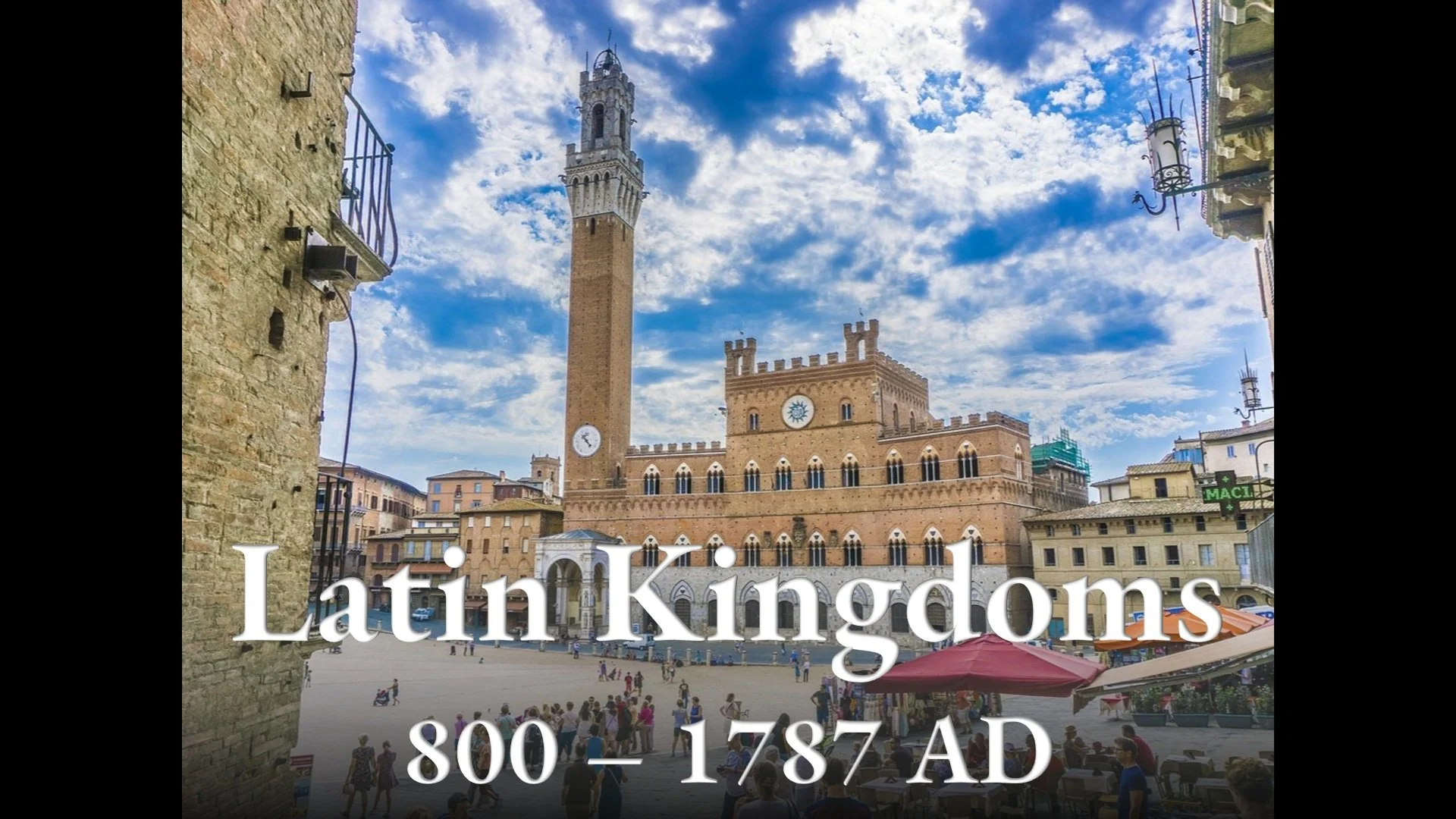
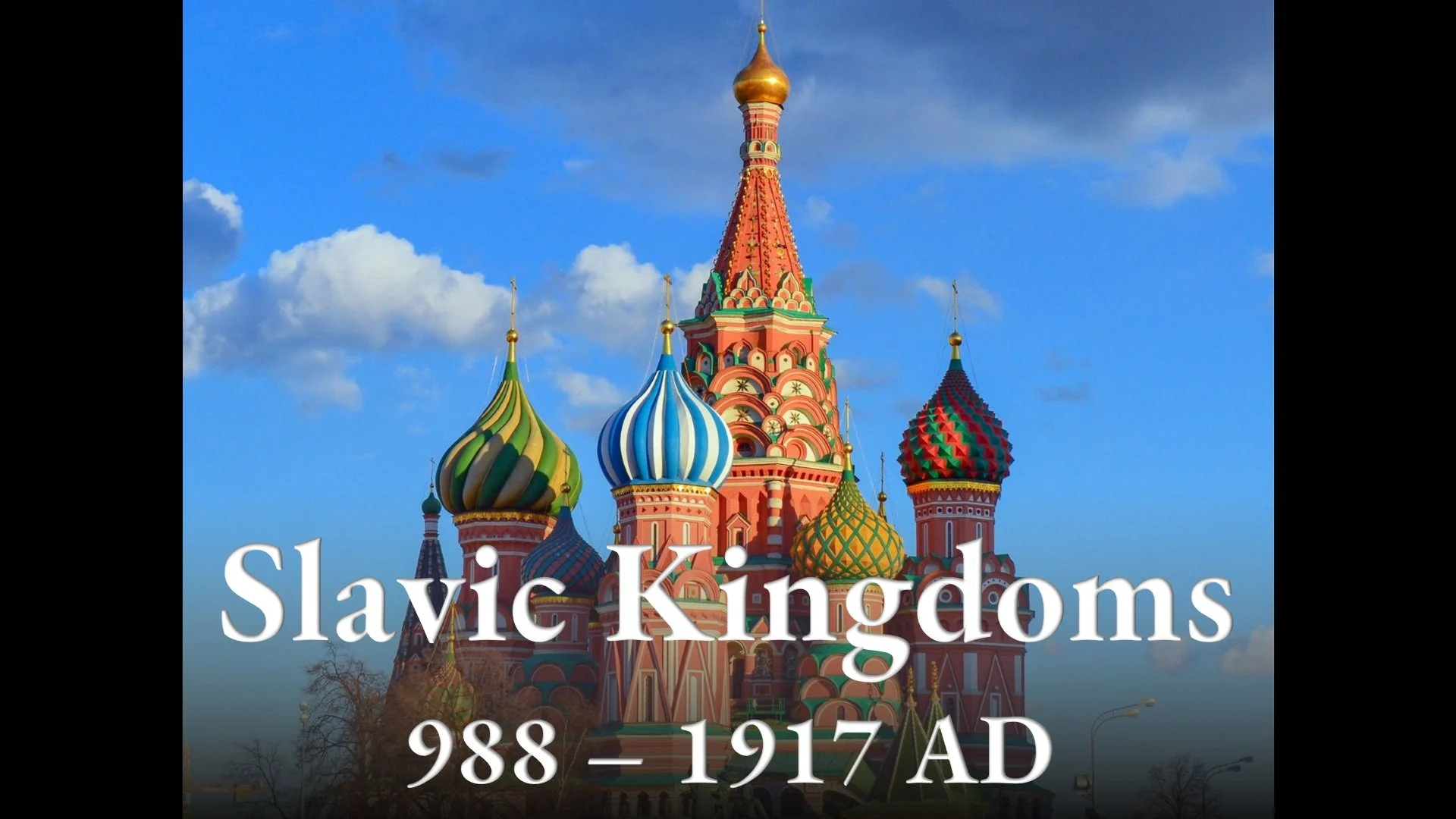
This section explores the experience and activities of Christians under various European regimes: the Roman Empire 313 - 800, the Celtic Kingdoms 431 - 1798, the Eastern Roman Empire 800 - 1453, the Latin Kingdoms 800 - 1787, and the Slavic Kingdoms 988 - 1917. See also our page on The Myth of Christian Ignorance, for resources contesting Christian faith as anti-science, politically backward, etc.

Church and Empire: Topics:
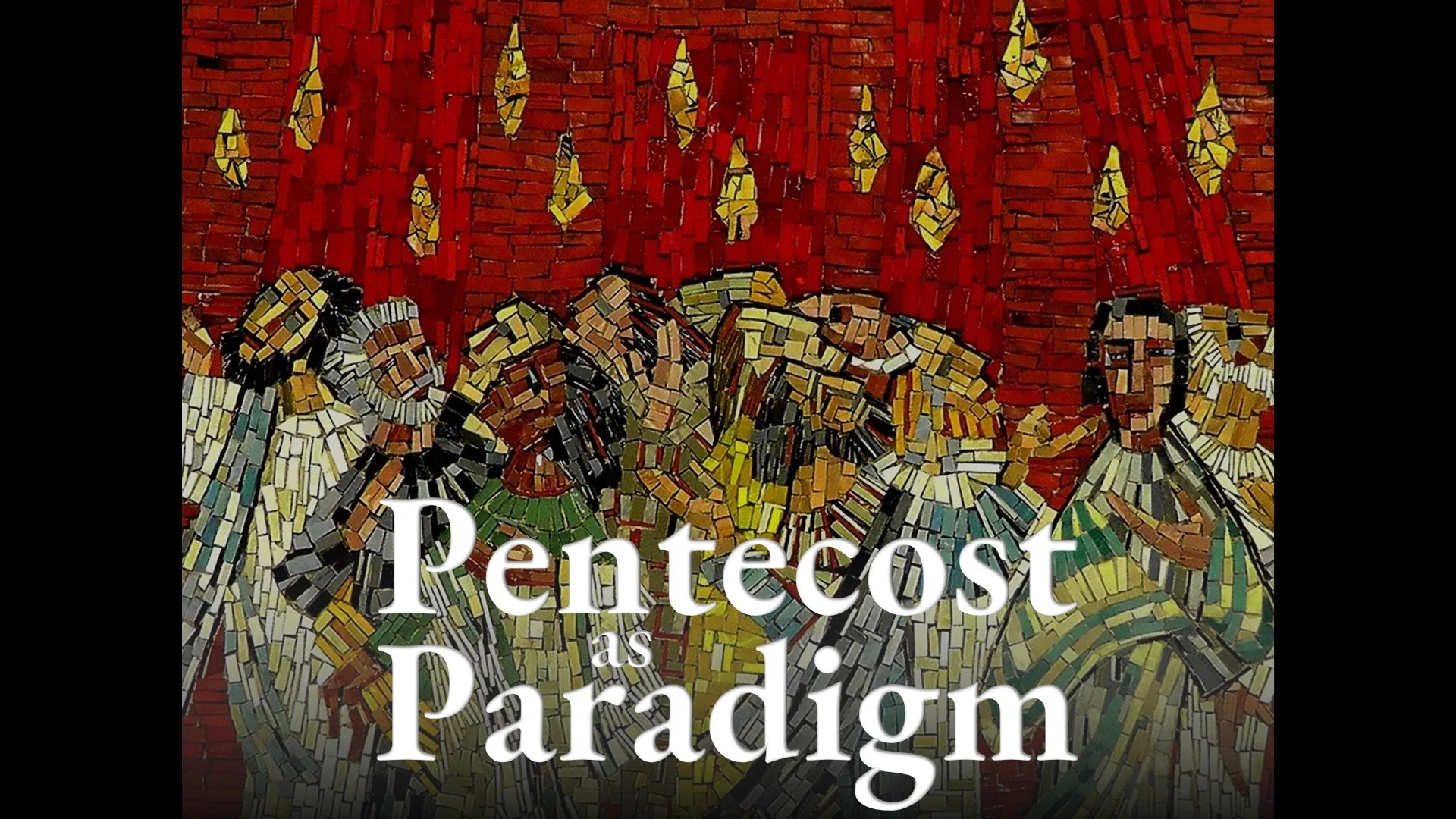
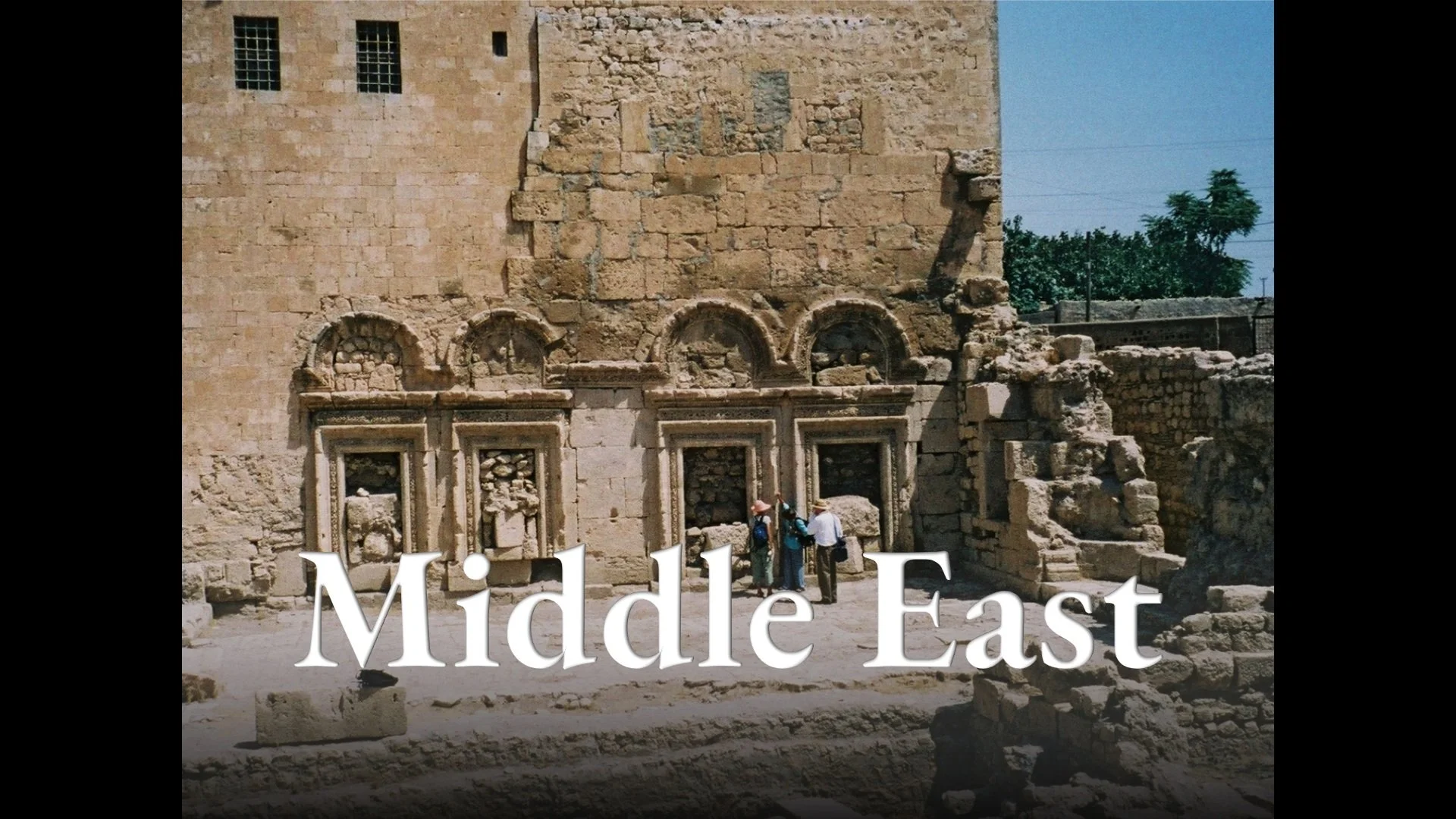
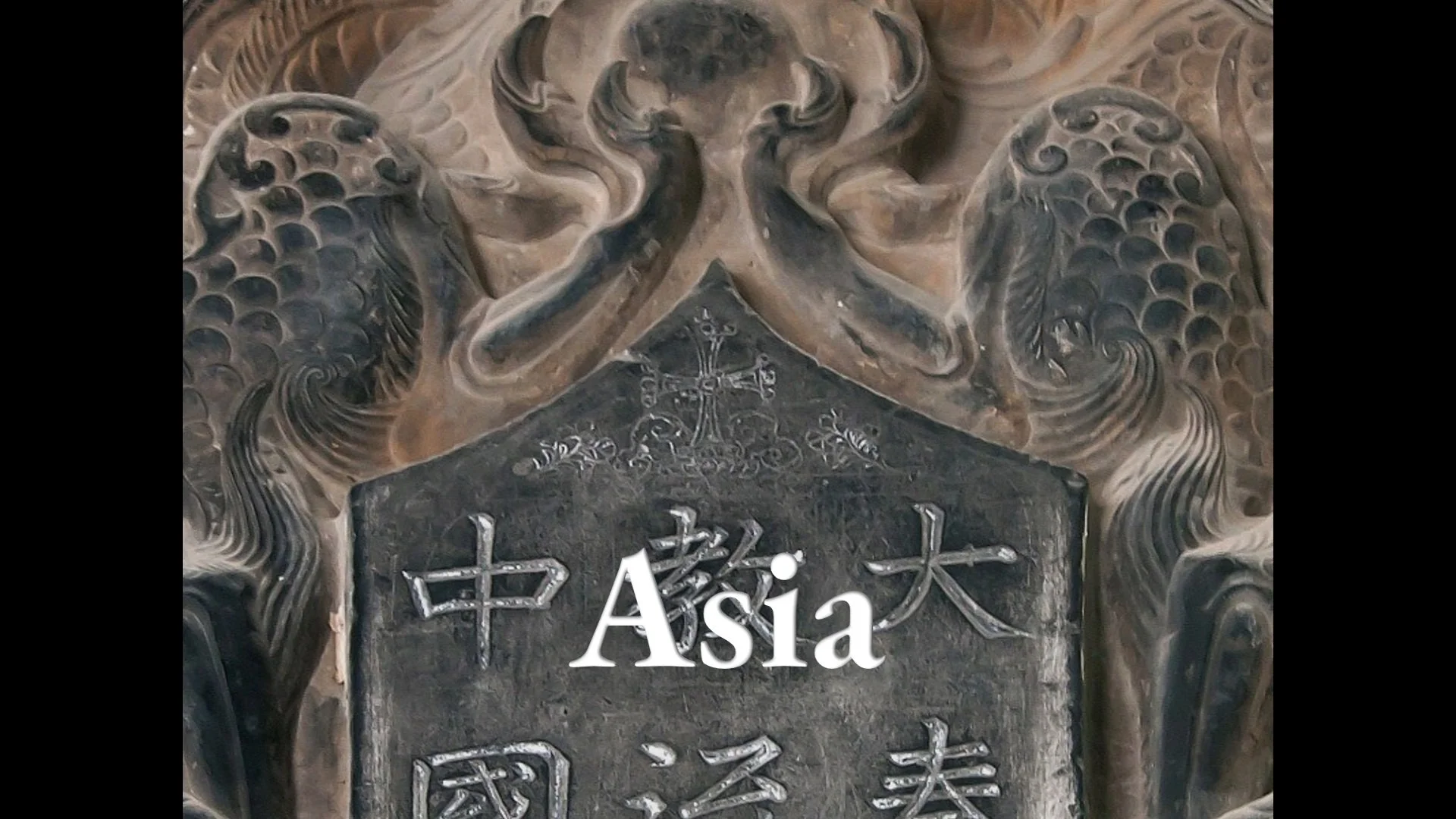
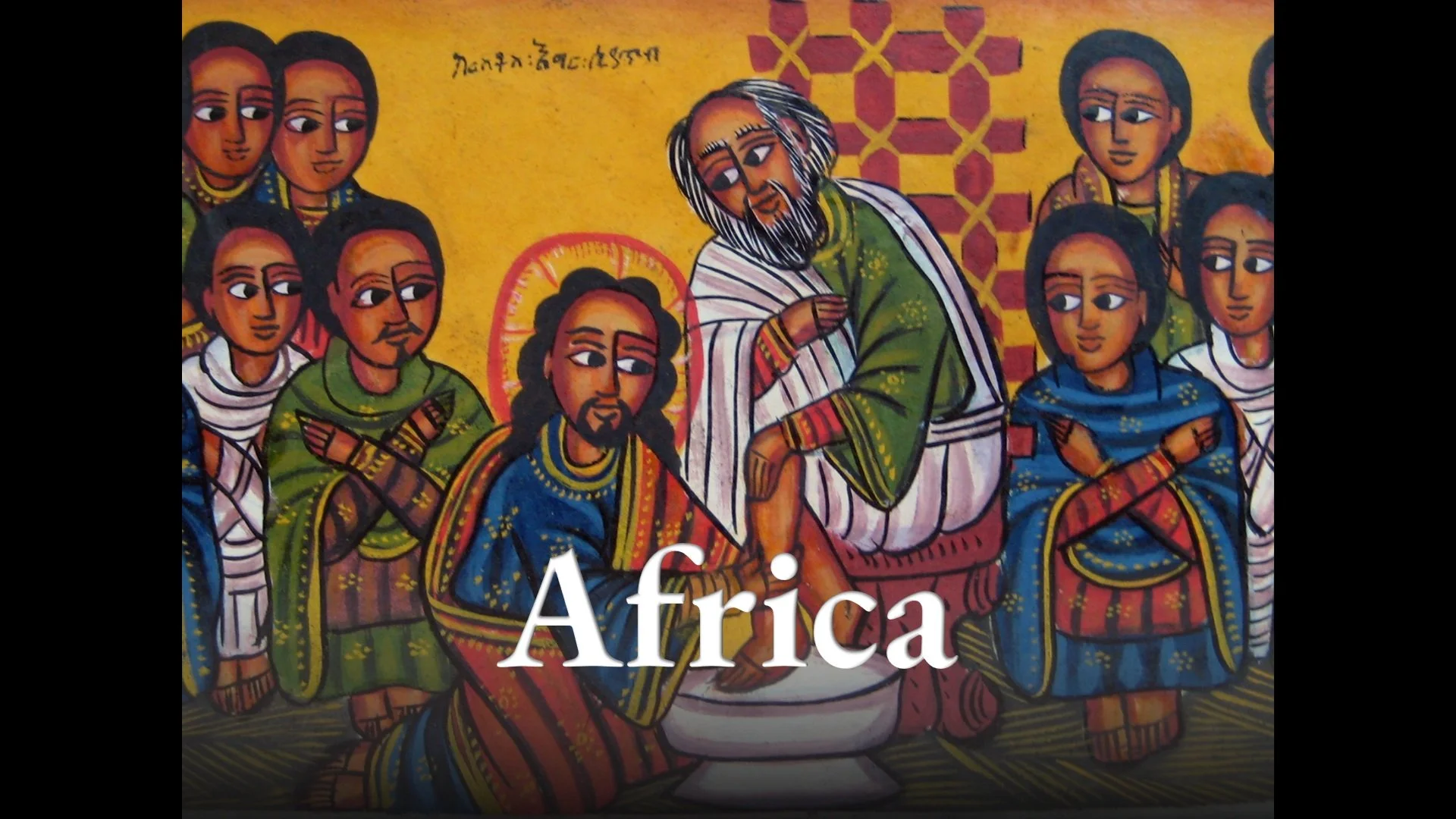
This page is part of our section on Church and Empire. These resources begin with a biblical exposition of Empire in Church and Empire and the meaning of Pentecost in Pentecost as Paradigm for Christianity and Cultures, then grouped by region.