The Church in the Slavic Kingdoms
988 - 1917 AD
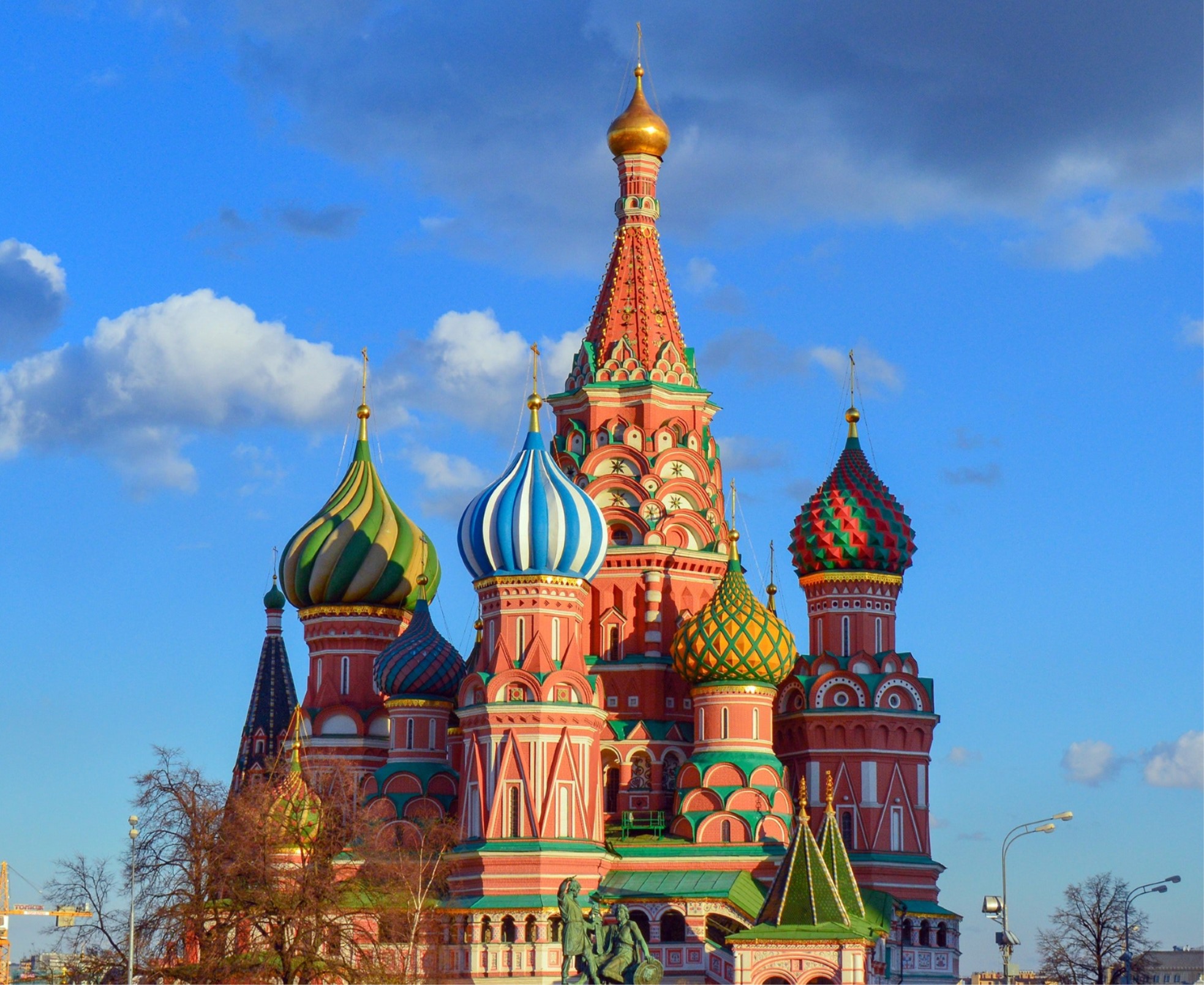
Photograph: The Cathedral of Saint Basil, in Moscow's Red Square. The unique architecture is meant to invoke a red bonfire. Photo credit: Pixabay, Creative Commons Zero. The Cathedral was built by Ivan the Terrible, who reigned as Grand Prince of Moscow from 1533 - 1547 AD, and then as Tsar of All the Russias from 1547 to his death in 1584. The title Tsar came the Russian word used for the Christian Byzantine Emperor (Caesar), for the Tatar Khan, for the kings of the Old Testament, and for Christ himself as divine tsar. He thus claimed continuity from the Kievan Rus in Ukraine which had become Christianized under Vladimir in 988 AD, and also sovereignty over non-Slavic and non-Christian peoples as well, such as the Tatars.
Introduction
The selection of perspectives on church history in this section — Church and Empire — has been guided by three factors: (1) to demonstrate that Christianity has not been a “white man’s religion”; (2) the study of empire as a recurring motif in Scripture by recent biblical studies scholars; and (3) explorations of biblical Christian ethics on issues of power and polity, to understand how Christians were faithful to Christ or not. Christian relational ethics continues a Christian theological anthropology that began with reflection on the human nature of Jesus, and the human experience of biblical Israel.
This section explores the experience and activities of Christians under the Slavic regimes from the year 988, when Prince Vladimir of Kiev became a Christian, until the year 1917, when the Bolshevik Revolution inaugurated the Soviet regime in Russia.
-
Ivan the Terrible's initial reform of law and administration was remarkable in many ways, as for a time, he was advised by the Orthodox Metropolitan Makari of Moscow, and the priest Silvestr. But that influence waned. Ivan warred constantly, massacred Novgorod, and insisted on the divine right of rulers to wield unlimited power under God. This prompted Basil the Blessed, a "holy fool," to give raw meat to Ivan during a fast, saying, "Why abstain from eating meat when you murder men?"
After the fall of Constantinople to the Ottoman Turks in 1453, Moscow came to be viewed as a "New Constantinople" or "Third Rome." Not coincidentally, that nomenclature had also been used by the Second Bulgarian Empire for Tarnovo, capital of Bulgaria, from 1185 AD in their ethno-nationalist uprising against the Byzantine Empire. Notable is the historical alignment between nationalist movements and Christianity in Eastern Europe and Eurasia.
The Russian Tsar fell in the Russian Revolution of 1917 AD to the Bolsheviks and the atheist Soviet regime. The Saint Basil Cathedral became a museum. However, it, like the Church of Saint Demetrius in Tarnovo, Bulgaria, remains a potent symbol of a church-empire relation that is still present in the consciousness of people, and is therefore still concerning.
Wikipedia, Phyletism (Wikipedia article) about the Eastern Orthodox Synod of 1872 which condemned as a heresy the idea that an autocephalous church should be based on an ethnicity, nationality, or language. This Synod condemned the idea that the church is associated with the identity or destiny of a single nation or a single race.
Jane Swan and Scott M. Kensworthy, Chosen for His People: A Biography of Patriarch Tikhon. Holy Trinity Seminary Press | Amazon page, 1964.
James H. Billington, The Icon and the Axe: An Interpretative History of Russian Culture. Vintage | Amazon page, 1966.
William C. Fletcher, Russian Orthodox Church Underground, 1917-70. Oxford University Press | Amazon page, 1971.
Francis Dvornik, Origins of Intelligence Services: The Ancient Near East, Persia, Greece, Rome, Byzantium, the Arab Muslim Empires, the Mongol Empire, China, Muscovy. Rutgers University Press | Amazon page, 1974.
John Meyendorff, Byzantium and the Rise of Russia: A Study of Byzantino-Russian Relations in the Fourteenth Century. Cambridge University Press | Amazon page, 1981. From Meyendorff, an outstanding Orthodox historian and theologian, comes this study focusing on the 14th century when Russia started as a province of the Mongol Empire, and became part of the Byzantine world
Charles Halperin, Russia and the Golden Horde: The Mongol Impact on Medieval Russian History. Indiana University Press | Amazon page, 1985.
John V.A. Fine, The Late Medieval Balkans : A Critical Survey from the Late Twelfth Century to the Ottoman Empire. University of Michigan Press | Amazon page, 1987.
John V.A. Fine, The Early Medieval Balkans: A Critical Survey from the Sixth to the Late Twelfth Century. University of Michigan Press | Amazon page, 1991.
Dimitri Obolenski, Byzantium and the Slavs. St. Vladimir’s Seminary Press | Amazon page, 1994. Obolenski discusses the interactions between the Greek Byzantine Empire, the Slavic kingdoms, and ultimately Russia.
Dimitry Pospielovsky, The Orthodox Church in the History of Russia. St. Vladimir’s Seminary Press | Amazon page, Jun 1998.
Nicolae Iorga, Byzantium After Byzantium. Center for Romanian Studies | Amazon page, Jun 2000.
Jerry McCollough and Faith McCollough, Cyril & Methodius: Illuminators of the Slavs. WinePress Publishing | Amazon page, Jun 2001. The Orthodox missionaries Cyril and Methodius ministered among the Slavs and developed the written Glagolithic script, which then became Old Church Slavonic, paving the way for a rich literary culture.
Anthony-Emil N. Tachiaos, Cyril and Methodius of Thessalonica: The Acculturation of the Slavs. St. Vladimir’s Seminary Press | Amazon page, 2001.
Paul M. Barford, The Early Slavs : Culture and Society in Early Medieval Eastern Europe. Cornell University Press | Amazon page, Oct 2001. the formation of Eastern Europe, its Orthodox and Catholic influences, and self-conceptions
John V.A. Fine, The Bosnian Church: Its Place in State and Society from the Thirteenth to the Fifteenth Century. Saqi Press | Amazon page, Oct 2007.
David Holden, Distributism: A Primer for Orthodox Christians. In Communion, Nov 24, 2010.
Rich Heffern, More About the Holy Fool. National Catholic Reporter, Feb 10, 2011. a development that seems, in Russia, at least, connected to the critique of corruption, not least in the state and among the clergy
Ovidiu Hurduzeu, Distributism in Eastern Europe. The Distributist Review, Dec 5, 2011.
Emmanuel Clapsis, Peace, Economic Injustice, and the Orthodox Church. Greek Orthodox Diocese in America, May 18, 2011.
Father Ernesto, Did the Church Fathers Address the Issue of Slavery? OrthoCuban, Jan 21, 2012.
David Bentley Hart, Is, Ought, and Nature's Laws. First Things, Mar 2013; a rejection of 'natural law' without revelation.
The Orthodox Church and State, Church, State, and Violence in Medieval Russia. The Orthodox Church and State blog, Mar 28, 2013.
David Bentley Hart, No Enduring City: The Gospel Both Created and Destroyed Christendom. First Things, Aug 2013. Hart points out the fundamental incompatibility between church and state.
A. Brining, Orthodox Christianity and Human Rights. Peeters Publishers | Amazon page, Sep 2013.
Katehon, The Economy in the Context of Globalization. Katehon, May 23, 2016.
Katehon, Russian Orthodox Church Against Liberal Globalization, Usury, Dollar Hegemony, and Neocolonialism. Katehon, May 26, 2016.
Artur Rosman, Why Speak of Theocracy in Poland When Confessional States Make Up the Secular West?. Patheos, Jun 10, 2016.
John Strickland, The Making of Holy Russia: The Orthodox Church and Russian Nationalism Before the Revolution. Printshop of St Job of Pochaev | Amazon page, Feb 2017.
John P. Burgess, Holy Rus': The Rebirth of Orthodoxy in the New Russia. Yale University Press | Amazon page, 2017.
Nicholas E. Denysenko, The Orthodox Church in Ukraine: A Century of Separation. Northern Illinois University Press | Amazon page, Nov 23, 2018. a case study examination involving the challenge of plural national identities; important given Paul Goble, Stalin Starved Populations to Death to Russify Ukraine, North Caucasus and Kazakhstan, Statistics Show. Euromaidan Press, Nov 27, 2016.
-
David Bentley Hart, Tolstoy and Dostoyevsky and Christ. First Things, Sep 14, 2009. Hart mentions Dostoyevsky's belief in Russian blood and soil, an Eastern Christian crusade to retake Constantinople, and anti-Semitism as a semi-pagan belief.
Ryan Hunter, Profound Examples of Holiness: The Royal Martyrs In Their Own Words and Through the Words of Those Who Knew Them. Orthodox in the District blog, Jul 18, 2013.
Admin, Ecumenical Patriarch Criticizes Nationalist Tendencies Within Eastern Orthodoxy. Pravmir, Apr 30, 2014.
Rod Dreher, Church to Orthodox Fascists: Repent! The American Conservative, May 5, 2014.
Sergei Chapnin, A Church of Empire: Why the Russian Church Chose to Bless Empire. First Things, Nov 2015.
Ryan P. Hunter, Analyzing the Transformation of Church-State Relations in Russia from 1987 to 2008. blog, Dec 1, 2015.
Katherine Kelaidis, Why is the Church Silent About LGBT+ Violence in Russia? Public Orthodoxy, Jan 9, 2017. Kelaidis should also be asked in the U.S. and other Christian-influenced nation-states.
Stephen Turley, The Reawakening of Christian Civilization in Eastern Europe. The Imaginative Conservative, Jan 23, 2017. although I am concerned that it is not thorough ethically and politically.
Yoram Hazony, The Virtue of Nationalism. Basic Books | Amazon page, Sep 4, 2018. Hazony praises the heretical appropriation of the Old Testament national freedom motif by the English, Dutch, and Americans, without acknowledging how those empires violated biblical ethics from Mosaic Israel . which included welcoming of foreigners, fairly egalitarian distribution of land, restorative justice, and empowerment of women. from Jesus' mission . anti-territorialism, expansion of communal identity, principled multi-culturalism. and ethics of repentance . restitution in both Moses and Jesus. which would normally be applied to colonialist injustice. See review by Friedrich Hansen, Reflections on the Renaissance of Nationalism. Geopolitica, Sep 4, 2018. from a Russian-Eurasian geopolitical posture, which many Eastern Europeans support, and regular support for Hazony from The American Conservative.
Tom Porter, The Christian Right Is Looking to Putin's Russia to Save Christianity From the Godless West. Newsweek, Sep 15, 2018.
Will Collins, The Myth of a Christian Revival in Eastern Europe. The American Conservative, Jan 7, 2019.
Editors, Anti-Semitism. History.com, Jun 10, 2019. The problem is that, despite what the apostle Paul said in Romans 9 - 11 about respecting and protecting Judaism, Christians took over the pagan imperial hostility towards Jews.
Anne Applebaum, The False Romance of Russia. The Atlantic, Dec 12, 2019. “American conservatives who find themselves identifying with Putin’s regime refuse to see the country for what it actually is.” This is an excellent and much-needed article. See also Marc Bennetts, Why Orthodox Christians Are Losing Faith in Putin. Politico, Dec 24, 2019. “Priests and churchgoers are standing up to the government.”
Daria Tarasova Markina, Ukraine’s President Signs Law Banning Russia-Linked Religious Groups. CNN, Aug 25, 2024. Although Russian Orthodox Patriarch Kyrill supports the invasion, backs Putin, promotes a vision of Russian imperial power based on language and the view of Moscow as a third Rome. Thus: “Ukraine’s Security Service of Ukraine (SBU) has accused the UOC of spreading pro-Moscow propaganda. Since the beginning of the full-scale invasion, the SBU has opened criminal proceedings against more than 100 clergymen of the UOC. Nearly 50 have already been charged and 26 have received sentences, according to the SBU. One of the clerics convicted used his sermons to defend the full-scale invasion of Russia and the seizure of parts of Ukraine. In conversations with parishioners, the cleric tried to persuade them to go to Russia or occupied regions to help Russians. He was sentenced to five years. The purpose of this law is to ban the activities of the Moscow Patriarchate in Ukraine “which is an instrument of Russian influence and propaganda” according to Mykyta Poturaiev, a Ukrainian member of Parliament who sponsored the bill.” See commentary by Michael Reneau and Matthew Namee, Ukraine’s Religious Identity Crisis. The Dispatch, Sep 22, 2024.
The Church and Empire in Europe: Topics:
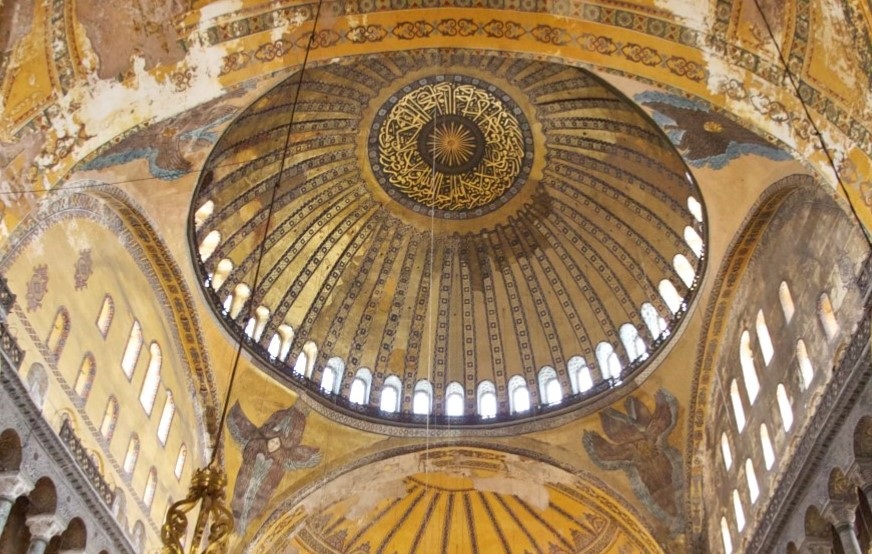
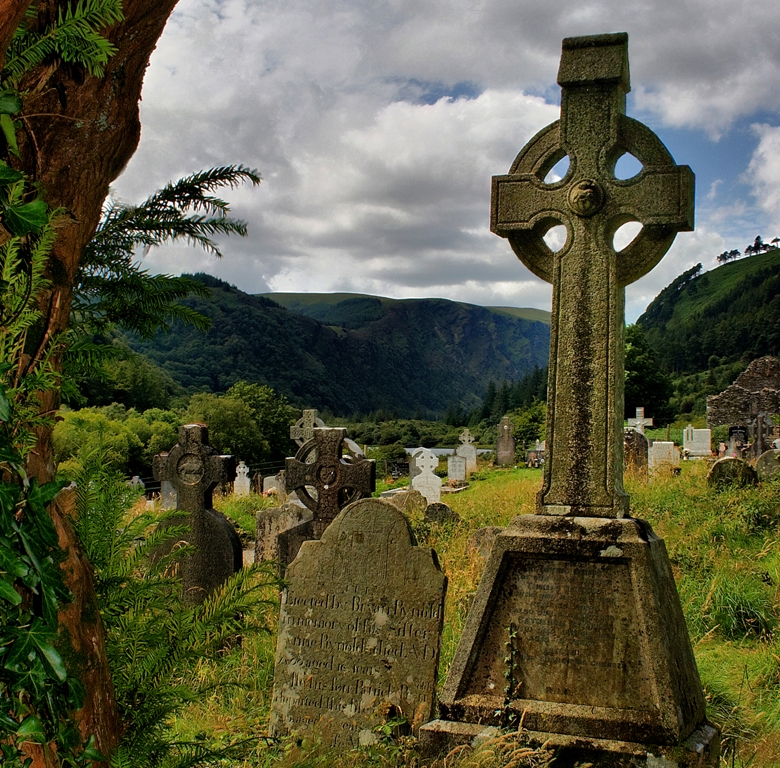
This section explores the experience and activities of Christians under various European regimes: the Roman Empire 313 - 800, the Celtic Kingdoms 431 - 1798, the Eastern Roman Empire 800 - 1453, the Latin Kingdoms 800 - 1787, and the Slavic Kingdoms 988 - 1917.
Church and Empire: Topics:
This page is part of our section on Church and Empire. These resources begin with a biblical exposition of Empire in Church and Empire and the meaning of Pentecost in Pentecost as Paradigm for Christianity and Cultures, then grouped by region: Middle East, Asia, Africa, Europe, Americas, then Nation-State, with special attention given to The Shoah of Nazi Germany.