Healing Atonement
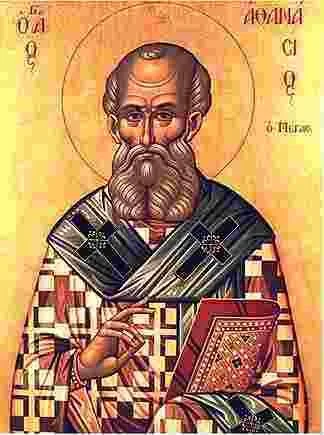
Athanasius of Alexandria (c.298 - 373 AD)
An old clay oil lamp from Nazareth, Israel. Photo credit: Olivia Armstrong.
Athanasius of Alexandria (c.298 - 373 AD) is considered the fountainhead of all Christian theology. He defended the full divinity of Jesus and the Nicene Creed concerning the Trinity at a time when the Roman Emperor and some church leaders were opposed and hostile. He also was the first to describe the New Testament as the collection of 27 books we receive today.
The Father-Son Relation, Athanasius, and the Nicene Creed
Athanasius helped draw up the Nicene Creed, defended the divinity of the Son and the doctrine of the Trinity, and was the first to identify the New Testament as the 27 books we now have. Read about his atonement theology, defense of God’s love and goodness, teaching on the Father-Son relation and key biblical passages, and how early Christian theology would speak to modern day issues. See whole series.

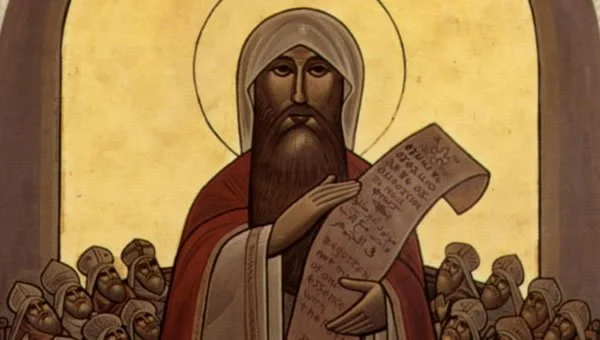
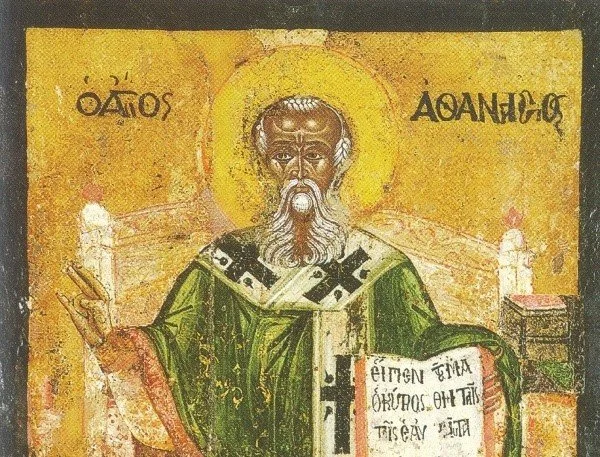

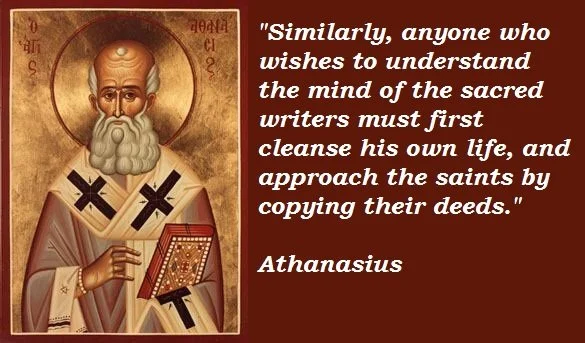
Messages and Essays on Athanasius of Alexandria
Appreciating Antony and Athanasius: Recovering from Trauma and Taking Courage Against Tyrants (link opens YouTube video) Mako gave this message at Trinity North Shore Church on November 1, 2025. “One of the reasons we honor the Saints on All Saints Day is that they inspire us to practice our faith in a deep and meaningful way. They remind us that we are not alone. The early church Desert Fathers and Mothers were really doing resistance training. In this fascinating sermon, Mako leads us through some of the intriguing stories of Anthony of Egypt. How can we reflect the love and goodness, the care and kindness and patience of Jesus? How can we work together to help a world that is broken, and fearful, and angry because they don't feel like they have many other options? The closer we can stay to Jesus, opening our hearts and our lives up to Him, the more we will find that He does lead us down new paths, by still waters and green pastures. That He does set a table before us in the midst of our enemies.”
See also the slides to this presentation. Given to the 2022 Reconstruction class. It spotlights Athanasius’ teaching on the following topics: creation; corruption; clinical trial in Israel; cure in Jesus; consummation. This is a good introduction to the broad thought of the early Christians, since Athanasius is considered a faithful spokesman. It also pays special attention to penal vs. medical substitutionary atonement, which introduces us to the contrast between divine retributive vs. restorative justice.
See also the slides to this presentation. Given October 30, 2021 to the Reconstruction class. This presentation covers the conceptual and linguistic factors that led to the need to explain the Father-Son relation at the Council of Nicaea, the anti-Nicene reaction, Athanasius’ leadership advocating a pro-Nicene position, and the articulation of the Constantinopolitan revision of the Creed in 381 AD. Note that medical substitutionary atonement serves as the foundation of Trinitarian theology on slides 15 - 17, 21, 24, 31.
See also the slides to this presentation. Given November 2022 to the Reconstruction class. This presentation covers the first century disagreement between Christian sexual ethics and Hellenistic sexual ethics, especially Stoicism. The first part is an introduction to patristic statements about God’s vision for sex and marriage. The second part is called The Diverse Community: Athanasius' Letter 48 to Amun and Festal Letter 10, which is about how Athanasius as a pastoral bishop brought together married, single, and committed celibates. The third section is called The Value of Struggle: Athanasius' Life of Anthony. It explores the story of the desert monastic Christian named Anthony, and the role of his sexual struggles and commitment to celibacy.
Medical Substitutionary Atonement in Athanasius of Alexandria
An introduction to Athanasius of Alexandria and his theology of atonement. This is part of Penal Substitution vs. Medical Substitution: A Historical Comparison, Mako Nagasawa’s analysis of the atonement theology (“medical substitution”) of early church theologians, including Clement of Rome, Ignatius of Antioch, the Epistle to Diognetus, the Odes of Solomon, Justin Martyr of Rome, Irenaeus of Lyons, Melito of Sardis, Tertullian of Carthage, Methodius of Olympus, Athanasius of Alexandria. Mako will continue to add to this paper to include later writers, bishops, and councils.
The Good God and the Healing of Creation According to Athanasius of Alexandria
Slides to a presentation given Feb 4, 2019 to my class in Orthodox Dogmatics at Holy Cross Greek Orthodox Seminary, at the kind invitation of Father Emmanuel Clapsis.
Athanasius as Evangelist, Part 1: Against the Heathen / Contra Gentes (c.328 AD)
An essay for Father George Dion. Dragas, at Holy Cross Greek Orthodox Seminary, Fall Semester 2017; examines Athanasius' first work in its evangelistic appeal, atonement theology, and Trinitarian framework, in comparison with penal substitutionary theory.
Athanasius as Evangelist, Part 2: On the Incarnation / De Incarnatione (c.328 AD)
An essay for Father George Dion. Dragas, at Holy Cross Greek Orthodox Seminary, Fall Semester 2017; examines Athanasius' second work in its evangelistic appeal, atonement theology, and Trinitarian framework, in comparison with penal substitutionary theory; considers the questions of the human soul of Christ and the fallen human nature of the incarnation.
Athanasius as Interpreter of the Trinity, Part 1: Discourses Against the Arians 1 - 2 / Contra Arianos 1 - 2 (c.341 - 2 AD)
An essay for Father George Dion. Dragas, at Holy Cross Greek Orthodox Seminary, Fall Semester 2017; examines Athanasius' major dogmatic work on the Father-Son relation, compared with penal substitutionary theory and Lutheran-Reformed doctrine of justification.
Athanasius as Interpreter of the Trinity, Part 2: Discourse Against the Arians 1 - 2 / Contra Arianos 1 - 2 (c.341 - 2 AD)
An essay for Father George Dion. Dragas, at Holy Cross Greek Orthodox Seminary, Fall Semester 2017; examines Athanasius' major dogmatic work on the atonement in its various dimensions.
Athanasius as Interpreter of Jesus' Humanity: Discourses Against the Arians 3 / Contra Arianos 3 (c.345 AD)
An essay for Father George Dion. Dragas, at Holy Cross Greek Orthodox Seminary, Fall Semester 2017; examines Athanasius' major dogmatic work on the topic of Jesus' humanity. Here I believe we start to see the “Hellenistic” influence of treating the Son’s divine nature as a static category on the topic of “divine emotions” (vs. “immutability”) and “divine ignorance” (vs. “omniscience”), and departing from the biblical portrayal of God responding to us emotionally and knowing us more dynamically, committed to time out of His love for us. This impacted how Athanasius conceived of Jesus’ human emotions and knowing. Athanasius compares unfavorably with Irenaeus of Lyons on these points, in my opinion.
Athanasius as Theologian of the Holy Spirit: Letters to Serapion on the Holy Spirit / Ad Serapionem (c.359 - 60 AD)
An essay for Father George Dion. Dragas, at Holy Cross Greek Orthodox Seminary, Fall Semester 2017; examines Athanasius' major dogmatic works on the Holy Spirit.
Athanasius as Theologian of Sanctification: Life of Antony / Vita Antonii (c.362 AD)
An essay for Father George Dion. Dragas, at Holy Cross Greek Orthodox Seminary, Fall Semester 2017; examines Athanasius' very influential biography of the Egyptian monk Antony of the Desert; this established Christian monasticism and shows Athanasius at his pastoral best. I critique Karl Barth and T.F. Torrance (and the Lutherans and Reformed theologians they represent) for placing “justification” as theologically and pastorally prior to “sanctification.” Athanasius’ work and various biblical texts on sanctification demonstrate that this “ordo salutis” is erroneous, and the result of a dim view of human nature - namely, the Augustinian view of total depravity imbibed by Luther and Calvin.
Athanasius on the Holy Spirit, Conversion, and Sanctification, Part 1
A long essay surveying Athanasius' framework and rhetoric for understanding the Holy Spirit's work.
Athanasius on the Holy Spirit, Conversion, and Sanctification, Part 2
A long essay surveying Athanasius' framework and rhetoric for understanding the Holy Spirit's work (paper in progress).
Fallen or Unfallen: Studies in Athanasius’ Contra Apollinarem and the Humanity of Jesus (c.373 AD)
An essay arguing that Athanasius (or someone writing under his name and tradition) demonstrated a commitment to the “fallenness” camp, although he used Apollinaris’ terms. Here is the text of Athanasius of Alexandria, Contra Apollinarem.
Discussions About Athanasius of Alexandria
From Dec 25, 2020. A sprawling discussion that started with a quote by Athanasius, explores God’s activities in both the Old Testament and in Christ, shows the importance of including “human nature” in the atonement and not just “human personhood,” and “human desires” in salvation and not just “human deeds.”
Debate on Facebook: PKC, from the Reformed Camp, Argues for the Divine Abandonment Theory
From August 2025. PKC is a professor emeritus of theology and also president emeritus of a seminary. He writes in support of John Piper, Timothy Keller, and R.C. Sproul: “It was the human consciousness of Christ that experienced the withdrawing of the presence of the Father. So the abandonment was real.” Mako argued against the divine abandonment theory based on Scripture and the Ecumenical Creeds, chiefly Athanasius. Here is Part 2.
The Writings of Athanasius of Alexandria
Athanasius of Alexandria, On the Incarnation, chapters 2 - 10
Athanasius of Alexandria, Discourses Against the Arians, discourse 1, paragraphs 51 and 60
Athanasius of Alexandria, Discourses Against the Arians, discourse 3, paragraphs 31, 33, 39
Athanasius of Alexandria, Letter 3, paragraphs 3 - 4 note the motif of God as a purifying fire, not a retributive fire
Athanasius of Alexandria, Letter 11, paragraph 14
Athanasius of Alexandria, Letter 59 to Epictetus of Corinth, paragraph 8 sees John 1:14 and Galatians 3:13 as mutually interpreting
Athanasius of Alexandria, Letter 60 to Adelphius, paragraph 4 sees 2 Peter 1:4 and Romans 8:3 as mutually interpreting
Athanasius of Alexandria, Letter 61 to Maximus, paragraphs 2 - 3 for discussion of Jesus' genuine humanity, and our reception of him being deification
Athanasius of Alexandria, Tomus ad Antiochenos 7 for Jesus having a human soul; cf. Against Apollinaris 1.17 "he gave body for body and soul for soul" and see Matthew Craig Steenberg, Of God and Man: Theology as Anthropology from Irenaeus to Athanasius (Amazon book, 2009, ch.5) for more discussion
Athanasius of Alexandria, Letters to Serapion on the Holy Spirit 2.7 - 8 (translation and commentary by C.R.B. Shapland, pdf file) full text now online here
Athanasius of Alexandria, Life of Antony paragraphs 7 and 74 where the monk Antony participates in what Jesus did in his own human nature: he condemned sin in his own flesh
Athanasius of Alexandria, Life of Antony paragraphs 24 speaks of the fiery appearance of demons as God's judgment on sin which is already unfolding
Athanasius of Alexandria / Pseudo-Athanasius, Contra Apollinarium (pdf file) see especially Book 1, chapters 7, 15, and 17; Book 2, chapters 5 - 11 (the authorship of these two books is uncertain, but it reflects a late fourth century, to early fifth century, teaching that was highly esteemed). See Fallen or Unfallen: Studies in Athanasius’ Contra Apollinarium and the Humanity of Jesus, an essay arguing that Athanasius (or someone writing under his name and tradition) demonstrated a commitment to the “fallenness” camp, although he used Apollinaris’ terms
The Works of Athanasius in Chronological Order (Fourth Century Christianity website)
Other Resources on Athanasius of Alexandria
Grace Communion International, The Nicene Creed's Incarnational Trinitarian Roots. Ted Johnston, The Surprising God blog.
T.F. Torrance, Theology in Reconciliation. Wipf and Stock | Amazon page, May 1996. Torrance, p.151 - 154 discusses Athanasius.
Antiochan Orthodox Christian Archdiocese, Saint Athanasius and the ‘Penal Substitutionary’ Atonement Doctrine. Antiochan Orthodox Christian Archdiocese, 2010.
Aidan Kimel, St. Athanasius: Substitutionary Atonement and the Dilemma of Death. Eclectic Orthodoxy, Apr 13, 2013.
Ben Myers, Atonement - Jesus' Death. ObjectiveBob, Sep 30, 2015. A video. On Athanasius' understanding.
Dattatreya Mandal, Nifty 3D Animation Presents The Grandeur Of Ancient Alexandria, From Its Library To Lighthouse. Realm of History, Apr 26, 2016.
Father Stephen Freeman, Sin Is Not a Legal Problem — Athanasius and the Atonement. Glory to God for All Things, Jul 12, 2016.
Jonathan Kleiss, Athanasius, T.F. Torrance, and the Vicarious Humanity of Christ. Reformissio, Oct 6, 2016.
Jonathan Kleiss, An Easterly Influenced Reformed Theology Rather Than a Westerly. Reformissio, Feb 1, 2017. Features Athanasius.
Ambrose Andreano, Original Sin According to the Athanasian Paradigm. Patristics Project, Sep 7, 2017.
J.B. Aitken, Athanasius, Orations Against the Arians. Patristic Charismata, Feb 3, 2018. Aitken gives a helpful, short summary
Sources of Atonement Theology
These resources explore the foundation of “Medical Substitution” as the best understanding of the Bible, and the original understanding of the church. There are also links to books, web articles, etc. from representatives of the three broad Christian traditions.