Photograph: London Street in the Rain. Photo credit: Anajana Menon | CC0, Wikimedia Commons.
Introduction
“Blessed are those who mourn,” said Jesus in Matthew 5:4. How and why do we mourn with Jesus, with faith and hope? The Book of Psalms, Jeremiah’s Lamentations, and examples from Jesus’ own life and teaching instruct us. “He was a man of sorrows, and acquainted with grief” (Isaiah 53:3).
Messages and Resources
The following video clips are from our 2019 Conference: Healing Atonement. Connie Bahng discusses the importance of Jesus entering into our trauma, and then compares penal vs. medical substitutionary atonement.
See the slides to this presentation. This material explores the biblical theme of human being and human becoming. God created us with good desires for more goodness and beauty, as well as the freedom to determine the direction of our love as constituting our human becoming. The biblical motif of meeting God on mountains is important. We glance at various Christian leaders, but do a deeper dive into Gregory of Nyssa’s Life of Moses, in his interpretation of Moses meeting God on Mount Sinai, and returning with shining face.
A curriculum for small group discussion or personal reflection. Shame is the desire to hide the self. Glory is the response of God to invest Himself in us and renew His image in us. This material explores humanity as fundamentally good, but corrupted by sin, and not entirely in control of our own desires and emotions. Part of the spiritual and emotional struggle, then, is to know ourselves, know how God sees and loves us, and to receive into ourselves the Spirit of Christ. Peppered with insights from the early Christians, including some “desert fathers and mothers” who were the earliest “spiritual directors.”
Jesus and the Shaping of Desire: An Exploration of Early Church Practices
A presentation introducing early Christian monastic and mystical practices understood as trauma recovery from the physical and sexual violence of Greco-Roman cities. This is not primarily about mental health per se as we understand it today. But it does demonstrate a bridge between the fields of church history, theology, pastoral care, human development, and mental and emotional health. More resources on human desire can be found here and resources on Christian spiritual formation can be found here.
-
Bruce Wauchope, The Gospel and Mental Health Sample. Trinity in You blog.
Anthony Hughes, Ancestral Versus Original Sin: An Overview with Implications for Psychotherapy. St. Mary Orthodox Church. presents a helpful explanation between the Eastern "corrupted nature" view of the fall, against the Augustinian-Western "inherited guilt" view, and spells out some practical implications for counseling and therapy
Joel James Shuman and Keith G. Meador, Heal Thyself: Spirituality, Medicine, and the Distortion of Christianity. Oxford University Press | Amazon page, 2003.
Matthew S. Stanford, Grace for the Afflicted: A Clinical and Biblical Perspective on Mental Illness. InterVarsity Press | Amazon page, 1st edition 2008; 2nd edition 2017.
Melissa M. Kelley, Grief: Contemporary Theory and the Practice of Ministry. Fortress Press | Amazon page, 2010. A very helpful resource from clinical, academic, and pastoral perspectives
Curt Thompson, Anatomy of the Soul: Surprising Connections Between Neuroscience and Spiritual Practices That Can Transform Your Life and Relationships. Tyndale | Amazon page, 2010.
George Tsakiridis, Evagrius Ponticus and Cognitive Science: A Look at Moral Evil and the Thoughts. Pickwick Publications | Amazon page, 2010.
Shelley Rambo, Spirit and Trauma: A Theology of Remaining. Westminster John Knox Press | Amazon page, Sep 2, 2010.
Alexis Trader, Ancient Christian Wisdom and Aaron Beck’s Cognitive Therapy: A Meeting of Minds. Peter Lang Inc. | Amazon page, 2011.
Jeff Levin and Keith Meador, Healing to All Their Flesh: Jewish and Christian Perspectives on Spirituality, Theology, and Health. Templeton Press | Amazon page, 2012.
Brene Brown, Daring Greatly: How the Courage to Be Vulnerable Transforms the Way We Live, Love, Parent, and Lead. Avery | Amazon page, 2012. Brene Brown, a Christian researcher who studies vulnerability, empathy, courage, and shame, speaks about the power of vulnerability and emotional authenticity. See also Brene Brown, The Power of Vulnerability. TED Talk, Jun 2010.
Amy Simpson, Troubled Minds: Mental Illness and the Church's Mission. InterVarsity Press | Amazon page, Apr 2013.
Eleonore Stump, Wandering in Darkness: Narrative and the Problem of Suffering. Oxford University Press | Amazon page, 2013. Stump is a Catholic philosopher, specializing in Thomas Aquinas, who focuses on many biblical passages dealing with God and human suffering. She is a thoughtful and insightful reader. Her book is a very substantial work.
Timothy Patitsas, The Opposite of War Is Not Peace: Healing Trauma in the Iliad and in Orthodox Tradition. Road to Emmaus, Winter 2013. a very helpful integration of trauma studies especially through moral injury sustained by soldiers, the limitations of modern secular psychotherapy, and a proposal that we need Christian liturgical community as the relational integration and communion. Patitsas cites Jonathan Shay's work on soldiers' trauma, highlights the Greek Homeric classics The Iliad and The Odyssey as originating from trauma recovery, and critiques the Western tradition of just war theory in comparison with the Eastern Byzantine tradition for being pastorally insufficient to deal with war trauma. This article is a must read. See this appreciative blog post by Curate Mike, Healing of Soul and Body. Curacy blog, Sep 2017.. Patitsas did a followup article: Timothy Patitsas, A Feeling for Beauty: The Aesthetic Ground of Orthodox Ethics. Road to Emmaus, Spring 2014. which treats "moral luck" and its tension with "moral agency."
Amanda Holpuch, Christians and Mental Health: 'This Has Nothing To Do With Whether I Believe in Jesus'. The Guardian, Nov 13, 2014. A helpful story, and snapshot of the American evangelical church broadly on mental health.
Bessel van der Kolk, The Body Keeps the Score: Brain, Mind, and Body in the Healing of Trauma. Penguin Publishing Group | Amazon page, 2014. is not a Christian work, but very helpful in having an integrated approach to human nature and human trauma experience
Sidney Callahan, A Christian Response to Alzheimer's. America: The Jesuit Review, Mar 18, 2015. a story and reflection, from a Catholic, Tolkien-esque standpoint
Diane Langberg, Suffering and the Heart of God: How Trauma Destroys and Christ Restores. New Growth Press | Amazon page, 2015.
Curt Thompson, The Soul of Shame: Retelling the Stories We Believe About Ourselves. InterVarsity Press | Amazon page, 2015.
Ed Stetzer, The Christian Struggle With Mental Illness. Christianity Today, May 23, 2016.
Sarah Eekhoff Zylstra, Died: Robertson McQuilkin, College President Praised for Alzheimer’s Resignation. Christianity Today, Jun 2, 2016. a tribute to a touching marriage story, including Muriel McQuilkin's personality during decline, and Robertson's care for her
Bonnie Gray, Having Mental Health Issues Doesn’t Mean You’re a Bad Christian. Relevant Magazine, Aug 30, 2017. a short reflection naming myths about mental health and Christian faith
Shelley Rambo, Resurrecting Wounds: Living in the Aftermath of Trauma. Baylor University Press | Amazon page, Sep 15, 2017.
Stephen Grcevich, Mental Health and the Church: A Ministry Handbook for Including Children and Adults with ADHD, Anxiety, Mood Disorders, and Other Common Mental Health Conditions. Zondervan | Amazon page, Feb 2018.
Joe Padilla, 4 Ways to Understand the Mind of Christ in Depression or Anxiety. Mental Health Grace Alliance, Feb 20, 2018. a short reflection which helpfully affirms our worth, which tends to be lacking where total depravity is taught, and worth is only imputed forensically, not intrinsic. For example, Protestant spiritual formation author David G. Benner, Human Being and Human Becoming: Living the Adventure of Life and Love. Brazos Press | Amazon page, Jan 19, 2016. says, "Eastern Orthodox and Celtic Christians have also never held a theology of the essential sinfulness of humans as part of their beliefs. Other Christian traditions, however, consider belief in the depravity of humans to be a cornerstone of orthodoxy. Unfortunately, this has led many to mistrust their bodies, emotions, sexuality, intuitions, and much more. This basic mistrust then easily spills over onto others—even onto the natural world. In short, it leaves people cut off from their deepest selves and misaligned with the flow of life."
Carol Kuruvilla, Chilling Study Sums Up Link Between Religion And Suicide For Queer Youth. Huffington Post, Apr 18, 2018. citing Megan C. Lytle, John R. Blosnich, Susan M. De Luca, Chris Brownson, Association of Religiosity With Sexual Minority Suicide Ideation and Attempt. American Journal of Preventative Medicine, May 2018. very important point for pastoral reflection
Ed Stetzer, The Church and Mental Health: What Do the Numbers Tell Us? Christianity Today, Apr 20, 2018.
Tom Stoelker, Voodoo and Mental Health: Haitian Social Work Student Seeks to Combine Cultures. Fordham University, Jun 29, 2018. touching on the journey of Haitian-American graduate student Kathy Elisca Clermont, including Haitian spiritual worldview considerations
Lesley Crews, 7 Mental Health Reads for Your Mental Health Needs. Relevant Magazine, Jul 2, 2018. biographies.
Lysa TerKeurst and Hope TerKeurst Houser, What Happens When Young Women Say Yes to God: Embracing God's Amazing Adventure for You. Harvest House Publishers | Amazon page, Jul 10, 2018.
David Briggs, Study: US Churches Exclude Children with Autism, ADD/ADHD. Christianity Today, Jul 20, 2018.
Lysa TerKeurst, It's Not Supposed to Be This Way: Finding Unexpected Strength When Disappointments Leave You Shattered. Thomas Nelson | Amazon page, Nov 2018.
Sheila Wise Rowe, Healing Racial Trauma: The Road to Resilience. InterVarsity Press | Amazon page, Jan 2020.
Jason Wilson, Battle Cry: Waging and Winning the War Within. Thomas Nelson | Amazon page, Sep 2021.
Sheila Wise Rowe, Young, Gifted, and Black: A Journey of Lament and Celebration. InterVarsity Press | Amazon page, Feb 2022.
Anthony Evans and Stacy Kaiser, When Faith Meets Therapy: Find Hope and a Practical Path to Emotional, Spiritual, and Relational Healing. Thomas Nelson | Amazon page, Aug 2022.
Alison Cook, The Best of You: Break Free from Painful Patterns, Mend Your Past, and Discover Your True Self in God. Thomas Nelson | Amazon page, Sep 2022.
D.L. Mayfield, Are You a Religious Fundamentalist? Substack, Aug 23, 2022. Mayfield has autism and OCD; her diagnoses came later in life. She discusses how fundamentalist religion, and a rigid Christian worldview, functioned as a way to cope, until she learned more about her own neurodivergence. While not all commitments to orthodox Christian faith and practice are attempt to escape trauma, we must consider how fundamentalism is common and has problematic motivations.
Cyd and Geoff Holsclaw, Reframing Mental Health: From Fixing a Machine to Fellow Wayfarers (with Dr. Warren Kinghorn). Attaching to God Podcast | Nov 20, 2024. “While modern psychiatry has improved many patients’ quality of life, it falls short in addressing their relational and spiritual needs? Can we draw on theological wisdom and scientific evidence to reframe our understanding of mental health care? Dr. Warren Kinghorn is a psychiatrist and theological ethicist whose work centers on the role of religious communities in caring for persons with mental health problems. He is jointly appointed to the faculties of Duke Divinity School and the Department of Psychiatry and Behavioral Sciences of Duke University Medical Center, and practices psychiatry at the Durham VA Medical Center.” See all episodes.
-
The resources here represent integrative approaches to counseling and the Christian view of the human person, generally. They are not necessarily addressing mental health concerns originally.
Leanne Payne, The Broken Image: Restoring Personal Wholeness through Healing Prayer. Baker Books | Amazon page, 1981.
Larry Crabb, Finding God. Zondervan | Amazon page, 1993.
Henry Cloud, Changes That Heal. Zondervan | Amazon page, 1993. integrates insights from human developmental stages: bonding, separating, moral discernment of self, taking responsibility
Leanne Payne, Restoring the Christian Soul: Overcoming Barriers to Completion in Christ through Healing Prayer. Baker Books | Amazon page, 1991.
Leanne Payne, Real Presence: The Christian Worldview of C. S. Lewis as Incarnational Reality. Baker Books | Amazon page, 1995.
Leanne Payne, The Healing Presence: Curing the Soul Through Union with Christ. Baker Books | Amazon page, 1995.
Malcolm Jeeves, Human Nature: Reflections on the Integration of Psychology and Christianity. Templeton Press | Amazon page, first printing 1997; second 2006.
Virginia Todd Holeman, Theology for Better Counseling: Trinitarian Reflections for Healing and Formation. InterVarsity Press | Amazon page, 2012. applies insights from Trinitarian theology to the practice of counseling, applied to personal, interpersonal, and social justice concerns
Father George Morelli, Orthodox Christian Spirituality and Cognitive Psychotherapy, part 2: Bio-Cultural Elements. Orthodoxy Today, Feb 2, 2013. and Father George Morelli, Orthodox Christian Spirituality and Cognitive Psychotherapy, part 3: The Passions. Orthodoxy Today, Sep 1, 2013. and Father George Morelli, Orthodox Christian Spirituality and Cognitive Psychotherapy, part 4: The Healing Potential of Faith. Orthodoxy Today, Sep 1, 2013.. See also Kevin Allen, Unique Characteristics of Eastern Orthodox Spirituality. Conciliar Post, Apr 16, 2015.
David N. Entwistle, Integrative Approaches to Psychology and Christianity, 3rd edition: An Introduction to Worldview Issues, Philosophical Foundations, and Models of Integration. Cascade Books | Amazon page, 2015.
Courtney Furlong, James Benjamin Hinnant, Childhood Adversity and Sex Trafficking Experiences Linked to Economic and Psychological Outcomes for U.S. Survivors of Commercial Sexual Exploitation. Frontiers in Psychiatry, Mar 12, 2026.
Introduction: This investigation sought to develop a deeper understanding of the lived experiences of survivors of commercial sexual exploitation by considering the links between childhood background, trafficking experiences, and outcomes.
Methods: To that end, 350 survivors of commercial sexual exploitation living in the US were surveyed. Guided by ecological and life course frameworks, variables included adverse childhood experiences, socioeconomic disadvantage, educational achievement, trafficking experiences, and several outcomes, including income, employment status, posttraumatic stress symptoms, dignity, and sobriety.
Results: Results suggested that adverse childhood experiences were strongly linked to more severe exploitation and poorer outcomes. Educational achievement improved income and employment without reducing trafficking severity. Socioeconomic disadvantage showed no significant risk, contradicting prior research. Further, more severe trafficking experiences were significantly linked to poorer economic stability. Findings went on to suggest that trafficking-related experiences may play a mediating role in the negative effects of early adversity on income, employment, and sobriety.
Discussion: This investigation highlights the diverse and individualized needs of survivors of commercial sexual exploitation, indicating that tailored interventions are essential for addressing the complex interplay of childhood adversity, trafficking experiences, and recovery trajectories.
-
Dr. Daniel Carr, Narrative, Pain, and Suffering. Mar 2005. on how the story you live in shapes how much pain you feel. Summary: Henry Knowles Beecher was an army doctor during World War II. He made the striking finding that 75% of wounded soldiers would turn down morphine as a pain reliever. At this earlier work in a clinic in Boston, people with bullet injuries always requested more morphine. The intensity of the pain associated with being shot was lower in the battlefield than in civilian life. What could explain that? Are soldiers just tougher guys? No; Beecher’s very simple explanation: Context. The pain that you feel when you’re hit by a bullet, it’s just as much about the story that comes with the bullet. The soldier, if he gets shot and survives, thinks: If I can be evacuated from here, I can recuperate at home, I’ll be given a medal of honor, they’ll honor me. The civilian, if he gets shot and survives, wonders: will I be able to work, will I be able to pay the doctor bills, how do I pay the rent, how will my family suffer? To Dr. Beecher, the difference in the stories affects how much you feel pain. The story you live in makes all the difference. See also Leon Weiseltier, His Grief, and Ours: Paul Ryan's Nasty Ideal of Self-Reliance. Aug 24, 2012., a political commentary but a very articulate comment on how beliefs are not destroyed or created by suffering; everyone should read the first four paragraphs
Jonah Lerner, Depression's Upside. New York Times, Feb 25, 2010. includes links between depression and mental exhaustion, depression and brain activity, depression and creative problem solving
Elizabeth Marquardt, The Spirituality of Children of Divorce. Huffington Post, Dec 22, 2010.
Milton Rokeach, The Three Christs of Ypsilanti: A Psychological Study. NYRB | Amazon page, 2011. Originally written in 1964.
“In 1959, at Ypsilanti State Hospital in Michigan, the social psychologist Milton Rokeach brought together three paranoid schizophrenics: Clyde Benson, an elderly farmer and alcoholic; Joseph Cassel, a failed writer who was institutionalized after increasingly violent behavior toward his family; and Leon Gabor, a college dropout and veteran of World War II. The men had one thing in common: each believed himself to be Jesus Christ. Their extraordinary meeting and the two years they spent in one another's company serves as the basis for an investigation into the nature of human identity, belief, and delusion that is poignant, amusing, and at times disturbing. Rokeach draws us into the lives of three troubled and profoundly different men who find themselves "confronted with the ultimate contradiction conceivable for human beings: more than one person claiming the same identity.””
In the 1981 edition of the book, Milton Rokeach added an afterword, "Some Second Thoughts About the Three Christs: Twenty Years Later." In it, he described a lecture he had given shortly after the experiment ended, during which he accidentally said there had been four gods under study rather than three. He came to see this as a Freudian slip—an unconscious acknowledgment that he himself had been operating under a delusion of omnipotence. By 1984, he was ready to apologize. "I really had no right, even in the name of science, to play God and interfere round the clock with their daily lives," he wrote in a new afterword. "While I had failed to cure the three Christs of their delusions, they had succeeded in curing mine—of my God-like delusion that I could change them by omnipotently and omnisciently arranging and rearranging their daily lives." The experiment had been designed to break open the patients' beliefs. Instead, it revealed something about belief itself—its extraordinary resilience, its capacity to absorb contradiction, its role in protecting the self from unbearable realities. And it revealed something about the researcher, too: the ease with which a person convinced of his own righteousness can cause harm while believing he is doing good.
The Three Christs of Ypsilanti has since been adapted into a stage play, two operas, and a 2017 film starring Peter Dinklage. The original Cessna Bird Dog that Leon might have called a machine-operated corpse-Christ now hangs in a museum of a different kind—the museum of psychological history, where we keep the experiments we're no longer sure we should have conducted. What remains most striking about the story is not the failure of the experiment but its unintended success. Rokeach set out to prove that identity delusions could be broken by confrontation with reality. What he proved instead was that our sense of self is far more creative than we imagine—capable of rewriting the world before it will rewrite itself. Three men believed they were Jesus Christ. When forced to confront each other, not one of them concluded he might be wrong. Each simply decided the others were not real. Perhaps that's the most human response of all.”
Kenneth Pargament, Spiritually Integrated Psychotherapy. The Guilford Press | Amazon page, Jul 2011.
Cecilia Dhejne, et.al., Long-Term Follow-Up of Transsexual Persons Undergoing Sex Reassignment Surgery: Cohort Study in Sweden. Plos, Feb 22, 2011. The study raises questions of ongoing biochemical challenges as well as social ones, which surgery does not resolve. Walt Heyer, Sex Change Surgery: What Bruce Jenner, Diane Sawyer, and You Should Know. Witherspoon Institute, Apr 27, 2015. See also Mark Yarhouse, Understanding the Transgender Phenomenon. Christianity Today, Jun 8, 2015. See also his book, Understanding Gender Dysphoria: Navigating Transgender Issues in a Changing Culture. IVPress, Jun 2015. Yarhouse offers Christian perspectives on transgender and gender dysphoria. See also Paul McHugh, Transgenderism: A Pathogenic Meme. Witherspoon Institute, Jun 10, 2015. However, we must be cautious about sources: Warren Throckmorton, Information and Misinformation on Gender Dysphoria from Wallbuilders and the American College of Pediatricians. Patheos, May 28, 2016. See his comparison of the American College of Pediatricians — a socially conservative organization — with the American Academy of Pediatrics. Also, Leslie P. Henderson, Check the Science: Being Trans Is Not a Choice. Ozy, Feb 25, 2017. And Alex Bollinger, Check Transgender Kids' Brains Resemble Their Gender Identity, Not Their Biological Sex. LGBTQ Nation, May 22, 2018. Draws on Aruna Saraswat, Jamie Weinand, Joshua Safer, Evidence Supporting the Biologic Nature of Gender Identity. Endocrine Practice, Feb 2015. Regardless, relational compassion and sensitivity is called for: The Atlantic, ‘I Wanted to Take My Body Off’: Detransitioned. The Atlantic, Jun 18, 2018. German Lopez, This Is the Biggest Survey of Transgender People Ever. It Contains a Lot of Bad News. Vox, Dec 8, 2016. Particularly saddening is Carol Kuruvilla, Chilling Study Sums Up Link Between Religion And Suicide For Queer Youth. Huffington Post, Apr 18, 2018. Cites Megan C. Lytle, John R. Blosnich, Susan M. De Luca, Chris Brownson, Association of Religiosity With Sexual Minority Suicide Ideation and Attempt. American Journal of Preventative Medicine, May 2018. Jesse Singal, When Children Say They're Trans. The Atlantic, Jul-Aug, 2018. and a response by Robyn Kanner, I Detransitioned. But Not Because I Wasn't Trans. The Atlantic, Jun 22, 2018. Because of social pressures which made it easier to be gay than trans. Difficult legal questions emerge: Diana Shaw, Male Inmates Will Be Moved Out of Women’s Prisons, Back to Men’s Prisons, Says UK Ministry of Justice. Women Are Human, Feb 15, 2019. “Since the policy was implemented and male transgender inmates began to be transferred to women’s prisons, there have been reported incidents of male transgender inmates sexually attacking female inmates.” See also Diana Shaw, Man Can’t be Guilty of ‘Gender Violence’ Against a Woman, Because He IS a Woman, Lawyer Says. Women Are Human, Feb 24, 2020. “We are no longer facing an alleged perpetrator but the alleged psychological violence perpetrated by a woman against another woman.” He demands that his client not be registered as an ‘abuser.’ The allegations in this case should simply be “aggression, with less harsh penalties,” the lawyer said.” Helen Joyce, Trans: When Ideology Meets Reality. Oneworld Publications | Amazon page, Sep 7, 2021. Joyce supports rights for trans people, but rejects gender-identity if different from biological sex. See review by Jesse Singal, Trans Rights and Gender Identity. New York Times, Sep 7, 2021. “She favorably cites the United Kingdom’s status quo on these issues, which balances legally enshrined protections for trans people with exceptions that allow for truly single-sex spaces in some settings, such as rape shelters. She also opposes legislation that strictly polices trans people’s access to bathrooms. But she does believe that biological sex matters, that females have a right to truly sex-segregated spaces – with some compromise-oriented exceptions – and that gender-identity ideology threatens these ideals. Treating transgender people with dignity and respect and accommodation, Joyce says, does not require embracing a worldview she describes as fundamentally anti-scientific… Joyce offers many troubling examples of what happens when a fundamentalist strain of gender-identity ideology takes hold. In Ireland, England and Canada, natal males convicted of violent sex crimes, but who identify as women, have been housed in women’s prisons. In England, a previously convicted pedophile, in jail on suspicion of having stabbed a neighbor, sexually assaulted multiple female inmates she was housed with. In British Columbia, more than a dozen female beauticians were forced to spend significant time and energy fending off a human rights complaint filed by a trans woman because they refused to wax her penis and testicles. In Spain and Australia, female politicians faced official investigations for expressing public opposition to self-ID.” U.S. Trans Survey 2022. The largest study of trans people by trans people, consisting of over 92,000 respondents ages 16 and over. There is significant satisfaction with hormonal and surgical treatment. Desistence is shown to be a myth. Gender dysphoria precedes bullying and abuse. Megan Twohey and Christine Jewett, They Paused Puberty, but Is There a Cost? New York Times, Nov 14, 2022. “The drugs suppress estrogen and testosterone, hormones that help develop the reproductive system but also affect the bones, the brain and other parts of the body. During puberty, bone mass typically surges, determining a lifetime of bone health. When adolescents are using blockers, bone density growth flatlines, on average. That could lead to heightened risk of debilitating fractures earlier than would be expected from normal aging…” England, Finland, and Sweden have begun to limit blockers. James Li, Lesbian Rights Activist Speaks Out Against the “Trans Agenda”. Breaking Points, Jun 30, 2024. James interviews Heidi Briones who argues for single-sex spaces for cis-women, especially. Genetically Modified Skeptic, Why Being Trans is Not a Trend | Rapid Onset Gender Dysphoria Debunked. Genetically Modified Skeptic, Mar 28, 2024. Cites responsible scientific studies. Robby Suave and Niall Stanage, J.K. Rowling Torches John Oliver For Minimizing Transgender Athletes’ Advantages: Watch. The Hill, Nov 18, 2024. Raises not only the scientific issues, and the question of deploying fairness, but legality: legally protected categories have been about immutable characteristics, but if gender and sexuality are fluid, then in what sense do they fall into this legal category? This points to the need to define another legal category, perhaps. Stephen Castle, U.K. Bans Puberty Blockers for Teens Indefinitely. New York Times, Dec 11, 2024. A freeze placed this year on their use to treat gender dysphoria will remain in place for young people under 18, except in clinical trials, Britain’s government said. Joshua E. Lewis et.al., Examining Gender-Specific Mental Health Risks After Gender-Affirming Study: A National Database Study. The Journal of Sexual Medicine, Feb 25, 2025. “From 107 583 patients, matched cohorts demonstrated that those undergoing surgery were at significantly higher risk for depression, anxiety, suicidal ideation, and substance use disorders than those without surgery. Males with surgery showed a higher prevalence of depression (25.4% vs. 11.5%, RR 2.203, P < 0.0001) and anxiety (12.8% vs. 2.6%, RR 4.882, P < 0.0001). Females exhibited similar trends, with elevated depression (22.9% vs. 14.6%, RR 1.563, P < 0.0001) and anxiety (10.5% vs. 7.1%, RR 1.478, P < 0.0001). Feminizing individuals demonstrated particularly high risk for depression (RR 1.783, P = 0.0298) and substance use disorders (RR 1.284, P < 0.0001). Findings suggest the necessity for gender-sensitive mental health support following gender-affirming surgery to address post-surgical psychological risks.”
Gaétan Chevalier, Stephen T. Sinatra, James L. Oschman, Karol Sokal, and Pawel Sokal, Earthing: Health Implications of Reconnecting the Human Body to the Earth's Surface Electrons. Journal of Environmental Health, Jan 22, 2012. "Reconnection with the Earth's electrons has been found to promote intriguing physiological changes and subjective reports of well-being. Earthing (or grounding. refers to the discovery of benefits—including better sleep and reduced pain—from walking barefoot outside or sitting, working, or sleeping indoors connected to conductive systems that transfer the Earth's electrons from the ground into the body."
Emily Esfahani Smith, There's More to Life Than Being Happy. The Atlantic, Jan 9, 2013. and TED Talk. TED, Sep 26, 2017.. See Emily Esfahani Smith, Meaning is Healthier Than Happiness. The Atlantic, Aug 1, 2013. and Emily Esfahani Smith, A Psychiatrist Who Survived The Holocaust Explains Why Meaningfulness Matters More Than Happiness. Business Insider, Oct 22, 2014.
Hilary Jacobs Hendel, It's Not Always Depression. New York Times, Mar 10, 2015. about shame stemming from a lack of connection
David Brooks, The Courage of Small Things. New York Times, Jul 7, 2015. about a Rwandan genocide survivor
PBS, A Map of Gender-Diverse Cultures. PBS Independent Lens, Aug 11, 2015. cultures that have more than a male-female gender binary
Lawrence Mayer and Paul McHugh, Sexuality and Gender. The New Atlantis, Fall 2016. and critique by Zack Ford, The Truth About The Massive New Study That Has Captivated Anti-LGBT Groups. Think Progress, Aug 26, 2016.
Tyler J. VanderWeele and John Siniff, Religion May Be a Miracle Drug. USA Today, Oct 28, 2016. regular church attendance connected with longer life and sense of meaning
Robin Marantz Henig, How Science Is Helping Us Understand Gender. National Geographic, Jan 2017.
Drake Baer, Psychologists Think They Found the Purpose of Depression. New York Magazine, Feb 9, 2017.
Stacey Cole, Inside the Village Where Girls Grow Penises at Age 12. Inquisitr, Aug 8, 2017.
Jean Twenge, With Teen Mental Health Deteriorating Over Five Years, There's a Likely Culprit. The Conversation, Nov 14, 2017.
Brittany Wong, Why Some Women Are Attracted To Serial Killers Like Charles Manson. Huffington Post, Nov 20, 2017. re: hybristophilia
David Rattigan, Uncovering the Dangers of Hoarding Disorder. Boston Globe, Dec 1, 2017.
Nina Strochlie, After Fleeing War, Refugee Children Face Lasting Psychological Trauma. National Geographic, Jun 20, 2018. trauma counselors meet Syrian refugee children to help them interpret their story; effects of trauma greatly diminished by a story that emphasizes strength, courage, and resilience; see also video, Reshaping the Trauma of Refugee Children in Lesbos. National Geographic, Jun 20, 2018.
Cahir O’Doherty, Confronting Three Generations of Schizophrenia on a Journey Home to Ireland. Irish Central, Aug 16, 2018. “The lingering consequences of the Famine and British colonialism, the ground zero of Irish madness.”
“In the 19th century in rural areas like Roscommon it was very common for 50-year-old men to take a teenage wife. Fears over inheritance and property laws led many so called peasant men to wed much later in life, and often this led to a match between a 18 year old and a man old enough to be her grandfather. Says Tracey, “The malnutrition and the drink are a no brainer, but it was more surprising to learn about the late paternity issue. The eldest son would inherit the potato patch when his parents passed away. He has his pick of the parish girls and – men being men – he’d often take the youngest one. Deals were done that way, not by choice but because they were being squeezed off their land by the British.” Sperm cells divide every 15 days, and by the time a man turns 50 there’s a hell of a lot of mutations. The link between paternity at 50 and schizophrenia, researchers say, is clear. “The links between famine, maternal malnutrition, late male paternity, and the stress of colonialism and its destructive nature is manifest. If a mother carried you through a famine in the early part of her pregnancy you’re more likely to be a manic-depressive. If she carried you through a famine in the latter part of her pregnancy you’re more likely to be schizophrenic… A DNA stew was cooking in the west of Ireland and it had to do with suffering. A lot of psychiatrists get carried away with their fancy book learning, but the truth can be more prosaic. You can drive people into insanity. The rates of schizophrenia fluctuate in populations but the Irish levels red lined in the 19 century.”
David Brooks, Fighting the Spiritual Void. New York Times, Nov 19, 2018. subtitled "Trauma is a moral and spiritual issue as much as a psychological or chemical one"
Pamela Wible, What I’ve Learned from My Tally of 757 Doctor Suicides. Washington Post, Jan 13, 2018. and Blake Farmer, When Doctors Struggle With Suicide, Their Profession Often Fails Them. NPR, Jul 31, 2018. and Mara Gordon, When Doctors Today May Be Miserable, But Are They 'Burnt Out'? NPR, Sep 18, 2018.
New York Times, America’s Mothers Are in Crisis. New York Times, Feb 4, 2021. A series of excellent and important articles surveying the impact of the COVID-19 pandemic.
Gabor Maté, The Myth of Normal: Trauma, Illness & Healing in a Toxic Culture. Avery | Amazon page, Sep 2022. See interview by Amy Goodman, “The Myth of Normal”: Dr. Gabor Maté on Trauma, Illness and Healing in a Toxic Culture. Democracy Now, Sep 16, 2022. A 40 minute video. Dr. Maté begins with a touching personal story about his own trauma. As a Hungarian Jew, he was entrusted by his mother when he was 1 year old to another woman, to save his life; but he interpreted this as abandonment and needed to reinterpret it and work through that as an adult. Dr. Maté calls trauma not what happens to you, but how you interpret what happens to you.
Jonathan Haidt, The Anxious Generation: How the Great Rewiring of Childhood Is Causing an Epidemic of Mental Illness. Penguin Press | Amazon page, Mar 2024. See Zvi, On the 2nd CWT with Jonathan Haidt. Less Wrong, Apr 2024.
Opinions, A.I. Companions and the Mental Health Risks for the Young. New York Times, Nov 9, 2024. Readers discuss an article about a teenager’s suicide.
Steven Overly, Australia Banned Kids From Social Media. Now It Has Advice for the US. Politico, Dec 31, 2024. “Australia’s eSafety Commissioner, Julie Inman Grant, says tech companies aren’t doing enough to protect kids online.”
Maggie Jones, What It’s Like to Live With One of Psychiatry’s Most Misunderstood Diagnoses. New York Times, Jan 30, 2026. “Spurred by her past struggles with dissociative identity disorder, she has devoted her professional life to studying it.”
“From the time she was a child, Milissa Kaufman felt as if she had a gang of kids in her mind, each with their own thoughts and opinions. One was a girl who was curious and wanted to learn. Another was calm, wise and confident enough to speak in class. Though she was only a few years older than the rest, Kaufman thought of her as the nice lady. Then there was the angry boy who was tough and unafraid. And at the far back of her mind existed a very young girl. All alone behind a door and in a box, she cried and screamed. The curious girl, the nice lady and the angry boy avoided her, frightened by the pain and the secrets she held.”
Suffering: Topics:
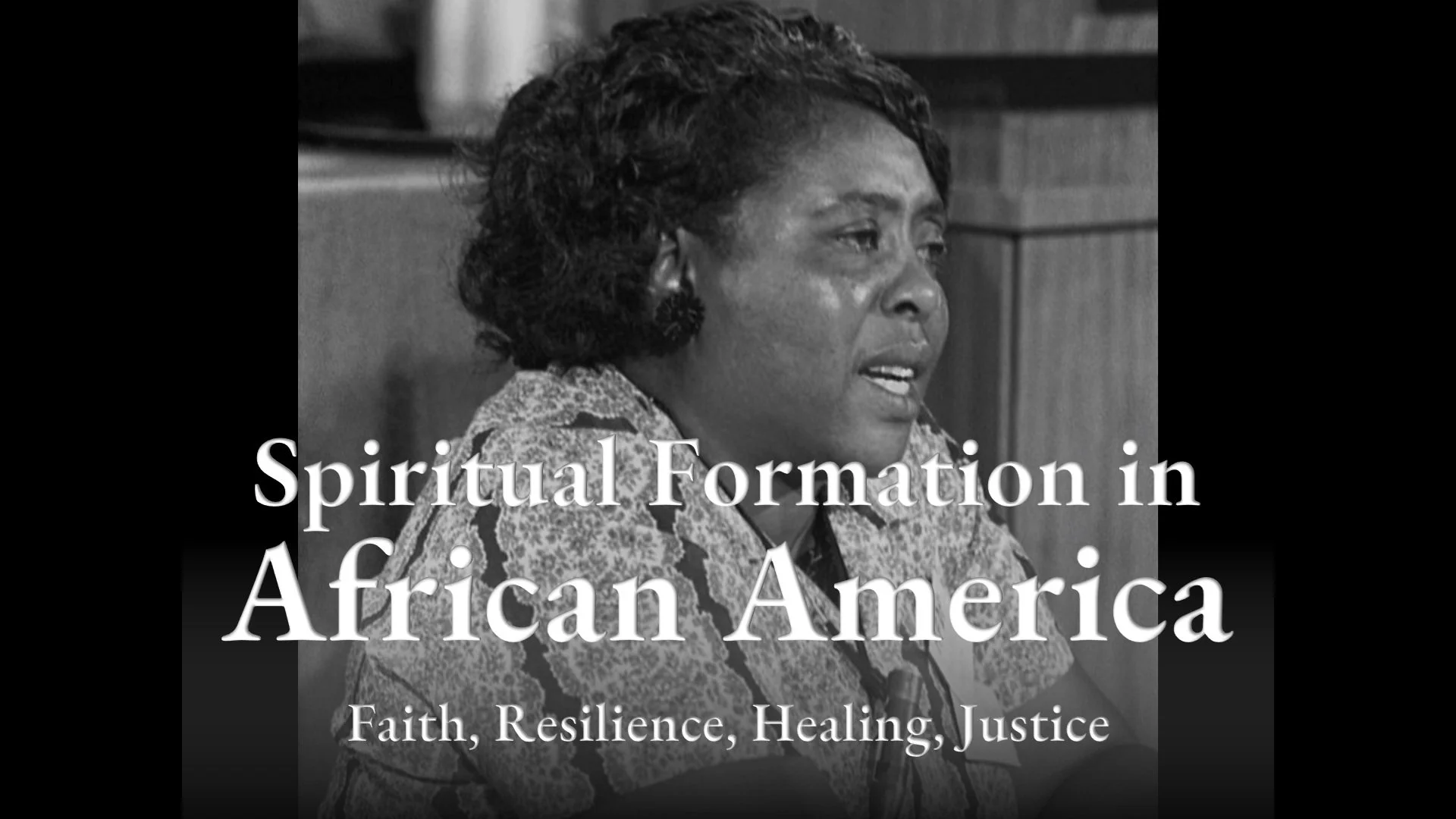
This section on Suffering is organized in the following way: Suffering and God explains why God is good despite human suffering. African American Faith connects to the deep, living Christian tradition of resistance to human evil and hope in Christ. Grieving collects resources for healthy grieving, both biblical and otherwise. Mental Health spotlights how Jesus and our experience of him intersect with various mental health needs. Church and Shoah is about Christians who were for and against Nazi Germany; it is drawn from our Church and Empire resources; we place it here because of how often people raise it as a question connected to human suffering. General Reflections highlights other resources that may not be Christian per se, but are thoughtful and helpful to consider.