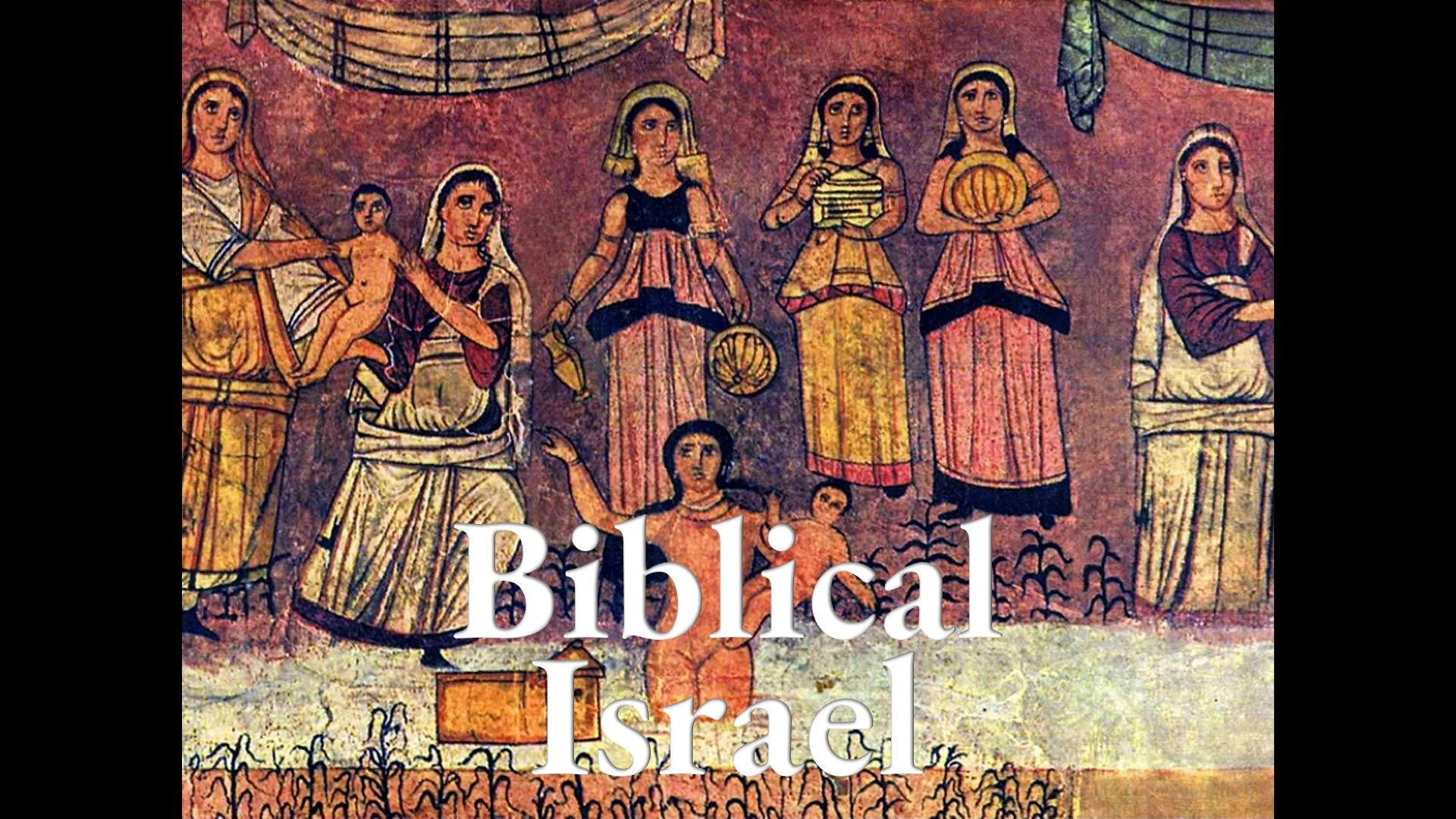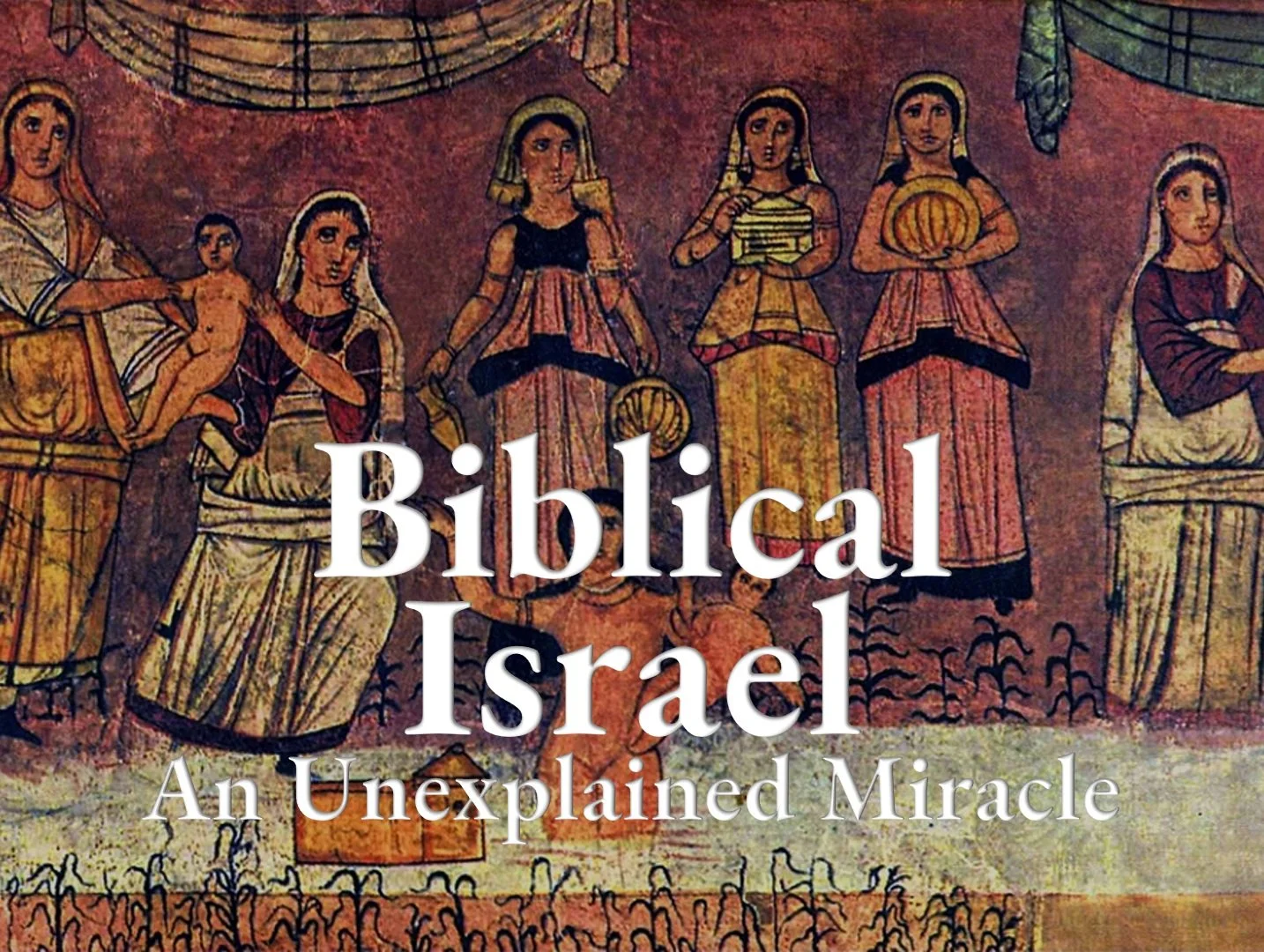
Photograph: A fresco from a synagogue in Dura Europos, Syria, dating back to 244 - 255 CE. It depicts the baby Moses being drawn up from the Nile River. Photo credit: Unknown | Public Domain, Wikimedia Commons. The synagogue was next to a Christian house church. Both had remarkable paintings and mosaics.
The emergence of the Jewish people and Hebraic thought is an unexplained miracle. This page explores why.
Spotlight
Theology of Black Panther, Part 2: Wakanda, Not Conquered, Not Conquerors -- An Image of a Chosen People? (link opens YouTube video). This video explores the portrait of Wakanda as Afro-futurist but also a near-ideal people in a world where colonization is the rule, not the exception. To the point of this section, Wakanda is also a "chosen people" image also portrayed by the Hebrew Bible, especially when we look at a human community in a garden land, who have received a divine gift from above, resulting in the power of women and more.
See also the slides to this presentation. The presentation examines the relationship between the Church and Israel. We begin with the Dead Sea Scrolls and the Qumran Community, who saw themselves as a fulfillment of Israel inviting the rest of Israel to join them. This hinges on a view of the Sinai covenant as an analogy to medical treatment, where God, in the sanctuary, played the role of a dialysis machine.
Does the Bible Have Evidence of Supernatural Design? A Sociological Approach. A series of examples comparing biblical precepts and stories sociologically to other belief systems. Examples include the positive view of women and monogamy over polygamy, the priority of marriage over extended family, the jubilee as benefiting the people versus the king, and Rene Girard’s insights into the scapegoat psychology which Israel’s Yom Kippur rituals undid.
-
The Uniqueness of the Jewish People and Jewish Thought
A selection of quotations on the uniqueness of Jewish practices, laws, and institutions, from historians and other scholars.
The Trinity: Can Other Gods Be Personally Known?
A presentation showing how Jewish monotheism allowed for at least a binitarian God who was both transcendent and immanent at the same time. The Trinity is the metaphysical framework that explains the historicity of Jesus and Israel.
Jewish and Christian Views of the Messiah.
Slides of a presentation. This presentation explores the historical hopes of Israel in Second Temple Judaism, under the Roman Empire. It also examines Jewish military messianic movements from 163 BCE - 135 CE, which were very frequent, since many Jews had revolutionary aspirations. We consider how Jews had four main options of strong vs. weak identification with Judaism and strong vs. weak assimilation with Rome. We position Jesus and his followers as a “new temple” movement that extended the hopes of Israel into a messianic peace movement.
Stories and Spirituality: How the God Engages Human Evil.
A one page chart comparing views of God and human evil. God could role model inner peace, or change human nature as one of us, or give us better laws. The chart compares how the deity in each category interacts with concepts of good and evil, whether the deity can touch humanity, how the deity helps us deal with human evil, and whether the deity will heal the world.
Why Did God Choose a "Chosen People"? Why Not Just Skip Right to Jesus?
An important question when considering the uniqueness of Judaism, Jewish suffering, and the role of human partnership with God
-
Gordon Hugenberger, The Historicity of the Bible
N.T. Wright, How Can the Bible Be Authoritative? (1989, 1991)
Frank Moore Cross, From Epic to Canon: History and Literature in Ancient Israel (1998)
Kevin D. Miller, Did the Exodus Never Happen? (Christianity Today, Sep 7, 1998)
James K. Hoffmeier, Israel in Egypt: The Evidence for the Authenticity of the Exodus Tradition (1999)
Kenneth A. Kitchen, On the Reliability of the Old Testament(2006)
Ben Witherington, The Relationship of the OT to the NT According to John Chrysostom (blog, Aug 28, 2007)
Roger Isaacs, Passover In Egypt: Did the Exodus Really Happen? (Huffington Post, Apr 9, 2011)
Annette Gordon-Reid, Slavery's Shadow: Historians' Problems with Slave Narratives (New Yorker, Oct 23, 2013) and my reflection on the socio-political context of biblical narrative
C.D. Elledge with Olivia Yeo, Rethinking the "Qumran Community": Recent Approaches (ASOR blog, Dec 13, 2013)
James Wood, Why? The Fictions of Life and Death (The New Yorker, Dec 9, 2013) on why stories and especially the novel wrestles with death - removing the story as a literary form from its original theological context (Hebrew biblical narrative) only leaves a deeply unsettling, emotional question: why?
Brian Zahnd, My Problem with the Bible (blog, Feb 17, 2014)
Sarah Knapton, Scientists: Noah's Ark Would Have Floated With 70,000 Animals If Built By Dimensions In The Bible (Business Insider, Apr 3, 2014)
Peter Enns, N.T. Wright on Jesus, Adam, Paul, and Hermeneutics (youtube video, May 23, 2014)
Kristin Romey, Has the ‘Signature’ of Biblical Prophet Isaiah Been Discovered? (National Geographic, Feb 21, 2018)
Janelle Alberts, 4 Little-Known Facts About the Bible That Suggest It Can Be Trusted (Relevant Magazine, Apr 10, 2018)
Henry Abramson, What is the Extra-biblical Historical Evidence for the Exodus? Henry Abramson, Mar 27, 2023.
-
These are the images used in artistic physical displays. They are survey questions and conversation starters that are topically and thematically organized. They demonstrate how Jesus is relevant to each topic or theme. You can also just view the images on your device. If you would like, see all our Conversation Stations; below are the ones that relate to the topic of the historical Jesus.
What Story Do You Live In? (and associated message)
Is Religion Just a Cultural Thing? (and instructions)
Who Do You Think Wrote This? (and instructions)
What Can We Do About Evil? (and instructions and conversation tree)
What Can We Do About Evil? (brochure version)
Find Your Heart's Desire? (and instructions and theology of desire)
The Supernatural: Topics:
This section on the Supernatural is organized as follows: The Natural highlights how creation itself is miraculous, since there is something rather than nothing; and creation points in its own way to God. General Accounts highlights how people who are not Christians have observed supernatural phenomena. Christian Accounts spotlights specifically Christian experiences and interpretations of the supernatural. Making Sense explores different ways of understanding supernatural events. Biblical Israel examines how the origins, literature, and early history of Israel point to a supernatural origin. The Decisive Miracle considers Jesus to be the supreme miracle of a God who reveals God’s own self.